
Summary
Editor's rating
Is the HALO24 worth the money?
Compact, light, and not a visual eyesore on a small boat
Power draw and standby: friendly enough for smaller boats
Build quality and how it holds up outside
Real-world performance: close range is where it shines
What you actually get with the HALO24
Does it actually help you avoid trouble?
Pros
- Very fast 60 RPM close-range sweep gives near real-time updates
- VelocityTrack Doppler coloring makes it easier to spot real collision risks
- Lightweight 24" dome with reasonable power draw and quick wake-up from standby
Cons
- Price is on the high side compared to basic dome radars
- Long-range performance is limited by the 24" dome format despite the 48 NM spec
- Tightly tied to Simrad MFD ecosystem, not ideal if you mix brands

Specifications
View full product page →| Brand | Simrad |
A 24" dome that actually feels like an upgrade
I put the Simrad HALO24 on a 32-foot cruiser that already had an older 18" dome radar, so I wasn’t coming from nothing. I wanted better target separation in busy channels, something that starts quickly, and ideally a unit that doesn’t suck the batteries dry on a swing mooring. After a few weeks using the HALO24 in real conditions (night entries, fog banks, and some ugly rain squalls), I have a pretty clear idea of what it does well and where it’s just “fine”.
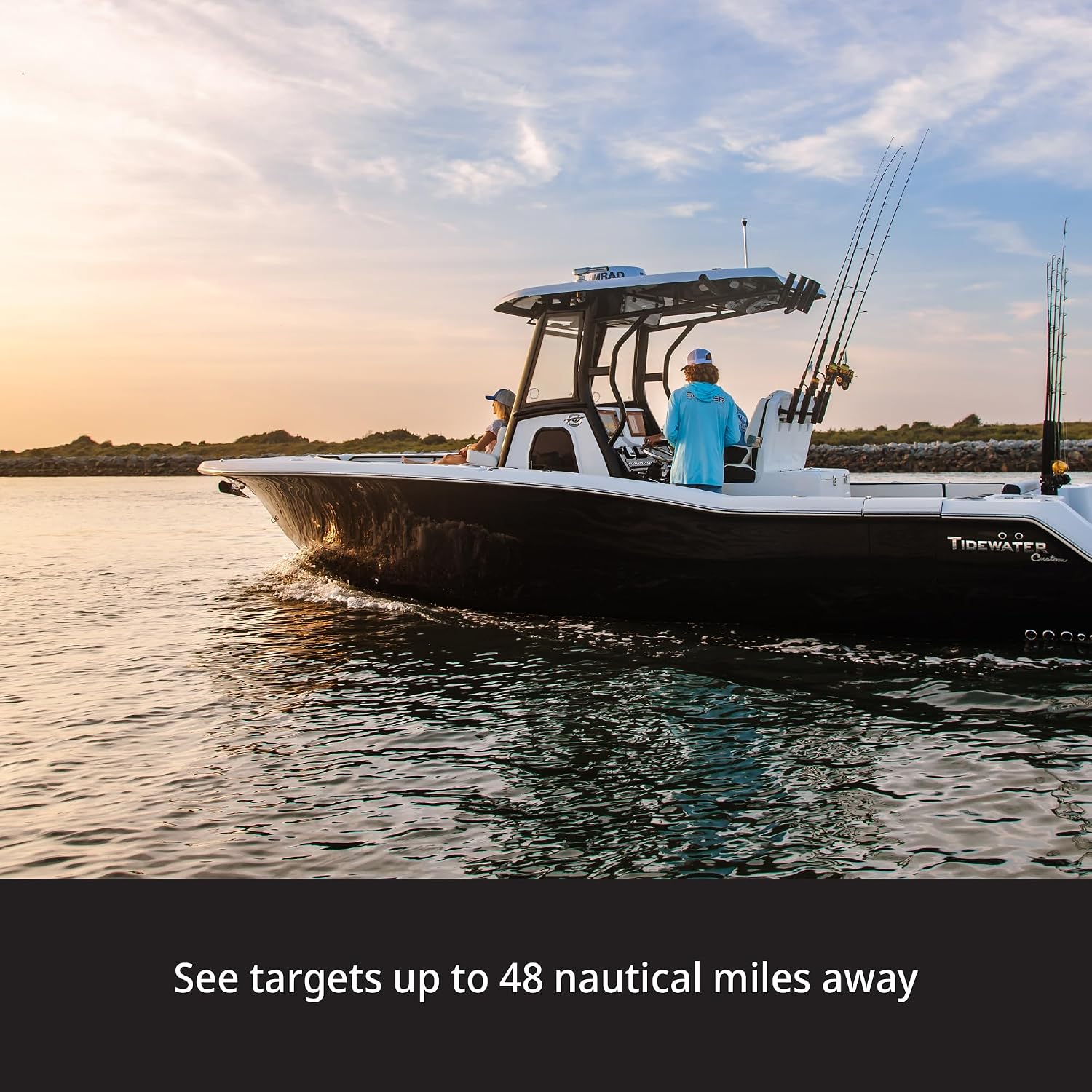
The big selling points on paper are the 60 RPM close-range sweep, VelocityTrack Doppler, and the 48 NM range in a compact 24" dome. On the water, the 60 RPM and Doppler are the ones you actually feel. The long range is nice to have, but with a 24" dome I never expected perfect long-range definition anyway. It’s more about seeing weather and bigger targets than spotting tiny boats at 40+ miles.
I used it with a Simrad MFD at the helm and another down below, so the integration part was easy. If you already live in the Simrad/B&G world, this thing plugs right in. If you’re hoping to mix brands, forget it – it’s clearly meant to live in the Simrad ecosystem. That’s not a surprise, but it’s worth saying upfront.
Overall, it feels like a modern, fast radar that actually helps with collision avoidance at short range, not just a spinning ornament you turn on in the fog. It’s not perfect, especially on the price side, and long-range detail is good but not magic. But compared to the older radars I’ve used, it’s a clear step up in ease of use and how quickly it becomes actually useful after you hit the power button.
Is the HALO24 worth the money?
Let’s be clear: the Simrad HALO24 is not a budget radar. You’re paying for modern tech: pulse compression, Doppler, Dual Range, fast sweep, and integration with Simrad MFDs. If you only sail on sunny afternoons and might turn on the radar once a year out of curiosity, this is overkill and probably a waste of money for you.
Where it starts to feel like decent value is if you actually use radar as a core tool: night sailing, coastal passages, fishing in busy areas, or dealing with frequent fog. In those cases, the HALO24 gives you a clearer, faster, and more informative picture than older domes. The Doppler coloring and 60 RPM are not just gimmicks; they genuinely reduce mental load when you’re tired and trying not to hit anything.
Compared to cheaper, older-style radars, you’re paying a premium, but you get:
- Lower power usage and quick wake-up
- Better close-range detail and faster updates
- More intelligent target handling (Doppler, MARPA, Dual Range)
So in terms of value, I’d call it good but not cheap. You’re paying for performance and features that you’ll only appreciate if you actually use them. If you’re already invested in Simrad displays and you care about close-range collision avoidance and night/fog comfort, the HALO24 is a solid choice. If you just want the lowest price radar that technically works, look elsewhere.
Compact, light, and not a visual eyesore on a small boat
From a design point of view, the HALO24 is pretty straightforward: white 24" dome, low-ish profile, branded Simrad across the side. Nothing flashy, but on a 30–35 ft boat it doesn’t look oversized or ridiculous. The light weight (about 6.75 kg) is a real plus. When I mounted it on a radar pole at the stern, I could actually handle it alone without worrying about wrenching my back or bending the pole.
The footprint is small enough that you can fit it on most arches or masts that previously carried a small dome. I reused an existing mount with only minor adjustments, which saved a bit of swearing. The cable run is standard network-style cabling, so nothing exotic, but plan your path because the connector is chunky and you don’t want to be drilling extra holes in your boat after the fact.
What I like is that the design clearly aims at low windage and minimal weight aloft. On a light sailboat, every kilo up high matters, and older radars can be heavy. Here, the dome doesn’t noticeably affect heel or motion, at least not in a way I could feel. It also doesn’t rattle or hum; once it’s spinning, you mostly forget it’s there, which is exactly what I want from hardware bolted outside.
If I had to nitpick, the dome style means you’re not getting the sharper beam of a big open array, so long-range target separation has its limits. But that’s not really a design flaw, just the reality of a compact dome. For the size and weight, the design feels practical and boat-friendly, not just something made for a catalog photo.
Power draw and standby: friendly enough for smaller boats
Power consumption is one of the big reasons I went for a modern pulse compression radar instead of a chunky old magnetron model. I don’t have a generator, just batteries and solar, so anything that runs constantly has to be reasonable. The HALO24’s low power mode and InstantOn were a key selling point for me, and in practice they do help.
While I don’t have lab numbers, in normal use the draw felt manageable on a 12V house bank. I could run it for several hours during a night passage without feeling like I was murdering my batteries, especially when mixing in periods of standby. The ability to drop into a low-power state and wake up quickly means you don’t have to leave it blasting away full-time just because you might need it in ten minutes.
Compared to an older radar I used on another boat, the difference in power draw and warm-up is noticeable. With the old unit, once it was on, you tended to leave it on because waiting for warm-up again was annoying. With the HALO24, I’m much more inclined to toggle between standby and active depending on conditions, which in the end saves a fair bit of energy over a long day or night.
If your boat’s electrical system is very tight and you rarely run the engine or have solar, you’ll still need to think about how many hours per day you can keep it active. But for a typical cruising setup with a decent house bank, the HALO24’s power behavior feels realistic and manageable, not something you can only afford to use in emergencies.
Build quality and how it holds up outside
Durability is always a bit of a guess unless you’ve used the unit for years, but I can at least talk about build quality and first signs. The HALO24 feels solidly put together: no flimsy plastic flex, no weird gaps, and all the seals and gaskets look like they’re meant for real marine use, not just a weekend lake toy. After a few rough days with solid spray and some heavy rain, there were no leaks, fogging, or strange noises from the dome.
The light weight also helps in terms of stress on mounts. On some boats, older heavy radars slowly loosen mounts or cause wobble over time. With the HALO24, the load on the pole/arch is lower, so I’m less worried about long-term fatigue there. The finish cleans easily; salt and grime rinse off with a hose and a soft brush, and I haven’t seen any discoloration so far.
Navico/Simrad has been around long enough that I don’t feel like I’m buying from a brand that will vanish overnight, which matters for spare parts and support. That said, these units are not cheap, and if something fails out of warranty, repairs or replacement won’t be fun on the wallet. So long-term durability really matters here. Based on build and history with other Simrad gear I’ve used, I’d expect several years of trouble-free service if installed properly and not abused.
In short, while I can’t speak to 10-year longevity yet, nothing about the HALO24 feels fragile or cheaply made. It looks and feels like proper marine equipment designed to live outside in salt, sun, and rain. Just make sure you mount it solidly and seal your cable entry right—the usual boat rules still apply.
Real-world performance: close range is where it shines
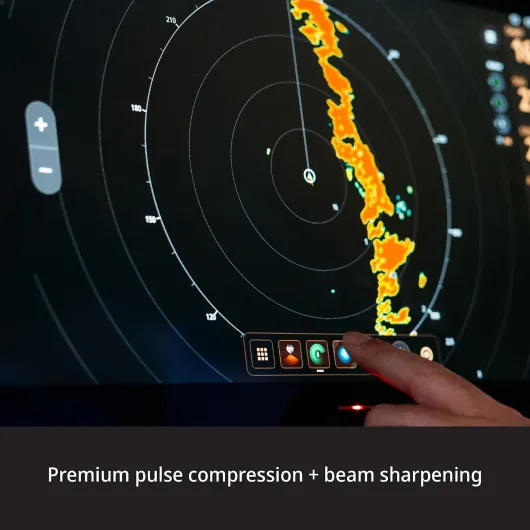
On the water, the close-range performance is the highlight. The 60 RPM at up to 1.5 NM gives you almost live feedback when you’re creeping into a harbor or threading between moorings. Compared to my older radar that updated every few seconds, this felt much more natural. When a small boat moves across your bow, you see it move almost in real-time instead of jumping every sweep or two. In tight channels and when dodging crab pots and small craft, that speed actually reduces stress.
The VelocityTrack Doppler is also genuinely useful. Targets coming towards you show in one color, moving away in another, so your brain doesn’t have to work as hard. In busy traffic areas, that quick color cue helps you focus on what’s actually a risk instead of staring at a mess of echoes. The nice part is that it checks every target in range automatically, so you’re not stuck manually tagging things one by one.
Longer range (beyond 12–24 NM) is usable but not magical. This is a 24" dome, not a big open array, so you can’t expect razor-sharp definition at 40+ NM. You can see bigger ships and weather fronts well enough to plan, but if you’re hoping to spot small targets far away, that’s not what this unit is best at. Where it really earns its keep is 0–12 NM, especially in Dual Range: one window close-in, one looking further out for squalls or bigger vessels.
In rain and light fog, target separation stayed pretty decent. In heavier rain, like with most radars, you start to get more clutter, but the HALO24’s processing still kept buoys and boats visible enough to work with after some tweaking of the controls. In short: great performance for collision avoidance and close navigation, acceptable for long-range awareness, but don’t expect miracles at max range just because the spec sheet says 48 NM.
What you actually get with the HALO24
On paper, the Simrad HALO24 is a 24" pulse compression radar dome with up to 48 nautical miles range, Dual Range mode, VelocityTrack Doppler, and MARPA tracking. The unit itself is pretty light for its class, around 6.75 kg (about 15 lb), which matters if you’re mounting it high on a small mast or arch. It’s designed for boats using Simrad MFDs, and that’s really the key point: this is not a standalone toy; it’s meant to be part of a Simrad network.
In practice, the features that actually make a difference are:
- InstantOn / fast wake-up from low-power standby
- 60 RPM rotation at up to 1.5 NM for near real-time close-range view
- Dual Range so you can watch close and far at the same time
- VelocityTrack Doppler coloring moving targets based on closing or opening speed
What confused me a bit is the box contents mentioned in some listings: they talk about a VHF marine radio (V20S) being included. Mine did not come with a VHF, only the radar dome and the usual mounting and cabling bits. So either that’s a copy-paste error or a bundle some sellers offer. Don’t buy this expecting a free radio unless the seller is extremely clear about it.
Overall, as a product, it’s a modern network radar that’s clearly designed for someone who already has or plans to have Simrad displays. If you just want a cheap radar to occasionally see boats in the fog, this is probably overkill. If you actually use radar regularly for night entries, tight harbors, and coastal runs, the feature set starts to make sense.
Does it actually help you avoid trouble?
Effectiveness for me means: does this radar actually help you avoid hitting stuff and making dumb decisions, or is it just an expensive spinning dome? On that front, the HALO24 does its job pretty well. The fast refresh and Doppler coloring make it much easier to see which targets matter right now. On a night entry into a busy anchorage, I could pick out moving boats, stationary moorings, and shoreline clearly enough to feel comfortable going slower instead of freezing and waiting for daylight.
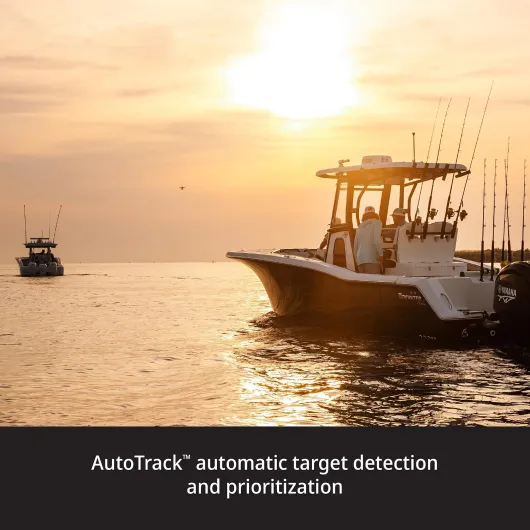
The MARPA target tracking works as expected once you’re locked on. You can track several targets and get CPA/TCPA (closest point of approach / time to CPA). It’s not perfect—acquiring small, weak targets in choppy conditions sometimes takes a bit of patience—but for bigger boats and solid echoes, it’s reliable. Combined with the Doppler, you get a decent picture of “who’s a real risk” instead of just staring at blobs.
Another point: the InstantOn / low-power standby is more useful than I thought. I often keep it in standby while sailing during the day to save power, then wake it up quickly when I see weather building or traffic increasing. Not having to wait long for it to become usable is a real plus. Compared to older magnetron radars that need a warm-up period, this is way more practical for intermittent use.
Overall, in actual use, I’d say the HALO24 is very effective for collision avoidance and close navigation, and decent for route planning and weather watching. It’s not magic, and you still need to understand radar basics and tweak gain and sea clutter. But if you already know how to use radar, this unit gives you better tools and quicker information than older domes I’ve used.
Pros
- Very fast 60 RPM close-range sweep gives near real-time updates
- VelocityTrack Doppler coloring makes it easier to spot real collision risks
- Lightweight 24" dome with reasonable power draw and quick wake-up from standby
Cons
- Price is on the high side compared to basic dome radars
- Long-range performance is limited by the 24" dome format despite the 48 NM spec
- Tightly tied to Simrad MFD ecosystem, not ideal if you mix brands
Conclusion
Editor's rating
The Simrad HALO24 is a compact, modern radar that actually brings useful upgrades over older domes, especially for close-range work. The fast 60 RPM sweep, VelocityTrack Doppler, and Dual Range mode all combine to give you a clearer and faster picture of what’s around you. For night entries, busy channels, and fog, it adds real comfort and safety, not just another screen to stare at. Power draw and InstantOn standby make it realistic to use on a typical cruising boat without needing a generator running all the time.
It’s not perfect. Long-range performance is fine for a 24" dome but nothing more; if you want super crisp long-range detail, you should be looking at bigger arrays. It also locks you into the Simrad ecosystem, so if your boat is full of gear from other brands, it’s not the most flexible choice. And price-wise, it sits in the higher bracket, so it only makes sense if you’ll actually use the features regularly.
If you’re a coastal or offshore boater who sails or motors at night, deals with fog, or runs in busy waters, and you already have (or plan to have) Simrad MFDs, the HALO24 is a strong, practical option that earns its keep. If you’re mostly a fair-weather day boater or just want the cheapest radar that works, you can save money with a simpler unit and probably won’t miss what this one offers.