Choosing marine grade fabric and canvas that truly lasts
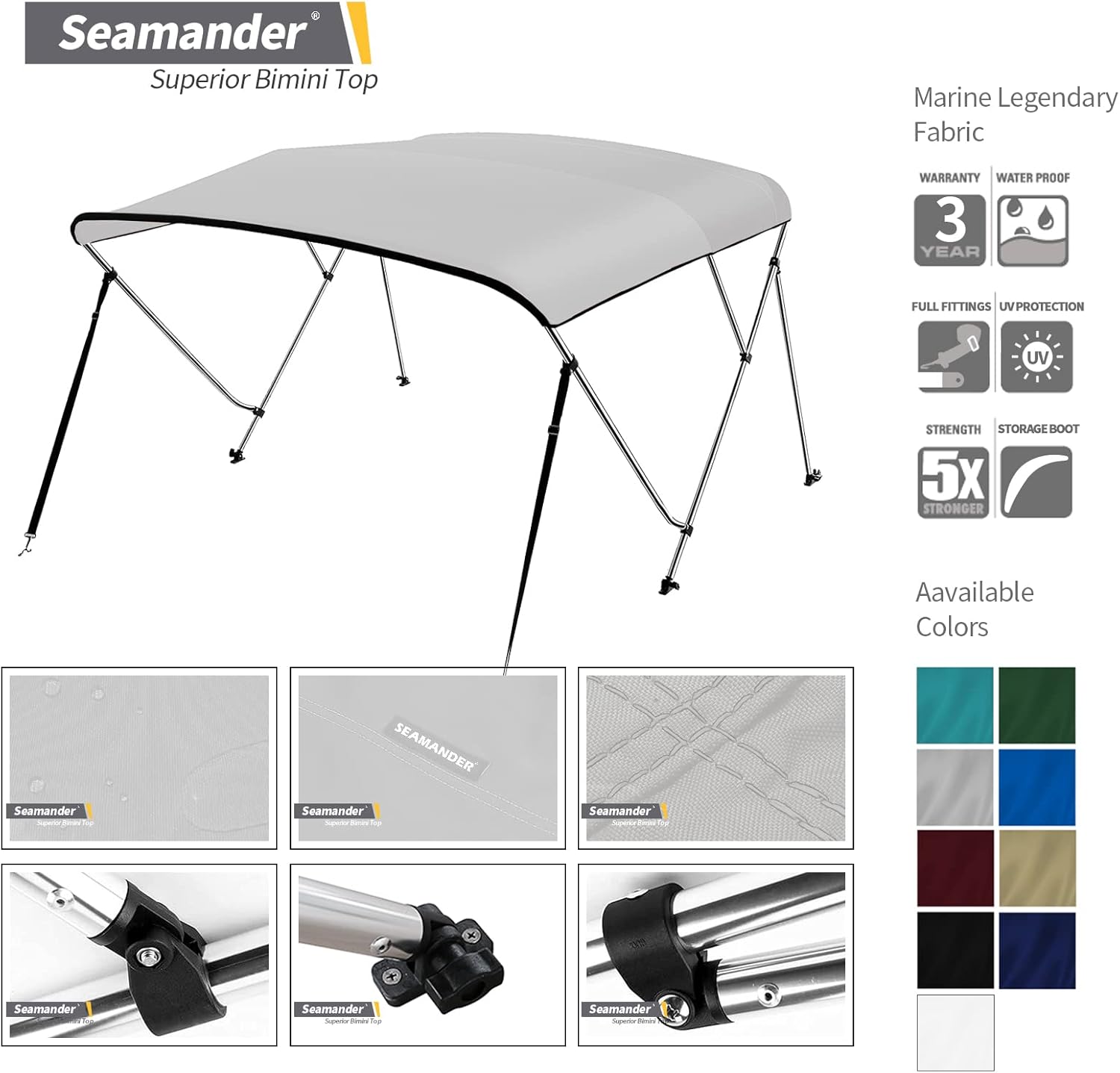
Every serious yacht program should start the specification of a bimini with the fabric, because this is the first barrier against sun and salt. High quality marine grade canvas such as solution dyed acrylic or advanced polyester offers stable color, strong UV resistance, and reliable water repellency, which is why many yards specify Sunbrella style fabrics for both the main yacht bimini and smaller pontoon boat tops. As a broad reference, solution dyed acrylic canvases marketed for marine use are often listed around 280–320 g/m² with hydrostatic head values in the 300–500 mm range, while lighter generic polyester canvases may fall below these figures. When evaluating the best boat bimini tops, ask the supplier for the exact fabric weight in grams per square metre and the hydrostatic head rating, then compare these figures across different tops.
On a superyacht, the crew often cycles between several bimini tops and spare replacement canvas sets during a busy charter season. This rotation only works when each cover uses consistent patterns and reinforced stress points, especially around the frame, the boot, and any zip on sun shade extensions. Owners who care about detail should inspect stitching density, seam taping, and how the cover interfaces with stainless steel or aluminum frame elements, because weak seams near mounting hardware quickly lead to tears when the boat slams into head seas.
Color selection also affects temperature and glare under the bimini and under any auxiliary boat canopy on tenders. Darker gray navy or green beige tones absorb more heat but reduce reflected glare, while lighter beige gray tops stay cooler yet can show dirt sooner, so the best boat bimini tops balance aesthetics with maintenance effort. When planning tech upgrades such as integrated underwater camera systems for diving, it is wise to coordinate cable runs and storage solutions with the chosen bimini top and canvas layout, and resources like this guide to top underwater cameras for diving help owners align deck shading with water exploration equipment.
| Component |
Typical spec range |
Example reference |
Approximate price band* |
| Solution dyed acrylic canvas |
280–320 g/m², 300–500 mm hydrostatic head (indicative) |
Sunbrella Marine Grade style technical sheets |
$$–$$$ (mid to premium) |
| Polyester marine fabric |
200–260 g/m², 150–300 mm hydrostatic head (indicative) |
Generic OEM bimini fabric data |
$–$$ (budget to mid) |
| Aluminum frame tubing |
25–32 mm diameter, 1.5–2 mm wall |
Coastal and pontoon boat kits |
$–$$ (lighter, cost focused) |
| Stainless steel frame tubing (316) |
25–32 mm diameter, 1.5–2 mm wall |
Offshore and blue water packages |
$$–$$$ (higher strength, premium) |
*Price bands are indicative only and vary by region and supplier.
Frames, hardware, and support systems that survive offshore use
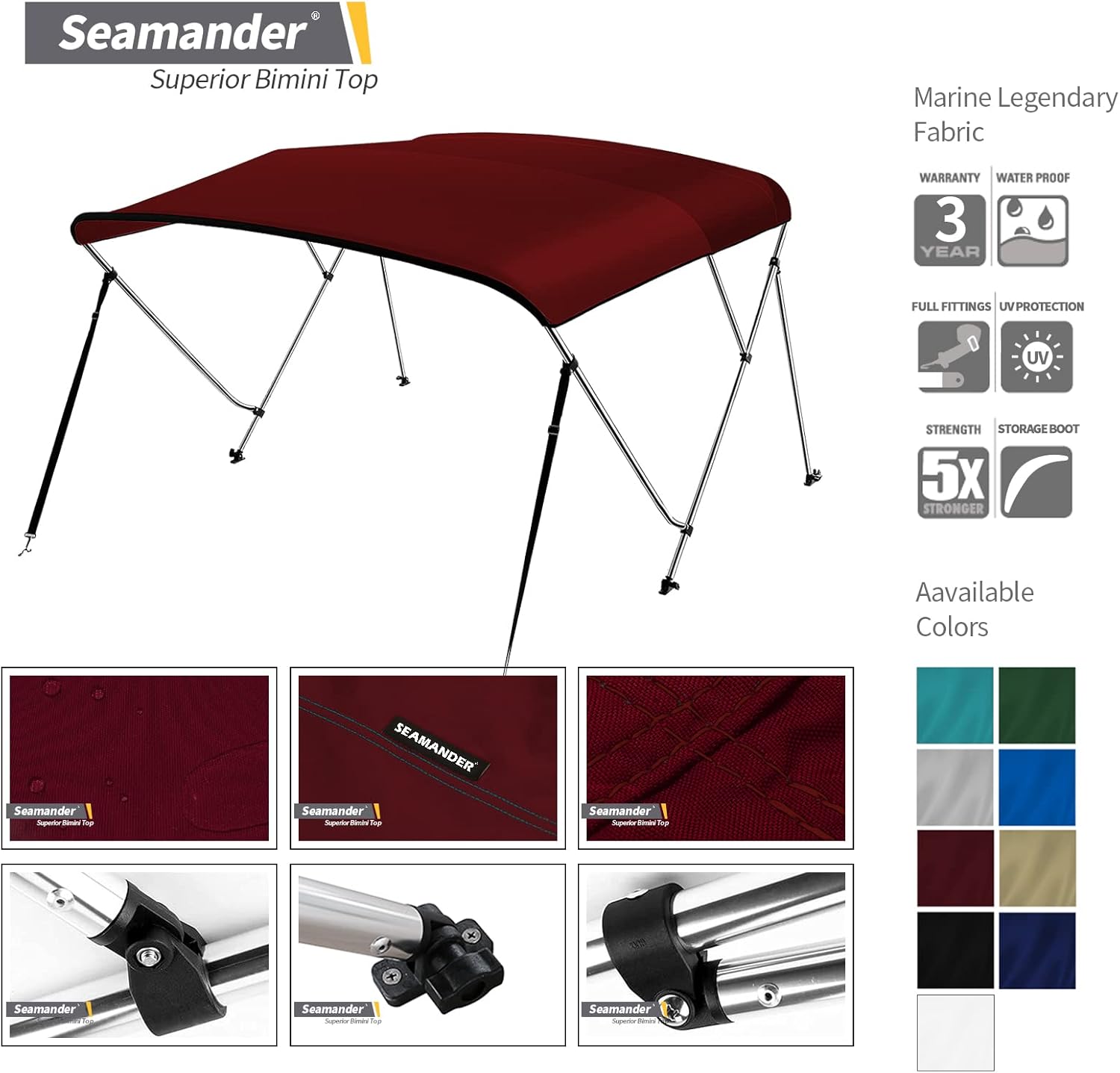
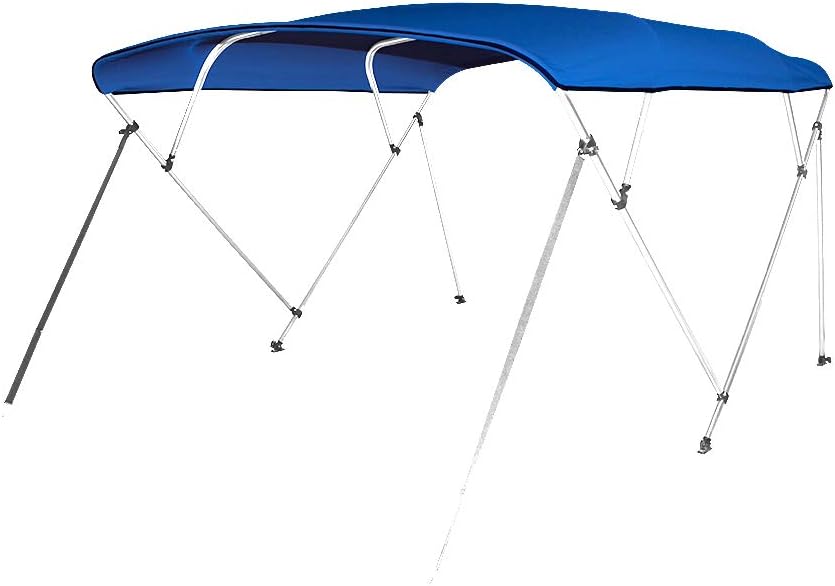
The structural frame of a bimini determines whether it will survive a mistral or only a gentle afternoon breeze. For offshore yachts, the best boat bimini tops rely on either a thick wall aluminum frame or a polished stainless steel frame, each paired with heavy duty hinges, support poles, and rear support braces. Aluminum frame systems are lighter and suit fast planing hulls or agile pontoon boat tenders, while stainless steel frames offer superior stiffness and corrosion resistance for blue water passagemaking.
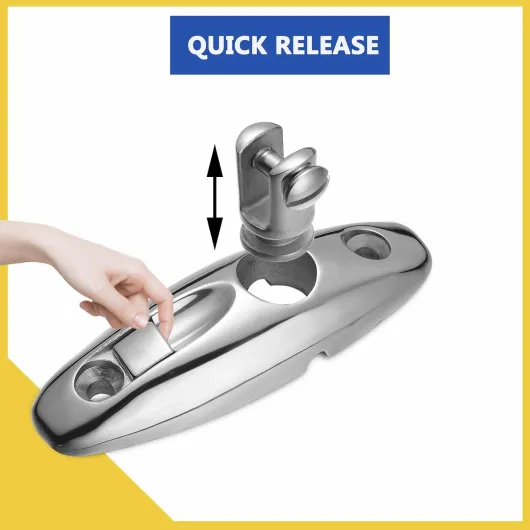
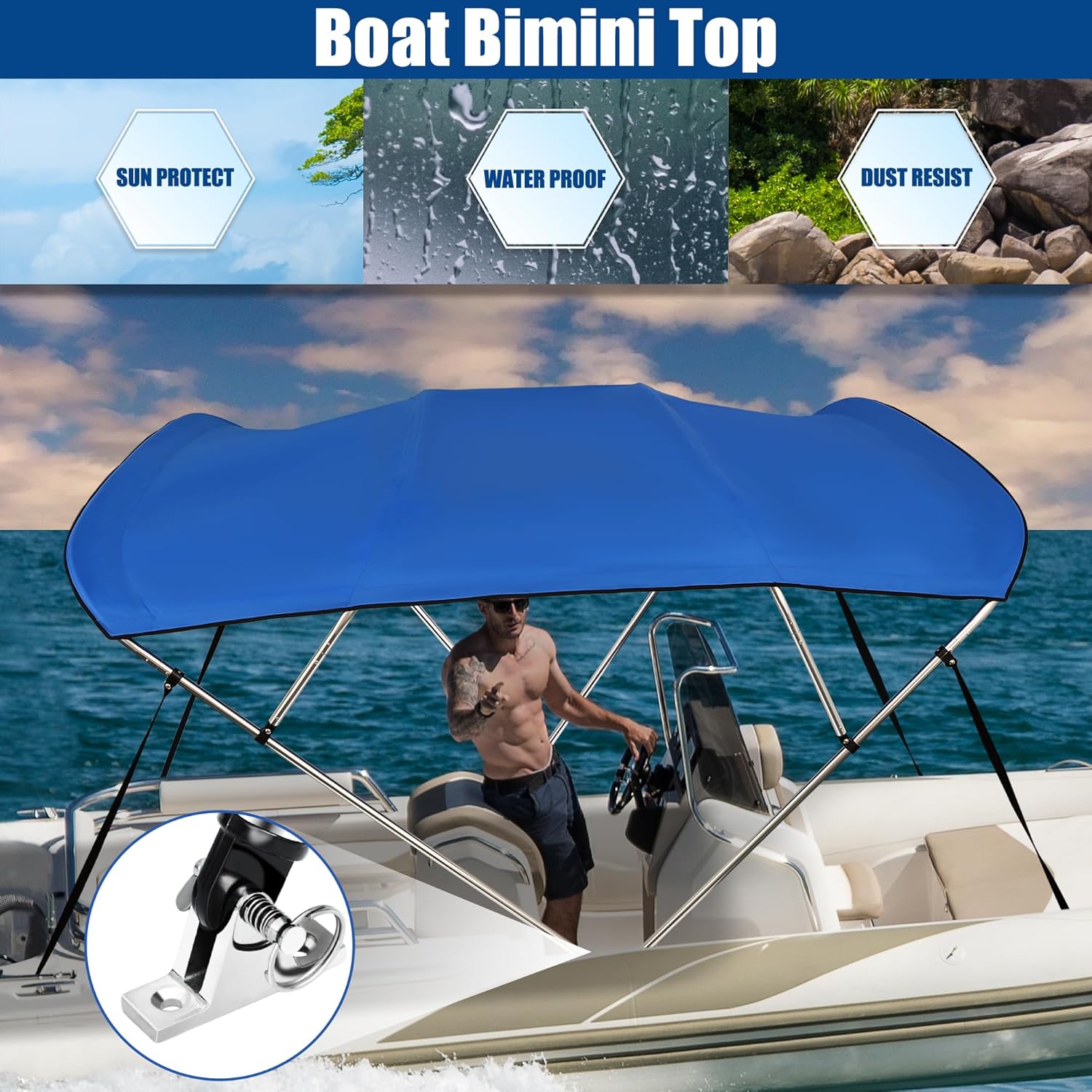
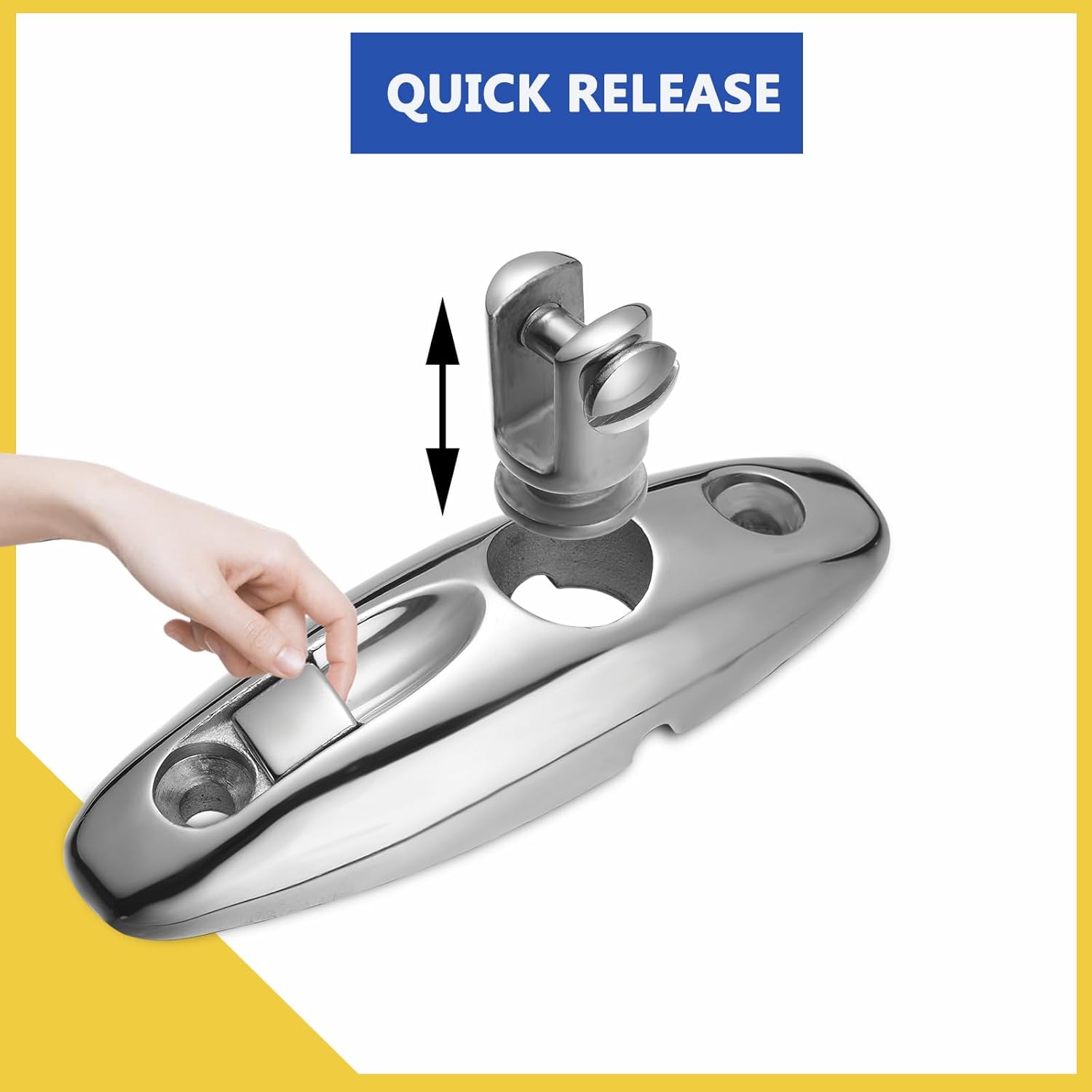
Mounting hardware is often underestimated, yet it is the interface between the bimini top and the boat itself. Through bolted deck fittings with backing plates spread loads far better than simple screws, and this matters when a large boat canopy or bow bimini catches a sudden gust while the yacht turns beam on to the wind. The most reliable shade systems use articulated support poles and quick release pins so crew can lower the bimini into its storage boot in seconds, rather than wrestling with seized fittings while spray and water sweep the deck.
Owners who retrofit lighting or electronics into a boat bimini should plan cable routing inside the frame from the start. Modern track lighting systems, such as those described in this reference on flexible spotlight track lighting, can be adapted to create elegant indirect light under a bimini top for evening cocktails. When combined with a robust marine grade frame, discreet wiring, and a snug storage boot, these tech upgrades keep the best boat bimini tops both functional and visually refined.
Smart tech upgrades around the bimini for serious yacht operations
On modern yachts, the bimini is no longer just a passive sun shade but a platform for integrated technology. Owners now mount solar panels, Wi Fi antennas, and compact searchlights on or near the bimini top, which means the best boat bimini tops must handle extra weight and vibration without flexing. When planning these upgrades, consider how the frame, the canvas, and the storage boot will behave when the boat pounds into steep chop or when the pontoon boat tender ferries guests at speed.
A remote controlled searchlight installed near the boat bimini can dramatically improve night approaches to anchorages or marinas. Products in the class of this waterproof marine searchlight illustrate how compact housings and efficient optics now allow powerful beams without overloading the bimini frame. The best boat bimini tops for tech heavy yachts therefore combine a rigid aluminum frame or stainless steel frame with reinforced mounting hardware plates, so that added loads from antennas, speakers, or cameras do not distort the canvas or tear the cover.
Energy management is another reason to treat the bimini top as a technical asset rather than a simple boat canopy. Flexible solar panels mounted above a beige gray or gray navy canvas can feed batteries that support refrigeration, navigation electronics, and underwater lighting, while the underside remains a cool, shaded lounge. When these systems are integrated from the design stage, the bimini tops, storage boot, rear support struts, and support poles all work together, giving detail oriented owners a clean deck layout and reliable power without sacrificing the elegance of the best boat bimini tops.
Maintenance routines that keep bimini tops charter ready
Routine maintenance is what separates tired, sagging bimini tops from the crisp, tight profiles seen on top charter yachts. After every passage, crew should rinse the bimini top, the frame, and the storage boot with fresh water to remove salt crystals that abrade marine grade fabric and canvas. A gentle wash with neutral soap every few weeks keeps the cover clean, while harsh detergents or aggressive brushes quickly damage the water repellent finish and weaken stitching.
On both the main yacht and any pontoon boat tenders, zippers and mounting hardware deserve the same attention as the canvas itself. Light lubrication of stainless steel fittings, inspection of aluminum frame joints, and periodic tightening of support poles and rear support braces prevent annoying rattles and premature failures when the boat encounters confused seas. The best boat bimini tops also benefit from seasonal checks of the storage boot, because a torn or loose cover allows UV and water to attack folded canvas, which then forces owners into early replacement canvas purchases.
When damage does occur, timely replacement of a panel or a full replacement canvas is usually more economical than constant patching. Professional sailmakers and marine canvas ateliers can replicate beige gray, gray navy, or green beige color schemes, ensuring that the new bimini top matches existing boat canopy elements and sun shade panels. For owners focused on long term value, keeping detailed records of maintenance, replacement dates, and any upgrades around the bimini tops also supports higher resale price, since a prospective customer can see that the shading systems on board have been treated as critical marine assets rather than disposable accessories.
How to evaluate price, value, and customer support for bimini systems
When comparing the best boat bimini tops, price alone rarely tells the full story. A low sale price might look attractive, yet if the bimini top uses thin fabric, weak frame sections, or poor quality mounting hardware, the real cost emerges later through early replacement and lost cruising time. Owners who think in lifecycle terms should instead evaluate total value, which includes durability, ease of use, and the responsiveness of customer service when something fails far from home waters.
Serious suppliers of boat bimini systems provide detailed specifications for marine grade canvas, frame alloys, and hardware, along with clear guidance on storage, cleaning, and replacement canvas options. They also offer modular solutions so that a basic bow bimini on a pontoon boat can later accept extra sun shade panels, a larger boat canopy, or upgraded stainless steel support poles without replacing the entire structure. The best boat bimini tops therefore feel easy to deploy, easy to stow into the storage boot, and easy to adapt as the yacht’s cruising program evolves from day trips to extended coastal passages.
Color and style options also influence perceived value, especially when coordinating beige gray, gray navy, or green beige bimini tops with upholstery, sprayhoods, and cockpit enclosures. A well matched set of bimini tops, storage boot covers, and sun shade extensions creates a coherent visual identity that guests immediately notice when they step aboard the boat. For many owners, that refined first impression, combined with robust marine performance and strong customer support, justifies paying a higher price for the best boat bimini tops rather than chasing the lowest sale price on generic tops.
Key statistics on yacht shading, fabric performance, and comfort
- High quality marine grade acrylic fabrics used in many premium bimini tops are typically advertised as blocking around 95–98 % of UV radiation, which significantly reduces sunburn risk for crew and guests during long passages (based on manufacturer literature for solution dyed acrylic marine ranges).
- Studies on cockpit temperatures suggest that effective sun shade from a bimini top can lower perceived temperature under the canopy by roughly 5 to 7 °C compared with an exposed deck, which directly improves crew endurance in tropical climates (figures reported in marina test summaries and comfort studies; actual results vary with wind, humidity, and color).
- Industry surveys of yacht refits indicate that canvas and bimini replacement projects often account for approximately 10 to 15 % of total exterior refit budgets on cruising yachts, highlighting the financial impact of choosing durable bimini tops at the outset (ranges compiled from trade magazine articles and refit conference presentations).
- Field testing of solution dyed acrylic canvas has demonstrated color fastness ratings commonly reported around 7 to 8 on the Blue Wool scale after several years of marine exposure, whereas lower grade polyester fabrics may drop below 5 in the same period, leading to visibly faded bimini tops (values drawn from textile testing institute summaries and manufacturer data; exact ratings depend on product line and color).
- Owner feedback collected by large yacht brokerages suggests that well maintained shading systems, including bimini tops and associated sun shade panels, can improve perceived yacht value by roughly 3 to 5 % during resale discussions, especially in Mediterranean and Caribbean markets where sun protection is a priority (indicative ranges from brokerage market reports and buyer surveys).