
Summary
Editor's rating
Value for money: good core package, but watch the hidden extras
Design and screen: bright, touch-friendly, but still a bit chunky
Build quality and how it holds up in a marine environment
Navigation & sonar performance: good for weekend use, with room to grow
What you actually get with the GO9 XSE bundle
How well it actually works on the water day to day
Pros
- Bright 9" touchscreen with an interface that’s easy to learn and use
- Includes basic 83/200 kHz transducer and C-MAP Discover charts for US/Bahamas, so you’re usable out of the box
- NMEA 2000 and radar-ready, with Wi-Fi for updates and screen mirroring
Cons
- Radar and advanced sonar features require extra hardware and cables that add a lot to the total cost
- Included transducer is decent but not great for advanced or deep-water sonar work
- Potential confusion around chart card format and what exactly is included in the box

Specifications
View full product page →| Brand | Simrad |
A real-world take on the Simrad GO9 XSE combo
I’ve been running the Simrad GO9 XSE with the included 83/200 transducer on a small offshore boat for a bit now, and I’ll be blunt: it’s a pretty solid unit, but it’s not magic and it’s not plug‑and‑play if you expect every option to work out of the box. It’s sold as a chartplotter + fish finder, with radar options and a C‑MAP Discover card, so I went in expecting a complete navigation and sounder hub for coastal trips and some light offshore runs.
In practice, the first thing that stands out is the touchscreen interface. If you’re used to a smartphone, you’ll feel at home fast. Tap, pinch, drag – it all works the way you think it should. That made the initial setup way less painful than some older button‑only units I’ve used from other brands. I had basic GPS, depth and charts going on the first outing without having to sit with the manual for hours.
Where it gets a bit more mixed is when you start adding expectations: radar, chart options, networking with other gear, etc. The hardware is ready for a lot of things (NMEA 2000, radar port, Wi‑Fi), but you still need the right cables, sensors and compatible cards. One reviewer on Amazon mentioned missing radar cable and a chart card format issue, and I ran into similar confusion with what actually comes in the box versus what you still have to buy.
So overall, my first impression: good core unit, nice screen, decent fish finder for recreational use, but you need to read the fine print. If you think this box alone will give you full radar and every chart option instantly, you’ll be disappointed. If you see it as a strong base to build your system around, it makes more sense and feels like money reasonably well spent.
Value for money: good core package, but watch the hidden extras
In terms of value, this Simrad GO9 XSE bundle sits in that mid‑range spot: not cheap, not crazy expensive. For the price, you get a 9" bright display, built‑in GPS, a basic but usable 83/200 kHz transducer, and a C‑MAP Discover chart card covering US + Bahamas coastal and inland waters. If your plan is mostly coastal cruising, weekend fishing, and some light offshore runs, that’s a decent amount of functionality in one box.
Where the value can feel a bit shaky is if you expect “radar options” and all the sonar modes to mean “included”. They’re not. To actually use radar, you’ll need a Simrad solid‑state radar dome plus the right connection cable (which at least one Amazon reviewer flagged as missing). Same with advanced sonar views like SideScan and DownScan – you’ll need compatible transducers and possibly extra modules. Those add‑ons can easily push the total cost well beyond what you initially planned.
On the flip side, the user interface and Wi‑Fi give it an edge over some cheaper units. Being able to update charts and software easily and mirror to a phone is the kind of thing that saves you time and headaches, which is worth something. Also, the fact that it’s NMEA 2000‑ready means if you slowly build up your boat’s electronics (engines, autopilot, sensors), this screen can tie it all together without needing to be replaced right away.
So my honest take: as a standalone chartplotter + basic fish finder, it’s good value, especially if you catch it on sale. As a full system hub with radar and all the toys, it’s only good value if you accept that you’ll be spending a fair bit more on accessories. If your budget is tight and you don’t care about networking or radar, there are simpler, cheaper options. If you want something you can grow around over the next few seasons, this one makes more sense.
Design and screen: bright, touch-friendly, but still a bit chunky
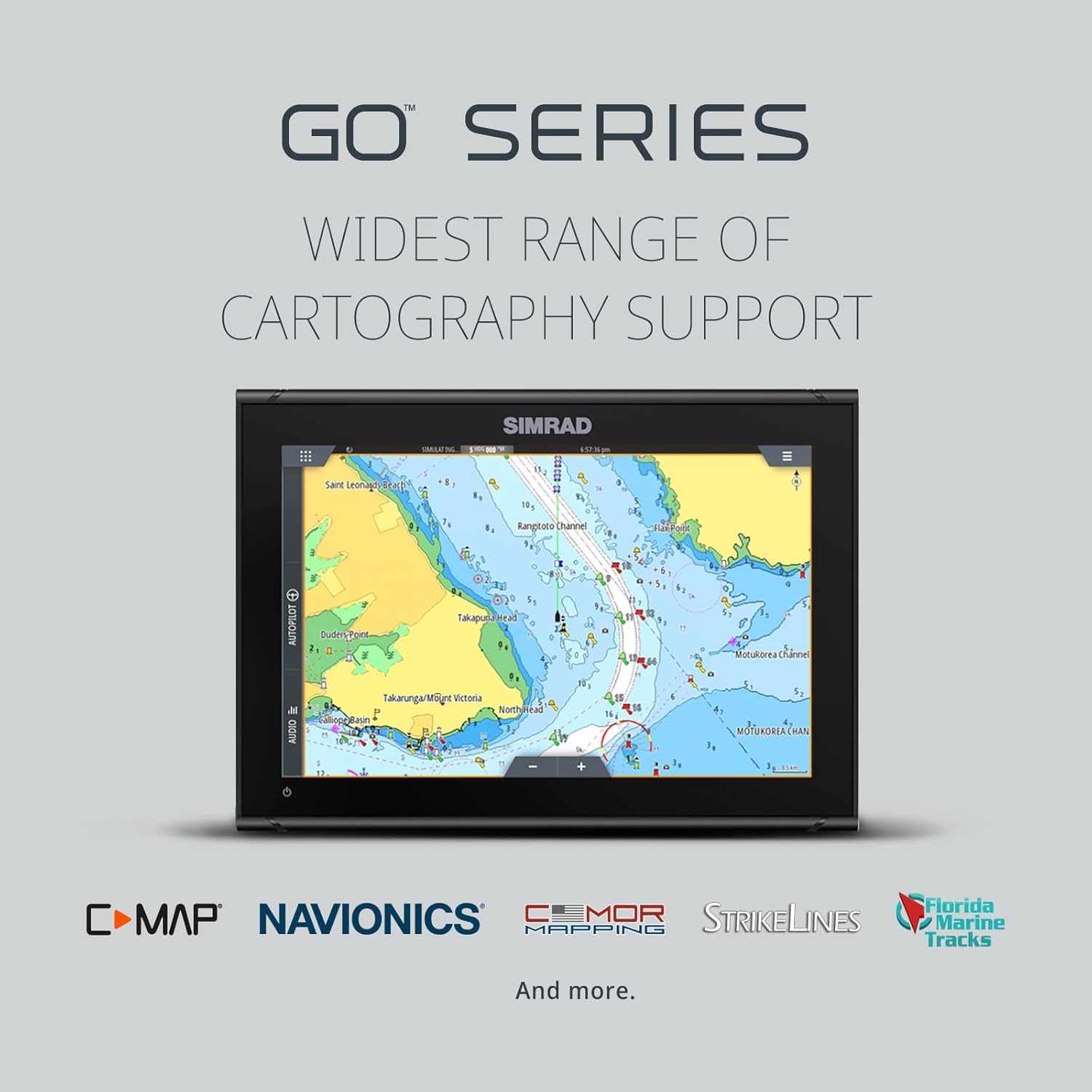
Physically, the GO9 XSE is a fairly standard 9" marine display: about 26.3 x 9 x 18.4 cm and roughly 1.36 kg. On my dash it doesn’t feel tiny, but it’s not some giant helm monster either. The bezels are not ultra‑thin like a tablet, but on a boat I honestly prefer a bit of frame to grab when things get bumpy. It mounts cleanly on the gimbal bracket, and you can also flush‑mount if you want a more integrated look.
The screen itself is the best part of the physical design. It’s bright enough that even in mid‑day sun offshore I could still read the charts and sonar without squinting too much. You’ll get some reflections like any glossy display, but nothing crazy. At night, you absolutely want to turn the brightness down or use night mode, otherwise it will light up the whole cabin. Touch response is close to a decent tablet – not as slick as a new iPad, but a lot better than older marine units that feel laggy.
Button layout is simple because, well, there aren’t many. It’s basically a touch‑first unit. If you hate touchscreens or if you often run in very rough water where tapping accurately is hard, that’s something to think about. For me, the trade‑off was fine – I liked being able to pinch‑zoom on charts and drag around quickly. The home screen with big icons is easy to hit even when the boat is moving.
Overall, I’d call the design practical and modern enough, but not fancy. It looks like proper marine gear, not like a fragile consumer tablet. It takes up some space on the dash, but the 9" size feels like the right balance: big enough to split screen for charts + sonar, small enough to fit on most center consoles or small wheelhouses without a full redesign.
Build quality and how it holds up in a marine environment
Marine electronics live a rough life: heat, sun, salt, vibration. I haven’t owned this unit for years, but I’ve had it long enough to get a sense of the build quality. The casing feels solid, not cheap brittle plastic. The connectors lock in firmly, which is important when the boat is slamming around. I’ve had it in spray and some light rain – no leaks, no fogging under the screen so far.
The suncover that comes with it is actually more important than people think. If you leave any display baking in direct sun all season, it’s going to age fast. With the cover on when the boat is parked, the screen still looks fresh. The brightness hasn’t noticeably faded after a stretch of hot days. I’ve seen cheaper units where the display starts to look washed out quickly; this one still looks sharp.
On the downside, this is still a touchscreen LCD, so it’s never going to be as tough as an old low‑res unit with physical buttons. If you tend to smack gear with rods or tools, or you have kids climbing around the helm, you’ll want to be a bit careful. Also, the gimbal mount is fine, but if you really hammer through chop all the time, I’d consider a more solid flush mount to reduce movement and stress on the bracket.
Compared to similar 9" units I’ve used, I’d rate durability as above average but not bulletproof. The housing and connectors inspire confidence, and the unit doesn’t feel fragile in the hand. Just don’t treat it like a hammer and expect miracles. Regular rinsing with fresh water and using the cover will probably make the difference between a unit that still feels new in a few seasons and one that looks tired.
Navigation & sonar performance: good for weekend use, with room to grow
Performance‑wise, the GO9 XSE does two main jobs out of the box: chartplotter and traditional sonar with CHIRP. On the navigation side, GPS lock was quick and stable for me. The C‑MAP Discover charts are clear, with decent detail for coastal runs and inland stuff. Panning and zooming are smooth – not instant like a high‑end tablet, but fast enough that I wasn’t sitting around waiting for tiles to load. Creating waypoints is literally just a tap, then you can rename them to something that actually means something to you (“reef drift 1”, “bar entrance”, etc.).
On the sonar side, using the included 83/200 kHz transducer, it’s good enough for recreational fishing. I was getting stable depth readings at planing speeds in moderate chop, and it did a decent job of showing bottom hardness and marking fish arches. Is it pro‑level like a big separate sounder with a beefy thru‑hull transducer? No. But for weekend fishing and depth awareness, it gets the job done without drama.
Where the performance could go further is with all the extra modes they mention: ForwardScan, SideScan, DownScan, radar integration. All of that depends on extra hardware. The unit itself is capable, and people who have added solid‑state radar say the integration is straightforward. But if you’re judging just the bundle as sold, you’re mainly looking at regular sonar and charts. In that setup, I’d rate it as strong mid‑range: reliable, clear, and easy to use, but not some ultra‑detailed imaging monster.
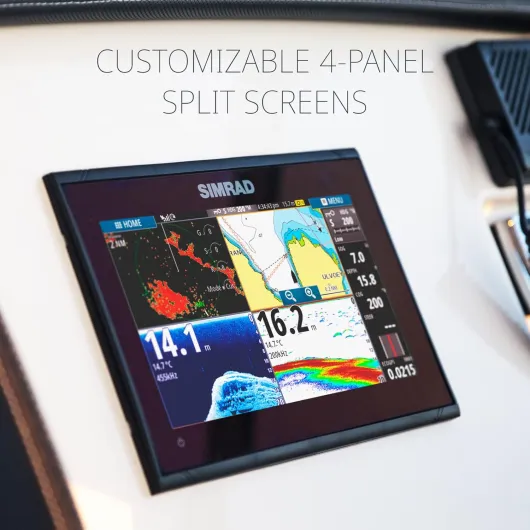
In rough terms, compared to older gear I’ve used from other brands, the GO9 XSE is snappier and easier to read, especially when you split screen. I could comfortably run a 50/50 view of chart and sonar while running along the coast, and the refresh stayed smooth. For my kind of use (inshore + nearshore up to maybe 30–40 miles), I never felt like the unit was struggling or lagging in a way that affected safety or fishing.
What you actually get with the GO9 XSE bundle
The bundle here is the Simrad GO9 XSE – 9" Multifunction Display plus an 83/200 kHz transom‑mount transducer and a C‑MAP Discover chart card. In the box I had: the 9" MFD, the 9‑pin transducer, a suncover, the C‑MAP card (US + Bahamas coastal and inland), the gimbal bracket with knobs, and the power cable. No radar, no radar cable, no NMEA 2000 backbone – those are on you. This matches what the spec sheet says, but the sales wording about radar options can give the impression radar is included. It isn’t.
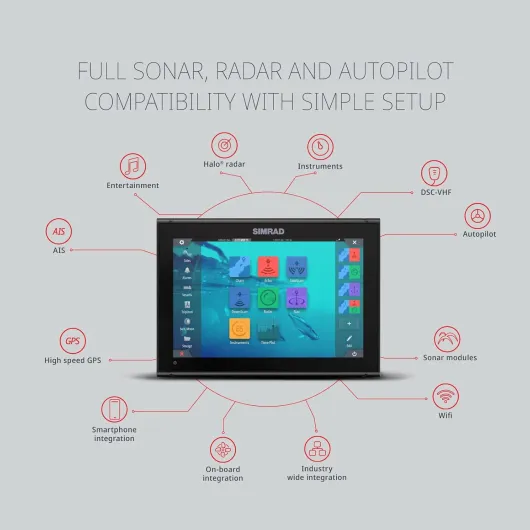
The unit is basically your central screen that can handle: chartplotter, standard sonar, CHIRP, and, if you add the right gear, ForwardScan, SideScan, DownScan, radar, and NMEA 2000 data (engines, autopilot, etc.). Out of the box, though, what you really get is: GPS charts + basic sonar + Wi‑Fi + a nice interface. For a lot of weekend boaters, that’s enough. For more serious setups, it’s a starting point.
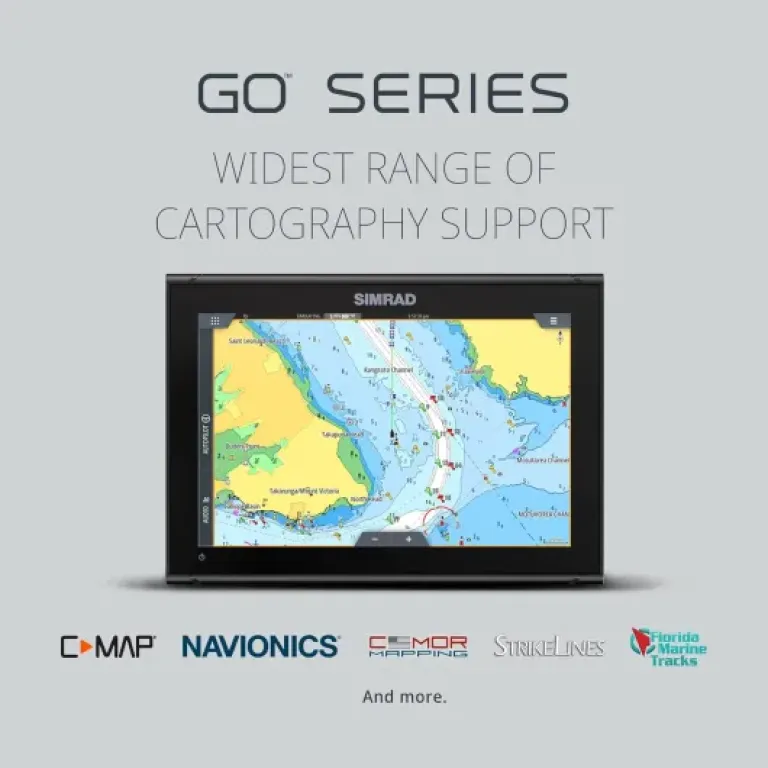
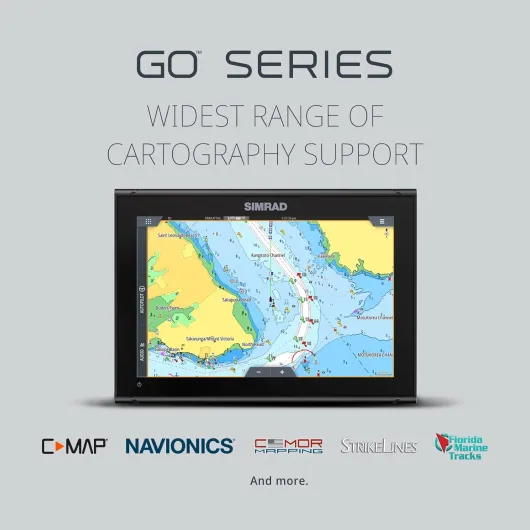
One thing I liked: the preloaded C‑MAP Discover card makes it usable right away for US and Bahamas coastal stuff. I didn’t have to mess around buying charts on day one. But like one Amazon reviewer said, pay attention to card format – the unit uses microSD, and if you get a full‑size SD by mistake or from another bundle, it won’t fit without an adapter. My card was fine, but I can see how someone could get burned here if they don’t check.
So in simple terms, this bundle is not a full electronics suite, it’s a competent 9" screen with a basic transducer and charts that you can grow from. If that’s what you expect, it’s good. If you expect plug‑and‑play radar and all the fancy sonar views out of the box, you’ll be annoyed and probably feel like parts are “missing”, even though they’re technically optional add‑ons.
How well it actually works on the water day to day
Effectiveness for me is simple: does it help me navigate safely and find fish without wasting my time? On that front, the GO9 XSE does its job. On my first few trips, I was able to lay out routes, drop waypoints on reefs and drop‑offs, and then come back to them on later days without any confusion. The menu logic is straightforward; after a weekend of use I barely had to think about where anything was. That matters more than any fancy spec sheet.
The integrated Wi‑Fi is also more useful than I expected. I mirrored the screen to my phone using the Simrad app when I was away from the helm, which is handy if you’re at the bow and still want to see depth or your position. Software and chart updates over Wi‑Fi are a nice touch too – not glamorous, but better than juggling cards and a laptop. It’s not perfect, sometimes the connection feels a bit clunky, but once set up it generally works.
Where it’s less impressive is when you push past basic use. The included transducer is fine for simple depth and general fish marking, but if you want crisp imaging, tight target separation, or serious bottom detail in deeper water, you’ll eventually want to upgrade the transducer and maybe add more sonar modules. Same story with radar: the port is there, but until you buy the radar dome and the proper cable, that “radar” line in the marketing is just a promise, not a feature you can actually use.
In everyday use though, I’d say the GO9 XSE is effective for the average boater: easy to read, quick to operate, and it reduces the mental load when you’re running in busy areas or unfamiliar channels. It’s not perfect and it’s not the top of the food chain, but if your main goal is not getting lost and having a decent idea of what’s under the boat, it does that reliably.
Pros
- Bright 9" touchscreen with an interface that’s easy to learn and use
- Includes basic 83/200 kHz transducer and C-MAP Discover charts for US/Bahamas, so you’re usable out of the box
- NMEA 2000 and radar-ready, with Wi-Fi for updates and screen mirroring
Cons
- Radar and advanced sonar features require extra hardware and cables that add a lot to the total cost
- Included transducer is decent but not great for advanced or deep-water sonar work
- Potential confusion around chart card format and what exactly is included in the box
Conclusion
Editor's rating
Overall, the Simrad GO9 XSE with the 83/200 transducer and C‑MAP Discover card is a solid mid‑range combo for someone who wants a clean, touchscreen chartplotter and a straightforward fish finder in one unit. The main strengths are the bright 9" display, the intuitive interface, and the fact that you can add radar and NMEA 2000 gear later if you feel like upgrading your boat’s electronics over time.
It’s not perfect. The bundle can be a bit misleading if you don’t read carefully: radar is an option, not included, and you might run into card format or cable surprises if you assume everything is there. The included transducer is fine for casual fishing, but not for hardcore sonar nerds chasing the best target separation and imaging. Still, for normal coastal cruising and weekend fishing, it gets the job done without being a pain to use.
I’d say this unit is well suited for small to mid‑size boat owners who want a modern touchscreen plotter, plan to fish regularly but not professionally, and like the idea of building out a NMEA 2000 network and maybe radar later. If you’re on a tight budget, don’t care about networking, or just need basic GPS + depth, a cheaper, simpler unit will make more sense. If you want top‑tier sonar or a true all‑in package with radar included, you’ll need to look higher up the range – and be ready to pay for it.