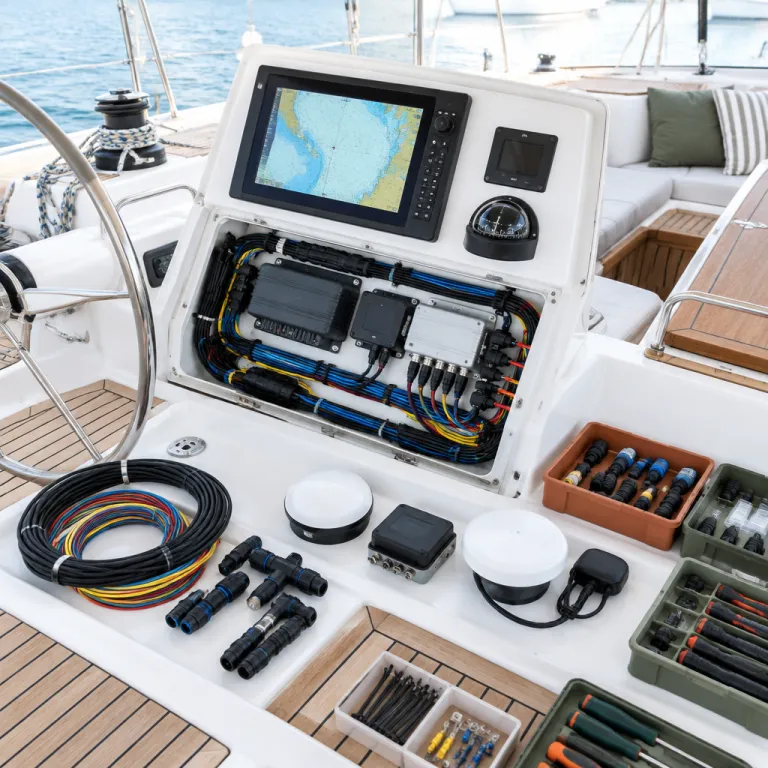
Why yacht refit project management is now a tech discipline
Yacht refit project management has shifted from paint and fabrics to integrated technology. A modern refit project now treats every digital system as a core part of the yacht, not as an afterthought bolted on during the last week in the yard. Effective management of these upgrades protects performance, safety, and long term value.
For any owner planning a technology focused refit, the first step is defining the project scope in terms of systems rather than gadgets. A disciplined project manager will map navigation, communication, power management, entertainment, monitoring, and cyber security as interconnected marine systems that must work together under real sea conditions. This approach allows the management team to align yacht construction standards, classification societies requirements, and practical crew workflows before any hardware is ordered.
On a large superyacht, the vessel size multiplies the complexity of every refit project. The project management challenge is not only technical ; it is also about cost control, schedule, and change order discipline across several projects running in parallel. When yacht management and the shipyard agree early on a clear matrix of responsibilities, the yard period becomes a controlled environment instead of a chaotic race against time.
Planning tech upgrades around yard period, vessel size, and real usage
Serious yacht refit project management starts with how the yacht is actually used, not with a catalogue of electronics. A project manager who understands the cruising program, crew rotation, and service patterns will design a refit project that fits the real yard period available between seasons. This planning discipline is even more critical for a superyacht project where vessel size and guest expectations leave no margin for extended downtime.
For a 35 metre yacht, a management refit focused on navigation and power systems might be scheduled in a single yard period, while a 70 metre superyacht refit often requires phased projects over several years. The manager owner and the owner representative should agree on which work can be done alongside normal operations and which tasks demand a full haul out at a major shipyard. Smart yacht management uses digital maintenance logs and performance data to build a long term upgrade roadmap instead of reacting to failures.
Tech upgrades must also respect the constraints of marine environments and classification societies rules. When planning new sonar, fish finding, or depth mapping equipment, for example, the project management team should evaluate how hull penetrations, power draw, and data cabling will affect existing systems. Tools such as a castable GPS sonar and portable depth finder, as reviewed in this practical sonar and depth finder test, illustrate how even small devices can influence the broader integration strategy.
Building the right management team for complex refits
Technology heavy yacht refit project management lives or dies with the quality of the management team. On a serious refit project, the project manager, captain, chief engineer, and owner representative must operate as a single decision making unit. Their work is to translate the owner vision into a realistic project that the shipyard can execute without uncontrolled change orders.
For a superyacht refit, naval architects and specialist marine integrators should be involved from the earliest project phase. They will analyse vessel size, weight distribution, power reserves, and cooling capacity before approving any new systems, especially when the refit includes large entertainment networks or hybrid propulsion. Classification societies surveyors then validate that the yacht construction standards remain intact after the change, which protects both safety and resale value.
Professional yards such as monaco marine have built a reputation on structured project management and transparent communication. Their approach to yacht refit combines detailed planning, clear documentation of every change order, and rigorous testing before redelivery. Owners who want a deeper dive into this process can study advanced yacht refit management for smarter tech upgrades to understand how top level managers align cost, schedule, and technical ambition.
Controlling cost, change orders, and scope creep in tech upgrades
Cost control in yacht refit project management depends on ruthless clarity about scope. Every project manager knows that unplanned change will appear once the yacht is opened up and hidden issues are exposed. The difference between a controlled refit project and a financial disaster lies in how change orders are handled.
Before the yacht enters the yard, the management team should define a baseline specification that includes clear allowances for cable routes, structural supports, and software integration work. When the shipyard proposes a change order, the project manager and owner representative must evaluate not only the immediate cost but also the impact on schedule, classification societies compliance, and long term maintenance. On a superyacht project, even a small modification to bridge electronics can trigger cascading change orders across power, cooling, and network systems.
Transparent reporting is essential for trust between the manager owner and the yard. Weekly progress reports that separate approved work, pending decisions, and potential risks allow the owner to make informed choices instead of reacting to surprises. This disciplined approach to project management also protects the relationship with the shipyard, because both sides can explore options calmly rather than arguing under time pressure at the end of the yard period.
From yacht construction to refits : integrating systems for the long term
Many of the best technology upgrades in yacht refit project management borrow methods from new build yacht construction. In a new project, naval architects, interior designers, and marine engineers work together from day one to define cable trays, equipment rooms, and cooling paths. Applying the same integrated thinking to refits avoids the common trap of stacking new systems on top of old ones until the yacht becomes unserviceable.
When planning refits on a large vessel size, the management team should treat the yacht as a living platform that will host several generations of technology. That means reserving space, power, and network capacity for future projects rather than filling every rack and breaker with the current upgrade. A disciplined management refit strategy will also standardise equipment families where possible, so that service and spare parts remain manageable for the crew.
Owners who care about long term enjoyment should align tech upgrades with small but consistent maintenance routines. A well structured program of seasonal checks, as outlined in this guide to small maintenance routines that preserve seasonal enjoyment, keeps new systems reliable and reduces emergency yard visits. Over time, this approach turns yacht management into a continuous improvement cycle rather than a series of disruptive and expensive refits.
Practical checklists for owners and managers before signing a refit contract
Before any yacht refit project management effort moves from idea to contract, both owner and manager should work through a structured checklist. The first section should confirm that every system affected by the refit project has been identified, from main switchboards to Wi Fi access points. This prevents the common situation where hidden dependencies appear only after the yard has started to open ceilings and bulkheads.
The second section of the checklist should focus on roles, responsibilities, and communication. A clear matrix that defines who approves technical changes, who controls cost, and who liaises with classification societies will reduce friction once work begins. On a superyacht refit, this matrix usually includes the project manager, captain, chief engineer, owner representative, and a senior contact at the shipyard or yard group such as monaco marine.
Finally, the checklist should address testing, training, and documentation before the yacht leaves the yard. The management team must ensure that every new system has been commissioned under realistic loads, that crew have received hands on training, and that updated drawings are approved by naval architects where structural or stability aspects have changed. When these steps are respected, owners can enjoy the benefits of advanced technology without sacrificing reliability, safety, or the elegance that defines a well managed yacht.
Key figures that shape modern yacht refit project management
- According to the International Council of Marine Industry Associations, refit and repair activities represent more than 40 % of total lifecycle spending for many large yachts, which means project management quality has as much financial impact as the original yacht construction.
- Data from major European shipyards indicate that technology upgrades now account for roughly one third of superyacht refit budgets, a share that has grown steadily as owners prioritise connectivity, entertainment, and energy efficiency.
- Classification societies such as Lloyd’s Register and Bureau Veritas report that a significant portion of survey findings during yard periods relate to outdated or poorly integrated electronic systems, underlining the need for structured management refit strategies.
- Industry surveys of project managers show that uncontrolled change orders can increase the final cost of a refit project by 15 to 25 %, especially when scope changes are approved late in the yard period.
- Operational data from fleet yacht management companies suggest that well planned tech refits can reduce unplanned downtime by up to 30 %, which directly improves charter revenue and owner satisfaction.
FAQ : yacht refit project management for tech upgrades
How early should a project manager be involved in a tech focused refit ?
A project manager should be engaged as soon as the owner starts defining the refit project goals, ideally six to twelve months before the planned yard period. Early involvement allows proper surveys, budget modelling, and coordination with naval architects and classification societies. Waiting until the contract stage usually leads to rushed decisions and more change orders.
What is the main difference between a superyacht refit and a smaller yacht refit ?
The core principles of yacht refit project management are similar, but vessel size multiplies complexity. A superyacht project involves more systems, more stakeholders, and stricter regulatory oversight, so the management team must be larger and more specialised. Smaller yachts can often complete focused projects in a single yard period, while superyachts usually require phased refits over several seasons.
How can owners control cost during complex technology upgrades ?
Owners control cost by insisting on a detailed technical specification, a realistic schedule, and a clear process for approving any change order. Regular progress meetings with the project manager, captain, and shipyard help identify risks early, when solutions are still affordable. Transparent reporting on work completed, variations, and remaining contingency protects both budget and relationships.
Why are classification societies and naval architects involved in many refits ?
Classification societies and naval architects ensure that the yacht remains safe, compliant, and structurally sound after modifications. When tech upgrades affect power distribution, weight, or hull penetrations, their review is essential to maintain class and flag approvals. Their input also supports resale value, because buyers and surveyors trust documented, professionally engineered changes.
What should a good yard period handover include after a tech refit ?
A professional handover includes full system testing under realistic loads, updated drawings and manuals, and structured crew training sessions. The project manager should verify that all punch list items are documented and that warranty terms for new systems are clearly recorded. This final discipline turns a completed refit project into a reliable, enjoyable upgrade rather than a source of post yard frustration.