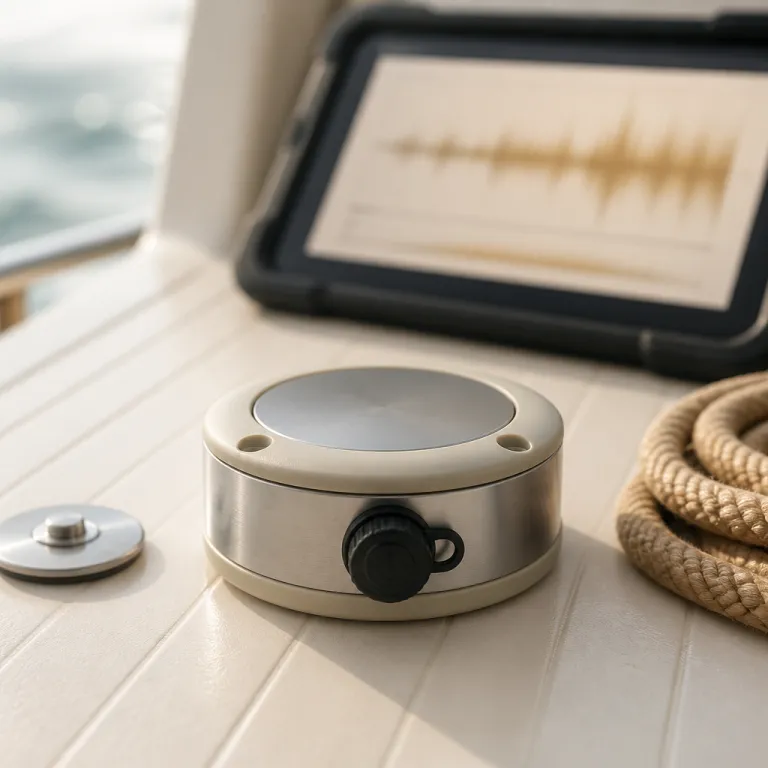
From calendar service to predictive maintenance on a cruising yacht
Most owners still run yacht maintenance on a calendar and a prayer. A predictive maintenance yacht philosophy replaces that habit with condition-based decisions that respect the actual state of every critical marine component. Once you have lived through a midnight engine room alarm in a tight maritime channel, you understand why predictive thinking matters more than another coat of varnish.
Traditional maintenance schedules were written for a commercial ship fleet that ran fixed routes and hours. Your 24 to 40 metre cruising yacht lives a different operational life, with long idle periods, short hops between harbours, and occasional full-throttle runs that stress the engine and auxiliary systems in very different ways. Condition-based maintenance for 30m yachts and similar vessels uses maintenance data and real-time monitoring to adapt service tasks to that unique pattern, cutting maintenance costs while raising safety margins.
At the core sits a web of sensors feeding data-driven platforms rather than a dusty logbook. Oil analysis, coolant chemistry, exhaust temperature and vibration signatures are tracked continuously, then interpreted by maintenance software or shore-based engineers who understand what each deviation means for your yacht and its systems. The result is a shift from time-consuming guesswork to targeted work orders that address a looming failure before it strands you off Porto Cervo or in a crowded Fort Lauderdale inlet.
What your engines, stabilisers and auxiliaries are really telling you
Walk into a modern engine room on a Sanlorenzo or Feadship and you are stepping into a data centre in overalls. Every major engine, gearbox and generator is wired to software marine platforms that collect pressures, temperatures, vibration and fuel burn in real time across the whole fleet of components. On a predictive maintenance yacht, that stream of maintenance data is not decoration; it is the heartbeat of the vessel.
Oil analysis looks for microscopic metal particles that signal wear long before a bearing failure, while coolant chemistry flags internal corrosion that no visual inspection could catch in time. Vibration sensors on the engine and shaft line build a baseline of normal behaviour, then alert your management team when a propeller knock, misalignment or mount degradation pushes the system outside its actual condition envelope. This is predictive maintenance in its purest form, turning invisible drift into a clear maintenance task instead of a catastrophic loss of propulsion and delivering measurable vibration monitoring ROI over several seasons.
Gyroscopic stabilisation and motion control systems from builders such as Seakeeper or Quantum now monitor their own health with the same obsessive focus. They track hydraulic pressures, gyro spin speeds and control systems temperatures, then send shore-based alerts when a seal, pump or controller approaches a defined condition limit. That same predictive logic is starting to appear in green retrofit projects such as the methanol-to-hydrogen conversion described in the E1 Marine project (see E1 Series technical notes, 2022), where complex hybrid systems demand software that can anticipate rather than merely react. In early trials on a 2023 foiling race support vessel reported by the project team, for example, condition-based alarms on cooling pumps cut unplanned downtime during the season and provided a template for future hybrid yacht refits.
Reading the dashboards without an engineering degree
Many owners hesitate to embrace predictive maintenance because the screens look like a flight deck. The good news is that the best software marine interfaces now translate dense maintenance data into simple traffic light views that any experienced yacht owner or captain can read at a glance. Green means the condition of that engine or stabiliser is within its expected band, amber means plan a yard visit, and red means you are flirting with failure.
Sample dashboard view: a main engine tile shows live load, oil pressure and coolant temperature, with a vibration trend graph underneath and a simple “Next service in 120 engine hours or 45 days” note. Adjacent tiles summarise stabiliser health, generator run hours and fuel polishing status so that, on one predictive maintenance screen, the captain can see the whole technical picture.
On a predictive maintenance yacht, the captain’s tablet becomes the central management console for the whole technical fleet on board. Integrated maintenance software aggregates data from engines, generators, watermakers, air conditioning systems and even audio electronics such as a marine stereo system, then turns it into prioritised work orders and spare parts lists. A well-designed platform will also sync with shore-based inventory management so that the right filters, seals and sensors are waiting in the next port rather than turning every small repair into a time-consuming scavenger hunt.
Artificial intelligence is slowly entering this picture, but in a grounded, practical way rather than as marketing gloss. Machine learning models trained on fleet-wide maintenance data from hundreds of similar yachts can suggest optimal intervals for specific maintenance tasks, or flag unusual patterns that a human might miss during a busy charter week. When paired with clear dashboards and disciplined operational routines, that artificial intelligence becomes another experienced crew member, not a black box that undermines regulatory compliance or the captain’s authority.
The cost equation on a 20 to 40 metre cruising yacht
Owners rarely need convincing that safety matters; they need clarity on costs. The shift from calendar-based servicing to condition-based yacht maintenance changes the shape of your maintenance costs curve over a five-year ownership cycle. You spend more early on sensors, software and setup, then less on emergency callouts, wasted yard time and premature overhauls as the predictive model matures.
Consider a 30 metre planing yacht running twin MTU or Caterpillar engines with a busy Mediterranean season. Under a traditional schedule, you might haul out every year, change fluids and many spare parts on a fixed timetable, and still face an unexpected turbocharger failure that ruins a charter week. With predictive maintenance and data-driven monitoring, oil and vibration analysis can extend some intervals safely while pulling forward others, aligning work orders with natural pauses in your cruising calendar and reducing the risk of a mid-season breakdown.
There is also a subtle but real impact on regulatory requirements and long-term asset value. Class societies and flag states increasingly accept predictive maintenance records as evidence of good maritime practice, provided your maintenance software logs are complete and your inventory management is disciplined. Guidance from organisations such as DNV and Lloyd’s Register on condition-based maintenance programmes now references digital trend data and structured work orders as part of a compliant regime. Over time, a well-documented predictive maintenance yacht with a clean history of condition-based interventions will present as a lower risk ship to insurers and buyers, which can translate into better terms and a stronger resale narrative.
Limits, blind spots and practical first steps for existing yachts
No amount of predictive software will replace a chief engineer’s nose for trouble. Some failures remain inherently sudden, such as a foreign object strike on a propeller or a lightning hit on navigation systems, and only regular physical inspection can protect you there. Even the best platforms struggle when maintenance data is incomplete, sensors are poorly calibrated, or crew treat the system as a box-ticking exercise rather than a living part of yacht management.
Hull integrity, deck hardware, rigging on sailing yachts and cosmetic finishes still rely heavily on human eyes and hands. A predictive maintenance yacht programme should therefore sit alongside, not instead of, traditional rounds, log entries and tactile checks of seacocks, hoses and steering gear. Simple routines such as frequent gentle propeller cleaning between haul outs, as outlined in specialist propeller care guidance, remain essential to keep fuel burn honest and to give context to the numbers on your screens.
For an existing 25 to 35 metre yacht, the smartest first step is usually a focused retrofit rather than a full systems overhaul. Start with engine room sensors, a robust maintenance software package that can handle work orders and regulatory compliance, and a clear division of responsibilities between onboard crew and shore-based support. As a practical checklist, owners typically begin with oil sampling kits, exhaust temperature probes, shaft line vibration sensors and a centralised digital logbook, a package that often falls in the EUR 25,000 to 60,000 range for a 30m vessel according to 2023 shipyard quotations and can pay back within three to five seasons through avoided breakdowns and optimised yard time. From there, expand into stabilisers, generators and hotel systems, always tying new data streams back to concrete maintenance tasks so the technology serves the yacht, not the other way round, because in the end it is not the length overall, but the wake she leaves.
FAQ
How is predictive maintenance different from standard yacht servicing ?
Standard yacht servicing follows a fixed calendar or hour-based schedule, changing fluids and parts at pre-set intervals regardless of their actual condition. Predictive maintenance uses real-time data from sensors, oil and coolant analysis, and vibration monitoring to assess the true state of each component before deciding which maintenance tasks are necessary. This condition-based approach reduces unnecessary work while catching emerging failures earlier, improving both safety and cost control.
What systems benefit most from predictive maintenance on a cruising yacht ?
The biggest gains usually come from propulsion engines, gearboxes, generators and stabilisation systems, because their failures are both disruptive and expensive. These systems respond well to data-driven monitoring of temperatures, pressures, vibration and fluid quality, which can reveal wear patterns months before a visible symptom appears. Over time, extending predictive logic to hotel loads such as air conditioning, watermakers and key electrical systems further stabilises operational reliability for long passages.
Do I need shore based support to run a predictive maintenance programme ?
Shore-based support is not mandatory, but it significantly enhances the value of a predictive maintenance yacht setup. Technical managers or service partners can interpret complex maintenance data trends across a wider fleet, advise on optimal intervention timing, and coordinate spare parts and yard slots more efficiently. For owners without a full-time engineer, this external expertise often turns raw data into actionable, well-prioritised work orders.
Will predictive maintenance help with class and regulatory compliance ?
When implemented correctly, predictive maintenance can support class and flag state regulatory compliance by providing detailed, time-stamped records of inspections, interventions and component condition. Many surveyors now accept digital maintenance software logs as evidence of good practice, provided they are complete and consistent with onboard records. However, you still need to meet all formal survey intervals and documentation requirements, as predictive tools complement rather than replace statutory inspections.
Is predictive maintenance worth it for a smaller yacht under 20 metres ?
For smaller yachts, the full suite of fleet-wide platforms and artificial intelligence may be excessive, but selective predictive tools can still pay off. Simple oil analysis, basic engine monitoring and a structured digital logbook reduce time-consuming guesswork and help avoid peak season breakdowns. The decision comes down to how intensively you use the yacht, how remote your cruising grounds are, and how much you value turning surprise failures into planned service stops.