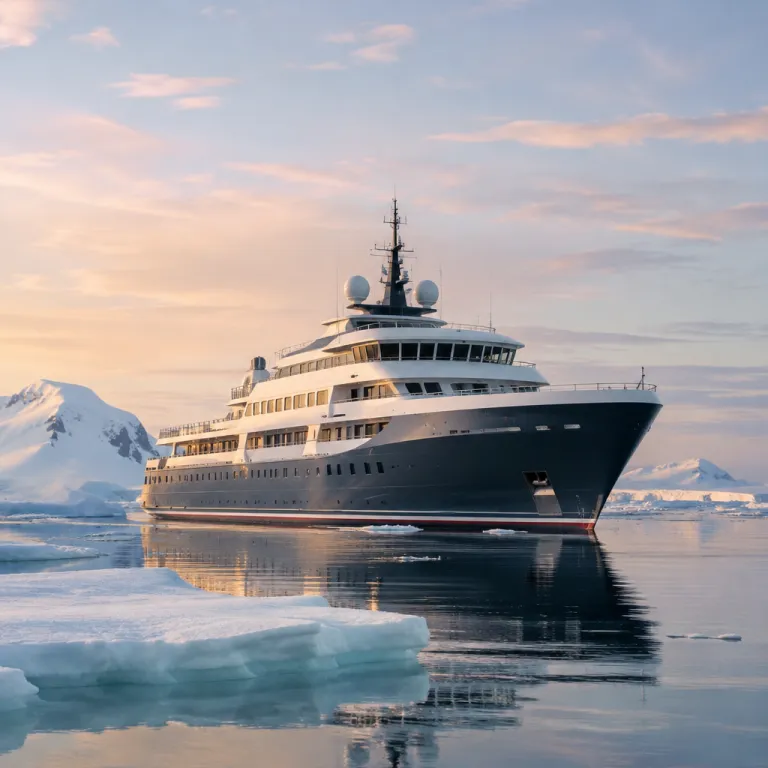
Why Antarctica is the natural next step for explorer yachts
When the last sundowner fades over Porto Cervo, the real season for an Antarctica yacht charter expedition is only beginning. As the Mediterranean marinas empty, a small but growing fleet of expedition yachts points south into the Southern Ocean, built precisely to turn the white continent into serious cruising ground rather than distant backdrop. For yacht passionate travellers used to polished bays and beach clubs, this shift from the Côte d’Azur to the Antarctic Peninsula feels radical yet strangely logical.
The Antarctic environment rewards yachts that are more ship than showpiece, with Ice Class hulls, deep fuel reserves and technical spaces designed for self sufficiency far from any island marina. A true luxury yacht for an Antarctic expedition carries enclosed tenders, Zodiacs and sometimes a helicopter, because the best wildlife encounters and the most awe inspiring ice fields sit beyond any charted anchorage. This is explorer territory where a private yacht is judged less by her beach club and more by how confidently her crew can navigate brash ice in the Gerlache Strait or hold station off the South Shetland Islands in a katabatic squall.
For guests used to warm water charters, the first surprise is how intensely alive Antarctica feels once you explore it at sea level from a small yacht. The continent’s scale, the southern light and the constant movement of ice and wildlife make even a short charter Antarctica itinerary feel like three voyages layered together. You step off the passerelle in Ushuaia or Punta Arenas and within days the familiar grammar of Mediterranean yacht charters is replaced by a new language of penguin colonies, elephant seals and wind patterns funneling down from the Antarctic Plateau.
Timing your antarctic expedition and choosing your route south
Planning an Antarctica yacht charter expedition starts with a blunt question; what do you most want to see when you explore the southern continent by yacht. Early season (November to early December) brings pristine ice, colder air and dramatic snow cover, while high summer from late December through February offers peak wildlife activity, milder temperatures and long, soft evenings that stretch almost without end. Late season, by contrast, is when whales dominate the conversation, sunsets deepen and the Southern Ocean feels heavy with life and history.
Most private yacht itineraries focus on the Antarctic Peninsula, the Gerlache Strait and the nearby South Shetland Islands, because this region combines relatively sheltered waters with dense wildlife and accessible landing sites. A typical 10–14 day Antarctic expedition aboard a luxury yacht might thread from Deception Island’s flooded caldera to the penguin rookeries near Port Lockroy, then south along the peninsula where ice cliffs calve beside the yacht’s hull. Each of these islands and anchorages offers different moods; one day you watch elephant seals hauled out on a black sand beach, the next you drift silently among sculpted icebergs that dwarf even the largest expedition yachts.
The Drake Passage is the other major planning fork for yacht charters heading south, and it deserves respect rather than bravado. Some guests relish the full sea crossing on a robust yacht charter, treating the two to three days in open water as a rite of passage that frames the entire Antarctica yacht experience. Others prefer fly the Drake style logistics, joining their private yacht or expedition yachts closer to the Antarctic Peninsula after a charter flight from the South American south, and this is where a specialist operator with strong IAATO aligned practices becomes essential; you want an équipe that treats safety, permits and environmental impact as non negotiable, not as fine print.
For those used to island hopping in the Bahamas or the Dalmatian Coast, it helps to read article style planning guides before committing to a southern season, just as you might consult a detailed customs guide for a Bahamas charter. The same disciplined preparation that smooths a Caribbean clearance will serve you well when your yacht charters south into Antarctic waters with complex permitting and strict landing limits. In both cases, the difference between a good charter and a great one lies in how much invisible work happens months before you ever step aboard.
Chartering versus taking your own yacht into the white continent
Every season, a few owners look at their steel hulled yachts and wonder whether to point them south for their own Antarctica yacht charter expedition. The honest answer is that taking your own yacht into Antarctica is possible only above a very high threshold of capability, preparation and risk tolerance. For most yacht passionate travellers, a well chosen private yacht charter in the southern hemisphere delivers the same awe inspiring experience with far less operational burden.
A true Antarctic capable yacht needs more than a reassuring profile and a long range fuel figure on the brochure. You want proven Ice Class or at least ice strengthened construction, redundant systems, serious heating and ventilation, and a crew that has already completed multiple Antarctic expedition seasons with ice pilots, naturalists and medical support embedded. Expedition yachts that spend their lives in the Southern Ocean also carry specialist gear; from cold water survival suits for guests to reinforced tenders that can nose into brash ice without flinching, every detail reflects hard earned polar experience rather than marketing flair.
Charter Antarctica specialists will walk you through the permitting maze, IAATO aligned landing protocols and the subtle ethics of low impact cruising on the white continent, while a private owner must assemble that expertise piece by piece. This is where the distinction between yachts charter operations and casual seasonal charters matters, because Antarctic waters punish improvisation. If you are used to relaxed shoulder season cruising along the Dalmatian Coast, as in this in depth look at a Croatian cruising week, think of Antarctica as the opposite end of the spectrum; every landing, every route choice and every wildlife encounter is planned with military precision.
For many, the sweet spot is to book a luxury yacht that is operated as part of a small, tightly run fleet of expedition yachts charter programs, where the same captains, guides and engineers return south year after year. These teams know how to balance guest comfort with the realities of the Southern Ocean, and they understand when to divert from the Antarctic Peninsula towards the South Shetland Islands or Deception Island because the ice or wind dictates it. If you enjoy seeking out lesser known harbours such as those around the Fayerweather Yacht Club in Bridgeport, you will appreciate how these polar crews treat each bay and island as a character in its own right, not just a waypoint.
Life on board during an Antarctica yacht charter expedition
Daily life on an Antarctica yacht charter expedition feels very different from a languid week at anchor off St Barths. The rhythm is layered and deliberate; early wake up calls when the light is soft, detailed briefings over coffee, then rapid transitions into Zodiacs as the crew watches the ice and weather windows. Guests quickly learn that the most memorable wildlife encounters and the most intimate moments with Antarctic ice often happen in short, intense bursts between long, contemplative stretches under way.
A typical day near the Antarctic Peninsula might start with a landing on a small island where gentoo penguins shuffle past your boots and Weddell seals sleep on the snow, followed by a slow cruise through the Gerlache Strait as the yacht threads between bergs. After lunch, you might explore a different island by Zodiac, circling cliffs where elephant seals bellow and skuas patrol the sky, then return to the warmth of the luxury yacht for hot drinks and a debrief on the day’s sightings. Evening brings lectures on the history of Antarctic exploration, quiet time in the observation lounge and perhaps a detour towards the South Shetland Islands or Deception Island if the captain senses a shift in the Southern Ocean swell.
Cabin life on a private yacht in Antarctica is less about marble and more about smart, warm design that lets you watch the white continent slide past without ever feeling cut off from the elements. Good charters provide layered clothing systems, drying rooms and thoughtful touches like heated mudrooms, because nothing kills the magic of an Antarctic expedition faster than shivering in damp gear between landings. When the Mediterranean sleeps and the harbours of Europe feel distant, this is the season when the ice wakes and reminds you that what matters is not the length overall, but the wake she leaves.
FAQ
How long should an Antarctica yacht charter expedition last for first time guests ?
For most first time guests, an Antarctica yacht charter expedition of 10 to 14 days in Antarctica itself strikes the right balance between depth and comfort. This duration allows time to cross or fly over the Drake Passage, explore key areas such as the Antarctic Peninsula, the Gerlache Strait and the South Shetland Islands, and still build in weather flexibility. Shorter trips can feel rushed, while significantly longer charters suit only those who already know they enjoy extended expedition style cruising.
What type of yacht is best suited to antarctic waters and the Southern Ocean ?
The best yachts for Antarctic waters are purpose built expedition yachts with Ice Class or ice strengthened hulls, long range fuel capacity and robust heating and ventilation systems. These vessels usually carry multiple tenders, Zodiacs and sometimes helicopters to reach landing sites and wildlife rich areas that are inaccessible to larger ships. A strong, experienced crew with prior Antarctic expedition seasons behind them is just as critical as the yacht’s technical specification.
Is it better to charter antarctica or join a larger expedition cruise ship ?
Chartering a private yacht in Antarctica offers far greater flexibility, intimacy and control over your daily schedule than joining a larger expedition cruise ship. On a private yacht charter, guest numbers are low, landings can be tailored to your interests and the crew can adjust routes quickly in response to ice, weather or wildlife opportunities. Larger ships can be more cost effective per person, but they operate on fixed itineraries with stricter landing rotations and less personalised experiences.
How rough is the Drake Passage on an Antarctica yacht charter expedition ?
The Drake Passage can range from relatively calm conditions to very rough seas, and even robust yachts feel the motion when crossing this stretch of the Southern Ocean. Modern expedition yachts are designed to handle these conditions safely, and experienced captains time their crossings to take advantage of the best available weather windows. Travellers who are concerned about seasickness can consider fly the Drake style logistics, joining their yacht closer to the Antarctic Peninsula after a charter flight from South America.
What environmental considerations should guests keep in mind when they explore antarctica by yacht ?
Guests should choose operators that align with IAATO guidelines, limit group sizes on landings and follow strict biosecurity measures to protect Antarctic wildlife and habitats. On board, simple actions such as minimising waste, respecting crew briefings on wildlife approach distances and supporting scientific or conservation initiatives connected to the voyage all help reduce impact. Responsible yacht charters treat the white continent as a privilege, not a playground, and guests share that responsibility every time they step ashore.