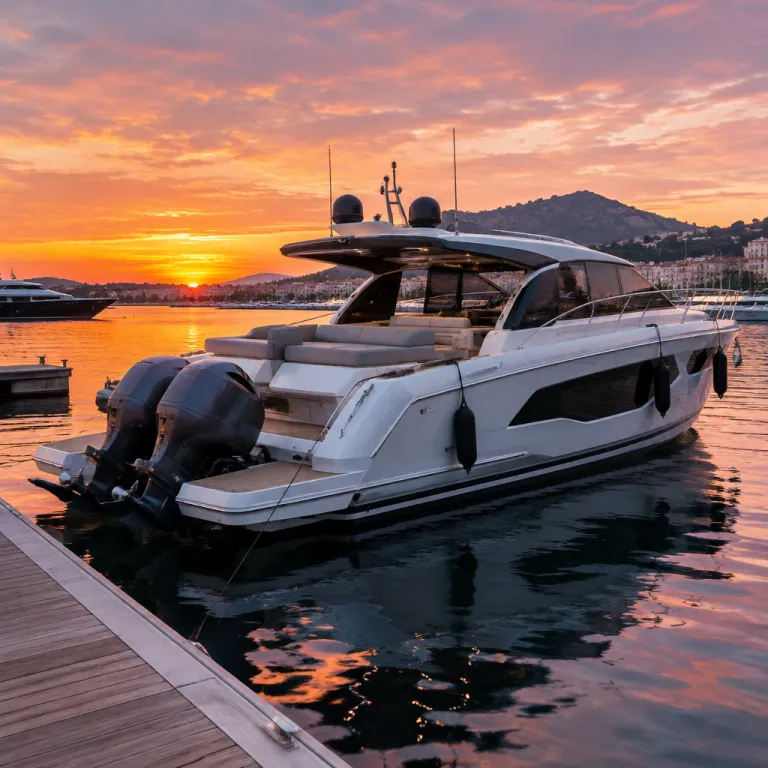
How Invictus yacht cost is structured from shipyard to sea
Understanding Invictus yacht cost starts with how each yacht is conceived and built. The shipyard works from a precise brief that balances length, beam and draft, overall dimensions, and the number of cabins to match the expectations of demanding guests. Every decision at this stage, from the choice of naval architect to the motor package, locks in a long-term price trajectory.
For Invictus models between 10 and 15 m in length, the base price usually reflects a standard deck layout, a defined number of guest cabins, and a simple crew cabin arrangement. Once you request extra accommodation for guests, such as a twin Pullman berth or a double/twin configuration in a VIP cabin, the cost rises quickly because it affects structural bulkheads and interior design. The more complex the accommodation plan for guests, the more hours of skilled labour are required, and that labour is a major driver of Invictus yacht cost.
Performance choices also shape the initial investment in ways many new owners underestimate. Opting for higher top speed, or a higher continuous cruising speed (knots), demands more powerful motors, stronger gearboxes, and often upgraded stabilizers to keep the yacht comfortable at speed. These upgrades add weight, which can require adjustments to length/beam ratios and sometimes to the overall dimensions, again feeding back into both build cost and long-term fuel consumption.
Design, customization, and how value reshapes real ownership costs
Invictus has built its reputation on refined exterior design and carefully detailed interiors, and that aesthetic has a direct impact on Invictus yacht cost. When a naval architect and interior designer collaborate on a bespoke layout, every non-standard choice, from custom beach club furniture to unique deck materials, adds design hours and specialized fabrication. Those elements can make a relatively compact yacht feel like a larger class of yachts, but they also move the final price well beyond the base list.
Owners often ask whether heavy customization will hold value when the yacht is resold after several years of use. Market data shows that tasteful upgrades which improve accommodation for guests, such as reconfigured guest cabins or better crew cabin ergonomics, tend to support resale price, while highly personal décor can narrow the buyer pool. A detailed analysis of how Invictus yacht value reshapes real ownership costs is explored in depth in this guide on Invictus value and long term cost of ownership, which many brokers now use when advising first-time buyers.
From a running cost perspective, design choices that reduce weight and improve hull efficiency can lower fuel burn at typical cruising speed, especially on routes such as the Italian coast to Malta. A lighter yacht with an efficient length/beam ratio and well-tuned stabilizers can maintain comfortable cruising at fewer knots, which reduces both fuel bills and engine wear. Over a decade, that difference in speed (knots) and fuel use can offset a meaningful portion of the initial Invictus yacht cost, particularly for owners who log many cruising days each season.
Dimensions, performance, and the hidden impact on annual budgets
The physical length of an Invictus yacht, including overall length, beam and draft, and height, quietly dictates many recurring expenses. Marina fees are usually calculated per metre of length, so stepping up from a 12 m yacht to a 16 m model can increase annual berthing cost by 30 to 40 percent in popular Mediterranean ports. Wider beam and deeper draft also influence which berths are available, especially in older marinas where space is tight.
Performance specifications matter just as much as raw size when you calculate the real Invictus yacht cost over time. A yacht optimized for a high top speed (knots) will often carry larger motors and more fuel, which raises both insurance premiums and maintenance budgets. By contrast, a hull optimized for an efficient cruising speed with moderate speed in knots can deliver similar passage times on typical coastal routes, while consuming significantly less fuel per nautical mile.
For buyers comparing Invictus models around 27 to 30 m in length, it is worth studying guidance similar to what is outlined in this resource on what you should know before choosing a 90 foot yacht. The same principles apply to Invictus yachts, where the step up in length, beam and displacement often requires more crew cabins, more complex stabilizers, and higher class survey requirements. Each of these factors adds layers to the annual budget, beyond the headline purchase price that first attracts many guests and aspiring owners.
Cabins, crew, and how accommodation choices drive operating costs
The internal layout of cabins and the overall accommodation for guests is one of the most underestimated drivers of Invictus yacht cost. A layout with three guest cabins and a compact crew area might suit a family, while a charter-oriented configuration with four or five cabins for guests and a larger crew cabin requires a bigger hull and more systems. Each extra bathroom, air conditioning zone, and storage locker adds complexity that must be maintained over the yacht’s life.
Owners who plan to host many guests often request flexible arrangements such as a double/twin cabin that can convert between a double bed and twin singles, or a twin Pullman cabin with fold-down berths for children. These solutions maximize accommodation for guests without dramatically increasing length, but they do require more intricate design and higher quality fittings. Over time, those moving parts and convertible mechanisms demand careful servicing by the crew, which slightly increases annual maintenance cost compared with a simpler fixed cabin layout.
The size and professionalism of the crew also influence both experience and budget. A larger Invictus yacht with a generous beach club, expansive deck spaces, and complex stabilizers will usually need more crew cabins to keep service standards high for all guests. As one Mediterranean broker noted in a 2023 client briefing, “Once you pass 24 metres, crew salaries become the single biggest line in the operating budget.” Salaries, training, and insurance for that crew become a significant share of yearly expenditure, so owners should align their desired level of service with a realistic view of ongoing Invictus yacht cost.
From marina to Malta: real world cruising patterns and their costs
How and where you cruise an Invictus yacht has as much impact on total cost as the yacht’s original price. A yacht that spends most of its time at a home marina with occasional weekend trips will have very different fuel, maintenance, and crew rotation patterns than one that regularly crosses between Sicily, Malta, and the Balearic Islands. Longer passages at steady cruising speed tend to be kinder to engines than constant short hops with frequent starts and stops.
On typical Mediterranean routes, many Invictus owners settle on a comfortable cruising speed of 18 to 22 knots, even if the yacht is capable of much higher speed. Running slightly below maximum continuous power reduces fuel burn, vibration, and wear on the motor, which in turn extends service intervals and preserves resale value. Stabilizers also work more efficiently at these moderate speeds, keeping guests relaxed on deck and in their cabins, which is especially appreciated on open water legs such as Malta to Gozo.
Seasonal patterns matter as well, because wintering in the water versus hauling out ashore changes both maintenance routines and insurance conditions. A yacht that remains afloat through the colder months may require more frequent checks by the crew, while one stored ashore can undergo deeper refit work on hull, deck, and beach club areas. Each strategy has a different cost profile, and smart owners align their chosen pattern with their personal use, their guests’ expectations, and the long-term Invictus yacht cost they are prepared to sustain.
Testing ownership costs with charter, and when Invictus makes sense
Many passionate buyers now use short-term charter as a practical way to understand real Invictus yacht cost before committing to purchase. Chartering an Invictus yacht with a similar length, beam and draft, and cabin configuration allows you to see how many crew are truly needed to deliver the level of service you expect. It also reveals how guests actually use the beach club, deck spaces, and interior cabins during a typical week on board.
A refined approach is to arrange an overnight or weekend charter that mirrors your intended ownership pattern, including the number of guest cabins you would normally fill and the cruising speed you prefer. This method, outlined in detail in this perspective on testing charter versus ownership with overnight yacht rental, gives concrete data on fuel consumption, provisioning, and crew workload. With that information, you can compare the effective daily cost of charter against the amortized cost of ownership, including maintenance, insurance, and mooring.
For some enthusiasts, especially those who cruise only a few weeks per year, a well-planned charter program on Invictus yachts may deliver more flexibility and lower overall cost than full ownership. For others who value spontaneous weekends, personal customization of design, and the pride of being an owner, the higher fixed Invictus yacht cost is justified by lifestyle returns. The key is to align the yacht’s overall length, crew structure, and performance profile with how you and your guests genuinely live on the water, rather than how a brochure suggests you might.
Key figures that frame Invictus yacht cost
- For Mediterranean-based motor yachts between 12 and 18 m in length, annual operating costs typically range from 8 to 12 percent of the yacht’s purchase price, according to data from major European brokerage houses compiled in 2022.
- Fuel can represent 30 to 40 percent of total running costs for planing hull yachts that cruise above 20 knots, based on 2021 analysis from engine manufacturers such as Volvo Penta and MAN.
- Berthing fees in prime Western Mediterranean marinas can exceed 1 500 euros per metre of length per season for popular sizes around 15 m, as reported by leading marina operators in 2023.
- Professional crew salaries, including social charges, often account for 35 to 50 percent of annual operating budgets on yachts above 24 m, according to surveys by international yacht management companies published in 2022.
- Well-maintained yachts with regular documented servicing can achieve resale values 10 to 15 percent higher than comparable poorly maintained vessels, based on transaction data compiled by global yacht brokerage networks in 2020–2023.
FAQ about Invictus yacht cost and ownership
How much does an Invictus yacht typically cost to buy
Smaller Invictus models around 10 to 12 m in length generally start in the mid six-figure euro range, depending on engines and options. Larger yachts above 15 m with more cabins, higher cruising speed, and advanced stabilizers can reach well into seven figures. Final Invictus yacht cost always depends on customization, electronics packages, and interior design choices.
What percentage of the purchase price should I budget annually
For most privately used Invictus yachts, a realistic annual budget is between 8 and 12 percent of the original purchase price. This range covers berthing, insurance, routine maintenance, crew, and typical fuel use at normal cruising speed. Heavy charter use or very high-speed operation can push that percentage higher.
Do more cabins and larger crew significantly increase costs
Yes, adding guest cabins and expanding the crew complement both raise operating expenses. More accommodation for guests means more systems to service, from air conditioning to plumbing, while extra crew increase salary, training, and insurance costs. Owners should balance their desire to host many guests with the long-term financial impact.
How do speed and stabilizers affect running costs
Running consistently at high speed (knots) increases fuel consumption and engine wear, which raises both direct fuel bills and long-term maintenance costs. Stabilizers themselves require purchase, installation, and periodic servicing, but they allow comfortable cruising at lower speeds where fuel burn is more efficient. Many Invictus owners choose a moderate cruising speed that optimizes comfort, cost, and passage time.
Is it better to charter an Invictus yacht before buying
Chartering an Invictus yacht with similar overall length, cabin layout, and crew structure is an effective way to understand real-world costs and usage patterns. A short charter shows how you and your guests actually use the beach club, deck, and interior spaces, and what level of crew support you require. That experience helps you decide whether full ownership or ongoing charter offers better value for your lifestyle.