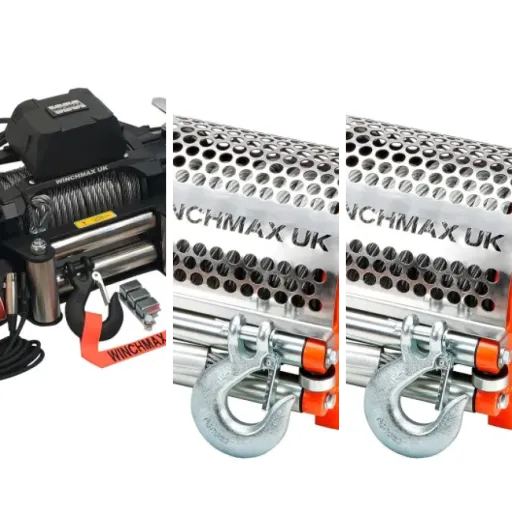
Summary
Analysis score
Average of the criteria rated below
Value for money for those who really need 20,000 lb
Design focused on heavy loads and remote control
Steel rope, forged hook and corrosion resistance
Built for harsh conditions, but long-term feedback is still limited
Pulling power and control for recovery work
What this 20,000lb WINCHMAX actually offers
Pros
- High 20,000 lb (9,072 kg) rated pulling capacity suitable for heavy recovery work
- 24V configuration well matched to commercial vehicles and serious expedition trucks
- Robust hardware: 25 m x 14 mm galvanized steel rope and Grade 70 forged clevis hook with safety catch
- Twin long-range wireless remotes plus wired backup control for safer, flexible operation
Cons
- Very heavy at around 76 kg, requiring a strong mounting solution and adding significant front-end weight
- 24V requirement makes it unsuitable for most standard 12V 4x4s without electrical modifications
- Limited number of public reviews, so long-term durability in daily professional use is not extensively documented

Specifications
View full product page →| Brand | WINCHMAX |
A serious winch on paper for serious loads
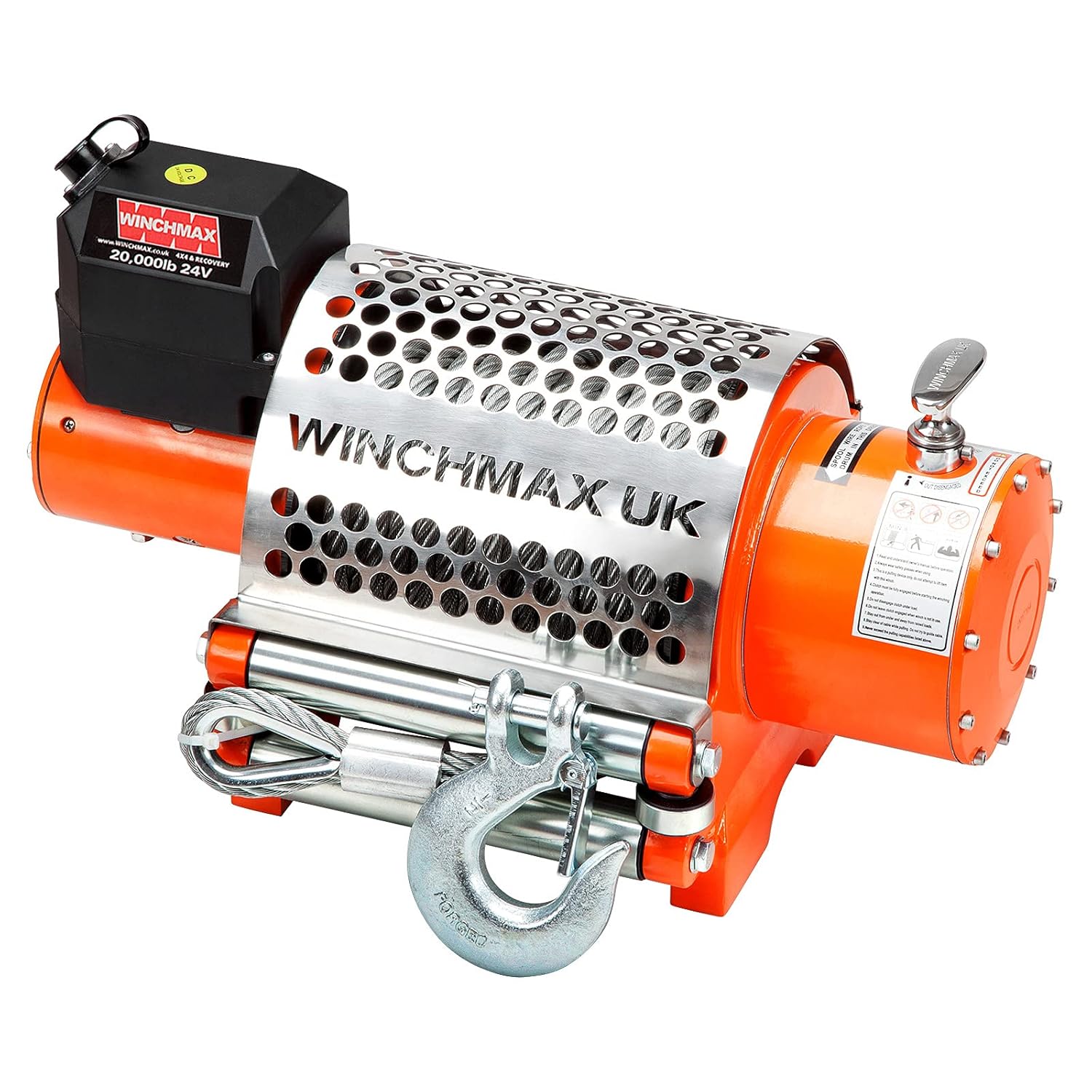
The WINCHMAX 20,000lb (9,072kg) Original Orange 24v Electric Winch clearly targets people who need more than a casual off-road accessory. With a declared pulling capacity of 20,000 lb, a 24V motor, and a 25 m x 14 mm galvanized steel rope, this is aimed at recovery trucks and heavier 4x4 use rather than weekend green-laning only. The average Amazon rating sits at 4.6/5 from a small pool of reviews, which suggests buyers are generally satisfied, but the sample size is still limited.
On paper, the winch is anything but compact or lightweight: the package weight is given as 76 kg and the box dimensions as 76 x 38 x 36 cm. That alone already tells you this is a big, heavy piece of gear that will likely require a solid mounting solution and probably two people to handle during installation. The brand also includes a branded protective cover, which hints that they expect the winch to live on the front of a truck, exposed to weather and road grime.
What stands out is the positioning: WINCHMAX markets this model as suitable for recovery trucks and 4x4s up to 3.5 tons, and the spec sheet supports that. The steel rope diameter (14 mm) and the 1/2 inch Grade 70 forged clevis hook indicate a build aimed at high loads. Add to that long-range wireless remotes plus a backup wired lead, and you get a package that, on paper, tries to combine heavy pulling power with ease of operation.
In my opinion, this winch looks like a tool for people who already know why they need 20,000 lb rather than 12,000 or 13,500 lb. It is heavy, clearly overkill for small SUVs, but potentially interesting for recovery professionals or owners of heavily loaded expedition trucks. The limited number of published reviews means there is not a huge amount of long-term feedback yet, but the early comments are positive enough to take this model seriously if you are shopping in this power range.
Value for money for those who really need 20,000 lb
Assessing value with this WINCHMAX 20,000lb 24v winch means keeping its position in mind. This is not a budget 9,500 lb unit for occasional self-recovery; it is a high-capacity, 24V, 76 kg winch with thick steel rope, forged Grade 70 hook, twin wireless remotes, wired backup control and a branded cover included. The Amazon category ranking (top 20 in electric winches) and a 4.6/5 average rating suggest that the people who do buy it generally feel they got their money’s worth, even if the overall number of reviews is still limited.
In terms of what you get in the package, it’s fairly complete. You do not need to immediately budget for a separate rope, hook, controller or cover. For a recovery truck build, that simplifies planning: one purchase, and most core components are there. On the other hand, being a 24V winch automatically narrows the potential audience. If your vehicle is 12V, you either need to look elsewhere or invest in a more complex electrical setup, which affects value. For the right platform (24V commercial truck or heavy expedition rig), this limitation disappears and the winch becomes much more attractive.
Compared with typical 12,000–13,500 lb winches, this model is likely more expensive and definitely heavier. But if you regularly pull vehicles in the 3–3.5 ton range from difficult situations, that extra capacity and thicker rope can be seen as an investment in safety margin and reduced strain on the equipment. Reviews from buyers who use it for recovery work indicate satisfaction with the price-to-performance ratio, essentially saying it gets the job done without drama and feels like solid kit for the money.
In my opinion, the value is good if you actually need what it offers: 20,000 lb capacity, 24V compatibility, heavy cable and hook, and remote operation. For a casual off-roader with a mid-size 4x4, it would be overkill, both in cost and in weight, and a smaller 12V winch would be a better use of budget. But for a recovery business, farm, or serious expedition truck running 24V, this WINCHMAX looks like a sensible balance between price, capability and included equipment.
Design focused on heavy loads and remote control
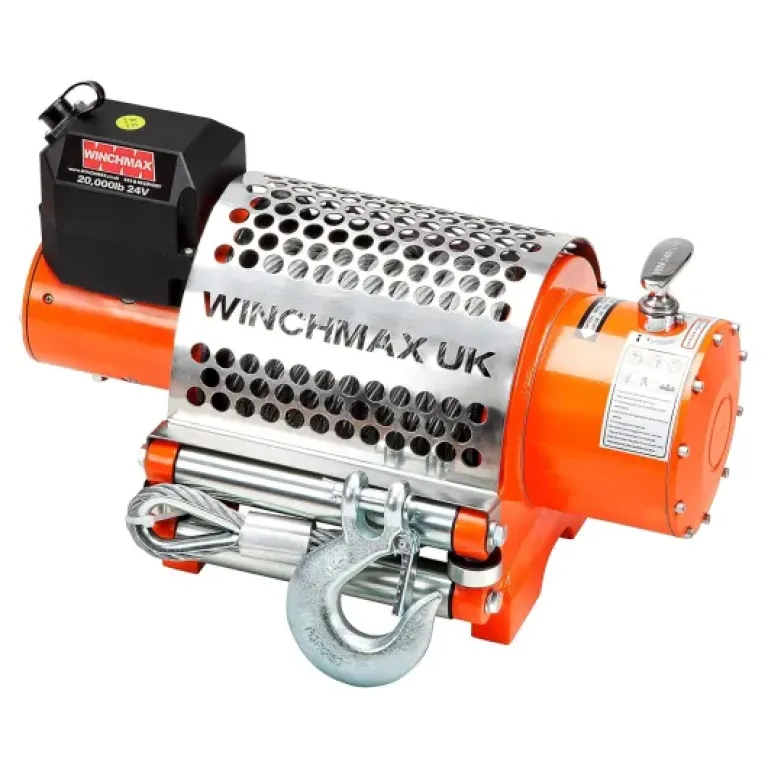
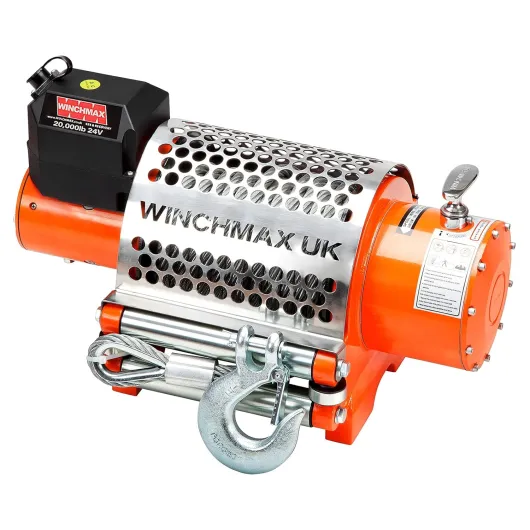
From a design angle, the WINCHMAX 20,000lb 24v winch follows the classic pattern of big-frame electric winches, but scaled up and painted in the brand’s signature orange. The 76 kg item weight and the 76 x 38 x 36 cm package dimensions point toward a large drum, substantial motor housing, and heavy geartrain casing. This is not something you casually bolt onto a light bumper; the winch will demand a reinforced mounting plate and a front end designed to carry serious weight. That bulk, however, matches the 20,000 lb pull rating and the thick 14 mm steel cable.
The decision to include twin long-range wireless remotes shows that user positioning and safety were considered. Wireless control lets the operator stand off to the side, watch the rope and anchor point, and avoid the line of fire if something fails. The wired backup lead is a simple but important detail: wireless systems can suffer from empty batteries or interference, so having a physical fallback is reassuring. Several buyers mention that the control system is straightforward to use, with no nasty surprises.
On the visual and practical side, the bright orange casing is not just a branding move. On a busy recovery truck with multiple tools, the color should make the winch and its control box easier to spot, especially in low light or bad weather. The supplied cover is also part of the design story: it is branded, but more importantly, it is sized for the unit and intended to stay on the truck to keep off water and road grime. That suggests WINCHMAX expects the winch to live outdoors full-time rather than be removed between jobs.
In my opinion, the design priorities are clear: high pulling capacity, robust cabling and hook, and safe, flexible control. This is not an attempt at a compact or stylish winch; it is built to look and behave like industrial equipment. The downside is obvious: weight and bulk. For a small 4x4 that already struggles with front axle load, this design would be overkill and potentially unhelpful. For a recovery truck or a heavy expedition vehicle, though, the design choices line up well with the intended use.
Steel rope, forged hook and corrosion resistance
The materials on the WINCHMAX 20,000lb winch lean heavily toward durability and load capacity. The main line is a 25 m long, 14 mm diameter galvanized steel wire rope. That diameter is significantly thicker than what you see on common 9,500–13,000 lb 4x4 winches, and it matches the higher stated pulling power. Galvanization is a standard treatment to slow down rust, especially important for recovery work where the rope will often be wet, muddy, or coated in road salt. On paper, this combination should offer good resistance to wear and environmental exposure, though like any steel rope, it will still require inspection and maintenance.
The hook is a 1/2 inch Grade 70 forged clevis hook with a safety catch and a hand saver. Grade 70 is typically associated with transport chain rated for high loads, so seeing it here is reassuring. The hook is zinc-plated, again for corrosion resistance. The presence of a safety catch is essential to avoid accidental unhooking under slack, and the hand saver is a simple but useful addition to keep fingers away from pinch points when handling the line. Buyers who mention the hardware in their comments tend to describe it as solid and up to the job.
The casing and drum materials are not fully detailed in the short spec sheet, but given the weight and typical winch construction, it is reasonable to expect a mix of steel for the frame and drum, and cast or machined metal for the gear housing. The 76 kg weight strongly suggests a lot of steel and relatively little plastic compared to lighter-duty winches. The supplied WINCHMAX-branded cover is likely made from a synthetic, water-resistant fabric; while the exact material is not specified, its main function is simply to shield the metal parts and electrics from constant spray and UV.
In my opinion, the material choices fit the target use: heavy recovery rather than casual off-road play. Steel rope and forged, zinc-plated hook are old-school but proven solutions. The flip side is that steel cable is heavier and more hazardous if it fails compared with synthetic rope. For some users, synthetic would be preferable despite higher cost and need for protection from abrasion. Here, WINCHMAX clearly favors traditional robustness and high heat tolerance over weight saving. If you are comfortable with steel cable and ready to maintain it properly, the materials on this winch look coherent and serious.

Built for harsh conditions, but long-term feedback is still limited
Durability is always a big question with heavy-duty winches, and here the WINCHMAX 20,000lb model has some reassuring elements on paper. The use of galvanized steel rope and a zinc-plated Grade 70 hook shows that corrosion resistance was taken seriously. The included branded cover is another sign: the manufacturer clearly expects the winch to live outside, exposed to rain, mud and road grime, and provides a basic layer of protection to slow down weathering and keep dirt off the electrics and drum.
The 76 kg weight and large dimensions suggest a lot of metal and relatively few lightweight compromises. That kind of mass tends to go hand in hand with thick casings, large gears and substantial bearings, which, in theory, should handle repeated heavy pulls better than compact, lightweight housings. Among the Amazon comments, buyers do not report early failures or obvious weak points, which is a good sign, but the total number of reviews is low. One buyer describes using the winch in demanding recovery situations and being satisfied with how it held up, particularly praising the sense of robustness when under load.
On the flip side, there is not yet a large body of long-term feedback covering multiple years of commercial use, which is often where weaknesses in seals, solenoids or motor brushes start to show. Electric winches are also very dependent on installation quality: undersized power cables, poor earths, or badly protected connectors can create reliability problems that are not the winch’s fault. Nothing in the spec sheet indicates unusual protection like IP ratings or fully sealed contactors, so it is reasonable to assume this winch should be installed with care, with attention to drainage, cable routing and regular inspection of the steel rope.
In my opinion, the construction details and materials point toward good durability for the price bracket, especially for users who maintain their gear: keeping the cable clean and lubricated, checking the hook and safety catch, and using the supplied cover when the vehicle is parked. However, anyone planning to use this winch daily in a professional recovery business should be aware that the public feedback sample is still small. The hardware looks up to the job, but there is not yet a mountain of multi-year reports to confirm how it behaves after constant exposure to winter salt and heavy loads.
Pulling power and control for recovery work
On paper, the performance headline is clear: this is a 20,000 lb (9,072 kg) 24V electric winch. That figure puts it well above the common 12,000–13,500 lb off-road winches and into the territory of recovery trucks, heavy 4x4 campers, and possibly agricultural or industrial pulling tasks. WINCHMAX indicates it is ideal for recovery trucks and 4x4s up to 3.5 tons. In real recovery scenarios, users often aim for a winch rating of at least 1.5 times the vehicle weight, sometimes more for deep mud or steep pulls. So, on paper, this winch offers a comfortable margin for the stated target vehicles.
The 24V configuration is another performance clue. Compared with 12V, a 24V system can deliver the same power with lower current, which helps with cable sizing and voltage drop over long runs. Many commercial vehicles and some expedition rigs already use 24V electrical systems, so this design fits naturally there. For owners of standard 12V 4x4s, though, this model would require additional electrical work or is simply not suitable. Among the published reviews, buyers who mention performance generally say the winch has no trouble dealing with heavy loads, which aligns with the spec sheet.
The 25 m length of 14 mm steel rope is fairly generous, giving plenty of line for complex recoveries or for reaching distant anchor points. However, it is worth remembering that a winch delivers its maximum pulling power on the first wrap of the drum; as more layers build up, the effective pulling force decreases. With a thick 14 mm rope, the number of wraps to fill the drum will be lower than with thin cables, so smart rigging (snatch blocks, double-line pulls) will still matter to get the most from the 20,000 lb rating.
In my opinion, for someone who genuinely needs this level of pulling capacity and runs a 24V system, the performance profile is attractive: high rated pull, thick cable, solid hardware, and wireless control for safer operation. It’s clearly overkill for small vehicles and will draw serious current under heavy load, so it demands a strong electrical system. It’s not the winch you fit just because it looks good; it’s the winch you choose because you regularly move heavy, stuck vehicles and want a large safety margin.

What this 20,000lb WINCHMAX actually offers
The WINCHMAX 20,000lb Original Orange 24v Electric Winch is presented as a complete heavy-duty kit. You get a 24V electric winch rated at 20,000 lb (9,072 kg), a 25 m long, 14 mm diameter galvanized steel wire rope, and a 1/2 inch Grade 70 forged clevis hook with a safety catch and hand saver. The hook is zinc-plated, which is a classic choice to slow down corrosion in wet and salty environments. The manufacturer also includes a WINCHMAX-branded cover, which is not just cosmetic: for gear that often lives at the front of recovery trucks, protection against constant rain, mud and road salt can make a difference.
This model runs on 24V, which immediately positions it more toward commercial vehicles, larger trucks, and some serious off-road builds rather than the typical 12V passenger 4x4. The spec mentions it is ideal for recovery trucks and 4x4s up to 3.5 tons. That does not mean you can pull only that weight; the 20,000 lb figure is the headline capacity, but in real-world recovery, line angles, friction and safety margins matter. Still, on paper, there is a comfortable gap between the target vehicle weight and the advertised pulling capacity.
Control-wise, WINCHMAX supplies the latest-generation twin wireless remotes with long-range capability plus a backup wired control lead. In practice, this should allow the operator to stand back from the danger zone during a pull, or to position themselves where they can best see the cable and anchor points. Reviews mention that the wireless remotes work as expected, which is reassuring for something that is critical to safe operation. Having two wireless handsets also adds a bit of redundancy in case one is misplaced or damaged.
The product has been available since September 2017 and currently sits in the top 20 for electric winches on Amazon Business, with a rating of 4.6/5. That ranking suggests it sells reasonably well in its category despite being a niche, high-capacity model. In my opinion, the overall presentation is straightforward: this is not a compact hobby winch, but a large, heavy, fully equipped kit designed to live on a serious recovery rig, with the accessories you would expect included in the box rather than sold as extras.
Pros
- High 20,000 lb (9,072 kg) rated pulling capacity suitable for heavy recovery work
- 24V configuration well matched to commercial vehicles and serious expedition trucks
- Robust hardware: 25 m x 14 mm galvanized steel rope and Grade 70 forged clevis hook with safety catch
- Twin long-range wireless remotes plus wired backup control for safer, flexible operation
Cons
- Very heavy at around 76 kg, requiring a strong mounting solution and adding significant front-end weight
- 24V requirement makes it unsuitable for most standard 12V 4x4s without electrical modifications
- Limited number of public reviews, so long-term durability in daily professional use is not extensively documented
Conclusion
Analysis score
The WINCHMAX 20,000lb Original Orange 24v Electric Winch is clearly aimed at users who treat a winch as a work tool, not a decorative accessory. With its 20,000 lb rating, 24V motor, 25 m of 14 mm galvanized steel rope and Grade 70 forged hook, it sits in the heavy-duty bracket and lines up well with recovery trucks and 4x4s up to around 3.5 tons. The twin wireless remotes plus wired backup, and the included protective cover, round out a package that, on paper, covers the main needs of professional or semi-professional recovery work.
The weak point is not so much the hardware as the limited long-term feedback available publicly. The current 4.6/5 rating from a small number of reviews is encouraging, and buyers who comment on performance and build seem happy with what they received. Still, there is not yet an ocean of multi-year reports to fully prove its endurance in daily commercial use. Installation quality and maintenance will also play a big role in how long it lasts.
In my opinion, this winch suits owners of 24V recovery trucks, heavy overland rigs and farms or businesses that occasionally need to move seriously stuck, heavy vehicles. For that crowd, the balance of pulling power, materials and included accessories looks good. Those with lighter 12V 4x4s, or people who just want occasional self-recovery, should probably look at smaller, lighter and cheaper 12V models. Here, you are paying and carrying weight for high capacity; if you genuinely need that, the value is solid, but if you do not, it is simply too much winch.