Summary
Editor's rating
Value: solid light, but you do pay the “marine brand” tax
Design: compact, clean, and clearly made for harsh use
Materials and build: feels properly sealed, lens is the weak point
Durability: so far so good, but lens longevity is the question mark
Performance: bright, wide beam, and usable color modes
What this light actually is (beyond the spec sheet)
Real-world use: how it changes night-time on board
Pros
- Bright, wide, and even beam that properly lights a small to mid-size cockpit
- Spectrum color modes (especially red) are actually useful, not just decorative
- Solid, sealed construction that has handled spray and washdowns without fogging
Cons
- Higher price than basic LED floods with similar wattage
- Plastic lens may scratch or haze over time with UV and rough cleaning

Specifications
View full product page →| Brand | Lumitec |
Bright little brick for boats and more
I picked up the Lumitec Caprera3 Spectrum mainly for my boat, but I also tried it briefly as a work light around the driveway. On paper it’s sold as a spreader light, but the specs look a lot like a universal LED flood: compact body, 36W, multi-color (Spectrum), clear lens, and fully sealed. I’d never used this specific model before, but I’ve used cheaper no-name LED floods from Amazon and some mid-range marine brands, so I had a decent baseline to compare it with.
First impression out of the box: it feels like a proper marine light, not a toy. The housing is small (around 15 x 10 x 5 cm), fairly light at about 180 g, and it doesn’t rattle or flex. I installed it on the aft side of the cabin roof to light up the cockpit and a bit of the swim platform. Wiring was straightforward: power and ground, plus the usual Lumitec control via the on/off switch to change colors and modes. No extra controller needed, which I like because it keeps things simple.
My goal was pretty clear: I wanted something bright enough for rigging lines and bait at night, without blinding everyone, and with the option to switch to red or other colors when we’re just hanging out. I’m not chasing showroom vibes; I just want to see what I’m doing and avoid kicking things on the deck. Over a few evening trips and some night docking, I got a pretty good idea of how this thing behaves in real conditions.
Overall, the Caprera3 Spectrum feels like a solid, no-drama light. It’s not cheap, and there are brighter lights out there if you only care about raw output, but in terms of balance between brightness, color options, and build, it holds up well. It’s not perfect – especially for the price – but it does what it’s supposed to do without any nasty surprises so far.
Value: solid light, but you do pay the “marine brand” tax
Let’s be honest: this is not the cheapest LED flood you can buy. If you compare it to random Amazon lights that claim similar wattage, the Caprera3 Spectrum costs more. What you’re paying for here is mainly: real marine sealing, more controlled beam, and the multi-color Spectrum feature that actually works without extra controllers. If you only care about raw brightness per dollar and don’t mind swapping lights when they fail, you can definitely go cheaper.
Where it starts to make sense is if you want something you can install once and not constantly babysit. The waterproofing, clean beam, and build quality are clearly a step up from the bargain stuff I’ve tried. Also, the Spectrum color modes add real value if you actually use the boat at night for more than just docking – fishing, hanging out, night cruises. You effectively get a work light and an ambience light in one unit, which takes some of the sting out of the price.
Compared to other known marine brands, the price feels in the same ballpark. You’re not getting a crazy deal, but you’re also not getting ripped off, especially considering the RGB functionality. If this were a plain white-only light at the same price, I’d be more critical. With the Spectrum features and the apparent build quality, the price feels justifiable, but not generous. It’s good gear, you just pay for it.
So in terms of value for money, I’d call it pretty solid for someone who actually uses their boat regularly and wants to avoid the hassle of replacing corroded or fogged-out lights every season. If you’re on a tight budget or you only go out a few nights a year, a simpler, cheaper white-only flood might make more sense. But if you like the idea of one compact, reliable light that covers both work and chill time, this one earns its place.
Design: compact, clean, and clearly made for harsh use
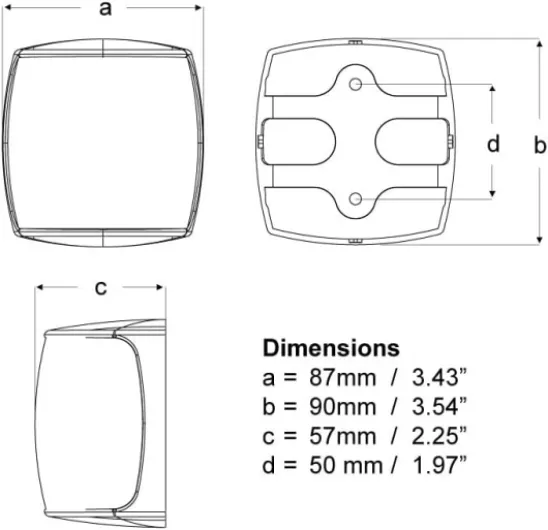
Design-wise, the Caprera3 Spectrum is pretty straightforward: rectangular body, white powder-coated housing, clear front lens, no weird curves or flashy logos. On the boat, that’s actually a plus. It blends in with typical white fiberglass and doesn’t look like an off-road bar glued onto a cabin. The size is small enough that it doesn’t clutter the roof line, but not so tiny that it looks like a toy. It’s around 15.2 x 10.2 x 5.1 cm, which is easy to place even on a smaller hardtop.
The mounting bracket is simple: one central pivot plus the usual screws. It gives you enough adjustment to aim the beam where you need it – I tilted mine just slightly down to avoid blinding people sitting in the cockpit. Once tightened, it holds its position; I haven’t had to re-aim it after a few bumpy outings. That’s already better than some cheap LED floods I’ve used that sag after a while because the bracket metal is too soft or the hardware is junk.
On the front, the clear plastic lens is flat, not fancy. No diffuser pattern that you can clearly see, but the beam spread is still wide enough, so whatever optics they’re using are inside. There’s no visible gasket line or obvious weak point where water can sneak in. The whole thing feels like a sealed block. No external screws on the lens itself, which means less chance of leaks but also no easy way to open it if something goes wrong. That’s pretty normal for this type of light though.
In terms of looks, I’d call it functional and clean. It doesn’t scream “premium design”, but it also doesn’t look cheap or tacky. For a boat, that’s honestly what I want: something that blends in, doesn’t rust, and doesn’t draw attention. The only small downside is that the white housing will probably stain or show dirt faster than a black one, especially with exhaust soot or dock grime, but a quick wipe with soapy water brought mine back to normal after a few trips.
Materials and build: feels properly sealed, lens is the weak point
The housing feels like coated aluminum (typical for marine LEDs), even though the listing doesn’t spell it out. It’s not flimsy; you can squeeze it and it doesn’t flex. The white coating/paint seems even, with no bubbles or obvious thin spots. I installed it with stainless hardware and after a few salty outings and some spray, I don’t see any rust streaks or chipping on the paint around the bracket area, which is usually where cheap lights start to show their limits.
The lens is plastic, and that’s both normal and a bit of a trade-off. Plastic is lighter and less likely to shatter if you hit it with something, but it can scratch and haze over time with UV and salt. After a few weeks, mine still looks perfectly clear, but I’m realistic: over a couple of seasons, it might pick up micro-scratches from cleaning and salt crystals. If you’re the type who wipes your boat with a sandy rag, this lens will show it sooner or later. Glass would have been nicer long term, but plastic is standard in this price/size range.
The sealing and waterproofing are the strong points. It’s sold as waterproof, and from what I can see, the back side is fully sealed with no obvious join line that screams “water entry point”. I’ve had the light hit by direct spray while under way and a couple of heavy rains at the dock. No fogging, no condensation ring inside, nothing weird. That’s already better than some budget LEDs I had that started fogging after the first storm. I didn’t dunk it underwater, but for a spreader light, surviving washdowns and spray is the main job.
Overall, materials feel marine-grade enough for someone who actually uses the boat, not just polishes it. The only part I’m a bit cautious about is long-term UV effect on the plastic lens and the white coating. Time will tell, but based on early use, it seems more robust than the generic Amazon LEDs, just not bulletproof. For the price, I would have liked a slightly more confidence-inspiring lens material, but it’s not a deal-breaker.
Durability: so far so good, but lens longevity is the question mark
I’ve only had this light on the boat for a few weeks of actual use, but I’ve squeezed in several trips with salt spray, rain, and a couple of washdowns. So far, it behaves like a proper sealed marine unit. No moisture inside, no flicker, no corrosion showing up on the mounting hardware or around the cable entry. That’s already better than my last generic LED flood, which started fogging inside the lens after the second or third wet outing.
The housing and bracket feel solid. I’ve hit some chop and the light hasn’t shifted or loosened. No hairline cracks in the coating, no rattles when you tap it, nothing like that. The waterproof claim seems justified so far; the back side looks potted and sealed, not just a cheap gasket. I also checked the cable after a few trips – still flexible, no cracks, and the entry point into the housing looks well protected.
My only real concern long-term is the plastic lens and white finish. Plastic is fine at first, but on boats, UV and salt eventually win. If you’re careful when cleaning (soft cloth, rinse first), it’ll last longer. If you’re rough, it will scratch and haze quicker. Same for the white coating: it’s holding up now, but white always shows stains faster. Compared to the cheap black automotive floods I’ve used, though, this one definitely feels more robust and better sealed. The cheap ones usually start rusting around the screws or clouding inside pretty quickly.
So in terms of durability, I’d say it feels trustworthy for regular marine use, not just occasional lake days. I can’t promise it’ll look brand new after five seasons, but based on early signs, it’s built better than the usual budget stuff. If you want something you can forget about and just flip on without worrying whether it survived the last storm, this is closer to that category than the bargain-bin options.
Performance: bright, wide beam, and usable color modes
Performance is where this light just quietly does its job. On white mode, it’s properly bright for its size. I don’t have a lab meter, but compared to a generic 27W flood I had before, the Caprera3 clearly throws more light and spreads it out more evenly. On my 7–8 m boat, one unit mounted above the cockpit gives me full working light for tying lines, prepping lures, and moving around without guessing where the deck ends. It’s not stadium-level bright, but it’s more than enough for practical night use.
The beam pattern is a wide flood, not a spotlight. That’s exactly what you want for a spreader. There’s a bright center zone, but the edges are still very usable, so you don’t end up with a harsh bright spot and then darkness. When I step back on the dock and look at the boat lit up, you can see a nice, even wash of light across the aft deck and swim platform. No weird stripes or patchy hot spots. It also doesn’t throw tons of light forward where you don’t need it, which helps keep glare down on the windows.
The Spectrum color modes are more than just a gimmick. The red mode is actually useful: we used it while cruising slowly at night so people could still move around in the cockpit without killing their night vision. It’s not as bright as white (obviously), but enough to see where you step and find gear. The blue and other colors are more for mood or hanging around at anchor. They’re fun, and they do give the boat a bit of a lounge feel, but that’s secondary for me. The key is that switching between modes with the power toggle works reliably once you get the timing down.
One thing to note: heat management seems okay. After running on full white for over an hour at the dock, the housing was warm to the touch but not scorching. No flickering, no dimming, nothing weird. If you’re looking for raw maximum brightness above all else, there are bigger, more aggressive lights, but as a compact spreader that balances brightness, spread, and color options, this one lands in a good spot.
What this light actually is (beyond the spec sheet)
On paper, the Lumitec Caprera3 Spectrum is sold as a marine spreader light, but the listing info is a bit all over the place – it even says “Car Doors” and “Front auto part position” in some places, which is clearly generic catalog junk. In practice, this is a 12/24V LED flood/spreader light you’d normally put on a boat hardtop, T-top, mast, or maybe on an off-road rig if you’re handy with mounting. My use case is strictly marine, mounted high to flood the cockpit area.
The model I used is the Spectrum (multi-color) version with a white housing and a clear plastic lens. It pulls around 36 watts, which matches the spec. You don’t get a fancy cable or wiring harness in the box – just the light and the mounting hardware. If you’re used to plug-and-play automotive stuff, know that this is more in the marine world: you bring your own connectors, heat shrink, and sealant. There’s no separate controller box; all the color and mode switching is done through the power switch with timed toggles.
Function-wise, you get: full white flood for working, plus colored modes (red, blue, etc.) for ambience or preserving night vision. Lumitec calls it “Spectrum”, but translation: it cycles through different colors and brightness levels depending on how many times you flick the switch. It’s not smart-home fancy, no app, no remote, just switch logic. Once you get used to the pattern, it’s fine, but the first evening I had to play around a bit to land on the mode I wanted without overshooting.
So if I had to describe it simply to a friend: it’s a compact marine-grade RGB flood light, bright enough to properly light a small to mid-sized cockpit, with wiring and control aimed at boats, not cars. The Amazon-style description calling it a “Great Product” doesn’t say much, but in real life it’s a practical, work-oriented light with a party side if you want it.
Real-world use: how it changes night-time on board
In real use, the biggest benefit of this light is simple: I can actually work comfortably at night without juggling a headlamp. Before this, I had two smaller, cheap LED floods on the back, and I still ended up using a headlamp to see what I was doing near the transom. With the Caprera3 mounted a bit higher and angled correctly, the entire cockpit is evenly lit. No harsh shadows where you actually need to see. It makes tasks like setting lines, cleaning up, or even just grabbing drinks way less annoying.
Another point where it’s effective is docking in low light. When I come in late, I flip the white mode on while I’m getting fenders and lines ready. I can see cleats, lines, and the edge of the dock clearly. Then, once we’re tied up, I’ll often switch to a dimmer color mode or red so we still have light but without blinding neighbors. It’s not magic, but it definitely makes those late returns easier and safer. My crew commented right away that it’s much easier to see where they’re stepping, especially on the swim platform.
The color modes are surprisingly useful when you’re not actively working. Red mode has become our go-to when we’re just sitting in the cockpit talking or having a drink. You get enough light to see faces and gear, but you’re not lighting up the whole marina like a construction site. My old setup was basically “on or off” – full white or darkness. With this, there’s a middle ground that actually gets used. It’s a small quality-of-life thing, but once you have it, going back to a single-mode light feels primitive.
If I had to nitpick the effectiveness, I’d say this: one unit is great for a small to medium cockpit. On a bigger boat with a wide beam or enclosed cockpit, you’d probably want two units to cover everything perfectly. Also, the switch-based control for modes is functional but not very intuitive at first; you might overshoot the color you want until you get used to the timing. But once you’ve used it a few evenings, it becomes automatic and stops being an issue.
Pros
- Bright, wide, and even beam that properly lights a small to mid-size cockpit
- Spectrum color modes (especially red) are actually useful, not just decorative
- Solid, sealed construction that has handled spray and washdowns without fogging
Cons
- Higher price than basic LED floods with similar wattage
- Plastic lens may scratch or haze over time with UV and rough cleaning
Conclusion
Editor's rating
The Lumitec Caprera3 Spreader Light – Spectrum in white housing is a practical, well-built LED flood that fits real-world boating better than the generic catalog description suggests. It’s compact, properly bright, and the beam spread works well for lighting up a cockpit or working area without turning everything into a harsh spotlight. The Spectrum color modes aren’t just a party trick; red and the dimmer colors are genuinely useful when you want light without blowing out night vision or annoying everyone around you.
It’s not perfect. The plastic lens will probably show its age faster than the rest of the unit, and the price is clearly in the “serious marine gear” range, not budget territory. The switch-based color control takes a little getting used to, and if you have a larger boat, you’ll likely want at least two units for full coverage. But once installed, it feels reliable, stays dry inside, and just works, which is more than I can say for a lot of cheaper LEDs I’ve tried.
If you’re a regular boater who actually goes out at night and wants one compact light that can handle both work lighting and relaxed evening use, this is a strong option. If you only go out on sunny afternoons or you’re trying to outfit a boat on the absolute cheapest budget, it’s probably overkill and you’d be fine with a simpler white-only flood. For my use – frequent night runs, docking, and some hanging out at anchor – it hits a good balance between performance, durability, and features.