Discover how to choose the best boat tie down straps for your yacht tender or jet boat, with guidance on load ratings, stainless hardware, strap materials, tie patterns and maintenance for safe trailer transport.
13 May 202611 min read
Discover our ranking of the 5 best boat tie down straps based on our tests.
What are the best boat tie down straps in 2026? Comparison, reviews, tests & buying guides
Why serious yacht owners obsess over the best boat tie down straps
Every experienced yacht owner knows that the journey on the road can be harsher than the journey at sea. Selecting the best boat tie down straps for your yacht or tender protects hull integrity, fittings and the entire boat trailer structure during transport. When you tie a valuable boat down incorrectly, even a short drive can create dangerous loads on cleats, transom hardware and trailer points.
On a modern yacht setup, the tender, RIB or jet boat often travels on a separate trailer behind a support vehicle. That means your choice of strap, from basic ratchet straps to advanced steel retractable systems, directly affects how secure the boat remains when you brake hard or hit uneven roads. High quality tie downs with adequate break strength in lbs, corrosion resistant stainless steel components and correct working length are not accessories; they are core safety equipment.
Think of each tie down strap as a structural link between hull and trailer, not as a simple rope replacement. The best boat tie down straps distribute strength across multiple attachment points so that no single down strap or transom tie carries the full load. When you secure a yacht tender or jet boat properly, the hull settles into the trailer bunks without bounce, twist or sideways movement that can fatigue the transom over time.
Ranking
#1
🏆 Best choice
BoatBuckle
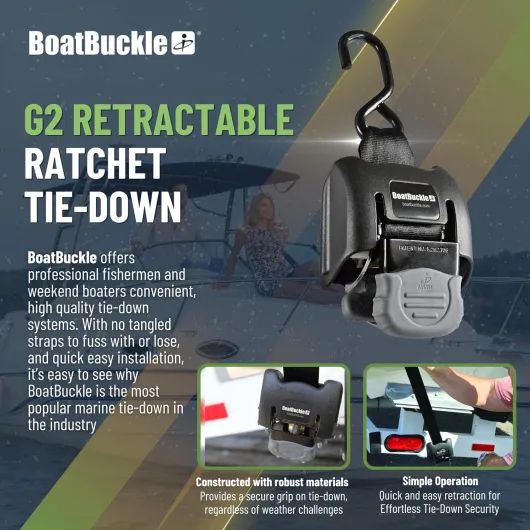
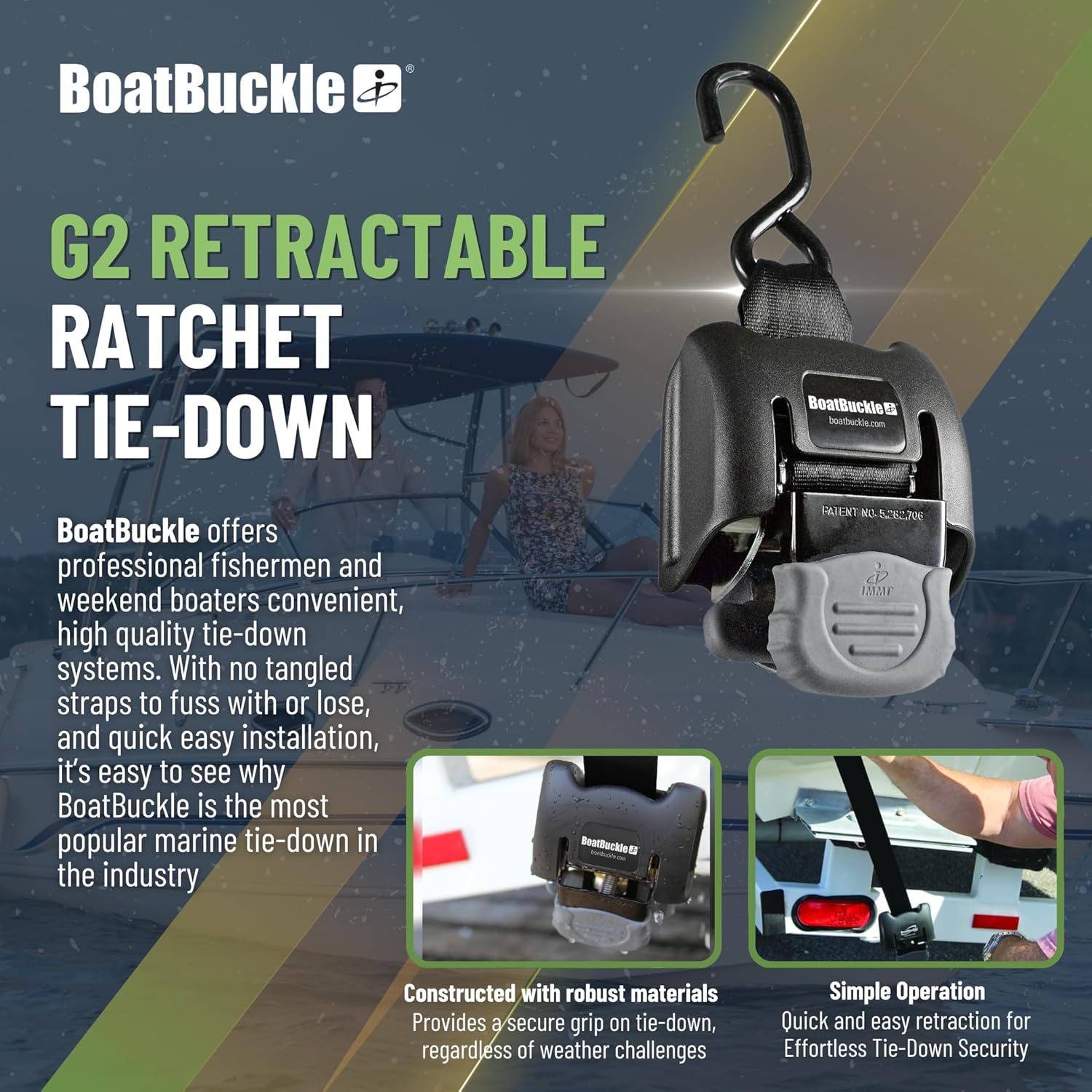
BoatBuckle G2 Transom Boat Tie Down Straps to Trailer 2x43-Inch, 2500lbs Break Strength, Bolt On Retractable Ratchet Straps Heavy Duty, 2-Pack Alloy Steel (Freshwater)
Bolt-on retractable design saves time and cuts out loose strap clutter
Strong 2-inch webbing and solid ratchet hold the boat firmly in place
Easy one-handed operation with rubber grip, even when wet
The BoatBuckle G2 2x43-inch transom straps are basically a quality-of-life upgrade for anyone who’s tired of fighting with loose ratchet straps at the boat ramp. They bolt onto the trailer, the extra webbing retracts into the housing, and you just hook and ratchet. In day-to-day use, that means faster loading and unloading, less clutter in the truck, and fewer chances of forgetting or losing a strap. On the road, they hold the boat steady and don’t flap around, which is exactly what you want.They’re not perfect: the retracting action isn’t lightning fast, and you might need to guide the strap in if it’s wet or twisted. The biggest limitation is that this particular model is meant for freshwater use only; if you’re a saltwater boater, you really should go for the stainless version or something similar. But for lake and river use, the build feels solid, the rated strength is more than enough for typical boats and PWCs, and the mechanism has held up well so far.I’d recommend these to regular freshwater boaters who launch often and are sick of dealing with loose straps, as well as folks who want a clean, always-ready tie-down solution on their trailer. If you only haul your boat a couple of times a year, or you’re strictly in salt or brackish water, I’d either stick with basic straps or jump straight to a marine-grade stainless setup. For my use – frequent weekend trips on freshwater lakes – these BoatBuckles hit a good balance between convenience, security, and price.
See more
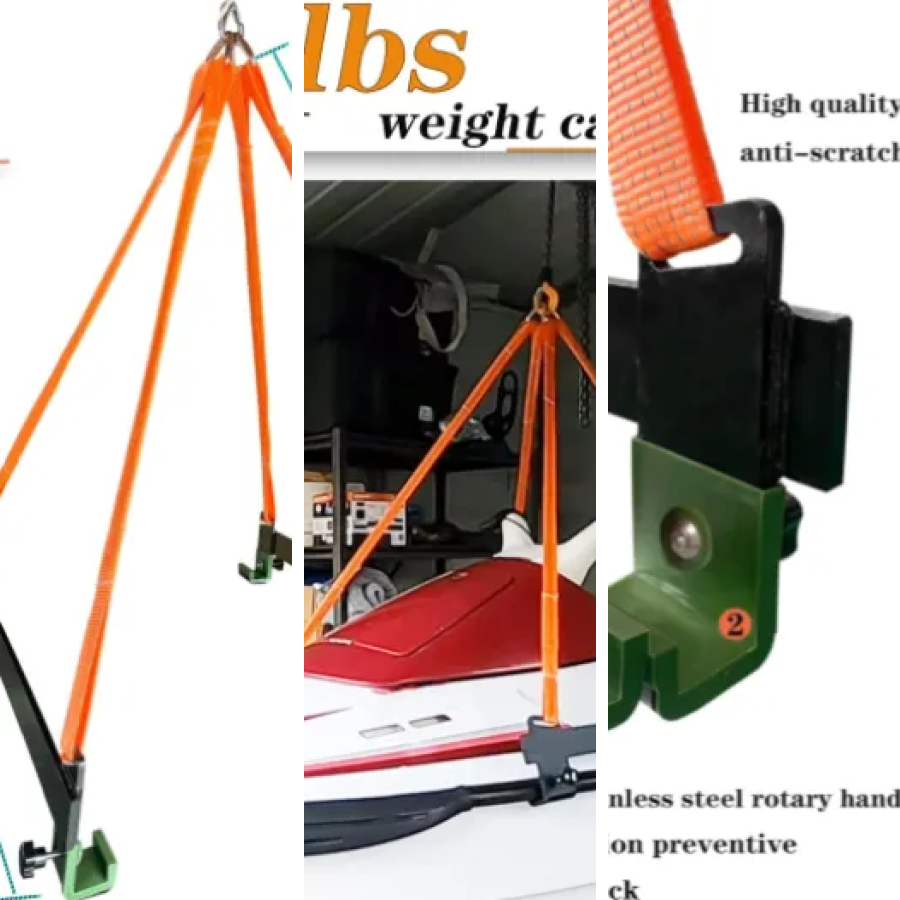
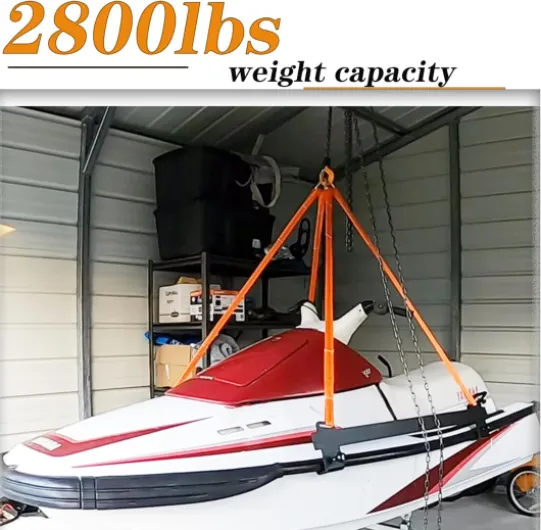
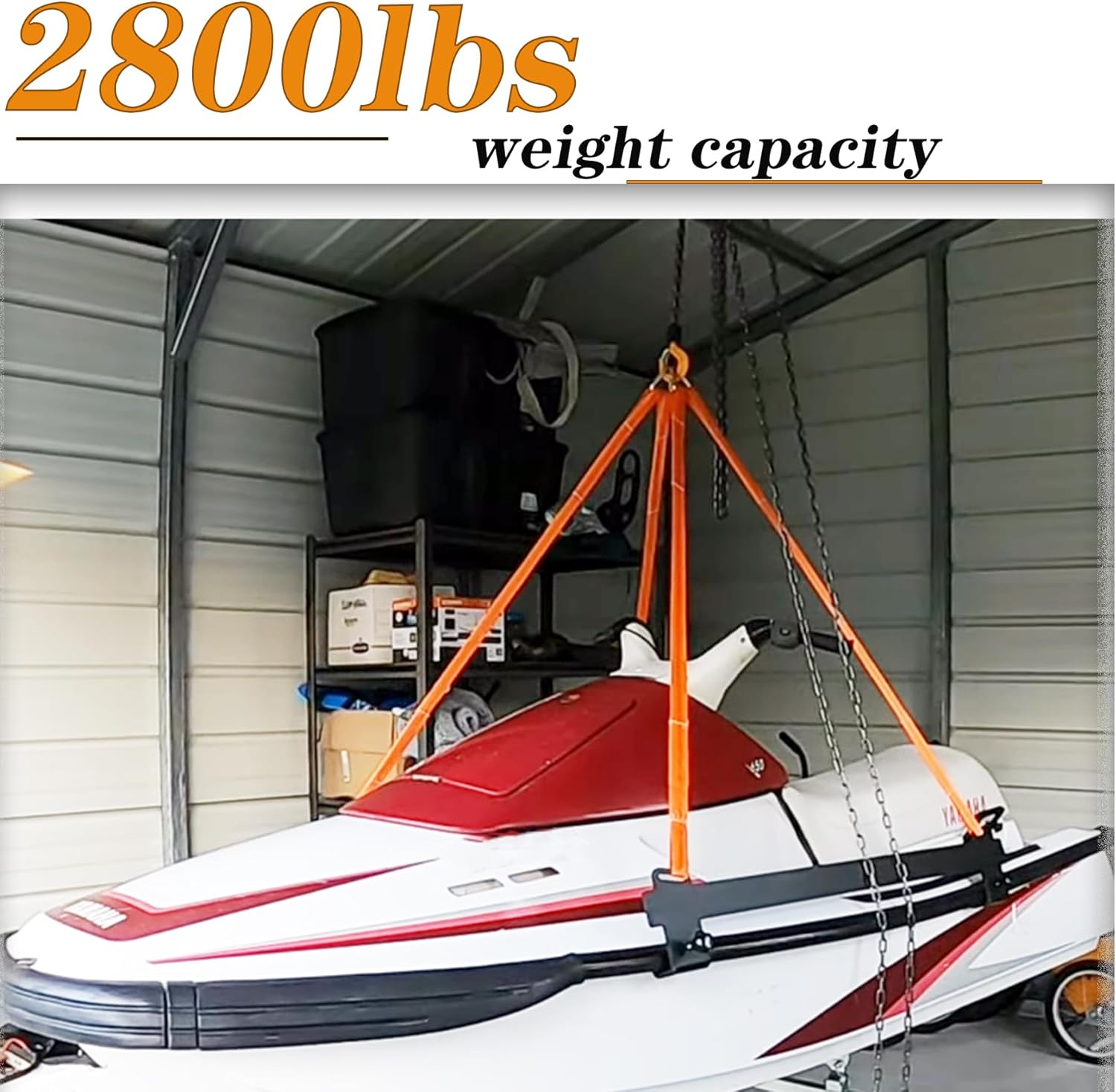
Watercraft Lift Sling 2800lbs Capacity,43''Jet Ski Sling,Upgrade Thickened Polyester Sling Will Not Break Safe Lifting,Suitable for Personal Watercraft,PWC,Jet Ski
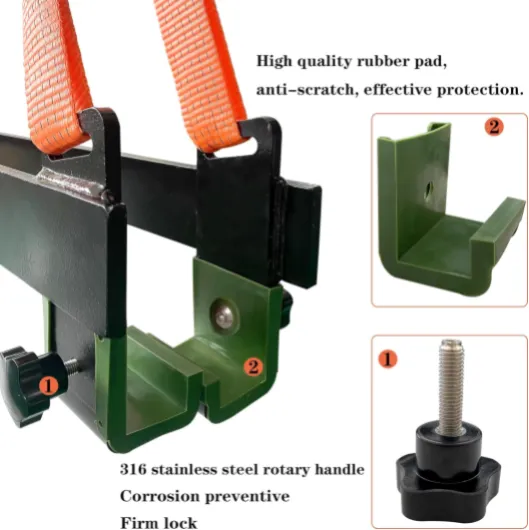
Sturdy construction with thick steel bars, beefy polyester straps, and stainless hardware
2800 lb capacity gives a strong safety margin for typical jet skis and PWCs
Works very well on newer skis with an under-lip, providing stable and controlled lifting
After using the FUYEAR watercraft lift sling on my own jet ski for a while, I’d sum it up like this: it’s a solid, no-frills lifting tool that does its job well if your hull shape matches what it was designed for. The materials are reassuring, the 2800 lb rating gives a nice safety buffer, and once you’ve got it positioned correctly, it lifts and holds the ski in a stable, predictable way. For cleaning, hull work, and short-term hanging in the garage, it’s a lot less stressful than the old mix of floor jacks and improvised straps.It’s not perfect. The adjustment screws with the rotating handles can loosen if you don’t really pay attention, so you need to double-check them before and after lifting. And the biggest limitation is compatibility: newer skis with a clear lip under the rub rail are fine; older or flatter-sided hulls are more questionable. The product page doesn’t make that super clear, so you have to be honest about your ski’s shape before buying.If you’re a jet ski or PWC owner who does your own maintenance and has a compatible hull, this sling is a practical, reasonably priced tool that will probably earn its keep quickly. If you’re looking for a universal solution that works on every hull type without thinking, or if you’re not comfortable checking and re-checking a lifting setup, you might be better off with a dedicated lift system or professional help. For my use, it’s a keeper, with the caveat that I treat it like real lifting equipment, not a casual accessory.
See more
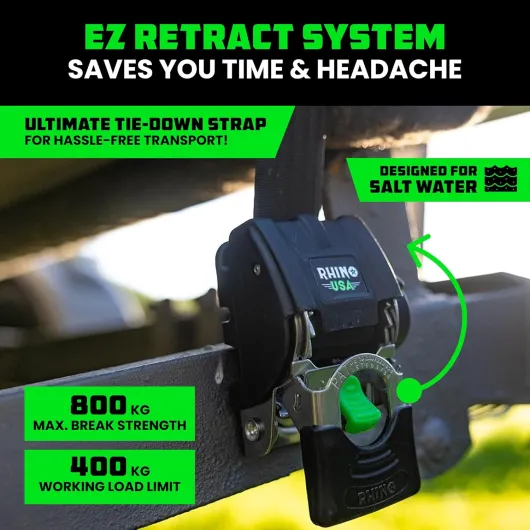
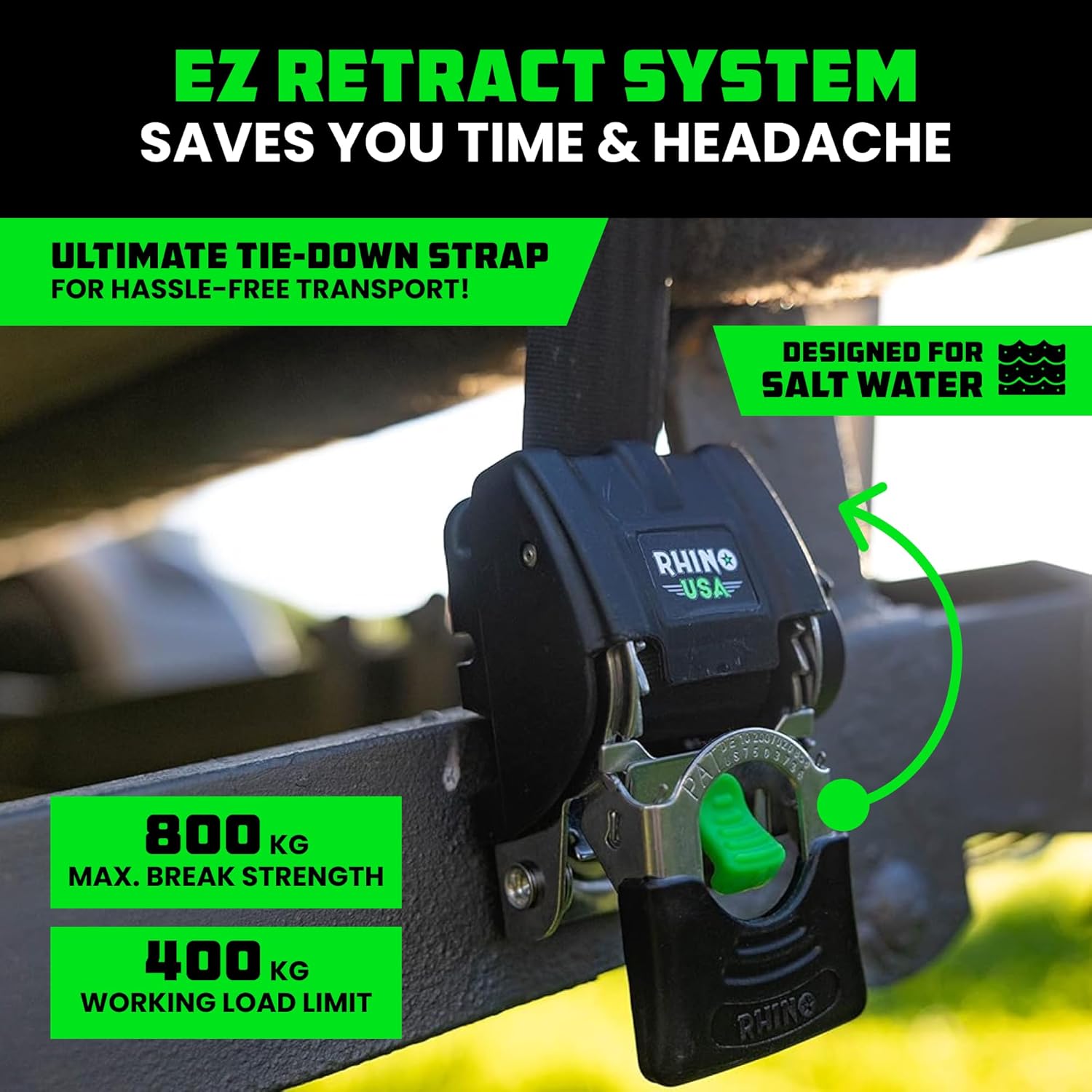
Retractable Boat Trailer Straps (2-Pack) - Heavy Duty 5cmx1.1m, 1300kg Tie Down Straps to Trailer - Ultimate Transom Tie Down Straps for Boat, Jet Ski & More! Stainless Steel Stainless Steel 5 cm x 110 cm
Retractable design keeps straps tidy and speeds up tie‑down and release
Corrosion‑resistant hardware and solid webbing suitable for regular saltwater use with rinsing
Bolts directly to trailer so you’re not constantly hunting for loose straps
Overall, the Rhino USA retractable boat trailer straps are a practical upgrade if you tow a small to mid‑size boat or jet ski regularly and you’re tired of loose ratchet straps. They bolt onto the trailer, stay there, and make tying down the transom quicker and cleaner. In my use, they held the boat securely on both highway and back roads, didn’t loosen up, and the retractable mechanism worked smoothly every time. The materials feel solid for recreational use, and the stainless / corrosion‑resistant hardware has held up fine so far in wet conditions.They’re not the cheapest option, and they don’t magically secure a boat better than a good set of standard straps. You’re really paying for convenience: faster hook‑up, no strap tails, and less clutter. If you tow only a couple of times a year, you can easily live without them and just stick with regular ratchet straps. But if you launch often, value a tidy setup, and like gear that just stays on the trailer ready to go, they make day‑to‑day use a bit smoother. I’d recommend them mainly to frequent weekend boaters and jet ski owners who want a cleaner, more efficient tie‑down routine, and I’d say heavy commercial users or people with very large boats might want something even more heavy‑duty.
See more
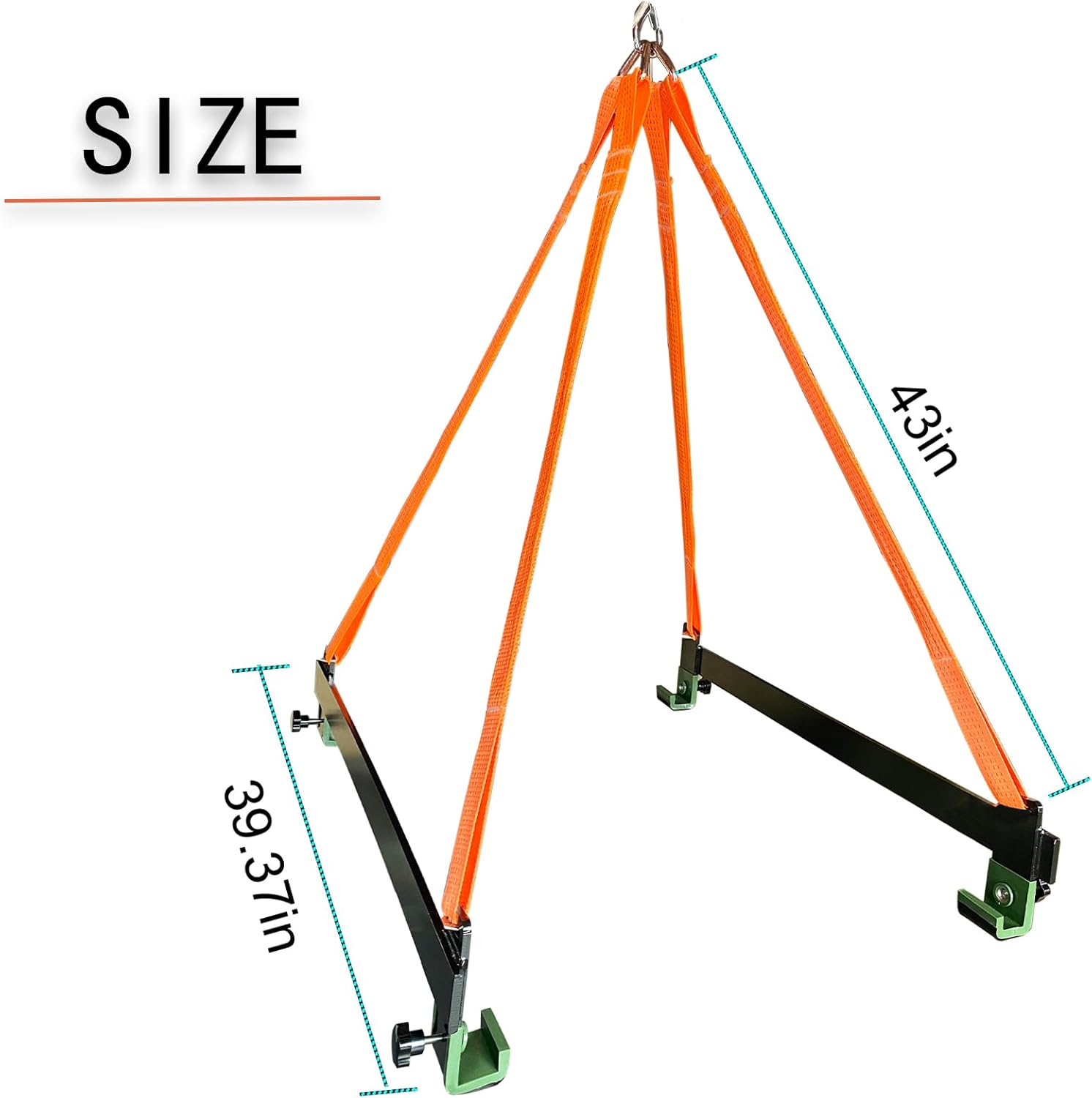
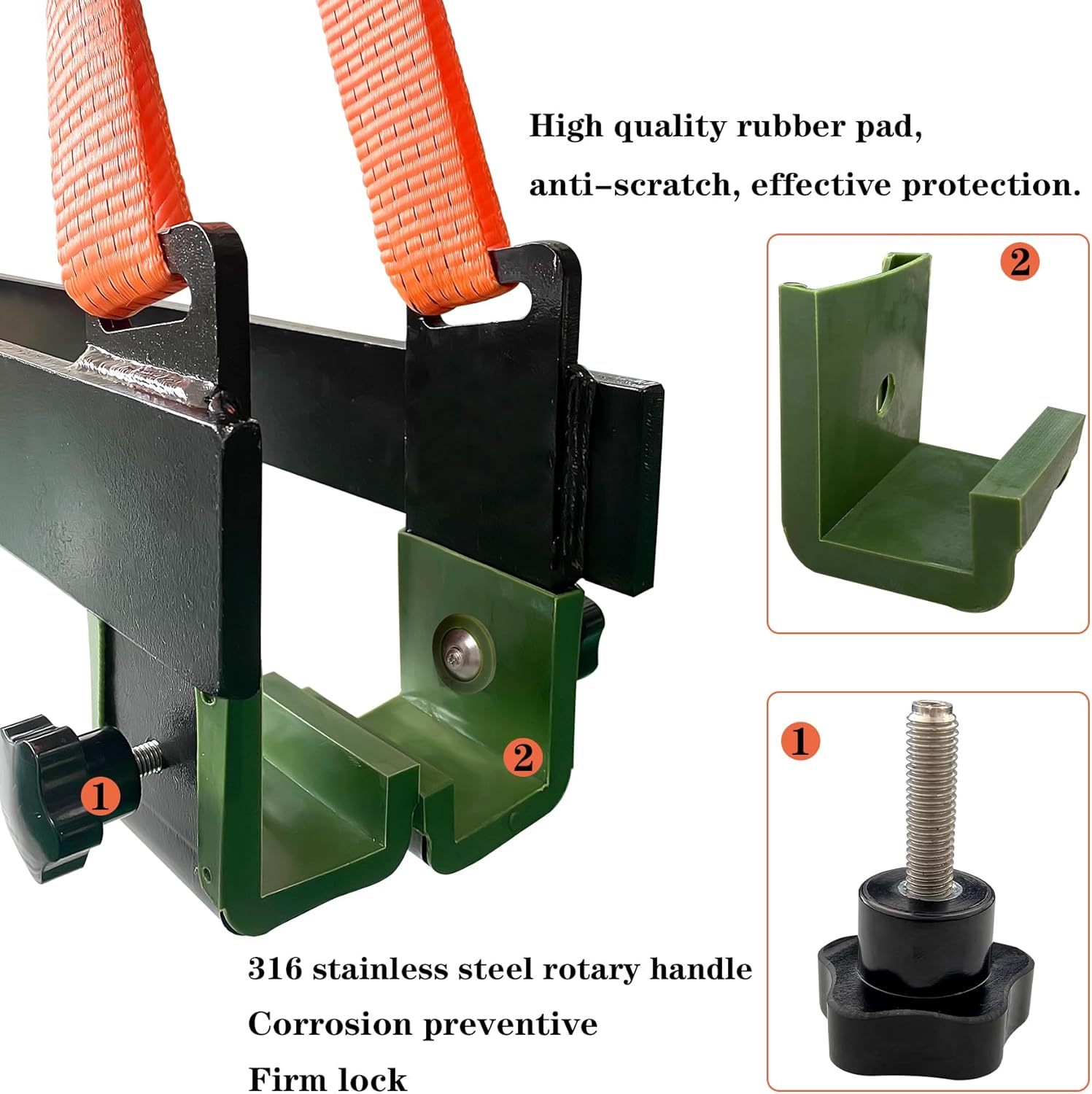
Thick powder-coated steel brackets and decent polyester straps feel robust for the price
2800 lbs rated capacity easily covers most personal watercraft with a good safety margin
Rubber pads and included stainless screws help protect the hull and keep the brackets in place
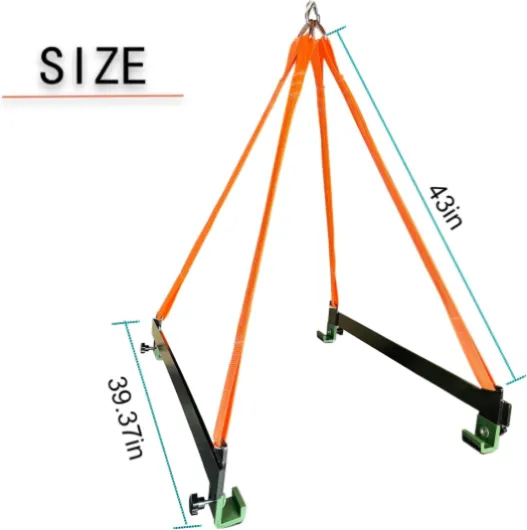
After using the SUONE 43'' watercraft sling for a bit, my honest take is that it’s a solid, no-frills option for lifting a jet ski or PWC if you’re on a budget but still care about safety. The steel brackets are thick, the straps feel dependable, and once you’ve figured out the right placement on your hull, lifts are stable and predictable. It doesn’t feel like a toy, and that’s important when you’re trusting it with an expensive machine over your head.It’s not perfect. The instructions are basic, the accessories feel a bit cheaper than the main components, and it’s not super adjustable or idiot-proof. You need to bring some common sense and take the time to do the first setup carefully. But for a recreational user who wants to get their ski off the trailer for maintenance, cleaning, or short storage, it does the job without feeling sketchy, and it seems like it will last if you don’t abuse it.If you’re running a professional shop, lifting boats all day, or you want something with full adjustability and brand support, I’d look at higher-end marine lifting systems. But if you’re a typical PWC owner who needs a reliable sling a few times a season and doesn’t want to spend a fortune, this is a good value, functional choice. Just respect the load limit, inspect it regularly, and take your time with setup, and it should serve you well.
See more
Strong steel bar and thick polyester straps with a generous 2800 lb rating
Works well with engine hoists, forklifts, or overhead beams for easy PWC lifting
Good value compared to paying marinas or buying brand-specific cradles
After using this C CLINK watercraft lift sling a handful of times, my take is simple: it’s a solid, no-frills way to lift a jet ski if you already have a hoist, forklift, or overhead beam. The materials feel strong, the 2800 lb rating gives a comfortable safety margin for a PWC, and once you’ve got it positioned right, it lifts cleanly without drama. For regular maintenance, trailer work, or moving a ski onto a stand, it definitely makes life easier than trying to muscle the thing around.It’s not perfect though. The universal design means it doesn’t hug every hull shape nicely, and on some models (like the Ski-Doo mentioned in the reviews) it can rub or damage plastics if you’re not careful. Hooking it up solo is also a bit of a hassle, especially at the dock when the ski is moving. There’s no detailed compatibility info or step-by-step guide, so you have to rely on your own common sense and do slow test lifts to avoid problems.I’d recommend this to people who are reasonably handy, own a PWC under the weight limit, and want a practical lifting solution without spending a fortune on a brand-specific cradle. If you’re the type who wants plug-and-play, model-specific fit with zero setup thinking, or you’re extremely picky about any chance of scuffs, you might be happier spending more on a dedicated system. For most DIY jet ski owners, though, it’s a good balance of price, strength, and usefulness – not perfect, but it gets the job done.
See more
Choosing the best boat tie down straps is not just about convenience; it is about protecting a high value yacht tender or jet boat from avoidable damage every time it travels by road.
Understanding load ratings, break strength and working limits
Before you choose any boat straps, you must understand the difference between working load limit and break strength. Manufacturers usually express break strength in lbs, indicating the maximum force a strap or tie down can withstand before it fails under extreme conditions. For safe yacht transport, many trailer specialists follow a working load limit equal to roughly one third of the stated break strength, especially when securing a heavy tender on a boat trailer, in line with common cargo securement practice such as the North American Cargo Securement Standard.
When you compare heavy duty ratchet straps or a retractable tie system, always check the label sewn into each strap. That label should show material, rated strength, recommended working load and sometimes the ideal length range for different trailer tie configurations. If a supplier cannot clearly state the break strength and working load in lbs for both the webbing and the stainless steel hooks, avoid using those tie downs on any yacht related boat trailer.
Load paths matter as much as raw strength when you tie a boat down for highway speeds. A well designed pattern uses at least two transom tie straps at the stern, one or two bow straps and sometimes additional down straps across the beam for very heavy boats. For ground tackle and overall safety planning, many owners review their secure boat procedures at the same time they evaluate new anchors using a dedicated guide to top boat anchors for marine use, aligning road and mooring safety standards.
Use case
Typical width
Example break strength
Suggested working load limit
Example models
Small RIB (up to ~1,500 lb)
1 in (25 mm)
1,500–2,000 lb
500–650 lb
Rhino USA 1" Boat Transom Straps, BoatBuckle G2 1"
Medium tender / jet boat (~1,500–3,000 lb)
1.5 in (38 mm)
3,000–4,000 lb
1,000–1,300 lb
Rhino USA 1.5" Ratchet Straps, Fulton F2 Transom Tie Downs
Heavy tender on tri axle trailer
2 in (50 mm)
4,000–5,000+ lb
1,300–1,700 lb
Erickson 2" Ratchet Straps, BoatBuckle G2 2"
Values above are typical examples based on manufacturer literature; always confirm the exact ratings printed on your specific boat tie down straps.
Materials, corrosion resistance and stainless steel hardware
Marine environments punish every component of a tie down system, especially metal hooks, ratchets and mounting bolts. Salt spray, UV exposure and repeated wet dry cycles can weaken non stainless hardware quickly, so yacht owners should prioritise stainless steel or zinc coated components on any boat tie solution. When you compare heavy duty options, look closely at whether the ratchet mechanism, springs and bolts use true marine grade stainless steel such as 304 or 316, or cheaper plated steel that may rust.
Webbing quality also separates the best boat tie down straps from budget alternatives that belong on a garden trailer, not under a yacht tender. High density polyester webbing resists stretch, maintains strength when wet and handles repeated loading cycles better than generic nylon straps trailer products. For long term reliability, choose a strap width and length that match your hull size, then pair that with stainless hooks and a steel retractable housing if you prefer a retractable transom system.
Many premium brands now offer integrated retractable tie solutions that bolt permanently to the trailer transom frame. These retractable transom units keep the down straps clean, dry and ready, while a simple release button lets you extend the strap and tie the boat down in seconds. When you evaluate a complete boat anchor kit for mooring, using a specialist resource such as a guide to top boat anchor kits, apply the same mindset to your trailer tie hardware; prioritise corrosion resistance, proven strength and ease of inspection.
Configuring transom tie patterns and trailer attachment points
Correct configuration of transom tie patterns is as important as choosing a strong strap. At the stern, two symmetrical transom tie straps should run from solid hull or lifting points down to secure trailer transom eyes, forming an even V shape. This geometry prevents sideways downs, reduces twisting loads on the transom and keeps the boat firmly centred on the trailer bunks.
On the bow, a dedicated boat tie strap should pull the stem snugly into the bow stop while a safety chain backs up the main tie down. For larger or heavier duty setups, many yacht owners add extra ratchet straps diagonally from the bow rail or cleats to trailer tie points near the axle. Each down strap should be tensioned enough to secure the boat without crushing fenders or deforming the hull, and the total system must share loads across multiple points rather than relying on a single heavy duty strap.
Side to side stability often requires additional boat straps across the beam, especially for high profile jet boats or RIBs carried behind a yacht. These cross down straps should connect to low trailer points, pulling the hull down rather than inward, which helps maintain balance during sharp turns or emergency brake events. When you plan your layout, sketch the tie downs as arrows showing force direction, then adjust strap length and attachment hardware until every strap contributes to a stable, secure boat configuration.
Diagram: recommended tie down pattern for a typical yacht tender on a trailer
[ Bow View ]

   Bow eye
     |
  (1) Bow strap to winch post
     |
====[Hull on bunks]====
  /                \
(2) V-shaped transom straps to trailer eyes
  \                /
   Trailer frame and axle

Legend:
(1) Primary bow tie down + safety chain
(2) Pair of transom tie straps forming a wide V
Optional: beam straps across the gunwales for tall or top heavy boats
Retractable systems, ratchet mechanisms and user friendly safety
Time pressed crews appreciate retractable tie systems because they reduce setup time while improving consistency. A steel retractable housing mounted on the trailer frame keeps each down strap protected, so the webbing does not drag on the ground or soak in bilge water between trips. With a simple push of a release button, the strap extends to the correct length, then locks as you ratchet it tight against the boat.
Traditional ratchet straps remain popular because they are versatile, affordable and easy to replace in remote marinas. When you use these on a boat trailer, choose models with ergonomic handles, clear lock positions and corrosion resistant stainless components in the ratchet body. Many yacht owners standardise on a single heavy duty ratchet design across all tie downs, simplifying crew training and ensuring that every strap reaches the same tension when they secure the boat before departure.
Brand reputation matters when you rely on a tie down system to protect a yacht tender worth tens of thousands of euros. Some owners favour products from established manufacturers such as Rhino USA, BoatBuckle and Fulton for their clearly stated break strength ratings, robust hooks and durable webbing. Whether you choose a retractable transom system, classic ratchet straps trailer kits or a hybrid approach, insist on hardware that feels solid in the hand, operates smoothly and inspires confidence every time you tie the boat down.
Inspection routines, maintenance and integrated safety culture on board
Regular inspection of every tie, strap and mounting bolt should become part of your yacht maintenance checklist. Before each journey, run your hand along every boat tie strap to feel for cuts, abrasions or stiff spots that signal UV damage, then check that all stainless hooks and trailer points remain free of sharp edges. Any strap showing frayed stitching, faded labels or reduced elasticity should be retired immediately, regardless of its original break strength in lbs.
At least once per season, remove each down strap, ratchet and retractable unit from the boat trailer for a deeper inspection. Clean stainless steel parts with fresh water, lubricate moving joints lightly and verify that mounting bolts into the trailer transom frame remain tight and free from corrosion. Many professional captains align this routine with other safety checks, such as reviewing lifejackets, flares and even camera gear using resources like a guide to top underwater cameras for diving, building a culture where every secure boat procedure receives equal attention.
Storage practices also influence how long your best boat tie down straps retain their rated strength. When not in use, roll each strap neatly, keep it out of direct sunlight and avoid leaving heavy duty webbing under constant tension against sharp trailer tie edges. By treating tie downs, transom tie systems and all boat straps as critical safety equipment rather than disposable accessories, yacht owners significantly reduce transport risks and protect both their vessels and the people who travel with them.
Key statistics on yacht and trailer safety
According to the United States Coast Guard Recreational Boating Statistics reports, improper loading and unsecured gear are recurring contributing factors in recreational boating incidents, highlighting how critical correctly installed tie downs and boat straps are for overall safety.
Industry testing by major strap manufacturers and independent laboratories shows that prolonged UV exposure can reduce synthetic webbing strength by a substantial margin over several seasons, which is why regular inspection and replacement of each tie down strap is essential for yacht owners.
Many marine safety organisations and cargo securement guidelines recommend that the combined working load limit of all tie downs meets or exceeds the weight of the boat on the trailer, and some practitioners target up to around 1.5 times boat weight to provide an additional safety margin for emergency brake events and rough road conditions.
Field surveys of trailerable boats in busy marinas have found that a significant share of owners still use non rated ropes instead of certified heavy duty ratchet straps, increasing the risk of hull movement and trailer instability during transport.
Laboratory corrosion tests indicate that marine grade stainless steel hardware can last several times longer than untreated carbon steel in salt spray conditions, making stainless components a cost effective choice for long term tie down reliability.
Frequently asked questions
Measure the distance from each hull attachment point to the corresponding trailer point, then add at least 20% extra length for routing around rails or cleats. For transom tie applications, ensure the strap can form a clean V shape without sharp bends. When in doubt between two sizes, choose the longer strap and use the ratchet to take up slack.
A typical setup uses at least two transom tie straps at the stern and one primary bow strap, plus a safety chain. Heavier or taller boats may require additional down straps across the beam to prevent lateral movement. Always follow both the trailer manufacturer’s recommendations and local transport regulations for minimum tie down requirements.
Quality retractable transom systems use the same grade of webbing and hooks as conventional heavy duty ratchet straps, and they carry similar break strength ratings. The main difference lies in convenience, because the strap retracts into a housing when not in use. As long as the retractable tie system is rated appropriately for your boat weight, it can be just as secure.
Most yacht owners replace frequently used tie downs every few seasons, or sooner if they show visible wear. Signs that a strap needs replacement include frayed edges, faded labels, rusted hardware or stiff, discoloured webbing. Because tie downs are relatively inexpensive compared with the value of a yacht tender, proactive replacement is a prudent safety investment.
General purpose cargo straps may offer adequate strength in lbs, but they often lack corrosion resistant stainless hardware and UV stable webbing. Marine specific boat straps are designed for repeated exposure to salt water, sunlight and dynamic loads unique to boat trailers. For a secure boat transport setup that matches yacht standards, marine rated tie downs are strongly recommended.
According to our tests, the best boat tie down straps is the BoatBuckle G2 Transom Boat Tie Down Straps to Trailer 2x43-Inch, 2500lbs Break Strength, Bolt On Retractable Ratchet Straps Heavy Duty, 2-Pack Alloy Steel (Freshwater) with a score of 8.7/10.
The cheapest boat tie down straps in our comparison is the Retractable Boat Trailer Straps (2-Pack) - Heavy Duty 5cmx1.1m, 1300kg Tie Down Straps to Trailer - Ultimate Transom Tie Down Straps for Boat, Jet Ski & More! Stainless Steel Stainless Steel 5 cm x 110 cm.
The most popular boat tie down straps is the BoatBuckle G2 Transom Boat Tie Down Straps to Trailer 2x43-Inch, 2500lbs Break Strength, Bolt On Retractable Ratchet Straps Heavy Duty, 2-Pack Alloy Steel (Freshwater) with 219 customer reviews.
To choose a boat tie down straps, we recommend comparing performance, build quality, value for money and user reviews. Our comparison table above helps you make the right choice.
We have tested 5 Boat tie down straps to establish this ranking.