
Summary
Editor's rating
Value: decent price for what it does, with some caveats
Design: simple universal sling, not made for one specific ski
Materials and build: feels sturdy, not cheap strap junk
Durability after repeated wet use
Real-world performance at the dock and in the garage
What you actually get in the box
Effectiveness: does it actually lift safely?
Pros
- Strong steel bar and thick polyester straps with a generous 2800 lb rating
- Works well with engine hoists, forklifts, or overhead beams for easy PWC lifting
- Good value compared to paying marinas or buying brand-specific cradles
Cons
- Universal design doesn’t fit every hull cleanly and can rub plastics if positioned poorly
- Can be tricky to hook up and balance solo, especially at a moving dock

Specifications
View full product page →| Brand | C CLINK |
A cheap way to get a jet ski off the trailer without wrecking your back
I picked up this C CLINK watercraft lift sling because I was tired of wrestling my jet ski on and off the trailer every time I wanted to do maintenance. I don’t have a fancy overhead lift or a dedicated PWC cradle, but I do have access to a basic engine hoist and occasionally a forklift at work. So I wanted something simple that could hook to a single lifting point and just get the job done without me overthinking it.
On paper, this sling checks the boxes: 2800 lb rating, polyester straps, a long steel bar with rubber padding, and two big steel rings to hook into. The jet ski I used it on is under 1,000 lbs wet, so there’s a huge safety margin in theory. I also saw the mixed reviews: some people saying it worked perfectly, one person complaining it didn’t fit their Ski-Doo and damaged the plastics. That’s exactly the kind of thing I pay attention to because I’d rather not crack fairings just to change bunks.
After a few weekends using it at the dock and in the garage, my feeling is pretty clear: it’s not fancy, the brand is nothing special, but the hardware is decent and it lifts. If you’re expecting a model-specific cradle that hugs every contour of your hull, this isn’t it. It’s more of a universal, “good enough” bar and strap setup that you’ll need to position carefully. When you take five minutes to set it up right, it feels solid. When you rush it, you can see how someone could scrape plastic.
Overall, I’d describe it as a practical tool for people who already have some lifting gear (hoist, forklift, overhead beam) and just need a way to grab the jet ski safely. It’s not perfect, and there are some annoying details, but for the price and the load rating, it’s a workable solution if you’re a bit handy and pay attention to how you hook it up.
Value: decent price for what it does, with some caveats
Price-wise, this sits in that mid-range “good enough” zone. It’s cheaper than some of the big-name, brand-specific PWC lift kits, but more expensive than random unbranded straps or trying to DIY something questionable. For what you get – a thick steel bar, four heavy straps, and hardware rated to 2800 lbs – the price feels fair. You’re paying for a simple but sturdy tool, not for a fancy brand logo or some elaborate system.
Compared to paying a marina or dealer to lift your ski every time you need to work on it, this thing pays for itself pretty fast if you’re a DIY person. I used it to replace bunks, clean the hull, and move the ski to a storage stand. If I had to pay someone to do those jobs or rent specialized gear, it would easily cost more than this sling after a couple of uses. So from that angle, the value is good as long as you actually use it a few times a season.
That said, it’s not perfect. There’s no model-specific guidance, no extra padding for tricky hull shapes, and it can be annoying to hook up solo. You’re trading some convenience for a lower price and a universal design. If you own a very expensive, fragile-skinned PWC and are paranoid about any scratches, you might want to look at a more tailored lifting cradle even if it costs more. If you’re okay with a few scuffs and just want something strong that lets you do your own maintenance, this is a decent compromise.
Overall, I’d call the value pretty solid: you get strong materials, a high load rating, and a tool that genuinely makes handling a jet ski easier, without breaking the bank. Just be aware that you’re buying a universal sling that expects you to use some common sense and take your time, not a plug-and-play lift system designed for your exact model.
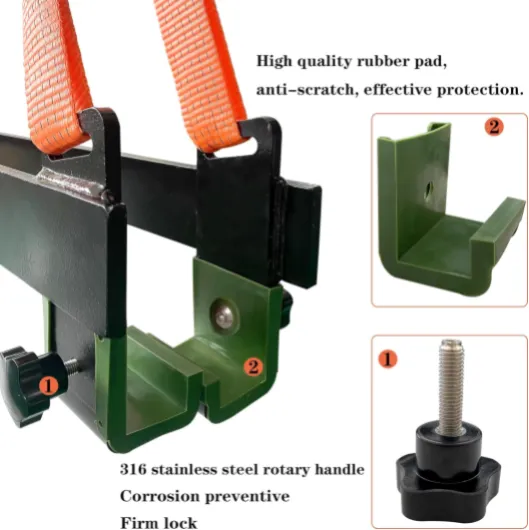
Design: simple universal sling, not made for one specific ski
The design is pretty straightforward: one long steel bar, four straps, two rings. No pulleys, no adjustment ratchets, no moving parts. The bar is about 2.36 inches wide and fairly thick (around 0.4"), so it doesn’t flex under load. On my jet ski, it sat nicely across the bottom as long as I took the time to center it. The rubber pad glued or fixed to the bar is there to avoid scratching the hull, and that part does its job as long as the bar is clean and you’re not dragging gravel against the ski.
The straps are anchored to the bar and go up to two triangular rings, so you’re basically lifting from one main point. That works well with an engine hoist or a forklift hook. The problem with the design is that it’s too generic for some hull shapes. On my ski (a mid-size PWC), it fit fine once I adjusted strap positions and checked clearances. But I can see how someone with a Ski-Doo with more pronounced side plastics could run into issues, especially if they just throw it on quickly and start lifting without doing a slow test lift.
I also noticed that getting it hooked up solo is a bit of a hassle. You’re trying to hold the bar in place, run the straps where you want them, and then hook the rings into your hoist. One reviewer mentioned it’s hard to hook up alone, and I agree. If your hoist hook is high, you end up lifting the rings over your head while trying not to shift the bar. It’s doable, but it’s not super user-friendly if you’re by yourself at the dock and the ski is moving around a bit.
Overall, the design is functional but basic. It’s built around strength and universality, not convenience or model-specific fit. If you expect to drop it in place and lift without thinking, you might be disappointed. If you’re okay with spending a few minutes on setup and a test lift, the design works well enough and feels safe within the rated capacity.
Materials and build: feels sturdy, not cheap strap junk
On the materials side, this thing is actually pretty solid. The steel bar is thick and heavy enough that you don’t worry about it bending. The welds on the ends and around the strap connection points on my unit looked clean, no ugly blobs or sharp edges. The triangular rings are thick steel as well (they say 0.46" thick), and you can feel they’re not some thin stamped metal. When I had the ski hanging in the air, there was no creaking or weird flexing – it just sat there.
The polyester straps are noticeably thicker than the cheap ratchet straps you buy in a bargain bin. They’re not super stiff; they have a bit of give, but nothing that feels sketchy. The stitching is heavy, with multiple rows crossing over each other. The product description talks about an upgrade with “multiple high-quality fixed weaving threads” and staggered stitching to avoid breakage. Mine looks consistent with that: no loose threads, no fraying after a few uses. I dunked it in the water a couple of times, let it dry in the sun, and didn’t see any immediate fading or stiffness, though obviously long-term UV exposure will always wear straps over time.
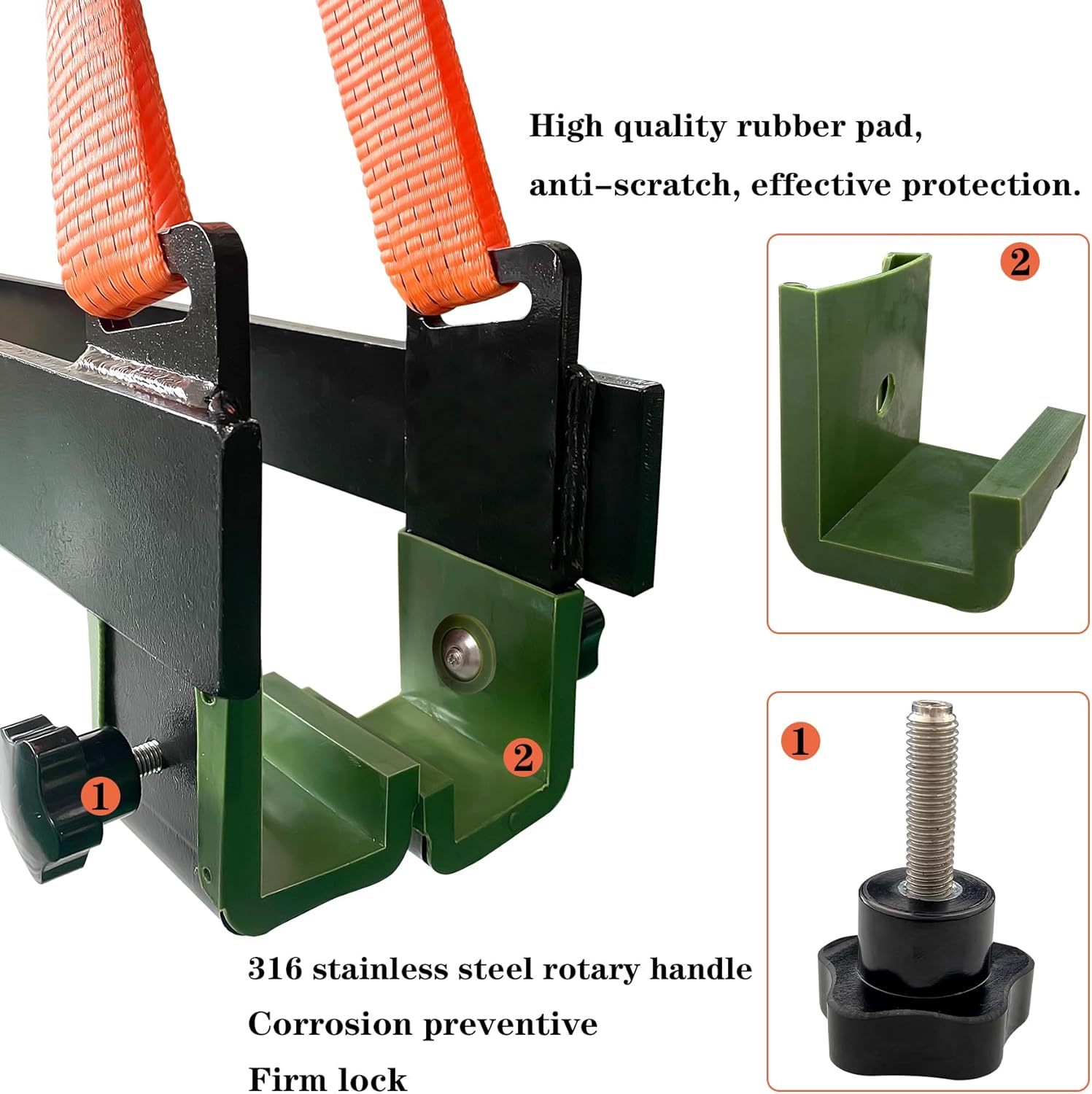
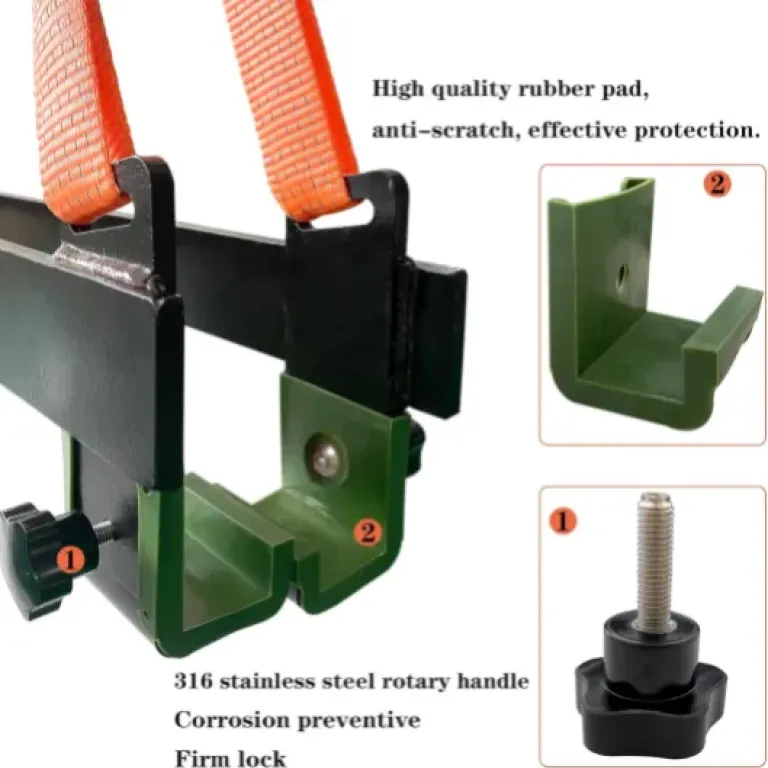
The rubber pad on the bar is decent. It’s not super thick like foam, but it’s enough to avoid metal-on-gelcoat contact if you keep it clean. They mention using 316 stainless hardware to keep the pad in place even when submerged for a long time. I can’t say I’ve left it underwater for days, but after a few wet lifts there’s no sign of it peeling or shifting. That said, if this is going to live in saltwater full-time, I’d still rinse everything off and check for rust or corrosion now and then. The bar itself is alloy steel, not stainless, so surface rust is always a possibility down the line.
In practice, the overall feel is reassuring. When you grab the bar and straps, it doesn’t feel like discount webbing that’ll snap on you. The 2800 lb rating seems realistic for this construction, especially if your jet ski is well under that limit. It’s not industrial-crane-grade gear, but for personal watercraft and light boat use, the materials are more than adequate and better than I expected at this price point.
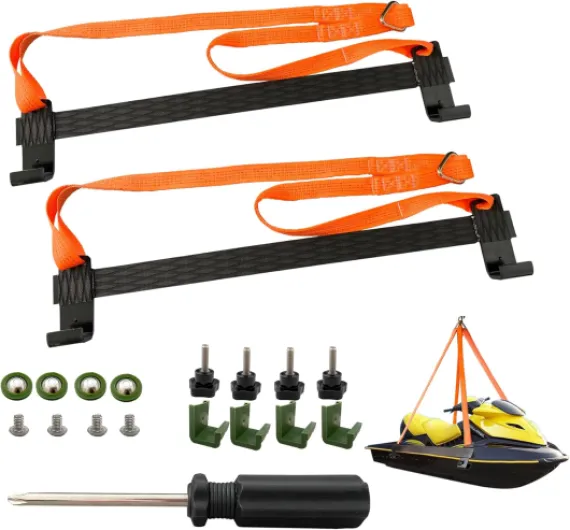
Durability after repeated wet use
I haven’t owned it for years obviously, but after several weekends of use and a few dunkings, I have a decent first impression of its durability. The steel bar hasn’t shown any bending or warping, which is expected given how thick it is. There’s no visible rust yet on my unit, but I’m also not leaving it sitting in saltwater. I rinse it with fresh water after use and let it dry in the garage. If you skip that step in a marine environment, I’d fully expect surface rust to show up eventually since the bar itself isn’t stainless.
The straps and stitching are holding up well so far. No fraying at the ends, no pulled threads around the stitched areas, even after being wet and then dried in the sun. Polyester is usually decent at handling UV and moisture, and this seems consistent. The manufacturer talks about an upgraded version that’s supposed to be 100% non-breakage thanks to better weaving and multiple stitching passes. I obviously can’t verify the 100% claim, but visually it does look more robust than the bargain lifting slings I’ve used in the past.
The rubber pad is probably the part I’ll watch the closest long-term. On mine, it’s still firmly attached and hasn’t started peeling at the edges. They mention 316 stainless hardware holding it, which should help in saltwater. But rubber and constant immersion never age perfectly, so if you’re using this every week at a saltwater marina, I’d inspect it now and then to make sure there’s no cracking or separation. Even if the pad eventually fails, you could technically keep using the bar with some added padding (old carpet, foam, etc.), but it would be annoying for a relatively new product.
Based on what I’ve seen, for occasional or seasonal use, I don’t see any red flags. The materials are thick enough that you’re more likely to replace the ski before this sling gives up, as long as you don’t abuse it or leave it rotting in the elements. For heavy commercial use or all-year marina duty, I’d probably check it more often and accept that, like any strap-based lifting gear, it’s a consumable at some point and not a lifetime item.
Real-world performance at the dock and in the garage
Using it in the garage with an engine hoist is where it shines the most. Solid floor, no movement, everything is predictable. I backed the trailer in, slid the bar under the ski, aligned it roughly with the center, hooked the rings, and did a slow lift. After a small adjustment (the nose was slightly lower than the rear), it balanced out and I could roll the hoist forward while the ski hung freely. Swapping trailer bunks and doing some underside cleaning was way easier than crawling under a loaded trailer.
At the dock, things are a bit more fiddly. Water movement, wind, and the fact that you’re leaning over the edge all add up. The 39" bar is long enough to give good support, but getting it under the ski while it’s floating takes a bit of patience. Once it’s in place and you start lifting with an overhead beam or davit, it works, but you have to keep an eye on the hull and plastics as the ski comes out of the water. The rubber pad helps but doesn’t solve everything if your straps are in a weird spot.
One performance detail I appreciated is that the bar doesn’t twist much under load. Some cheaper setups will want to rotate or dig into one side of the hull. Here, the thickness and width of the steel keep it stable. The straps also don’t slip through the attachment points once there’s tension. I didn’t have to keep re-centering anything mid-lift, which is good because that would be stressful with a 700–900 lb ski hanging over the water or your trailer.
So overall performance is solid but not idiot-proof. In the right setup, it works very well and feels strong. In less controlled situations, like a choppy dock or if you’re trying to rig it solo in a hurry, it can be a bit of a pain and you increase the risk of scraping or misbalancing the ski. It’s a tool that rewards taking your time; if you do that, it performs exactly like you’d hope for a basic sling.
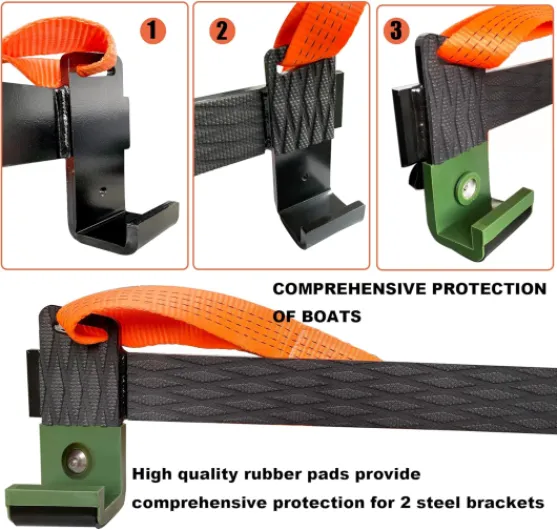
What you actually get in the box
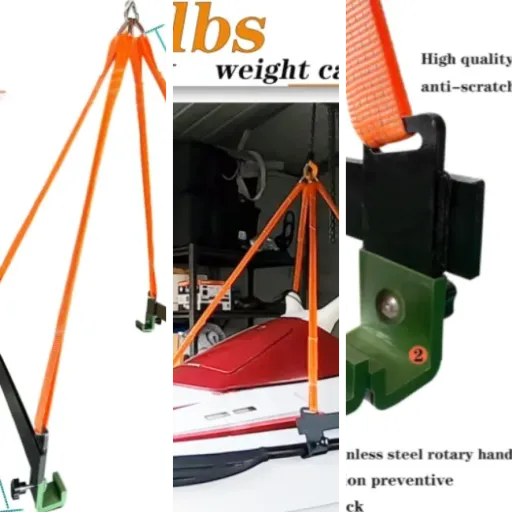
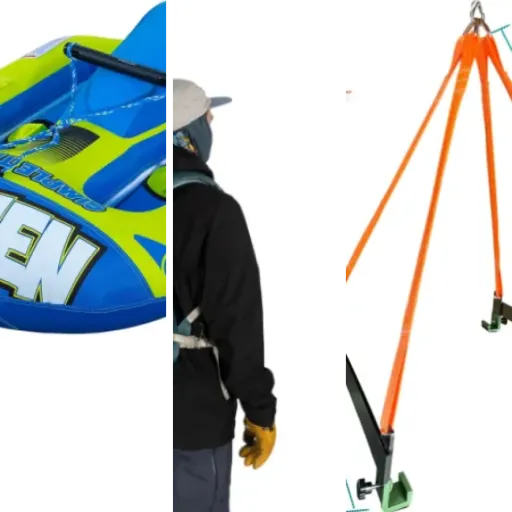
Out of the box, you basically get three main pieces: the long steel bar with rubber padding on one side, four polyester straps already attached, and two big triangular steel rings at the top where you hook your hoist. That’s it. No fancy case, no extra hardware, no instructions that walk you through different jet ski models. Mine came with a pretty bare-bones leaflet that just showed a very generic diagram. If you’ve never used a sling before, you’ll be guessing a bit the first time.
The bar is about 39 inches long (they say 39.37"), and the straps are around 43". The idea is simple: the steel bar goes under the hull, rubber side facing the ski, the four straps go up around the sides, and the two triangular rings meet at the hook of your hoist. It’s a straightforward design, but it’s universal, so nothing lines up to any specific brand like Sea-Doo or Yamaha. You have to position the bar more or less under the center of gravity yourself and check that the straps clear the plastics and any sharp edges.
One thing I noticed quickly: there’s no clear marking for where “center” is on the bar. Would’ve been nice to have a simple line or notch showing the middle to help line it up under the ski. I ended up measuring once and making a small mark myself with a paint pen. Also, there’s no padding on the straps themselves, just the rubber on the bar, so if your hull has weird shapes or side panels that stick out, you need to pay attention to how those straps are rubbing.
In short, the presentation is very no-frills: one piece of gear, basic paperwork, that’s it. It feels like something made for people who already sort of know what they’re doing with lifting gear. If you’re expecting detailed user guides or compatibility charts for each PWC model, you won’t find that here. You get a beefy bar, thick straps, and you’re on your own to make them work with your setup.
Effectiveness: does it actually lift safely?
In terms of pure effectiveness, it does what it’s supposed to do: it lifts a jet ski. I used it with two setups: an engine hoist in my garage to pull the ski off the trailer, and a forklift at work to move it onto a rolling stand. In both cases, once I had the bar centered and the straps laid out right, the lift was smooth. The ski came straight up, no crazy tilting, and I could swing it slowly without feeling like something was going to slip.
The 2800 lb capacity is honestly overkill for a single PWC, which is a good thing. My ski is under 1,000 lbs, so I’m nowhere near the limit. I did a couple of test lifts: first just a few inches off the bunks to check balance, then higher once I was confident. No stretching, no sounds, nothing. That lines up with some of the positive reviews – people lifting big Sea-Doo 300s without drama. If you’re within the weight range and not doing anything silly, it feels safe enough for home use.
Where the effectiveness takes a small hit is fit and ease of use. This is not a custom cradle. One Amazon reviewer mentioned it didn’t fit their Ski-Doo right and damaged the side plastic. I can see how that could happen if the straps are rubbing on a sharp edge or catching a panel. You really have to look at how the straps run up the sides and maybe adjust the angle or move the bar slightly forward or back. That’s not hard, but it does mean you can’t just throw it under there and yank the hoist. Also, doing all this alone is annoying – the ski floats or rolls slightly, and you’re constantly adjusting.
Overall, as a lifting tool, I’d say it’s effective and reliable enough if you take five extra minutes to set it up and do a slow test lift. If you’re the type to rush, or if you want something perfectly tailored to a specific hull, you may run into issues. But if your expectations are “basic sling that lets me get my PWC off the trailer or out of the water without breaking my back,” it hits that goal pretty well.
Pros
- Strong steel bar and thick polyester straps with a generous 2800 lb rating
- Works well with engine hoists, forklifts, or overhead beams for easy PWC lifting
- Good value compared to paying marinas or buying brand-specific cradles
Cons
- Universal design doesn’t fit every hull cleanly and can rub plastics if positioned poorly
- Can be tricky to hook up and balance solo, especially at a moving dock
Conclusion
Editor's rating
After using this C CLINK watercraft lift sling a handful of times, my take is simple: it’s a solid, no-frills way to lift a jet ski if you already have a hoist, forklift, or overhead beam. The materials feel strong, the 2800 lb rating gives a comfortable safety margin for a PWC, and once you’ve got it positioned right, it lifts cleanly without drama. For regular maintenance, trailer work, or moving a ski onto a stand, it definitely makes life easier than trying to muscle the thing around.
It’s not perfect though. The universal design means it doesn’t hug every hull shape nicely, and on some models (like the Ski-Doo mentioned in the reviews) it can rub or damage plastics if you’re not careful. Hooking it up solo is also a bit of a hassle, especially at the dock when the ski is moving. There’s no detailed compatibility info or step-by-step guide, so you have to rely on your own common sense and do slow test lifts to avoid problems.
I’d recommend this to people who are reasonably handy, own a PWC under the weight limit, and want a practical lifting solution without spending a fortune on a brand-specific cradle. If you’re the type who wants plug-and-play, model-specific fit with zero setup thinking, or you’re extremely picky about any chance of scuffs, you might be happier spending more on a dedicated system. For most DIY jet ski owners, though, it’s a good balance of price, strength, and usefulness – not perfect, but it gets the job done.