
First encounter with the Wally 108 sailing yacht on the dock
The Wally 108 sailing yacht does not arrive, it appears. From the quay in Porto Cervo the first view is all horizontal tension and disciplined restraint, a long low hull in dark carbon fibre that seems to erase freeboard rather than add it. You register the length only when a tender passes abeam and suddenly looks like a toy boat beside this Wally thoroughbred, a 33.0-metre performance cruiser with a beam of around 7.6 metres and a light displacement just under 60 tonnes according to Wally’s preliminary data.
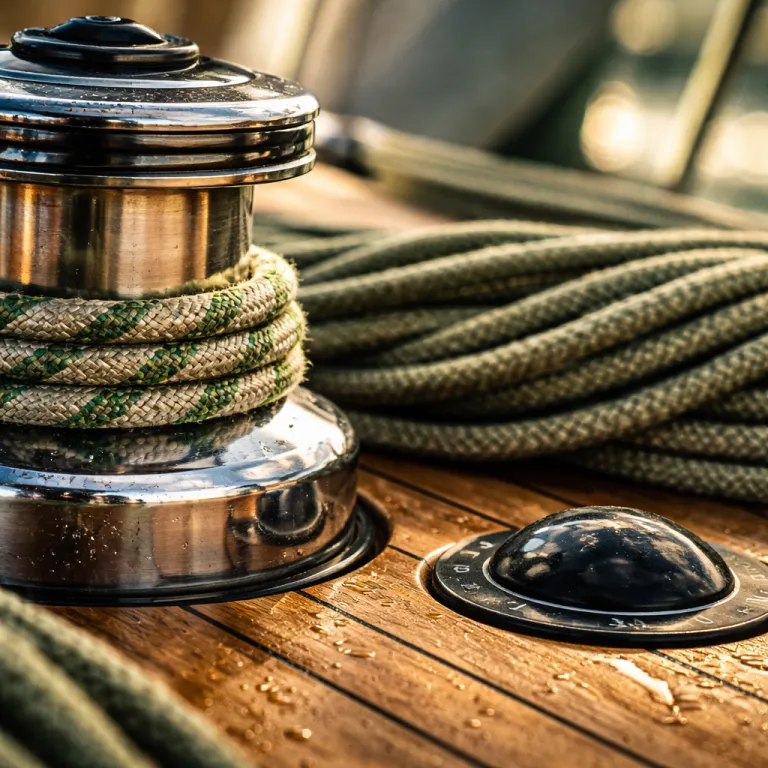
The trademark flush deck stretches clean from bow to cockpit, and the design intent is obvious. There is nowhere for the eye to snag, no clutter to break the sailing narrative, only discreet hatches and hardware that sit years ahead of most yachts in this size range. Wally yachts have always chased that racing purity, and here the sail handling systems vanish into the deck so the crew can move fast when the time comes, helped by powered winches and recessed tracks that keep sheets and lines out of the way.
Step aboard and the first sensation is scale rather than luxury. The teak deck runs unbroken around the coachroof, and the square top mainsail towers above, promising a serious sail area once hoisted. Wally’s figures indicate more than 640 square metres of sail upwind and over 1,200 square metres with gennaker set, and even at rest the Wally 108 sailing yacht feels tuned for performance, like a grand prix racer that has been stretched and civilised for an experienced owner who still wants to feel every shift of breeze.
Aft, the twin wheels frame a wide open helm station that is all business. The buttons at the helm for the so‑called Magic Trim system sit under your fingers, inviting short‑handed sailing that would have been unthinkable on 33‑metre yachts a few years ago. You sense this is a Wally‑built machine that expects you to sail, not simply to be sailed, with the carbon fibre rudder and deep T‑keel ready to translate every small input into a change of heading or heel.
The builder Wally has always blurred the line between racing and cruising yachts. On the Wally 108 sailing yacht that philosophy is distilled into a boat that looks ready for a cup start line yet hides the comforts of a serious cruising yacht below. It is not about being the best on paper; it is about how the yacht will feel after years of hard sailing upwind and long evenings at anchor, and why early coverage in Boat International and Wally’s own press material emphasises both performance and long‑range comfort.
Sailing under gennaker off Corsica : helm, heel and the quiet rush of speed
The first proper sail comes on a reach between Santa Teresa and the granite headlands of northern Corsica. The crew unrolls the gennaker, the square top main is trimmed with a tap of the Magic Trim buttons at the helm, and the Wally 108 sailing yacht leans into the breeze with the calm confidence of a boat that understands apparent wind. There is no drama, only that subtle acceleration you feel through the carbon fibre wheel before you see it on the instruments, where 11 to 12 knots of boatspeed appear in barely 14 knots of true wind.
At 12 to 14 knots of true wind the yacht settles into a heel angle that keeps wine glasses safe yet tells every sailor on board that this is not a floating villa. The helm feel is light but not nervous, and you can steer with two fingers even when sailing upwind in a Corsican chop that would have older yachts hobby‑horsing. Short‑handed or with a full crew, the Wally 108 sailing yacht rewards precise inputs, and the time between a small sail trim and a knot of extra speed is measured in seconds, not minutes, echoing the polar curves shared in Wally’s technical notes.
We spend an afternoon playing with sail combinations, swapping between full main and gennaker, then genoa and reefed main as the breeze builds. Each tack and gybe is a choreography of buttons at the helm, powered winches and a crew that quickly trusts the systems, because the Wally‑built logic is consistent from bow to stern. For an owner used to more traditional yachts, the ease of short‑handed sailing here feels almost unfair, especially when you realise that the same hull can also be pushed to race‑level loads with a full team on deck.
Off Calvi, with the sun dropping behind the citadel, we push the boat harder. The Wally 108 sailing yacht tracks like a racing yacht when pressed, the long waterline and fine entries slicing through leftover swell with a rhythm that makes time blur. You sense why Luca Bassani insisted that performance must never be sacrificed to comfort, and why this design still feels years ahead of many yachts for sale in the same segment, with test sails reporting sustained speeds in the mid‑teens when reaching in moderate breeze.
For readers interested in how sailing thinking migrates into power, the same design rigour appears in projects like Feadship Project 826, where a sailing yacht designer draws a motor yacht with a pickleball helipad. That cross‑pollination of ideas explains why a boat like the Wally 108 sailing yacht can feel both like a pure racing machine and a relaxed cruiser in the same day. It is a reminder that the best yachts are not defined by rig alone, but by the coherence of their design under real sea conditions and the way hull, appendages and rig work together.
Life below deck : owner spaces, guest flow and the working galley
Drop down the companionway and the mood shifts from regatta to refined retreat. The interior of the Wally 108 sailing yacht is all pale oak, indirect light and carefully framed sea‑level views that keep you connected to the sailing experience even below deck. There is no wasted volume, only a sequence of spaces that feel considered rather than simply large, with headroom that makes the 33‑metre hull feel closer to a small sailing superyacht than a conventional cruiser.
The owner suite sits forward, away from the mechanical hum of the stern, and it uses the full beam to create a cabin that feels more like a private loft than a traditional yacht stateroom. Large hull windows give a cinematic view of the anchorage, and the bed is oriented so the owner wakes facing the sea rather than a bulkhead, which sounds minor until you have lived with both layouts for years. Storage is generous but discreet, and the materials echo the carbon fibre structure without becoming cold, with soft fabrics and acoustic panels tempering the hard racing geometry.
Guest cabins are arranged to keep couples and families comfortable without turning the boat into a charter dormitory. Two double cabins and a flexible twin can host friends for a racing weekend or a slow cruise, and the circulation keeps crew traffic separate so service feels invisible when you want privacy. For those who obsess over yacht sale listings, this is where the Wally 108 sailing yacht quietly outperforms many yachts for sale in the same length, because the design respects how people actually move on board and how they use spaces over a full season.
The galley, often an afterthought on performance yachts, is a proper working space. It sits near the crew area for efficient service, with enough refrigeration and dry storage to support a week at anchor without daily tender runs, which matters more than any brochure gloss. For owners comparing custom designs, it is worth reading about the art of luxury yacht interior design to understand how choices in joinery, lighting and layout will age over time, and why Wally’s own interior guidelines prioritise durability as much as visual drama.
Interior stylist Maria Magnolfi has collaborated on several Wally projects, and her influence is visible in the way hard racing lines soften into livable spaces. The Wally 108 sailing yacht feels like a coherent whole, from the square top main above deck to the linen textures below, and that unity is what separates a true custom design from a catalogue refit. This is a boat you can live on for long periods without feeling trapped, which is the quiet definition of the best cruising yacht for an owner who still wants a fast, responsive sailing yacht.
Anchoring rituals, tender life and the shore night rhythm
Late afternoon off the Lavezzi Islands, the Wally 108 sailing yacht shifts from passage maker to floating terrace. The crew drops the hook in 12 metres over sand, the boat settles back on the chain, and the wide aft deck becomes an outdoor salon with nothing between you and the horizon. You understand why so many owners in this size bracket prioritise deck space over interior volume, and why the transom platform and side terraces are treated almost like additional living rooms.
The tender garage swallows a serious RIB without compromising the clean transom lines, and launch and recovery feel more like a practiced gesture than a manoeuvre. For a family cruise, this matters; the less time you spend wrestling with toys, the more time you spend actually using them, and the crew appreciates a system that works the same every time. When you read about other custom yachts such as the Cassidy Marie yacht, you see the same focus on how the day unfolds between anchor, tender and shore, and how the best designs make that choreography effortless.
Evenings ashore follow a familiar rhythm that any experienced owner will recognise. A quick tender ride to a harbour like Bonifacio or Santa Maria Navarrese, dinner on the quay, then a quiet return to the soft glow of the Wally 108 sailing yacht at anchor, where the boat feels like a private island waiting in the dark. The contrast between shore noise and the hush on deck is part of the magic that keeps people in this world for years, and why many owners describe the yacht as a moving waterfront home rather than a simple sailing boat.
From a practical standpoint, the systems that support this lifestyle are as important as the romance. Reliable generators, a watermaker sized for real usage, and a crew that can rotate without losing the thread of the yacht’s routines all shape the long‑term experience more than any single design flourish. Owners scanning yachts sale listings should read beyond the headline performance numbers and ask how the boat actually handles a week of anchoring, tender shuttles and late‑night returns, including fuel burn at displacement speeds and service intervals for hotel systems.
On the Wally 108 sailing yacht, those details feel resolved. The boat moves from sailing mode to anchor mode with minimal fuss, and the crew can shift from racing trim to dinner service without the sense of a theatre set being rebuilt. That ease is what makes a yacht feel years ahead of its peers, even when the spec sheet looks similar on paper, and it explains why Wally’s own communications highlight the transition from regatta course to quiet bay as a core part of the design brief.
Handling, crew demands and what an experienced owner really learns
After a week aboard, the Wally 108 sailing yacht reveals itself less as a trophy and more as a tool for serious sailors. This is not a boat for someone who wants to hand everything to the crew and retreat behind a closed door, because the helm is simply too seductive and the feedback loop between sail trim and speed too immediate. If you enjoy feeling a boat accelerate out of a tack or gybe, this yacht will keep you on deck longer than you planned, especially when you realise how closely the real‑world behaviour matches the design polars.
In practical terms, the crew requirement sits in a sweet spot. You can run the boat with a compact professional crew for private use, relying on powered systems and thoughtful deck ergonomics to make short‑handed sailing realistic for an engaged owner, yet there is enough space and separation to support a larger équipe if you decide to race or host more guests. Over time, that flexibility matters more than shaving a single crew berth from the plan, and it is one reason the model is attractive on the brokerage market.
Running costs align with other high‑performance carbon fibre yachts in this size range. Insurance, maintenance of advanced sail handling systems and periodic rig checks are not optional luxuries but structural realities, and any serious yacht sale discussion should include a frank line‑item review of these recurring commitments. The reward is a boat whose performance does not fade after a few years, because the systems are maintained to racing standards rather than cruising complacency, and because the carbon structure is inspected and serviced on a schedule closer to a maxi racer than a typical cruising yacht.
From a design lineage perspective, the Wally 108 sailing yacht sits squarely in the tradition that began when builder Wally first fused racing DNA with cruising comfort. Luca Bassani’s insistence that a yacht must be both fast and easy to use is visible in every tack, every gybe and every quiet reach under reduced sail area when the breeze pipes up. For owners comparing multiple yachts for sale, the question is not whether this is the best boat in abstract terms, but whether its particular blend of performance and restraint matches the way you actually sail and the kind of passages you dream about.
In the end, what stays with you is not a single number or feature. It is the memory of standing at the helm at dusk, one hand on the wheel, the other hovering over the buttons at the helm, feeling the boat lean into a Corsican breeze as the wake stretches straight and clean behind you. Out here, it is never the length overall that matters, but the wake she leaves, the way she holds 10 knots under main and jib in a fading breeze, and the quiet satisfaction of knowing the yacht is doing exactly what she was designed to do.
FAQ about the Wally 108 sailing yacht
How many crew does the Wally 108 sailing yacht realistically require ?
The Wally 108 sailing yacht can be operated with a compact professional crew of four to five for private use. For racing or larger guest parties, owners typically carry six to eight crew to manage sail handling, service and maintenance without fatigue. The exact number depends on how actively the owner participates in sailing and how often the yacht is used for events, regattas or longer offshore passages.
Is the Wally 108 suitable for short handed or handed sailing by an owner ?
Yes, the yacht is designed to make short‑handed sailing feasible for an engaged owner. Powered winches, organised deck layouts and centralised controls at the helm reduce the physical load of sail handling. However, for offshore passages or demanding racing, a full crew remains the safer and more efficient option, especially when handling the large square‑top mainsail and powerful headsails in rising wind.
How does the performance of the Wally 108 compare to similar length cruising yachts ?
The Wally 108 sailing yacht is significantly more performance‑oriented than many cruising yachts of similar length. Its carbon fibre construction, generous sail area and refined underwater profile deliver higher average speeds, especially when sailing upwind or reaching. Owners should expect a more responsive, race‑like feel rather than the softer motion of heavier displacement cruisers, with test sails and Wally’s own polars indicating double‑digit speeds in moderate breeze.
What kind of maintenance profile should an owner expect over the years ?
Maintenance focuses on preserving the integrity of the carbon fibre structure and the reliability of advanced sail handling systems. Regular rig inspections, hydraulic servicing and electronics updates are essential to keep performance at design levels. Budgeting for these items from the outset makes ownership smoother and protects long‑term resale value, particularly when presenting the yacht on the yachts sale or charter market.
Is the Wally 108 a good candidate for yachts sale or charter programmes ?
The Wally 108 sailing yacht can attract strong interest on the yacht sale and charter markets due to its distinctive design and performance reputation. However, it appeals most to experienced sailors who value speed and handling, so it is not a mass‑market charter product. Owners considering charter should work with brokers who understand performance yachts and can match the right clients to the boat, ideally referencing sea trial reports and Wally’s official specifications when presenting the yacht.
Sources
Boat International sea trial reports on the Wally 108, Yacht Charter Fleet market summaries, Wally official communications and technical press releases.