
Oyster 565 review for the first serious owner
You step aboard the Oyster 565 on a quiet Friday in Hamble. The boat feels substantial underfoot yet the bluewater sailing yacht does not loom over you like some big, remote machine. Within minutes you sense this British yard built it for an owner who actually plans to leave the marina and point the bow offshore, rather than just day sail between nearby ports.
This Oyster 565 review is not about chasing polar diagrams, it is about whether a couple can run this 56-foot cruiser without a permanent crew and still enjoy the ride. The design brief from Oyster Yachts was clear enough: create a yacht that bridges the gap between their larger yachts and the smaller models while keeping the handling civilised for shorthanded sailing. That intent shows in every corner of the layout, from the twin wheels in the cockpit to the deep, protected walkways leading aft to the transom, and it has been echoed in independent test reports that describe the 565 as “a genuine owner-driver bluewater cruiser”.
On deck the yacht reads like a masterclass in practical design rather than a styling exercise. The cockpit is long, with a large central table that anchors the social space yet still leaves clear passage to the aft deck. High coamings and the trademark seascape windows in the raised saloon sides give you that familiar Oyster yacht silhouette before you even look at the sail plan, and the overall impression is closer to a small expedition yacht than a fragile performance boat.
Oyster 565 key specifications at a glance
Length overall (LOA): approx. 18.1m (59ft 5in)
Length on the waterline (LWL): around 16.6m (54ft 6in)
Beam: about 5.0m (16ft 5in)
Displacement (lightship): roughly 27,000kg (59,500lb)
Draft: standard keel close to 2.5m (8ft 2in), with optional shoal or centreboard versions
Engine: typically a 150hp diesel driving a shaft and three-blade propeller
Fuel capacity: in the region of 950 litres split between tanks
Fresh water capacity: around 730 litres for extended cruising
Upwind sail area: just over 150m² with standard mainsail and headsail; manufacturer polars and sea trials suggest 7.5–8 knots at 35–40° apparent in 16–18 knots of true wind when trimmed correctly
Leaving the dock and learning what the yacht forgives
Cast off the lines and the first surprise is how calmly the Oyster 565 backs out of a tight berth. The twin rudders bite early, the twin wheels give precise feedback, and the boat pivots without the drama that haunts many big sailing yachts in crowded marinas. For a new owner this forgiveness at low speed matters more than any brochure claim about top speed under sail, and several owner reports highlight that the boat “handles like a much smaller yacht” when manoeuvring.
Visibility from the helm is helped by the raised saloon and generous windows, so you can see both the port side and the starboard side when sliding past a neighbour’s hull. The cockpit layout keeps winches and clutches clear of the helm seats, which means you will not be tripping over hardware while you focus on course and prop walk. Compared with many large yachts in the ninety foot class, often explored in depth in guides to luxury 90 foot yachts, the 565 feels almost intimate in how it communicates what the hull and rudders are doing, and the steering remains light even when the bow is pushed around by crosswind or tide.
Once clear of the harbour wall, you ease the throttle and feel the cruising yacht settle into an easy displacement groove. The high standard of engineering from this British yard shows in the lack of vibration and the way lockers stay quiet even when the bow meets a short chop. At around 2,000rpm the boat will typically cruise at 8–9 knots under power, with fuel burn in the region of 12–16 litres per hour and enough range from the fuel tanks for serious coastal passages. It is the kind of calm behaviour that lets an aspiring owner relax and start thinking about the sail plan rather than worrying about every gust or every small course correction.
Sail handling, cockpit life and the feel under way
Out in open water, you unroll the main and headsail and the Oyster 565 begins to show its character. Electric winches bring the sheets in without fuss, so even a light crew can trim the sail plan while one person stays at the helm and another moves forward along the wide side decks. In 12–15 knots of true wind you can expect a comfortable 7–8 knots of boat speed at 60–90 degrees off the wind, rising toward 9 knots on a broad reach in a bit more breeze, which aligns closely with published test-boat data. The boat heels gently, the twin rudders lock in, and the yacht tracks straight enough that you can step away from the wheel for a moment to check the chart table or glance at the plotter.
The cockpit becomes the heart of life aboard the Oyster 565 once the apparent wind settles and the autopilot holds course. Deep seating, a large table and the shelter of the sprayhood create a space where you can eat, work or simply watch the changing seascape windows of sky and water around you. If you have ever weighed up a refined boat rental on the French Riviera against ownership, this is where the equation shifts, because the cockpit feels like a private terrace rather than a hired deck, and the ergonomics make long watches less tiring than on many performance cruisers.
Short handed gybes in a fresh breeze are where many aspiring owners feel exposed, yet this performance cruiser is built to lower the pulse. Lines are led aft cleanly, the layout keeps the mainsheet system within easy reach of the helm, and the twin wheels allow you to move quickly from one side to the other as the boom comes across. The high standard of deck hardware and the balanced hull form mean the boat settles quickly on the new tack, rather than rounding up or wallowing while you sort out the sheets. Owners who have joined Oyster World Rally legs often comment that the 565’s predictable behaviour in squalls and night watches is what makes long passages feel manageable for a couple, with one rally skipper noting that “the boat never felt on edge, even when the wind built beyond the forecast.”
Life below: cabins, saloon and the working nav station
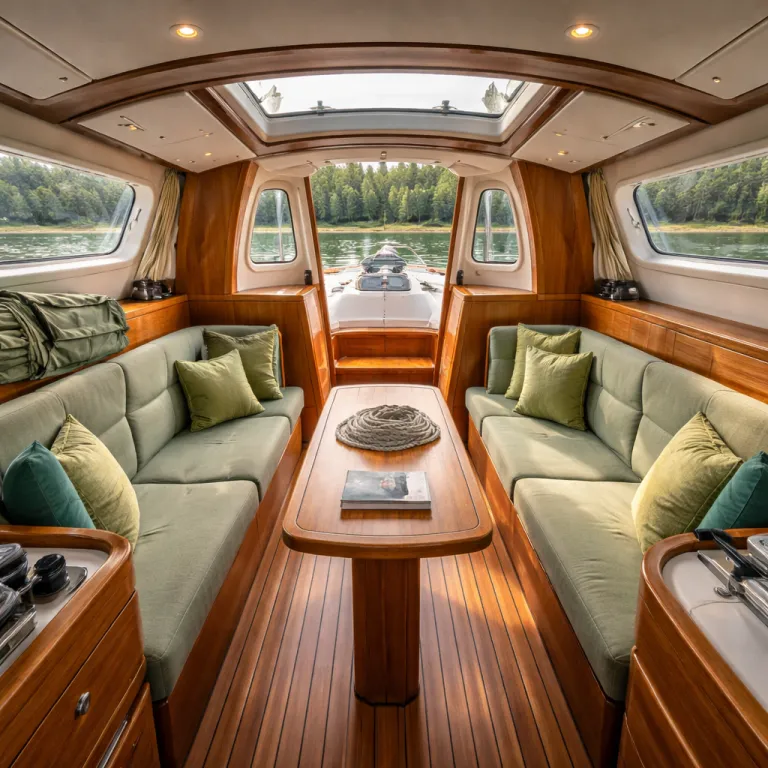
Drop down the companionway and the first impression is light, not length. The raised saloon, framed by those signature seascape windows, floods the interior with daylight even on a grey Channel passage. It feels like a modern apartment that happens to move, rather than a dark traditional cabin buried deep in the hull, and the joinery quality is closer to a small luxury apartment than a typical production cruiser.
The main saloon sits amidships with a large dining table to port side and a comfortable sofa on the starboard side, giving the owner several options for lounging or working. Forward, a well proportioned cabin forward can serve as a guest space or a quiet retreat on longer sailing passages, while aft the master cabin stretches across the full beam with its own ensuite and generous storage. This aft master cabin is where many buyers realise that a bluewater cruiser like this can replace a city pied à terre, because the layout feels residential rather than merely nautical, and the sound insulation makes it a genuinely quiet refuge under way.
At the foot of the companionway, the nav station anchors the working side of life aboard the Oyster 565. The chart table is properly sized for paper charts, the electronics are grouped logically, and the dedicated nav station seat lets you work on routing or weather without balancing on a saloon cushion. For an aspiring owner planning an Oyster rally or a long independent cruise, this space becomes mission control, and the way Oyster Yachts integrates systems here reflects a high standard of thinking about real offshore use. Access to electrical panels, tank gauges and battery management is generally straightforward, which matters when you are troubleshooting far from home and relying on your own skills rather than a nearby service yard.
Ownership, running costs and the Oyster network
Buying into the Oyster 565 is not just about acquiring a yacht, it is about joining a support ecosystem that extends far beyond the British yard where the hull was laid up. Oyster Yachts has built its reputation on bluewater cruiser service and refit, and that culture shows in how they brief new owners and stand behind each Oyster yacht in the fleet. When you are thousands of miles from home, that kind of backup turns a big purchase into a manageable long term relationship, especially if you plan to join an organised rally or undertake a full circumnavigation.
Running costs for a boat of this size will include regular engine servicing, rig checks, sail maintenance and the usual haul out work, and any realistic Oyster 565 review must acknowledge those numbers. A prudent owner should budget for annual yard time, insurance, mooring fees and a reserve for upgrades, whether that means new sails, updated electronics at the nav station or cosmetic work in the saloon and cabins. As a broad guide, many owners allow a percentage of the yacht’s value each year to cover maintenance and refit, especially if planning extended bluewater cruising. The reward is a sailing yacht that holds its value and remains ready for an Oyster rally or a private ocean crossing at short notice, rather than slowly slipping into deferred-maintenance territory.
Leadership at the yard matters too, and under Richard Hadida the company has doubled down on the idea that Oyster will support its yachts for the long haul rather than just at handover. That philosophy is why you see multiple generations of yachts rafted together at an Oyster rally, with owners swapping stories about life aboard Oyster boats from different eras. In the end, what you are buying with a 565 is not only a specific hull with twin rudders, twin wheels and a carefully considered interior layout, but a place in a community where the measure of success is not the length overall, but the wake she leaves and the miles she quietly logs.
Choosing a 565 over other bluewater options
For many readers this Oyster 565 review sits alongside research into other bluewater cruiser candidates in the fifty to sixty foot range. Some yachts in this bracket lean hard toward performance, with lighter displacement and more aggressive sail plans that reward constant trimming but punish inattention. Others prioritise volume, packing in extra cabins and a larger saloon at the expense of stowage, tankage and the reassuring motion that comes from a well balanced hull, and this is where careful comparison of specifications and sea trials becomes essential.
The Oyster 565 occupies a middle ground that suits an owner who values comfort under way as much as speed made good. The layout gives you a proper master cabin aft, a flexible cabin forward for guests or crew, and a saloon that remains usable on passage because the windows keep your eyes on the horizon. Systems access is generally good, which matters when you are far from a British yard and relying on local yards to work to a high standard on an unfamiliar Oyster yacht. Owners who have taken the 565 across the Atlantic or through the Pacific often highlight the combination of motion comfort, storage and tankage as the reason they arrived less fatigued than on racier designs, and independent testers have compared its feel favourably with yachts such as the Hallberg-Rassy 57 and Amel 55 in terms of bluewater capability.
If you are still weighing whether your next step should be a monohull like this or a multihull, it is worth reading a detailed guide to the real trade offs between catamarans and monohulls. For those who already know they want the feel of a responsive sailing yacht under twin wheels, the 565 offers a compelling blend of manageable systems, forgiving handling and a genuinely liveable interior. It is a boat that invites you to plan not just one season but a series of courses across oceans, from your first coastal rally to the moment you realise that life aboard Oyster has quietly become your default address.
FAQ
Is the Oyster 565 manageable for a couple without crew ?
The Oyster 565 is designed so that a couple can handle the yacht without permanent crew, thanks to electric winches, well organised sail handling systems and a cockpit layout that keeps key controls within easy reach of the helm. The twin rudders and twin wheels provide good control at low speed and under sail, which reduces stress for a new owner. Many 565 yachts are sailed by owner couples who bring in extra hands only for longer offshore passages, and sea trial reports consistently describe the boat as “reassuringly docile” when short handed.
How many cabins does the Oyster 565 typically have ?
A standard Oyster 565 layout offers a master cabin aft, a guest cabin forward and an additional cabin that can be configured as either a twin or a bunk cabin. This three cabin arrangement balances privacy for the owner with flexible guest accommodation. Some owners customise the interior slightly, but the core layout remains focused on comfortable long distance cruising and practical storage for bluewater gear.
What annual running costs should a new owner expect ?
Annual running costs for an Oyster 565 usually include mooring or marina fees, insurance, engine and generator servicing, rig and sail maintenance, and periodic haul outs for antifouling and underwater checks. Owners should also budget for ongoing upgrades, such as electronics, sails or comfort systems, especially if planning extended bluewater cruising. Exact figures vary by region and usage, but serious buyers should discuss realistic cost ranges with brokers and existing Oyster owners, and compare them with similar yachts such as the Hallberg-Rassy 57 or Amel 55 to build a sensible long term budget.
Is the Oyster 565 suitable for circumnavigation ?
The Oyster 565 is conceived as a bluewater cruiser and is structurally and system wise suitable for circumnavigation when properly prepared. Tankage, stowage and the robust hull and deck construction from Oyster Yachts support long passages, while the interior layout remains comfortable on extended voyages. Many owners choose the 565 specifically with world cruising or participation in organised rallies in mind, and manufacturer documentation and rally logs provide verifiable examples of ocean crossings completed by this model.
How does the Oyster support network help owners ?
Oyster Yachts maintains a global support network that assists owners with maintenance, refits, parts and technical advice, whether the yacht is near a main yard or in a remote cruising area. The brand also fosters an active owner community through events and rallies, which creates informal knowledge sharing and mutual support. This combination of professional backup and peer experience is a key part of the ownership appeal for an aspiring bluewater sailor, and it is frequently cited in independent reviews as a major differentiator in this size range.