
Summary
Editor's rating
Value: fair price for what you get, as long as it fits your ski
Design: simple idea with a few quirks
Materials: thick steel, decent straps, and no obvious weak links
Durability: built to last longer than the ski if you care for it a bit
Performance in real use: stability, ease, and small annoyances
What you actually get out of the box
Effectiveness: does it actually lift safely?
Pros
- Sturdy construction with thick steel bars, beefy polyester straps, and stainless hardware
- 2800 lb capacity gives a strong safety margin for typical jet skis and PWCs
- Works very well on newer skis with an under-lip, providing stable and controlled lifting
Cons
- Adjustment screws/handles can loosen slightly and need regular checking
- Not ideal or fully secure on older or flat-sided hulls despite the generic marketing

Specifications
View full product page →| Brand | FUYEAR |
A simple way to get a heavy jet ski off the ground
I got this FUYEAR watercraft lift sling because I was tired of wrestling my jet ski on a floor jack and a pile of sketchy wood blocks every time I wanted to work on the hull. My ski is around 900–950 lbs wet, so I wanted something with a decent safety margin. This sling is rated at 2800 lbs, which is clearly more than I need, but that extra margin is exactly what made me try it. I’ve used it several times now to lift and hold the ski for cleaning, hull inspection, and some basic maintenance.
In practice, I’ve been using it with a regular engine hoist (cherry picker) in the driveway and also once with a winch mounted in the garage rafters. The idea is simple: two long steel bars grab the sides of the hull under the rub rail, and four polyester straps go up to a central lifting point. Compared to the DIY strap setups I used before, this feels a lot more controlled and predictable. You don’t spend the whole lift wondering which strap is going to slip first.
That said, it’s not plug-and-play for every ski. The product page kind of glosses over the fact that hull shape and rub rail design matter a lot. On my newer machine with a pronounced lip under the rub rail, it bites nicely. On an older friend’s ski with a flatter side, it felt a lot less secure and we ended up not using it. So it’s not a universal magic solution; you really have to look at how your hull is built before trusting it.
Overall, after a few weekends of use, I’d say it does what it’s supposed to do: it lifts and holds a heavy jet ski without drama, as long as the hull shape is compatible and you take your time with the setup. It’s not perfect, and there are some small design quirks I’ll get into, but if you’re currently improvising with random straps, this is a noticeable step up in safety and convenience.
Value: fair price for what you get, as long as it fits your ski
On the value side, I’d put this in the “good but not mind-blowing” category. It’s not dirt cheap, but when you consider what it does—lift and hold something that costs several thousand dollars—it feels reasonably priced. Buying or installing a full dedicated PWC lift system is way more expensive and usually overkill if you just want to get the ski off the ground for maintenance or occasional storage. For a casual owner who works on their ski a few times a season, this sling is a practical middle ground.
What I like is that the manufacturer didn’t obviously cut corners on the important bits: the steel is thick, the straps are beefy, and the hardware is stainless. You’re paying for actual material and capacity, not for branding. It’s from a relatively unknown brand (FUYEAR), but based on what I’m seeing in hand, they at least spent money in the right places. The 2800 lb rating gives a nice safety margin, which is worth a lot to me even if I’m never going to hit that limit.
The catch, and this does affect value, is compatibility. If your ski has the right kind of hull lip, it’s a solid buy and you’ll probably use it for years. If your ski is older or has a flatter side profile, you might end up with a product you don’t fully trust, which suddenly makes the price feel high. The product page doesn’t clearly filter out those incompatible hulls, so you have to do that homework yourself. In that sense, the value is “all or nothing”: either it fits and you’re happy, or it doesn’t and it’s basically a waste.
So, if you’ve checked your hull and it looks compatible, I’d say the value is good. It’s cheaper and simpler than installing a full lift, and safer than improvising with random straps. If you’re unsure about the fit, I’d either contact the seller with photos of your hull or look for a more universal-style lifting solution, because guessing wrong here is not worth the savings.
Design: simple idea with a few quirks
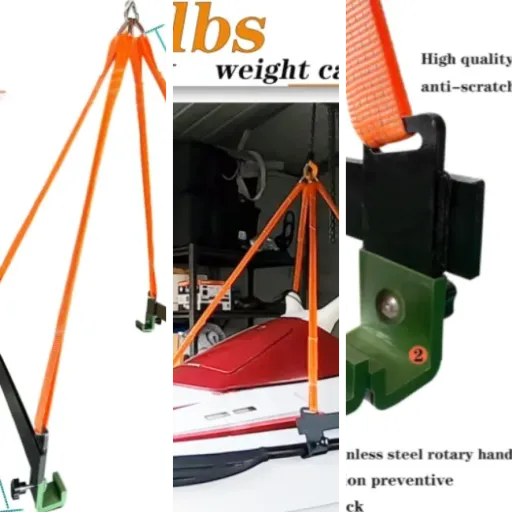
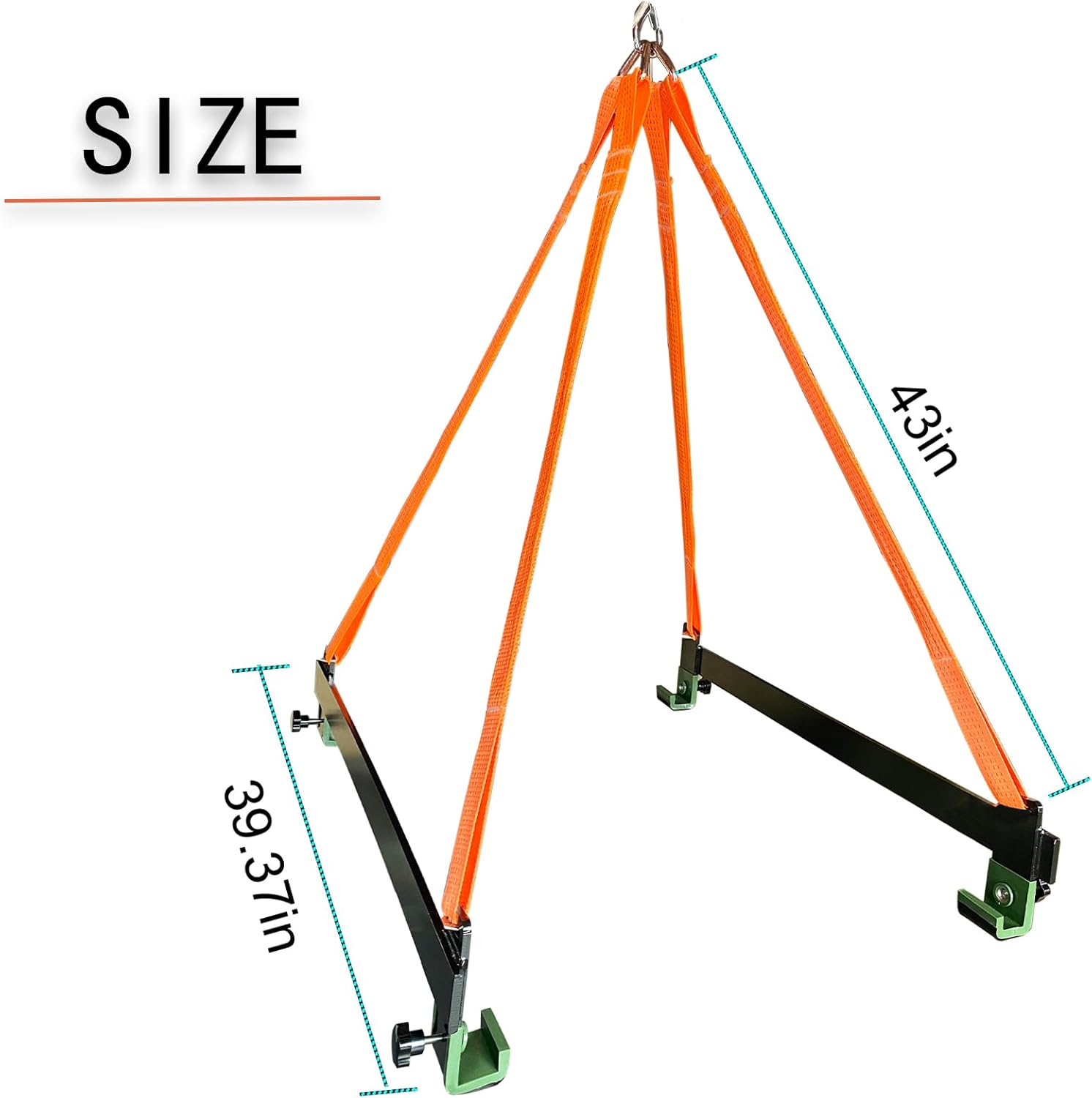
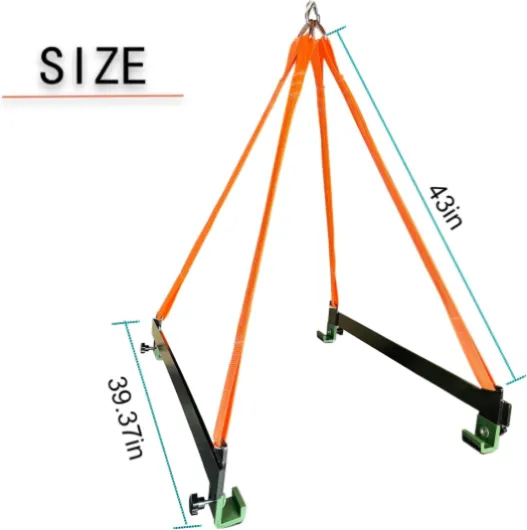
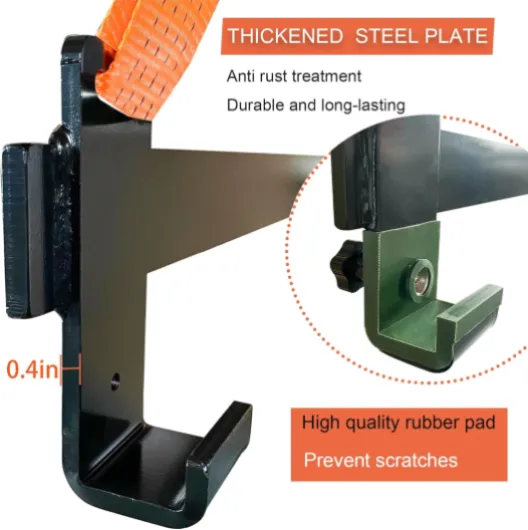
The basic design is pretty straightforward: two thick steel bars run along each side of the hull, with a slight curve at the bottom so they hug the shape of the jet ski a bit better. Under those bars you’ve got rubber pads so the metal doesn’t dig straight into the fiberglass or the rub rail. Then four polyester straps go up from each corner to a central lifting point (hook from your hoist or winch). It’s a classic cradle-style setup, and for newer skis with that inward-facing lip, it works pretty well.
One thing I noticed is that the adjustment system for the bars relies on screws with rotating handles. You loosen them, slide things into place, then tighten them down. This gives you flexibility to fit different hull widths, which is good, but it also introduces a weak point: if those handles aren’t fully tightened or if they back off a bit during use, the setup can shift. I saw one Amazon review mention the adjustment screws slipping, and I get what they mean. On mine, they didn’t fail, but I did catch one that had backed off slightly after some movement, so now I double-check them every time.
From a usability angle, I like that the bars are long enough to spread the load over a good chunk of the hull. You’re not putting all the weight on a tiny contact patch. The curve and the rubber pads help the bars sit more securely, but again, this really depends on your hull shape. On my ski with a decent lip, it feels like the bars “hook” under the edge. On an older flat-sided hull we tried, it felt more like the bars were just pressing, not hooking, which is not how I want to lift 700–800 lbs.
Overall, the design is functional and fairly safe if your hull matches what they had in mind. Where it falls a bit short for me is the lack of positive locking for the adjustments and the assumption that every ski has a similar side profile. A couple of extra safety pins or a more secure adjustment mechanism would make me more comfortable leaving a ski hanging for long periods. As it stands, I treat it like something that needs visual checks and a bit of common sense, not a set-it-and-forget-it lifting system.
Materials: thick steel, decent straps, and no obvious weak links
On the material side, this sling is actually better than I expected for the price. The steel bars are properly thick and have a decent weight to them. They’re not flimsy at all; you can feel that when you pick them up. The surface has an anti-rust treatment (basically a black coating), and so far with freshwater use and some damp garage storage, I haven’t seen any rust spots. I haven’t put it through saltwater abuse long term yet, but with 316 stainless hardware, it’s at least built with that environment in mind.
The orange straps are polyester and are clearly thicker than the random tow straps I’ve used before. The stitching looks clean and consistent, no loose ends hanging out of the box. The listing claims 2800 lbs capacity, and while I’m not going to push it to the limit on purpose, lifting a ~900 lb ski felt well within its comfort zone. The straps didn’t stretch noticeably or feel like they were under crazy tension. After a few uses, there’s no fraying or weird wear marks, which is what I look for as an early warning sign.
The rubber pads under the steel bars are another small but important detail. They’re not soft foam; they’re a denser rubber that actually feels like it can handle some pressure without tearing. They help grip the hull a bit and, more importantly, keep the steel from chewing into the gelcoat. On my ski, there are no marks or scratches after lifting, which is exactly what I was hoping for. If you’ve ever used bare metal on a hull, you know how fast that can go wrong.
In terms of overall build, I’d say it feels like something designed by people who at least understand marine use: thick metal, corrosion-resistant hardware, and overbuilt straps. It’s not fancy, but nothing here screams “cheap shortcut” either. The only thing I’ll watch over the long term is the coating on the steel bars; if that chips badly and rust starts, that’s when I’d start touching it up or thinking about a replacement. For now, though, the materials inspire a decent level of confidence when I’m lifting something that costs way more than the sling itself.
Durability: built to last longer than the ski if you care for it a bit
Durability is always a big deal with lifting gear, because if something fails, it’s not just an inconvenience, it’s a busted hull or worse. So far, this sling is holding up well. I’ve used it over a handful of weekends, stored it in a not-very-fancy garage (temperature swings, a bit of humidity), and I’m not seeing any real wear yet. The coating on the steel bars still looks intact, and there’s no rust on the bars or the 316 stainless screws.
The straps are usually the first place you see issues on cheaper products, but here they still look pretty much like new. No fraying at the edges, no weird stretch marks, and the stitching hasn’t started to fuzz. I always check the areas near the hooks and where the straps bend under load, and so far, nothing concerning. If you rinse them after saltwater use and don’t leave them soaking in the sun 24/7, I don’t see a reason they wouldn’t last several seasons for a typical recreational user.
The rubber pads on the bottom of the steel bars are another thing I watched closely. They’re what stands between your expensive hull and bare metal. After multiple lifts, they’re slightly polished from contact, but not torn or peeling. They still grip fine and haven’t shifted out of place. If anything is going to wear out first, I’d guess it’ll be these pads, just from repeated pressure and maybe grit between the pad and the hull. Even then, that’s the kind of part you could probably replace or patch easily if you’re handy.
Overall, the sling feels like it’s built for repeated use, not just a one-time project. It’s not indestructible, but with basic care—rinsing off salt, not dropping the bars on concrete, checking the hardware—it should easily outlast a few seasons of normal use. I’d be more worried about user error than about the materials falling apart on their own. If I notice any long-term issues after a year or two, they’ll most likely be cosmetic or related to the coating, not structural failure.
Performance in real use: stability, ease, and small annoyances
Performance-wise, once you’ve got it dialed in for your particular ski, it’s straightforward. The lift is stable, and it doesn’t feel like you’re playing roulette every time you pump the cherry picker handle. The 2800 lbs rating is overkill for a single ski, which I like because it means I’m rarely pushing the system anywhere near its limit. Even when I had my ski fully off the ground for a couple of hours, the bars stayed level and the ski didn’t tilt or sag noticeably.
The downside is in the small details. Those rotating adjustment handles are the main annoyance. They work, but they can loosen if you don’t really crank them down. One time, after repositioning the ski slightly while it was still supported, I noticed one of the handles had backed off a quarter turn. Nothing catastrophic, but enough to make me stop and retighten everything. Since then, my routine has been: tighten, shake the bars a bit by hand, then re-check before lifting fully. It’s not a deal-breaker, but it’s something you have to stay on top of.
Another performance point is how easy it is to set up solo. I’ve done it alone and with a second person. With two people, it’s quick and painless: one on each side, slide the bars into place, check alignment, done. Solo, it’s still doable, but you’ll be walking back and forth a few times to make sure both bars are even and the straps aren’t twisted. If you’re planning to use this often by yourself, just expect a bit of back-and-forth the first few times until you know exactly where everything needs to sit.
In everyday terms, I’d say the performance is pretty solid once you understand its quirks. It’s not some high-tech system; it’s just a sturdy metal-and-strap cradle. It lifts, it holds, and it does it better than the random mix of tow straps and blocks I was using before. The little annoyances (mainly the adjustment handles) are manageable if you treat it like proper lifting gear and not like a toy. If you want something totally idiot-proof, you might look at a dedicated PWC lift, but you’ll pay a lot more for that.
What you actually get out of the box
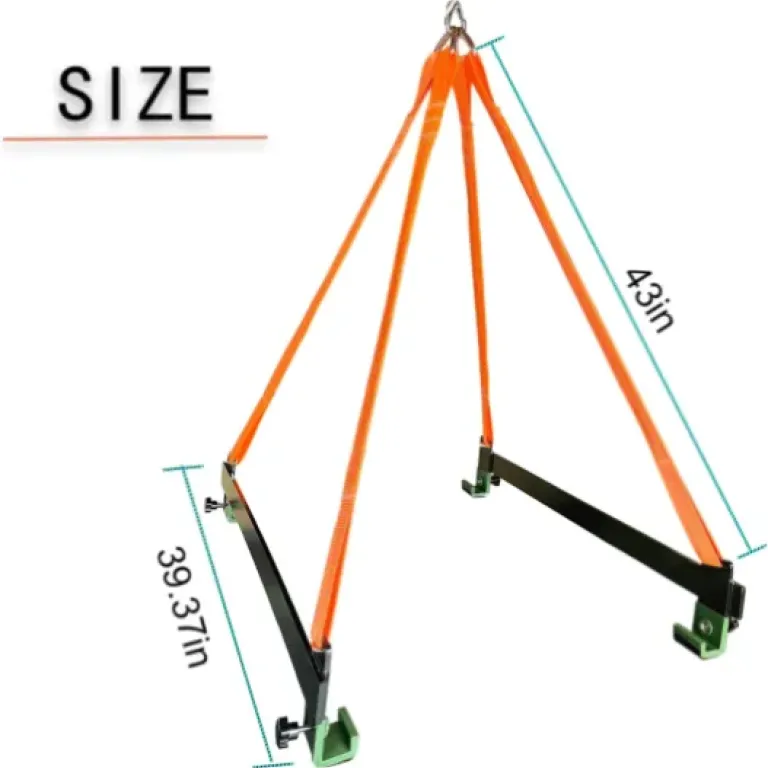
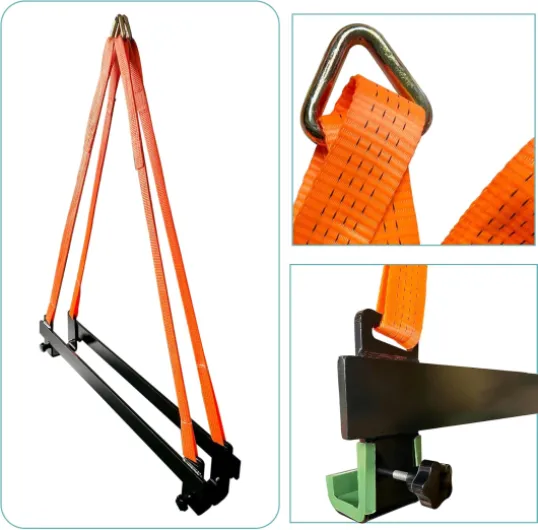
When you open the box, you’re basically looking at a pretty straightforward kit: two long steel brackets, four orange polyester straps already attached, some rubber sleeves/pads, and the hardware (screws and rotating handles). No fancy carrying case or anything like that. It’s clearly built to do a job, not to look pretty on a shelf. The dimensions match the listing: the steel bars are about 40 inches long, and the straps are around 43 inches, which lines up fine with most mid-size and larger PWCs.
The brackets come with the rubber pads already on the bottom in my case, but you do have to fiddle with the adjustment screws and the rotating handles to get the stance right for your ski. The included hardware is stainless (316 according to the listing), which is what you want around water and salt. I checked the threads and the finish on the bolts; nothing felt cheap or cross-threaded out of the box. It doesn’t scream premium, but it doesn’t scream bargain-bin either. It’s just solid, usable hardware.
There’s no real manual beyond a basic sheet, and honestly, the sheet is pretty light on details. If you’re not at least somewhat comfortable around lifting gear, you might feel a bit under-guided. You’re basically figuring out how wide to set the bars, how to center the load, and how high to lift based on common sense. I would have liked a clearer diagram with some safety tips, like where exactly to position the bars relative to the center of gravity of a typical jet ski, or warnings about incompatible hull shapes.
From a first impression standpoint, my takeaway was: this is a work tool, not a polished consumer gadget. It looks like something you’d find in a marina workshop, which is fine by me. As long as you know what you’re doing and don’t expect a step-by-step illustrated guide, you’ll be able to set it up. If you’re brand new to lifting heavy stuff, you’ll probably end up searching for photos or videos online to double-check you’re using it the right way.
Effectiveness: does it actually lift safely?
In terms of pure effectiveness, it does the main job: it lifts a jet ski without drama, as long as you’re using it on the right kind of hull. I’ve used it to pick my Yamaha ski up several times with a cherry picker. The process is pretty simple: slide the bars under the sides, line them up under the lip, check the rubber pads are sitting flat, then hook the straps to the hoist and start lifting slowly. The ski comes up evenly if you’ve centered everything, and there’s no sudden shift or sketchy wobble once you’re off the ground a bit.
Where it really shines for me is for maintenance and storage. I’ve had the ski hanging for a couple of hours while I cleaned and polished the hull, and once overnight in the garage at a low height. The straps didn’t creep, and the bars stayed in place. I still checked everything a couple of times because I don’t fully trust any single lifting system, but nothing moved in a worrying way. Compared to trying to balance the ski on stands or blocks, this is way less stressful.
The main limitation is compatibility. Like one of the Amazon reviews said, it works great on newer units with a lip that faces down/in, but on older, flatter hull sides, it just doesn’t bite as securely. We tried it on an older two-stroke ski, and you could tell right away it wasn’t as locked in. We ended up lowering it and going back to a different setup. So if your ski doesn’t have that under-lip, I’d be cautious. The product page doesn’t hammer this point enough in my opinion.
Overall, I’d rate the effectiveness as solid but conditional: in the right scenario, it’s a very handy tool that makes lifting feel controlled and relatively safe. In the wrong scenario (wrong hull shape, sloppy setup, not tightening the adjustment screws), it could give a false sense of security. If you’re careful and actually look at how it’s gripping your ski before committing to a full lift, it gets the job done well.
Pros
- Sturdy construction with thick steel bars, beefy polyester straps, and stainless hardware
- 2800 lb capacity gives a strong safety margin for typical jet skis and PWCs
- Works very well on newer skis with an under-lip, providing stable and controlled lifting
Cons
- Adjustment screws/handles can loosen slightly and need regular checking
- Not ideal or fully secure on older or flat-sided hulls despite the generic marketing
Conclusion
Editor's rating
After using the FUYEAR watercraft lift sling on my own jet ski for a while, I’d sum it up like this: it’s a solid, no-frills lifting tool that does its job well if your hull shape matches what it was designed for. The materials are reassuring, the 2800 lb rating gives a nice safety buffer, and once you’ve got it positioned correctly, it lifts and holds the ski in a stable, predictable way. For cleaning, hull work, and short-term hanging in the garage, it’s a lot less stressful than the old mix of floor jacks and improvised straps.
It’s not perfect. The adjustment screws with the rotating handles can loosen if you don’t really pay attention, so you need to double-check them before and after lifting. And the biggest limitation is compatibility: newer skis with a clear lip under the rub rail are fine; older or flatter-sided hulls are more questionable. The product page doesn’t make that super clear, so you have to be honest about your ski’s shape before buying.
If you’re a jet ski or PWC owner who does your own maintenance and has a compatible hull, this sling is a practical, reasonably priced tool that will probably earn its keep quickly. If you’re looking for a universal solution that works on every hull type without thinking, or if you’re not comfortable checking and re-checking a lifting setup, you might be better off with a dedicated lift system or professional help. For my use, it’s a keeper, with the caveat that I treat it like real lifting equipment, not a casual accessory.