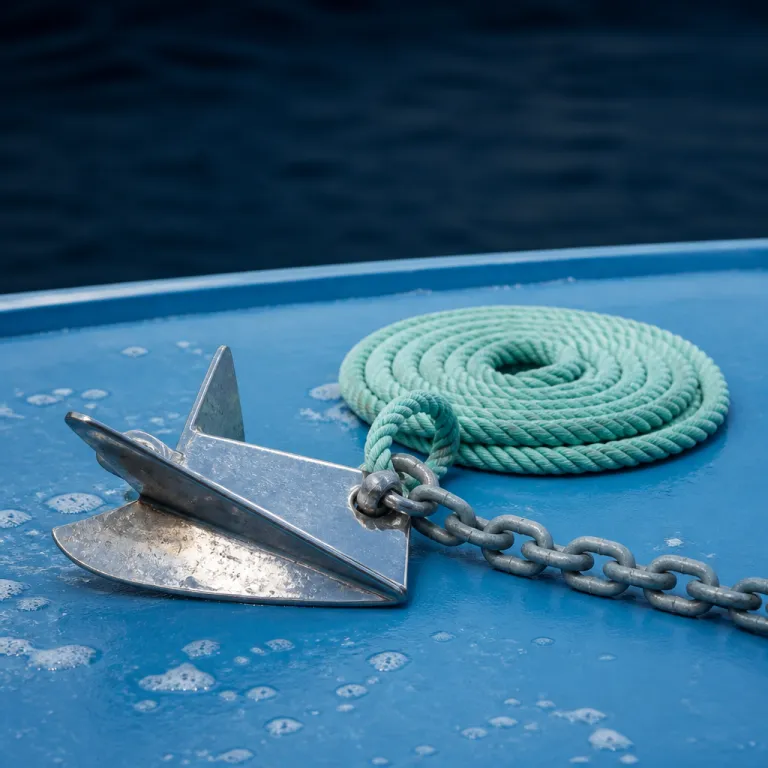
Yacht anchoring technique: the real test of seamanship
Why yacht anchoring technique is the real test of seamanship
A calm anchorage flatters every skipper, but a summer squall exposes every weak yacht anchoring technique. When the wind jumps from a lazy 8 knots to a howling 35 in minutes, the way you chose your anchor, laid your anchor rode and judged the swing of surrounding boats decides whether your boat will ride safely or drag toward trouble.
The owners who sleep through that night are the ones who treated anchoring techniques as a core seamanship skill, not a chore between marinas. In those moments, your decisions about scope, swing room and seabed matter more than any electronics on the helm.
Think of your ground tackle as the yacht’s life insurance, where the primary anchor, the anchor chain and the rope rode quietly carry the risk so your crew members can relax. Oversizing the anchor by one model, carrying more chain length than the broker suggested and learning how to anchor properly in real wind and current is cheaper than one bent bow roller or one insurance claim.
A well planned anchor boat routine, from the first drop anchor to the final pull anchor at departure, turns a nervous first season into a confident cruising life. The more you repeat that routine, the more instinctive your yacht anchoring technique becomes when the sky turns black.
On a 18 metre composite yacht off Porto Cervo or a 12 metre steel boat in a tight Cyclades cove, the geometry is the same, but the margin for error shrinks as the anchorage fills with boats. Your yacht anchoring technique must account for depth, expected wind direction shifts, the type of seabed and how far your boat will swing when the gusts arrive at night.
Treat every set as if a second squall is coming at 03:00, and you will naturally choose the anchoring habits and procedures that serious captains rely on. That mindset quietly separates confident skippers from the ones pacing the deck until dawn.
Choosing ground tackle that lets you sleep through a squall
Ground tackle is not where you save weight or budget, because the anchor will be the only thing between your hull and the rocks when the wind pipes up. For a typical 16 metre planing yacht, moving from a 25 kilogram plough to a 32 kilogram Rocna or Mantus primary anchor often transforms marginal holding into a secure hook that resets cleanly after a wind shift.
Oversizing anchors by one step, and pairing them with generous chain length, is the cheapest insurance policy you will ever buy for your boat. That extra metal on the bow is trivial compared with the cost of a grounding or a collision in a crowded anchorage.
Modern scoop anchors such as Rocna and Mantus excel in sand and mud, while a Delta or well maintained CQR still performs reliably if matched with enough anchor chain and a correctly sized anchor windlass. Comparative holding tests published by Practical Sailor and Yachting Monthly over the last decade consistently show higher initial holding power and faster setting for these newer scoop designs in common seabeds.
The key is not the catalogue photo but how the anchor rode works as a system, with the weight of the chain creating a low pull angle at the seabed so the flukes stay buried when the boat will snub hard in a gust. On a 10 metre cruising boat, 60 to 80 metres of 8 millimetre chain is a sensible baseline, with extra rope rode spliced on for deeper anchorages.
Think in ratios, not guesses, and you will quickly see why 3:1 scope on all chain is rarely sound practice for a blow. In 8 metres of depth, with 1 metre from bow roller to water, paying out only 27 metres of chain leaves a steep angle that can yank the anchor out when the current opposes the wind.
Paying out 50 to 60 metres of chain in the same depth, and then snubbing gently astern, lets the anchor dig in and stay there when the squall line hits. That extra length of chain is often the difference between a quiet night and a dragging incident recorded in an insurance report.
Thoughtful underwater maintenance such as correctly sized zinc anodes complements robust ground tackle, because a corroded bow roller pin or weakened cleat can fail just when your secure anchor is most needed. Treat every shackle, swivel and link in the anchor chain as a potential single point of failure, and inspect them with the same discipline you apply to engines and electronics.
The more confidence you have in each component, the more calmly you will react when the barometer starts to fall. Reliable hardware and a conservative anchoring technique buy you time to think clearly when conditions deteriorate.
Reading the seabed and choosing where to drop anchor
Before you even touch the anchor windlass, your yacht anchoring technique starts with reading the seabed and the behaviour of surrounding boats. Clear sand, visible as a pale patch through turquoise water off Saint-Barthélemy or Formentera, is usually prime territory for an anchor to bite, while dark weed beds and shiny rock promise a restless night.
Use the plotter’s depth shading, the echo sounder and your own eyes at the bow to choose a spot where the anchor will bite and reset if the wind direction swings. A few extra minutes spent searching for clean sand often pay back hours of uninterrupted sleep.
In sand, a modern scoop primary anchor sets quickly, so you can drop anchor with confidence once you have checked the depth and calculated your target chain length. In soft mud, you may need more length of chain and a gentle, progressive reverse to avoid ploughing a trench before the flukes engage, especially if the current runs across the wind.
Weed demands patience and sometimes a second anchor attempt, because the anchor rode can skate over the top until the anchor boat combination finds a patch of bare seabed to grip. In marginal weed, it is often safer to move boat to a different cove than to accept a poor set in the only available patch.
Rocky bottoms are the most technical, where your aim is to lodge the anchor securely without jamming it irretrievably, and where a second anchor can sometimes reduce the swing circle in tight harbours. When you move boat slowly upwind to your chosen spot, imagine the full 360 degree swing your boat will trace if the wind and current reverse at night.
If that circle intersects with surrounding boats, shallow patches or moorings, you either need more depth, fewer neighbours or a different anchoring strategy such as a V shaped layout with a second anchor rode. Thinking through that geometry before you drop anchor is far easier than solving it in the dark.
Compact solutions such as the folding stainless steel anchor kits used for tenders and personal watercraft show how much design progress has been made in small anchors. The same design logic applies to larger yachts, where a well engineered anchor chain and shank geometry can mean the difference between a first time set and three frustrating attempts.
Respect the seabed as much as the sky, and your choice of where to drop anchor will matter as much as which brand of metal you trust. Good anchoring technique always starts with choosing the right patch of ground.
Setting, testing and resetting: the routine that earns your sleep
Once you have chosen the spot, the choreography of setting the anchor separates a casual stop from a secure overnight yacht anchoring technique. Approach slowly into the wind or dominant current, stop the boat over your chosen point and then ease astern while lowering the anchor rode in a controlled flow, never in a tangled heap.
Your crew members should communicate clearly from the bow to the helm, calling out depth, metres of chain and any risk from surrounding boats as the boat falls back. Calm, precise language on the foredeck often prevents rushed mistakes when you are close to other hulls.
When you reach your planned chain length, snub the anchor chain gently and engage reverse at low power, letting the boat pull anchor gradually until you feel the bow swing into line and the speed over ground drops to near zero. Increase the revs in stages, up to a firm astern thrust that simulates the load of a strong gust, while you check the GPS track and visual transits ashore for any creeping movement.
If the anchor will not hold at this stage, it will not hold at 03:00, so treat a failed set as a gift and move boat to try again with more scope or a different patch of seabed. Accepting a marginal set is one of the most common causes of dragging in cruising association incident reports.
Once satisfied, rig a snubber or bridle to take the load off the windlass and reduce shock loads on the chain, especially on lighter displacement boats that tend to hobby horse in a chop. Marking your chain length every 10 metres with paint or inserts makes it easy to reproduce good technique in the dark, when counting links by torchlight is the last thing you want.
A disciplined routine, repeated every time, builds instinct so that when the wind shifts or a second squall line appears on radar, you can reset or lay a second anchor without drama. Practising this in settled weather is the best preparation for doing it under pressure.
Many experienced captains quietly agree on one point: “If you have not tested your set under full reverse, you have not really set the anchor at all.” Treat that as a private standard, and your secure anchor will become a predictable partner rather than a source of anxiety.
The more you rehearse this pattern in benign conditions, the more natural it feels when the sky turns black over the Golfe de Saint-Tropez or the Ionian at night. Confidence at anchor is earned long before the first gust hits.
Quick checklist: approach → set → test → secure → monitor
- Approach slowly into wind/current and choose a clear patch of good holding ground.
- Lower the anchor under control while easing astern, paying out the planned scope.
- Test the set under progressively stronger reverse until the boat stops moving.
- Secure with a snubber or bridle, chafe protection and clearly marked chain.
- Monitor with GPS track, visual transits and an anchor alarm matched to swing room.
Scope, swing and the geometry of a safe anchorage
Scope is the ratio between the length of anchor rode you pay out and the vertical distance from bow roller to seabed, and it is the quiet geometry behind every successful yacht anchoring technique. In settled weather with all chain, 4:1 can be acceptable, but when a summer squall is forecast, 5:1 to 7:1 is where prudent anchoring begins.
In 6 metres of depth with 1 metre from bow to water, that means 35 to 50 metres of chain, not the 20 metres many charter boats routinely use. The numbers below give a simple reference for common depths with an all chain rode in strong winds:
| Depth (m) | Bow to water (m) | 5:1 scope (m) | 7:1 scope (m) |
|---|---|---|---|
| 5 | 1 | 30 | 42 |
| 8 | 1 | 45 | 63 |
| 10 | 1 | 55 | 77 |
The longer the chain, the flatter the pull angle at the anchor, which keeps the flukes buried even when the boat surges back in a gust or when the current reverses. This is why a heavier anchor chain and generous chain length often compensate for a slightly smaller anchor, though oversizing both is ideal if your bow can carry the weight.
On a 20 metre yacht with a high bow, remember to add that extra metre or two to your depth calculation, because ignoring it effectively shortens your scope just when you need every metre. Small errors in scope become big differences in holding power when the wind rises above 30 knots.
Swing room is the other half of the equation, and it is where many otherwise careful owners get caught when the wind shifts 120 degrees at night. Visualise your boat as the centre of a circle whose radius is the length of the anchor rode from bow to anchor, and then imagine every other hull drawing its own circle as the wind and current change direction.
If any of those circles overlap, you either need to move boat, reduce scope carefully or consider a second anchor laid in a V to limit swing, especially in crowded Mediterranean anchorages where surrounding boats often mix chain and rope. A simple mental diagram helps: boat at the centre, anchor at the edge of the circle, and the chain describing the arc as the wind veers.
Pay attention to how different hull types behave, because a light catamaran on a short rode will swing differently from a heavy displacement monohull on long chain. When you check your position before bed, note not only your GPS coordinates but also the relative bearing to two fixed lights ashore, so you can sense any unusual swing pattern at a glance later.
A quiet five minutes spent on this geometry at sunset often saves a frantic half hour on deck when the first gusts arrive. Understanding scope and swing visually is one of the most powerful upgrades you can make to your anchoring technique.
When the squall hits: night watches, alarms and the decision to re-anchor
Mediterranean summer squalls often arrive after a hot, breathless afternoon, when the first cool gust rolls down from the hills and the anchorage turns its bows into the new wind. Your yacht anchoring technique for this moment starts hours earlier, with a conservative scope, a tested set and a mental plan for what you will do if the anchor drags at night.
Set an anchor alarm on the plotter or a dedicated app, using a radius that matches your expected swing but leaves no doubt if the boat moves beyond the safe circle. Many skippers also log the GPS position and depth at the time of setting, so any change later is easy to spot.
When the first heavy gusts hit, step on deck with a torch and quietly check the chain angle, the snubber tension and the distance to surrounding boats, looking for any unusual swing or acceleration. If the anchor rode is bar tight and the bow is shearing wildly from side to side, consider veering a few extra metres of chain if depth allows, because a longer length of chain can absorb shocks and keep the anchor buried.
If you see the boat steadily sliding downwind relative to fixed shore lights, do not wait for a second confirmation; start the engines, prepare to pull anchor and be ready to move boat to a safer patch. Hesitation is what turns a manageable drag into a near miss with another hull.
The decision to re-anchor at 03:00 is where instinct, preparation and crew members’ confidence intersect. If you have rehearsed the routine, briefed everyone on their roles at bow and helm, and kept the deck clear of clutter, you can often reset the primary anchor or lay a second anchor in a controlled way even in 30 knots of wind.
If the anchorage is too crowded or the depth and seabed no longer feel trustworthy, the safest option may be to head for open water and ride out the squall under power, returning to drop anchor again once the worst has passed. Good seamanship includes knowing when to leave a bad anchorage rather than trying to fix it.
Good seamanship also means thinking about what happens if the lights go out, literally, which is where reliable deck and underwater lighting become more than cosmetic. A well placed system such as a tested white underwater LED array can make it far easier to judge chain length, fender positions and the proximity of other hulls when you are working the anchor windlass in driving rain.
In those moments, every small preparation you made in daylight quietly pays you back in calm decisions and a boat that rides safely until dawn. Night-time anchoring drills and clear checklists turn a stressful squall into a controlled operation.
Safety equipment and maintenance habits that back up your anchoring
Anchoring is a system, not a single act, and your safety equipment and maintenance habits either reinforce or undermine your yacht anchoring technique. Start with the basics: strong bow cleats backed by proper plates, chafe protection where the snubber passes over the bow and a windlass that can handle the full weight of the anchor chain without stalling.
A neglected gypsy or corroded electrical connection can turn a routine pull anchor into a dangerous wrestling match on the foredeck when the wind is still howling. Regular servicing of the windlass and inspection of wiring is a small task compared with recovering a heavy anchor by hand in a squall.
Inspect the entire anchor rode at least once a season, checking every shackle, swivel and splice for wear, and measuring the actual chain length against what is written in the manual. Replace any suspect components before they fail, because the cost of a new shackle is trivial compared with the damage from a dragging anchor boat collision.
Insurance claim summaries from major marine underwriters such as Pantaenius and BoatUS Marine Insurance repeatedly highlight inadequate scope and poorly maintained ground tackle as root causes in many dragging incidents. Those same reports underline how modest investments in chain length, shackles and windlass servicing prevent high value losses.
Keep a second anchor ready to deploy, with its own rode neatly flaked and labelled in metres, so that you can use it as a kedge, a stern anchor or a backup if the primary anchor will not reset after a major wind shift. A ready-to-go secondary system turns a potential emergency into a manageable manoeuvre.
Safety on deck during a blow also depends on personal gear: lifejackets worn, jacklines rigged, non slip footwear and head torches for all active crew members. When you move boat in the dark to re-anchor, clear communication between bow and helm, backed by hand signals and radios, prevents small mistakes from compounding under stress.
Treat every night squall as a live training exercise, and your anchoring techniques will improve with each season until setting a secure anchor in 10 metres of depth and 25 knots of wind feels as natural as leaving a marina berth. Quietly, this is how confident owners are made: not by the length overall of the yacht, but by the wake she leaves in the minds of her crew after a hard night on the hook.
The boats that ride calmly through those hours share the same pattern of preparation, from oversized anchors and generous chain to disciplined routines and well maintained safety equipment. In the end, it is not the length overall, but the wake she leaves.
Key figures that shape safe anchoring decisions
- On many cruising yachts between 12 and 18 metres, oversizing the primary anchor by one model typically adds only 5 to 10 kilograms, yet can increase holding power in sand and mud by 30 to 50 percent according to manufacturer test data from brands such as Rocna and Mantus, which is a major margin in a summer squall.
- For all chain rodes, a scope of 5:1 to 7:1 in strong winds means that in 10 metres of depth, most skippers should plan to use 55 to 77 metres of chain, a figure that often exceeds the 40 metre standard fit on many production boats and explains why dragging incidents cluster in deeper anchorages in reports from cruising associations.
- Field tests published by several anchor manufacturers and independent reviewers (for example, comparative trials reported by Practical Sailor and Yachting Monthly) show that modern scoop designs such as Rocna and Mantus can achieve initial sets at as little as 1 to 2 metres of dragging distance in sand, while older plough designs may require 3 to 5 metres, which matters greatly in tight harbours with limited swing room.
- Insurance claim analyses from major marine underwriters, including summaries released by Pantaenius and BoatUS Marine Insurance, consistently attribute a significant share of hull damage at anchor to inadequate scope and poorly maintained ground tackle, highlighting that relatively low cost investments in chain length, shackles and windlass servicing can prevent high value losses.
- Mediterranean summer squalls often bring rapid wind increases from under 10 knots to over 30 knots in less than 15 minutes, as documented in regional meteorological bulletins and race reports, which can triple the load on the anchor rode and explains why testing the set under firm reverse is essential rather than optional.
FAQ about anchoring in summer squalls
How much chain should I use when a squall is forecast ?
In strong winds with an all chain rode, aim for a scope between 5:1 and 7:1, which means five to seven times the total depth from bow roller to seabed. In 8 metres of water with 1 metre from bow to surface, that translates to 45 to 63 metres of chain, assuming there is enough room to swing safely. Using less scope than this in a blow significantly increases the risk that the anchor will break free when the gusts hit.
Is it worth oversizing my primary anchor for a 15 metre yacht ?
Oversizing the primary anchor by one model is widely regarded as cheap and effective insurance for yachts in the 12 to 18 metre range. The extra 5 to 10 kilograms at the bow are usually negligible for trim and performance, but the increased fluke area and holding power can be decisive when the wind rises above 30 knots. For serious cruising or frequent anchoring, choosing the larger option is generally the most reliable choice.
When should I use a second anchor in a crowded anchorage ?
A second anchor becomes useful when swing room is limited, when the forecast shows major wind shifts or when the seabed offers poor holding in one direction. Laying two anchors in a V off the bow can reduce the swing circle and keep the boat aligned more steadily, which helps in tight harbours with mixed chain and rope rodes. Always brief the crew members carefully and avoid crossing other boats’ rodes when deploying a second anchor.
How do I know if my anchor is dragging at night ?
Use both electronic and visual checks: set an anchor alarm on your plotter or phone with a radius that matches your expected swing, and also choose two fixed lights or landmarks ashore to form a transit. If the boat moves steadily out of that transit or the alarm shows a consistent track downwind, assume the anchor is dragging and start the engines while you assess options. Do not wait for a second confirmation if you are already uncomfortably close to surrounding boats or shallow water.
What is the safest way to reset the anchor during a squall ?
Prepare the deck and crew before you start: everyone in lifejackets, jacklines rigged, torches ready and clear roles agreed between bow and helm. Motor slowly upwind of your chosen spot, lower the anchor under control, pay out the planned chain length and then set it firmly under reverse while monitoring position on the plotter. If the new set does not hold under full reverse, move boat again rather than accepting a marginal hold in deteriorating conditions.