
Summary
Editor's rating
Is it worth the money compared to simpler radios?
Chunky, functional design that feels like a tool
Battery life: fine for a day out, not a multi-day monster
What you actually get in the box and setup experience
Ruggedness, waterproofing and real-world abuse
Radio performance and GPS: does it actually deliver?
What this radio actually offers on paper
Pros
- Rugged, IPX8 waterproof and floating design with water-activated strobe for real-world safety
- Built-in 66-channel WAAS GPS provides accurate position without relying on other devices
- Clear audio and 6W transmit power with selectable 6/2/1W for flexible communication
Cons
- Interface and menus are quite dense; you need time and the manual to master it
- Battery life is fine for a day but not ideal for multi-day trips without charging
- Pricier than basic handheld VHFs if you don’t need GPS and extra features

Specifications
View full product page →| Brand | OSAT |
A handheld VHF that tries to do it all
I’ve been using the Standard Horizon HX891BT/E for a few weeks now on a small sailing boat and a RIB, and I’ll be honest: I bought it mainly for the combo of 6W power, built-in GPS and IPX8 waterproofing. I wanted one radio I could throw in a wet bag, clip to my lifejacket, and basically forget about until I needed it. On paper, this model ticks pretty much every safety box: GPS, DSC, water-activated strobe, floating, and Bluetooth.
In real life, it’s not perfect, but it’s solid gear, more on the professional side than the toy side. It feels like a tool, not a gadget. The interface is a bit busy at first, and you actually have to read the manual to get the most out of it. If you’re hoping to just turn it on and magically understand all the menus, you’ll be a bit lost the first day.
What stood out quickly is that the radio side is reliable: audio is clear, 6W output does what it should, and the GPS locks on without drama. The Bluetooth is nice to have but not essential, at least for how I use it. The weight and size are noticeable in a pocket, but it also feels sturdy and not like cheap plastic that will crack after one season.
So overall, after a few trips in choppy, wet conditions, my feeling is: this is a serious handheld for people who actually go out on the water, not just for chatting in the marina. But you pay for that with a slightly higher price and a learning curve. If you just want a simple backup radio for the odd trip, this might be overkill. If you care about safety features and GPS on the radio itself, it starts to make sense.
Is it worth the money compared to simpler radios?
In terms of value for money, this radio sits in that awkward middle-to-high range. It’s clearly more expensive than the basic 5W, no-GPS handhelds, but it’s still cheaper than some of the top-end DSC/GPS handhelds from big brands with every bell and whistle. The question is: do you actually use the extra features you’re paying for? For me, the main justification was GPS, waterproofing, floating, and the strobe. Those are safety features I actually care about when something goes wrong.
If you compare it to a simple, cheaper handheld that just does voice, you’re paying extra mainly for integrated GPS and rugged build. If you already have a reliable fixed VHF with DSC and a good GPS/plotter on board, and you only need a backup handheld for short-range talking, then honestly, you can save money and go for something simpler. The HX891BT/E would be overkill and you’d be paying for features you barely touch.
On the other hand, if you’re on a small boat, dinghy, or you move between boats and don’t always have full fixed electronics, then having a self-contained communication and basic navigation tool in one device starts to look like a good deal. In that case, paying more for something that’s tougher, has better waterproofing, and gives you your coordinates directly on the radio makes sense. The 2-year warranty and the general feel of solid construction also help justify the price a bit.
So overall, I’d say the value is decent but not mind-blowing. You’re not getting a bargain, but you’re also not being ripped off. It’s priced like a serious tool, and if you actually use it as such, it’s fair. If you just want a casual chat radio for the odd summer outing, then no, this is probably not the smartest way to spend your money.
Chunky, functional design that feels like a tool
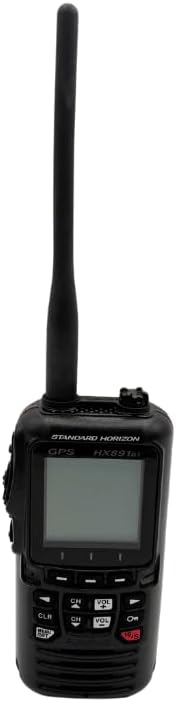
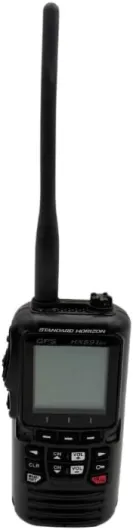
Design-wise, the HX891BT/E is not a pretty gadget, it’s a chunky black brick with a big screen and a lot of buttons. Personally, I prefer that on a boat. The body has enough thickness and texture that you can grab it with wet hands and not feel like it will slip away. At around 300 grams, it has some weight, but not so much that it becomes annoying on a lanyard. It feels like something you can drop on the deck without instantly panicking.
The 1.7" x 1.7" full-dot matrix display is actually one of the strong points. It’s square, quite large for a handheld VHF, and the day/night modes are genuinely useful. In bright sunlight you can still read channel numbers and GPS data, and at night you can dim it so it doesn’t blind you. The fonts and icons are more on the practical side than pretty, but you can actually see what’s going on, which matters more when you’re bouncing around.
The front is busy: several buttons, a directional pad, and dedicated keys for things like power, PTT, and GPS-related functions. The button layout takes a bit of time to learn. After a few outings, I got used to where the key functions are, but at the start I had to think a bit before changing settings or diving into menus. The upside is that once you know it, you don’t need to dig into submenus for every small adjustment; many things have their own button or shortcut.
One thing I liked is the overall rugged feel. The casing doesn’t creak, the antenna connection is solid, and the rubber covers on ports feel like they’ll actually keep water out. It’s not slim or stylish, but in practice I’d rather have this slightly bulky, tool-like design than a sleek one that feels fragile. If you want something that disappears in a pocket, this isn’t it; if you want something you can grab quickly with gloves or wet hands, it does the job well.
Battery life: fine for a day out, not a multi-day monster
The HX891BT/E comes with an 1800mAh Li-ion battery and claims around 11 hours of operation. In real use, that depends a lot on how much you transmit, whether you keep GPS on all the time, and how bright the screen is. On my typical day trips (6–8 hours on the water, radio on most of the time, GPS active, occasional transmissions), I usually ended the day with around 30–40% battery left. So for a normal day outing, the battery is fine and you’re not in constant battery anxiety mode.
Where you need to think a bit is if you do multi-day trips without easy charging. If you leave the radio on all the time as a watch-keeping device, with GPS and high screen brightness, you’ll chew through the battery faster. In that case, having a charging option on board (12V adapter, inverter, or similar) becomes almost mandatory. The included charging cradle is convenient on shore or on a boat with proper power, but you’ll want to plan for that if you’re away from mains power for more than a day or two.
I didn’t experience any weird drops or sudden shutdowns; the battery indicator seems honest. It goes down gradually and you can roughly guess how much time you have left. Compared to older NiMH-based handhelds I’ve used, this Li-ion pack feels like a step up in terms of stability and charging time. You can top it up quickly before a trip without needing to leave it overnight every time.
My only real complaint is that 11 hours is optimistic if you hammer it with lots of transmissions and GPS usage. For safety gear, I’d prefer a bit more capacity or an easier way to swap to a spare pack or AA tray. So, battery life is good enough for most day users, but if you’re doing longer offshore passages and want it on all the time, I’d either carry a spare battery or make sure you have reliable charging on board.

What you actually get in the box and setup experience
The packaging is pretty straightforward, nothing fancy. You get the radio itself, antenna, battery pack, and charging cradle, plus the usual paperwork and manual. No carrying case or lanyard deluxe kit, just the basics. Personally I’m fine with that; I’d rather they focus on the hardware than fill the box with cheap accessories I’ll never use. But if you like having a pouch or belt clip included, you may have to buy that separately depending on the seller.
Out of the box, setup is not plug-and-play if you want to use all the features. For simple voice communication, it’s easy: screw on the antenna, clip in the battery, charge it, and you’re good. But once you start dealing with GPS settings, MMSI, Bluetooth pairing, and various alarms, you quickly realise you actually need to read the manual. The interface is logical enough once you get used to it, but there are many options buried in menus, and some icons aren’t totally obvious on first glance.
The charging cradle is handy: you just drop the radio in and it starts charging, no fiddling with cables into the radio body. It feels stable enough on a shelf or nav table, but on a moving boat you’ll want to secure it somehow. The contacts line up easily, and I didn’t have any issue with it not charging when seated properly. Charging time from low to full is reasonable; I usually just leave it overnight and it’s done.
Overall, the unboxing and setup experience is functional but not exciting. It’s clearly aimed at people who don’t mind spending 30–45 minutes setting things properly once and then leaving it. If you hate menus and manuals, you’ll probably only use half of what this radio can do. But if you’re okay with a bit of configuration at the start, it’s fine. Nothing about the packaging screams premium, but nothing feels cheap either – it’s just practical.
Ruggedness, waterproofing and real-world abuse
Durability is one of the main reasons I went for this model. It’s IPX8 waterproof and MIL-STD-810F compliant, which in normal words means it’s built to handle being wet, dropped, and generally mistreated more than the average cheap handheld. I’ve had it splashed, rained on, and left in a damp cockpit locker, and so far it hasn’t complained. No fogging under the screen, no weird buttons sticking, nothing like that.
I did an unplanned test when it took a small drop onto a fiberglass deck from about waist height. The casing got a tiny scuff, but functionally it was fine. That’s the kind of clumsy accident that happens a lot on boats, so it’s good to see it survive without issues. The rubberized parts give some shock absorption, and the antenna connection didn’t loosen. The buttons still click properly and haven’t gone mushy with use.
The floating design is also reassuring. I did a controlled drop into the water near the dock: it floated, stayed visible, and the water-activated strobe kicked in. That’s exactly what you want if it goes overboard at night or in low light. You still need to grab it fairly quickly in rough seas, but at least it doesn’t sink like a stone. The seals on the ports and battery compartment feel tight; you have to press them in properly, but they don’t feel flimsy.
After several trips, I’d say the overall build feels tough enough for regular use by people who aren’t super careful with their gear. It’s not indestructible, obviously, but it sits well above the flimsy entry-level stuff. If you treat your equipment reasonably and rinse it with fresh water now and then, I don’t see it failing quickly. The 2-year warranty is decent, but given the construction and the Japanese origin, I’d expect it to last longer than that if not abused too badly.
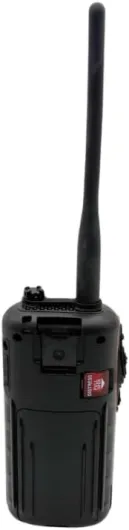
Radio performance and GPS: does it actually deliver?
On the VHF performance side, the HX891BT/E does what you expect from a 6W handheld. On the water, I’ve used it both as a main radio on a small RIB and as a backup to a fixed set on a sailboat. In both cases, audio quality was clear on both transmit and receive. People on the other end never complained about low volume or muffled voice, even with some wind noise around. The selectable 6/2/1W power is handy: I left it mostly on 6W offshore and dropped it when close to marinas or when battery was getting low.
Range-wise, don’t expect miracles. The advertised 8 km is possible in good conditions with decent antenna height and no obstacles, but like any handheld VHF, you’re limited by being low to the water. Compared to a cheaper 5W handheld I’ve used before, I did notice slightly more consistent range and fewer dropouts, but it’s not night-and-day. Where it shines more is reliability: it just works, doesn’t randomly lose signal, and the squelch and volume controls are straightforward.
The GPS performance is actually pretty decent. The 66-channel WAAS receiver locks onto satellites in a couple of minutes from cold start, sometimes faster if it has seen the sky recently. Once locked, the position stays stable. I used it as a secondary position check against a phone and a plotter, and the coordinates were always close enough for real-world use. Having GPS in the radio is reassuring if you think about a worst-case scenario where you end up in the water with just the handheld and a lifejacket.
Bluetooth is the feature I used the least. It works, you can pair a headset and do hands-free operation, but on a small boat with engine and wind noise, I didn’t find it very useful. It might be better on a bigger, quieter boat where you want to keep the radio clipped somewhere and talk through a headset. Overall, performance is pretty solid and predictable. It’s not magic, but it does the basics well and the GPS adds a real layer of safety rather than being a gimmick.
What this radio actually offers on paper
On the spec sheet, the HX891BT/E is pretty loaded. You get 6W transmit power with selectable 6/2/1W, IPX8 waterproofing, a floating body, and a water-activated strobe light if it ends up overboard. It also has a 66-channel WAAS GPS receiver, which means it can get a fairly accurate position without needing your phone or chartplotter. Add Bluetooth for hands-free use, an 1800mAh Li-ion battery rated around 11 hours, and a large full-dot matrix screen with day/night modes.
In the box, you get the basics: the radio, antenna, battery pack, and a charging cradle. No nonsense extras, but nothing really missing either. It’s around 300 grams, and the dimensions are roughly 3 x 6 x 15 cm, so it’s not tiny, but that size gives you a decent grip and space for a readable display. It’s built to MIL-STD-810F, which is military-style ruggedness testing, so in theory it should handle drops, vibrations, and rough weather better than cheaper handhelds.
The manufacturer lists a talking range of up to 8 km. Like all VHF claims, that’s optimistic and depends a lot on antenna height and conditions. In normal coastal use, you’re not going to get magic range, but the 6W power does help compared to the cheap 3W sets. The radio is aimed clearly at boaters and sailors who actually care about navigation and emergency tools, not just casual users who want a basic walkie-talkie on the water.
On paper, it sits in that category of premium handheld marine VHF: more expensive than the basic units, but with extra safety and comfort features. If all you want is a simple talk/listen device, these specs are overkill. But if you like redundancy (GPS position on multiple devices, backup distress options, etc.), the feature list makes sense. The question is how much of this you actually end up using once you’re on the water.
Pros
- Rugged, IPX8 waterproof and floating design with water-activated strobe for real-world safety
- Built-in 66-channel WAAS GPS provides accurate position without relying on other devices
- Clear audio and 6W transmit power with selectable 6/2/1W for flexible communication
Cons
- Interface and menus are quite dense; you need time and the manual to master it
- Battery life is fine for a day but not ideal for multi-day trips without charging
- Pricier than basic handheld VHFs if you don’t need GPS and extra features
Conclusion
Editor's rating
After using the Standard Horizon HX891BT/E in real conditions, my takeaway is that it’s a solid, serious handheld VHF aimed at people who actually spend time on the water and care about safety. The radio performance is reliable, the 6W output and clear audio do the job, and the built-in GPS plus floating IPX8 body with strobe give you a real backup if things go sideways. It feels tough, handles splashes and drops without drama, and the big screen is readable in both bright sun and at night.
It’s not perfect though. The interface is a bit busy, you really need to read the manual to get the most out of it, and the battery life, while okay for a day, isn’t endless if you run everything at full tilt. Bluetooth is more of a bonus than a must-have, and the price is clearly above entry-level sets. So, who is it for? I’d say: good for sailors, RIB users, and small boat owners who want one handheld that can act as a safety backup and basic navigation tool. Also makes sense if you move between boats and can’t rely on fixed gear everywhere.
If you only go out occasionally, stay close to shore, and already have good fixed electronics, you might be happier with a simpler, cheaper handheld just for short-range comms. But if you want a radio that feels like proper equipment rather than a toy, and you like the idea of having your position and distress options directly in your hand, this model is a pretty sensible choice, even if it’s not the cheapest option on the shelf.