
Summary
Editor's rating
Cheap, flexible lighting with predictable trade-offs
Simple puck design with a few practical quirks
Battery life and the annoying red-light warning sign
Waterproof enough if you’re careful, but not bulletproof
Light output and remote control: works, with some limits
What you actually get in the box
Pros
- No wiring needed: fully battery powered and easy to move around
- Decent brightness and plenty of RGB color options with multiple modes
- Good price for a 4-pack with remote, handy for casual or temporary setups
Cons
- Battery life is only average and AAA usage adds up over time
- Waterproofing depends heavily on carefully tightening plastic caps
- Remote and build quality feel cheap, with occasional sync issues between lights

Specifications
View full product page →| Brand | Generic |
Battery boat lights for people who don’t want to mess with wiring
I picked up these JT-HLM wireless battery boat lights because I was tired of using a headlamp and a single crappy dome light on my small fishing boat. I didn’t want to run wires or drill holes, so the idea of a few self-contained LED pucks with a remote sounded pretty handy. Four lights, RGB colors, and no wiring at all — just throw in AAA batteries and stick them where you want. On paper, it sounded like exactly what I needed.
In reality, they’re decent but not magic. They do what they say: they light up, change colors, and the remote mostly works as long as you’re not too far or at a weird angle. But you can feel right away that this is budget gear. The plastic is light, the seals are basic, and you can tell you need to be careful with how you close them if you actually want them to stay waterproof.
I’ve used them over a couple of weekends: one evening fishing trip, a short night cruise on a pontoon, and I also threw one in a bucket of water to see if it would leak. I also tested them as simple patio and pool lights at home, just to see how versatile they really are. They’re kind of a “do everything OK” product: they work on a boat, they work in the yard, but nothing about them feels high-end or super tough.
If you’re expecting professional marine-grade lighting, you’ll be disappointed. If you just want some cheap, colorful lights for casual night fishing or to give your pontoon a bit of atmosphere, they’re not bad for the price. You just need to accept the quirks: fiddly battery caps, average battery life, and a remote that feels straight out of a cheap LED strip kit.
Cheap, flexible lighting with predictable trade-offs
Price-wise, these sit firmly in the budget category. For four wireless lights plus at least one remote, the cost per light is pretty low compared to proper marine fixtures. You’re paying for convenience (no wiring, no drilling) and flexibility (can use them on the boat, in a pool, in a bucket, whatever), not for top-notch build quality or long-term reliability.
The main hidden cost is batteries. Four lights x 3 AAA each means 12 batteries per full set. If you use them often and stick to disposable alkalines, that adds up. With rechargeables, the math gets better, but you need a charger and you have to remember to rotate sets. So the sticker price of the kit looks nice, but you should mentally add a bit for ongoing battery use if you’re a regular night boater.
Compared to wired LED strips or proper marine LED courtesy lights, this kit is cheaper up front but worse on long-term value if you factor in battery costs and potential failures. On the other hand, if you’re renting boats, using them on kayaks, or just want something you can remove quickly and use in different places, these are more flexible than anything you have to wire in. That’s really where the value is: temporary and portable lighting, not permanent installation.
In short, I’d say value is decent if your expectations are realistic. For a casual angler or pontoon owner who wants some color and basic deck lighting without touching the boat’s electrical system, the price makes sense. If you’re already comfortable wiring 12V accessories and want serious, long-lasting lighting, your money is better spent on proper marine LEDs and a bit of installation time.
Simple puck design with a few practical quirks
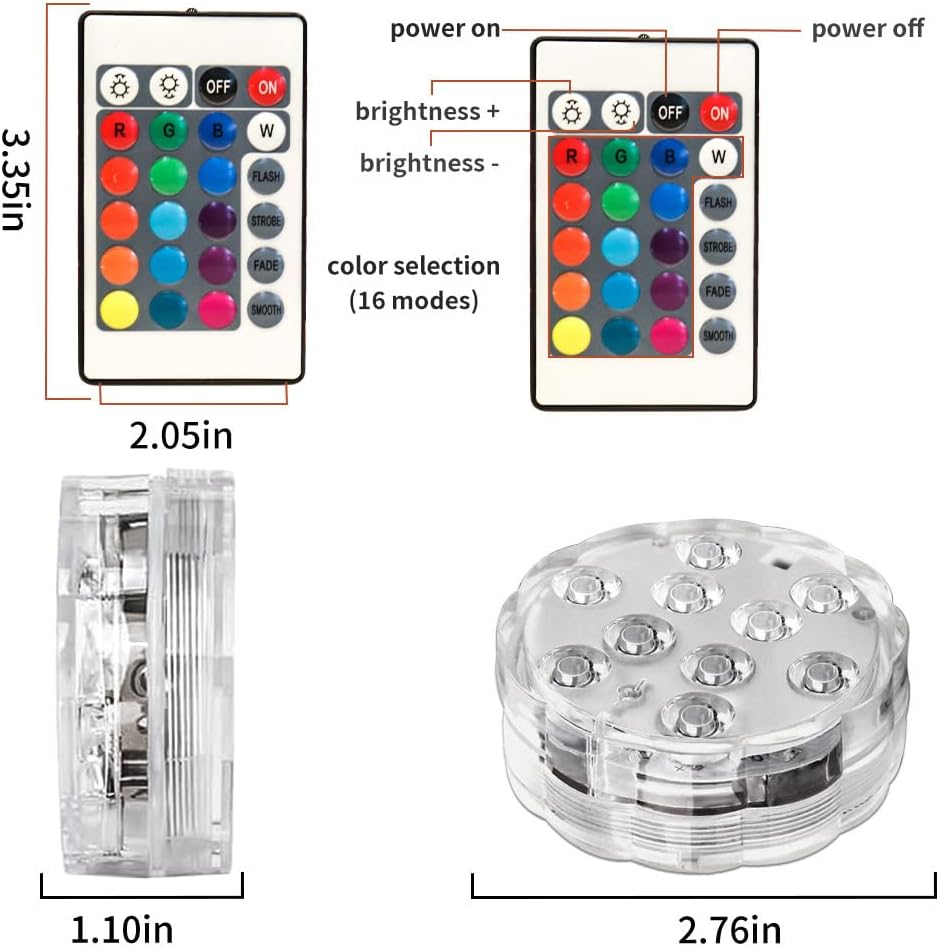
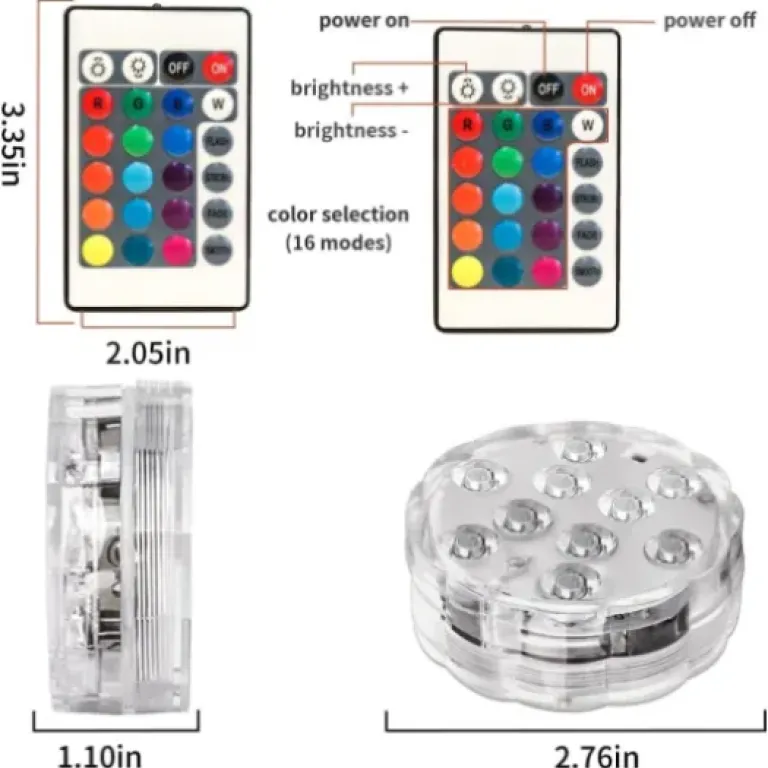
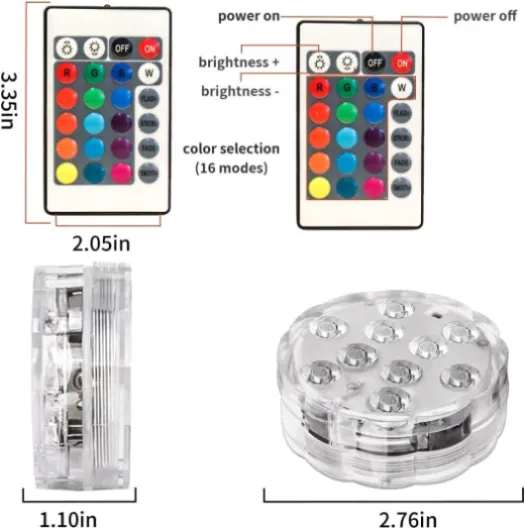
The design is basically white plastic hockey pucks with a clear lens on top and a screw-on base. Inside, each unit has 10 small 5050SMD LEDs. The look is nothing fancy: it’s generic white plastic, no branding, no metal, no rubberized exterior. On a boat, once they’re mounted, they don’t really stand out visually — which can be good if you just want functional lighting and not some flashy gadget.
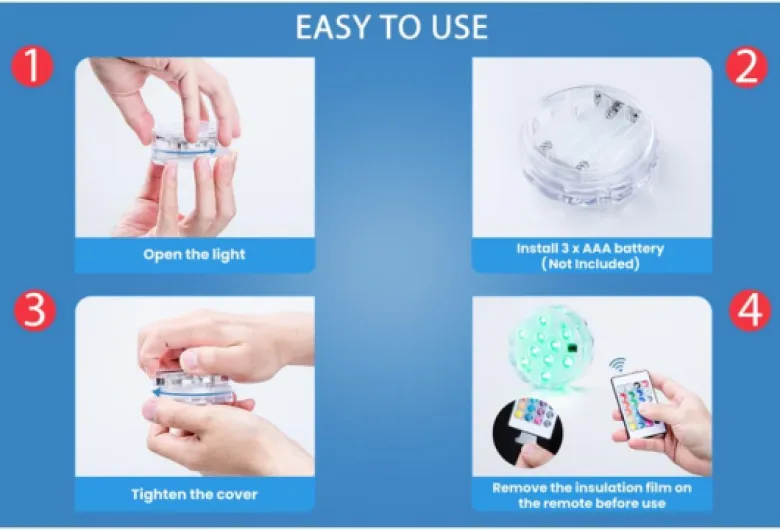
The main design point you need to know: everything depends on that screw-on cap. You twist the housing open to put in the 3 AAA batteries, then twist it back on to seal it. The waterproofing is just a rubber O-ring inside. If you don’t tighten it firmly, water can get in. The problem is, you have to find that sweet spot between “tight enough to seal” and “not so tight that you strip the threads or struggle to open it again.” After changing batteries twice, I could feel the plastic threads getting a bit rough on one of the units.
Light output is spread pretty evenly, but there’s no diffuser beyond the clear plastic. So up close, you see the individual LED points. On a deck or in a console, it’s fine, but don’t expect soft, uniform light. Mounted under seats or under the gunwale, they give a decent glow. Mounted right in open view, they look a bit like cheap pool lights, which is basically what they are. The RGB colors are strong enough in the dark, but in twilight or if there’s already some ambient light, the effect is less visible unless you stick to white or brighter colors.
I would describe the design as functional but obviously budget. It’s not ugly, it’s just basic. If you want something sleek that looks like it came from a marine brand, this isn’t it. If you just want small, wireless, throw-them-anywhere lights, the design works, as long as you respect the limitations of the screw cap and the plastic threads.
Battery life and the annoying red-light warning sign
Each light runs on 3 AAA batteries, which adds up fast if you’re using all four. The description claims 20–50 hours depending on batteries and modes. In my real use, with mid-range alkaline batteries and mostly white or green at medium brightness, I’d say I got around 15–20 hours before things started to drop off. On full brightness white, they faded noticeably sooner. So the 50-hour figure feels optimistic unless you’re running very low brightness or colors that draw less power.
The weird behavior is when the batteries run low: the light gets stuck on red and stops responding properly to the remote. At first I thought the remote had died or the unit was defective, but after swapping batteries, it went back to normal. It’s basically their low-battery indicator, but it’s not obvious if you haven’t read the description. So if your lights suddenly only show red and ignore color changes, it’s time to change batteries, not throw the thing away.
On a practical level, if you use these regularly, you’ll chew through a lot of AAAs. For someone who goes out at night a few times a month, that’s manageable. For heavy users, I’d seriously consider rechargeable AAA batteries, otherwise the running cost becomes annoying. Also, keep in mind you need to unscrew each unit every time to change batteries, and if you’re doing that often, the plastic threads and O-ring will see a lot of wear.
Overall, battery life is acceptable but not great. It matches the price point and the fact that these are small pucks, not big battery packs. Just don’t expect to throw them in the boat and forget about them for a whole season. If you’re okay with swapping batteries fairly often and dealing with the red-light warning quirk, they’re usable. If you hate battery maintenance, you’ll get tired of these pretty quickly.
Waterproof enough if you’re careful, but not bulletproof
The big question with cheap battery lights on a boat is always: will they actually survive water? I tested one unit in a bucket of water for about 30 minutes, fully submerged, with the cap tightened firmly. That one came out fine: no moisture inside, still worked perfectly. On the boat, I had them on the deck where they got splashed a bit, and again, no immediate issues. So the basic waterproofing concept works — as long as you do your part and twist the caps properly.
Where I see potential problems long-term is wear on the threads and O-ring. Every time you change batteries, you’re twisting that plastic-on-plastic connection. On one light, after the second battery change, I could feel the threads starting to feel a bit rough and less smooth, like they could cross-thread if I rushed it. The rubber seal also looks generic, not especially thick. I’d expect that with heavy use (lots of opening/closing) and exposure to sun and salt, they might eventually lose their tight seal.
Impact resistance is average. I dropped one from about waist height onto my garage floor — it popped open, batteries flew out, but the housing didn’t crack and it worked fine after I put it back together. On the boat, with normal bumps and moving coolers around, they handled it. I wouldn’t trust them to survive being stepped on by a heavy person in boots repeatedly, but for regular use they seem okay.
I’d rate durability as good enough for casual freshwater and light saltwater use, but not something I’d bet on for years on a hard-used offshore boat. If you treat them like cheap accessories, rinse them if they get salty, and don’t over-tighten or cross-thread the caps, they should survive a few seasons. If you abuse them or expect true marine-grade toughness, you’ll probably be disappointed sooner or later.
Light output and remote control: works, with some limits
In terms of brightness, I’d call these moderately bright, not floodlights. On my 14-foot aluminum fishing boat, using all four lights on white, I could see the deck, tackle, and inside the hull well enough to move around and rig lines without tripping. They’re great as courtesy lights or mood lights, but they are not a replacement for a proper navigation or spotlight setup. If you’re expecting to light up the shoreline or see buoys, this is the wrong product.
The RGB modes are decent for atmosphere. The 16 colors on the remote are clear and distinct. I mostly used white, green, and blue. Green worked nicely while night fishing — it didn’t kill my night vision as much as white. The flash/strobe/fade/smooth modes all work as advertised, but on a boat I found them more annoying than useful, especially the fast strobe. It’s more of a party trick for a backyard pool than something you actually want while moving around on deck.
The remote performance is okay but a bit finicky. The stated 3–10 m range is realistic, but only with a clear line of sight and pointing roughly toward the lights. If you’re off to the side or the remote’s sensor is blocked, some lights respond, some don’t. One nice thing: one remote controls all four lights at once, so you don’t have to aim at each one individually. But sometimes one light doesn’t receive the signal and stays on a different color or mode, and you have to point more carefully or move closer to sync it up.
For what they cost, I’d say performance is fine but not impressive. As deck courtesy lights, they get the job done. As decorative lights for a pontoon party, they’re fun enough. But if you want consistent, strong, and reliable illumination, you’re better off with wired LED strips or proper marine fixtures. These sit in that middle zone: bright enough for casual use, but you feel the compromises as soon as you ask more of them.
What you actually get in the box
Out of the box, you get 4 round LED puck lights, a small IR remote, and hook-and-loop sticky pads for each light. No batteries included, so plan on buying at least 12 AAA batteries right away. The lights are about 7 cm across and a bit over 2.5 cm tall, so they’re not huge, more like a thick drink coaster. They’re small enough to tuck under a gunwale or around the console, but big enough that you won’t lose them in the boat.
The listing says one remote, but my package actually had 2 remotes, which was a nice surprise. Both worked the same: 24 buttons, 16 fixed colors, brightness controls, and four modes (flash, strobe, fade, smooth). It’s the same style of cheap remote you see with RGB strip lights. Light, plastic, and not something you want to get soaked. There’s a little plastic tab under the battery you have to pull before it works — easy to forget if you’re in a hurry.
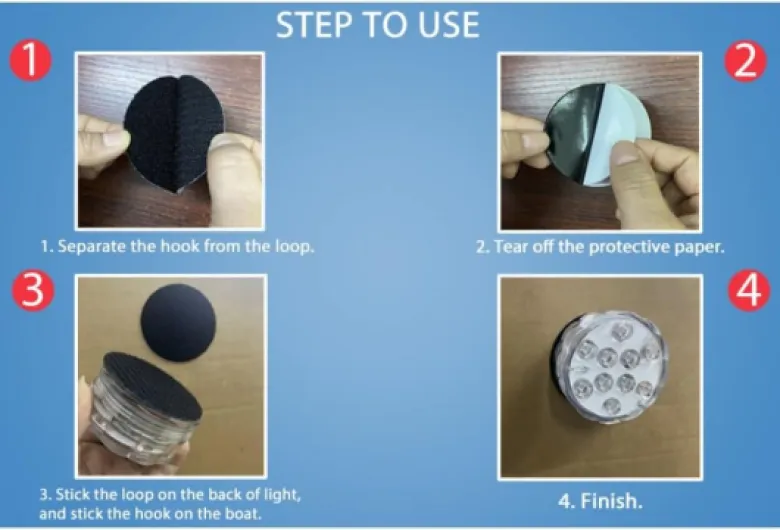
The hook-and-loop pads are basic but useful. One side sticks to the bottom of the light, the other to your boat or whatever surface you’re using. The adhesive is okay on smooth fiberglass or painted metal, but on rough or dirty surfaces it doesn’t hold that well. I ended up wiping down the mounting spots with alcohol first, and that helped a lot. If you plan to mount them permanently, I’d probably back this up with better 3M tape or even screws and a small plate.
Overall, the kit is simple: four self-contained lights, one or two remotes, and some Velcro-style pads. No instructions beyond the basics, but honestly you don’t need much. Twist open, insert batteries, twist closed, and use the remote. It’s the kind of product where you figure it out in a minute, but you also instantly see where the corners were cut to keep the price low.
Pros
- No wiring needed: fully battery powered and easy to move around
- Decent brightness and plenty of RGB color options with multiple modes
- Good price for a 4-pack with remote, handy for casual or temporary setups
Cons
- Battery life is only average and AAA usage adds up over time
- Waterproofing depends heavily on carefully tightening plastic caps
- Remote and build quality feel cheap, with occasional sync issues between lights
Conclusion
Editor's rating
Overall, these JT-HLM wireless battery boat lights are decent budget gadgets that do what they promise, as long as you don’t expect professional gear. They light up your deck or cockpit, give you a bunch of color options, and the remote mostly works as advertised. For casual night fishing, a relaxed pontoon cruise, or just adding some color to a kayak or pool area, they get the job done without any wiring or permanent changes to your boat.
Where they fall short is in the usual budget areas: long-term durability, battery consumption, and overall polish. You have to be careful with the screw caps to keep them watertight, accept that battery life is okay but not great, and live with a slightly finicky remote and a low-battery behavior that locks the light on red. If you’re a heavy user or need something you can trust in rough, wet conditions all the time, I’d look at proper wired marine LEDs instead.
I’d recommend these to anyone who wants cheap, flexible, and easy temporary lighting for small boats, pontoons, or even backyard use, and who doesn’t mind swapping batteries and treating them a bit gently. If you want set-it-and-forget-it reliability, or you already plan to run wires, then skip these and invest in a better permanent system. For what they cost, they’re fine — not special, not terrible, just a practical quick fix for light-duty use.