
Summary
Editor's rating
Value for money: decent price for a known name
Design: low-profile, but not as small as you might think
Materials and build: plastic, but doesn’t feel like a toy
Durability and long-term feel
Performance on the water: heading lock and readability
What you actually get out of the box
Pros
- Stable, readable 2 3/4-inch dial with quick heading lock thanks to DirectiveForce magnets
- Solid plastic construction that handles sun and heat without bubbles or warping in normal use
- Simple surface-mount design from a reputable marine brand, with the bonus of being 100% repairable
Cons
- Larger footprint than you might expect from the word "compact", can feel bulky on very small consoles
- Basic feature set with no real extras beyond the sun shield; feels a bit plain for the price

Specifications
View full product page →| Brand | Ritchie |
A basic boat compass that does what it says
I picked up the Ritchie S-53 Explorer Compass because I wanted a simple, fixed compass on a small boat, not another app on my phone or a fancy chartplotter that needs power all the time. I wasn’t looking for something high-tech, just a unit I could glance at while steering to keep a steady heading. On paper, this one looked like a classic: surface mount, plastic body, 2 3/4-inch dial, and not insanely expensive. So I decided to give it a try and live with it for a while.
First impression when I opened the box: it’s bigger than I expected. That matches the one Amazon review saying it’s a “large item.” I was picturing something closer to a tiny dash compass, but this is more like a proper small-boat binnacle-style unit. Not huge, but it does take some space on the console. If you’re expecting something pocket-sized or ultra-low profile, you’ll probably be surprised like I was.
I mounted it on a small center console boat that I use on a lake and occasionally in coastal waters. Installation was straightforward, nothing complicated, but you do need to think about where you put it so that metal parts or electronics don’t mess with the reading. I used it over several outings in different weather: bright sun, overcast, and a couple of cool mornings. That gave me enough time to see how the card settles, how readable it is, and whether the plastic housing feels cheap or solid.
Overall, after a few weeks, my feeling is: it’s a pretty solid, no-frills compass. It’s not perfect, and there are a few details that bug me, but it does the main job: it gives you a heading that you can trust once it’s installed and adjusted properly. If you’re expecting a super compact, high-end instrument, this isn’t it. If you just want a straightforward compass that holds a heading, this is in that zone.
Value for money: decent price for a known name
In terms of value, the Ritchie S-53 Explorer sits in that middle zone: not the cheapest compass on the market, but far from the top-tier prices. You’re basically paying for a known marine brand, a proper fluid-damped card, and a design that’s made for actual boat use, not just decorative purposes. Given the 4.4/5 rating on Amazon and my own use, I’d say the price is fair for what you get, but not a crazy bargain.
If you compare it to really cheap dash compasses, those might cost less, but you usually pay for that in poor card stability, bubbles, or questionable accuracy. I’ve had a couple of those in the past, and honestly, they ended up in the trash after a season. The S-53 feels like something you can actually rely on as a backup to GPS, which for me justifies spending a bit more. It’s still way cheaper than bigger professional compasses with fancy mounts and lighting, so it hits a sensible middle point for small-boat owners.
Where the value could be better is on the "compact" claim. If you’re tight on space and buy it thinking it’s tiny, you might feel a bit misled. It’s not huge, but it does take a chunk of dash. So part of the “cost” is the real estate on your console. If you have plenty of space, that’s no big deal. If you run a very small skiff or a kayak, you might want something smaller and cheaper instead.
Overall, I’d rate the value as good but not mind-blowing. You get a reliable, readable compass from a serious brand, with decent materials and repairability. There are cheaper options if you just want something that looks like a compass, but if you actually care about heading stability and avoiding junk, this hits a sensible price-performance balance. I don’t feel like I overpaid, and I’d buy it again for a similar small boat setup.
Design: low-profile, but not as small as you might think
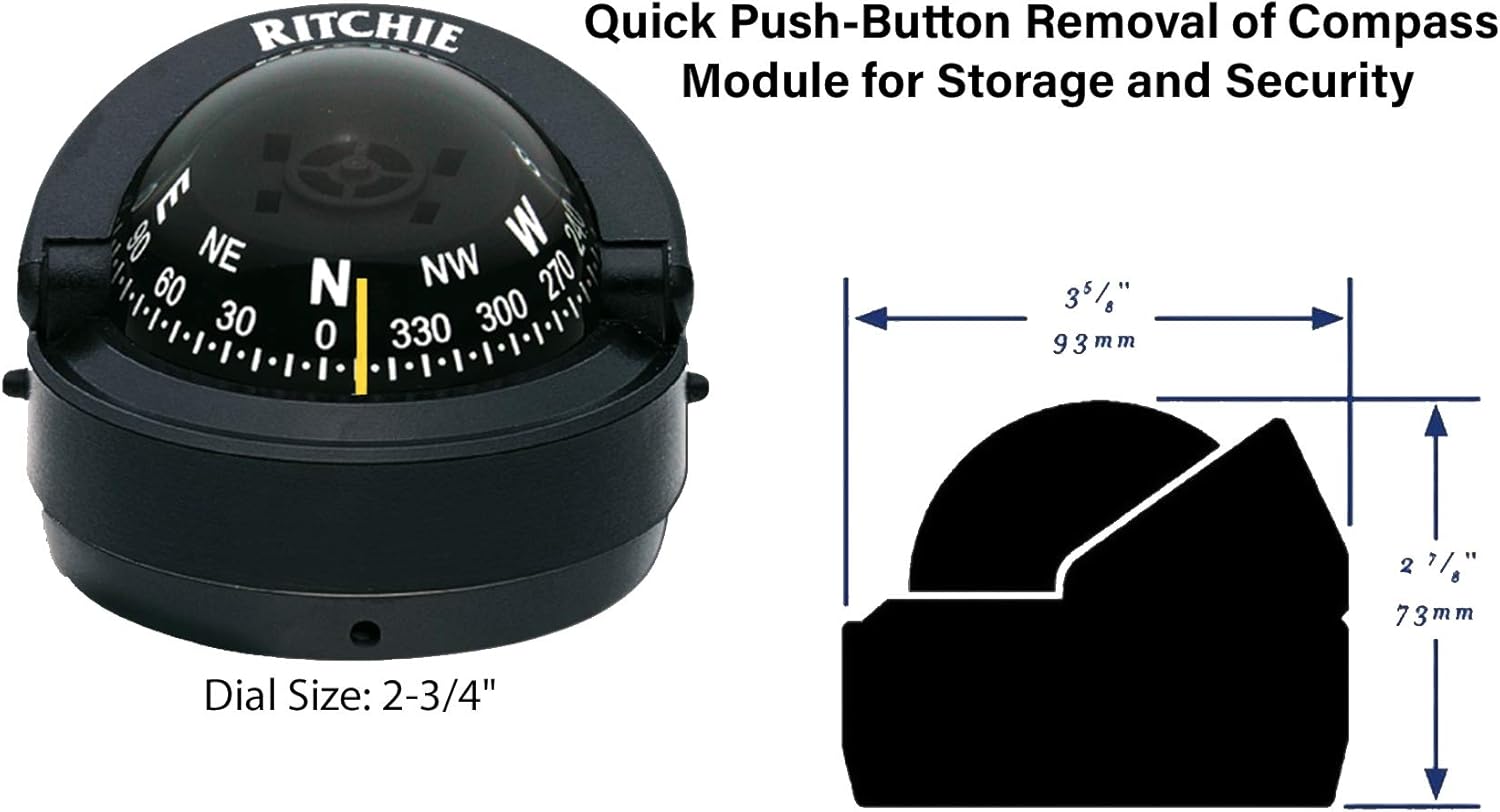
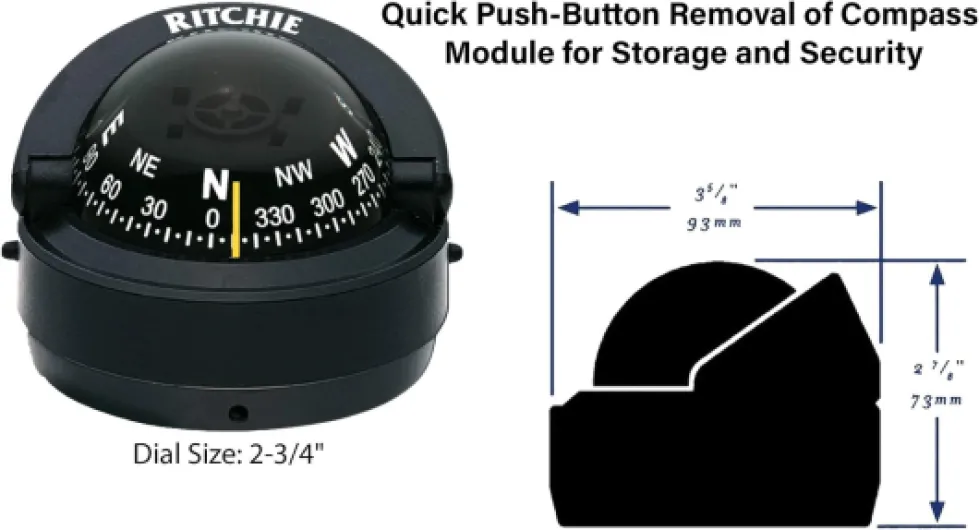
The product description talks about a compact low-profile design, and I’d say that’s half true. The profile is low in the sense that it doesn’t stick up like a huge binnacle, but the footprint (15.2 x 15.2 cm) is not tiny. On my small console, I had to think a bit about where to place it so it wouldn’t crowd other gauges. If you have a narrow dash or a kayak-style setup, it might feel a bit bulky. On a standard small powerboat, it’s fine, just not ultra-compact.
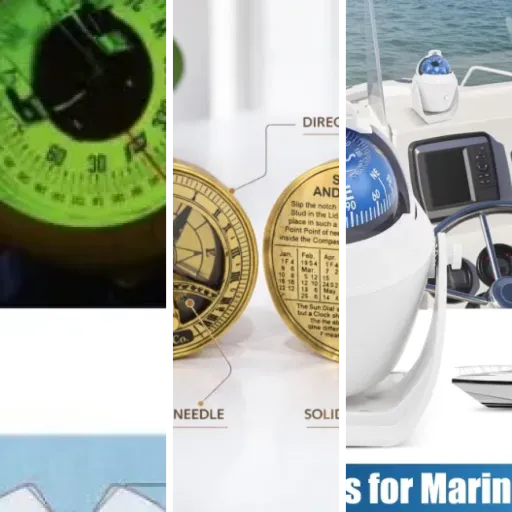
One thing I liked is the general shape and layout. The dome is smooth, and the viewing angle is decent from both sitting and standing at the helm. You don’t have to be exactly in front of it to read it. The markings are simple and functional: cardinal points, degree markings, and a clear lubber line. It doesn’t try to cram in too much information, which is good. You look at it, you get a number, and that’s it. No distractions.
The movable sun shield is a small detail that actually matters. On bright days, reflections on the dome can make some compasses annoying to read. With this shield, you just slide it to block the worst of the glare. It’s not a perfect system, but it does cut down on the mirror effect. I ended up adjusting it a few times during the day when the sun angle changed. It’s one of those cheap-looking bits of plastic that actually improves usability more than you’d think.
Overall, the design is functional rather than pretty. It looks like gear for a working boat, not a showpiece. Personally, I’m fine with that. My only real criticism is that calling it “compact” is a bit optimistic. It’s moderate in size, not tiny. If you’re upgrading from a very small dash compass, expect this to take more room. If you’re coming from a traditional bulkier compass, you’ll probably find it reasonably streamlined.
Materials and build: plastic, but doesn’t feel like a toy
The compass is made from a high temperature composite plastic, according to the specs. In real life, that translates to: it’s plastic, but the shell feels tougher than cheap consumer stuff. When you tap it, it has a solid feel, not that hollow brittle sound you get from low-grade plastic. The dome is clear, with no obvious distortions or bubbles on my unit, which matters when you’re trying to read the card at an angle.
Ritchie advertises an “extended operating range” thanks to the high-temperature construction. I haven’t baked it in tropical sun for years, but I did leave the boat uncovered in direct sun for several days. The housing didn’t warp, and the fluid inside the dome didn’t show any bubbles or weird behavior. That’s already better than some cheap compasses I’ve seen, where you get bubbles after one hot weekend. So from a normal-user point of view, the material seems to handle heat reasonably well.
All the mounting parts and the base are also plastic. That has pros and cons. On the plus side, you don’t have to worry about corrosion like with metal brackets. On the downside, if you overtighten screws or drop something heavy on it, you’re more likely to crack it. I was careful when screwing it down and had no issues, but if you’re heavy-handed with tools, keep that in mind. The "100% repairable" bit suggests you can replace parts if you mess something up, but that’s an extra hassle.
In day-to-day use, the materials feel good enough for a small boat. It’s not luxury gear, but it doesn’t scream “cheap junk” either. Compared to some budget no-name compasses I’ve handled, this feels clearly a step up in quality. Compared to higher-end Ritchie models or big-boat compasses with metal housings, it’s obviously a simpler product. For the price range and target use (small powerboats, dinghies, maybe sailboats under 25 ft), I’d say the material quality is appropriate, with the main advantage being low maintenance and decent heat resistance.
Durability and long-term feel
I haven’t owned this compass for years, so I can’t pretend I know how it will age long term, but I can talk about the early signs. After several weeks mounted on the boat, exposed to sun, spray, and some light bumps, the housing still looks clean. No yellowing of the dome yet, no bubbles in the fluid, and no condensation. That’s already better than some cheap models where you start seeing tiny bubbles after a few hot days.
The plastic body has handled vibration and regular use without any creaking or loosening. I checked the mounting screws after a few outings; they were still tight, and the base hadn’t warped. I’m not babying it either – I lean on the console sometimes, grab it when moving around, and it hasn’t shown any signs of cracking. So in normal small-boat use, it feels robust enough. Obviously, if you slam heavy gear into it or drop the boat hook directly on it, it’s still plastic, so it will lose that fight.
The “100% repairable” claim is nice in theory. It suggests that if the dome gets scratched or the card gets damaged, parts can be replaced instead of tossing the whole unit. I didn’t need to test that, but it’s good to know the design isn’t a sealed, disposable brick. For someone who keeps boats a long time, that matters. For casual users, it just means you’re less likely to be stuck if something minor goes wrong out of warranty.
Overall, my impression is that durability is pretty solid for the price. It’s not military-grade gear, but it doesn’t feel like a temporary toy either. If you care for it a minimum – don’t step on it, don’t leave harsh chemicals on the dome, and avoid constant cover rubbing – it should last several seasons without drama. Compared to ultra-cheap plastic compasses, this is clearly a step up. Compared to high-end, larger Ritchie units, it’s still the budget cousin. But for a small recreational boat, it’s in a comfortable middle ground.
Performance on the water: heading lock and readability
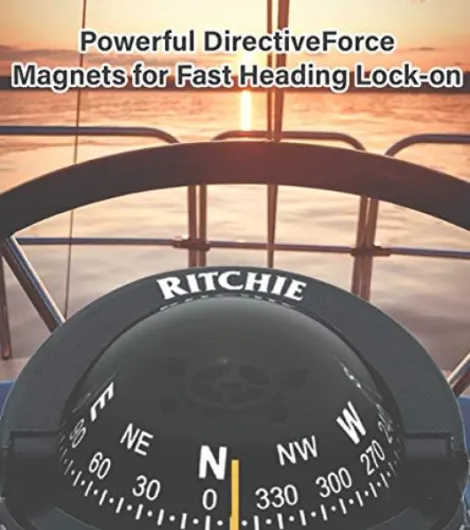
Performance-wise, the big question is: does it hold a stable, accurate heading? With the Ritchie S-53, the answer is mostly yes, as long as you install it properly. It uses Ritchie’s "DirectiveForce" magnets, which is a fancy way of saying the card settles quickly. On the water, when I turned the boat to a new course, the compass card would swing and then settle in a second or two. It doesn’t wobble endlessly like really cheap compasses do. That makes it easier to steer to a specific heading without chasing a moving target.
Accuracy is always tricky to judge without professional gear, but I compared it to GPS heading and another older compass on the boat. After doing a basic adjustment to reduce deviation (avoiding placing it near speakers and metal), the readings were within a few degrees of the GPS, which is perfectly fine for small-boat use. I’m not using this for precision navigation across oceans; I just need to hold a course to a waypoint, and for that it’s spot on. If you’re sloppy with placement and don’t respect magnetic interference, you’ll obviously get worse results.
Readability is pretty good in daylight. The 2 3/4-inch dial is big enough that you don’t need to squint. The contrast between the card and the markings is decent. On overcast days, it’s very easy to read. In very bright sun, that’s where the sun shield helps a lot. Without it, reflections on the dome can be annoying. With the shield in place, it’s manageable. I didn’t test any built-in lighting (not mentioned in the data), so for night use you’ll probably rely on a separate light source unless your specific model has wiring for illumination.
In choppy water, the card movement is reasonable. It does move around with the boat motion, but not in a crazy way. You can still estimate your average heading without much effort. I’ve seen more expensive compasses that are a bit smoother, but for this price bracket, the S-53 is perfectly usable and reliable. If your main concern is a compass that locks onto a heading quickly and doesn’t act like a toy, this one gets the job done. Just don’t expect the dead-calm card behavior of big, heavy professional units.
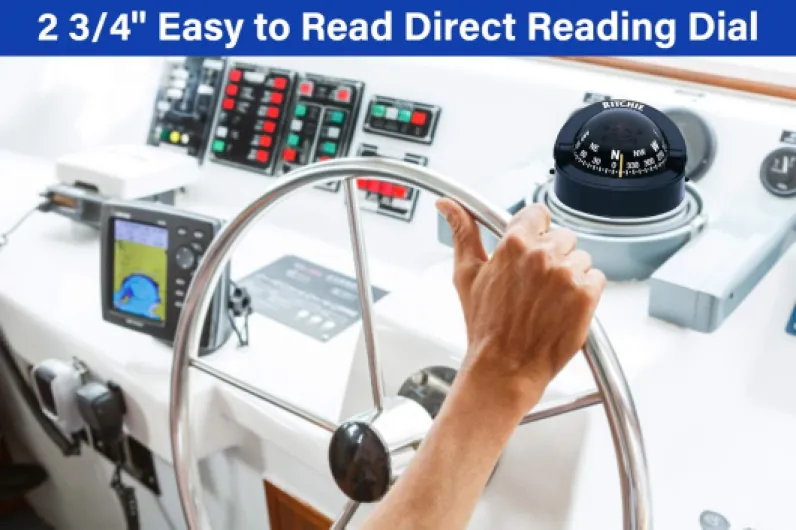
What you actually get out of the box
Out of the box, the Ritchie S-53 Explorer is pretty barebones. You get the compass itself, the built-in surface mount base, and that’s basically it. No fancy accessories, no hard case, nothing extra. It weighs about 295 g, so it feels light but not flimsy. It’s clearly meant to be screwed down and left there, not something you move around every time you go out. The label calls it “portable”, but in reality it’s more “easy to mount” than truly portable like a handheld compass.
The dial is 2 3/4 inches, which is a good size for a small boat. You can read it from the helm without leaning in too much. The card markings are clear enough, with the main headings easy to spot. It’s not as crisp or high-contrast as some pricier marine compasses I’ve used, but it’s perfectly usable. There’s also a movable sun shield on top, which is a simple piece of plastic you can slide to block glare. It’s a basic idea, but on bright days it actually helps more than I expected.
One thing that stands out in the description is the “100% repairable” claim. That sounds nice, but as a regular user, what that really means is: if something goes wrong, you’re not forced to throw it away. To be honest, most people in this price range will probably just replace it instead of sending it in for repair, but it does show that Ritchie didn’t design it as a disposable toy. The brand has a decent reputation in boat compasses, and you can feel that this is not a gimmicky gadget from a random no-name factory.
In terms of overall presentation, it’s practical and no-nonsense. No luxury vibe, no fancy packaging, just a compass that looks like it belongs on a working boat. If you like clean, functional gear, you’ll be fine with it. If you’re expecting some premium unboxing experience or a ton of documentation and accessories, you’ll be underwhelmed. Personally, I don’t care about the box; I care that it’s readable and works on the water, and on that front, the first impression is pretty decent.
Pros
- Stable, readable 2 3/4-inch dial with quick heading lock thanks to DirectiveForce magnets
- Solid plastic construction that handles sun and heat without bubbles or warping in normal use
- Simple surface-mount design from a reputable marine brand, with the bonus of being 100% repairable
Cons
- Larger footprint than you might expect from the word "compact", can feel bulky on very small consoles
- Basic feature set with no real extras beyond the sun shield; feels a bit plain for the price
Conclusion
Editor's rating
After using the Ritchie S-53 Explorer Compass for a while, my conclusion is pretty simple: it’s a solid, no-nonsense boat compass that does its job without drama. The card settles quickly, the heading is trustworthy once you install it away from interference, and the 2 3/4-inch dial is easy to read in normal daylight. The plastic housing doesn’t feel premium, but it feels durable enough for real use, and the high-temperature composite seems to handle sun and heat better than the cheap stuff.
It’s not perfect. The "compact" label is a bit exaggerated – it’s more medium-sized than truly small, and on a tight console it will take noticeable space. It’s also pretty basic in terms of extras: no fancy mounting tricks, no frills, just a straightforward surface-mount compass. But for a small powerboat, dinghy, or modest sailboat where you want a fixed reference heading to back up GPS or help you steer straight, it’s a good fit. If you’re outfitting a big cruiser or want top-tier precision and features, you’ll probably want to step up to a more expensive model.
So, who is this for? People who want a reliable, readable, mid-priced compass from a known brand and don’t care about luxury looks. Who should skip it? Anyone with very limited dash space, or those who want a tiny, ultra-compact unit or a fully tricked-out, high-end navigation instrument. For everyday boating, fishing trips, and casual coastal runs, it gets the job done without fuss.