Summary
Editor's rating
Value: worth it if you care about quality, pricey if you just want a glow
Design: dual colour and a low‑profile housing
Materials and build: feels marine‑grade, lens is still plastic
Durability: season in the water and no leaks so far
Performance: brightness, beam, and real‑world use on the water
Installation: doable for a handy boater, not for total beginners
What you actually get out of the box
Pros
- Very bright, usable light with dual white/blue modes that actually light up the water
- Feels properly sealed and has held up well through a season in saltwater with no leaks or fogging
- Low‑profile design that sits cleanly on the transom and doesn’t snag lines easily
Cons
- High price compared to cheaper underwater lights with similar claimed lumens
- Plastic lens may be a long‑term weak point and needs careful cleaning
- Installation involves drilling below the waterline and isn’t ideal for beginners

Specifications
View full product page →| Brand | OCEAN_LED |
Serious underwater glow for your transom
I’ve been running the OceanLED Sport S3124s (white/blue) on the transom of a small cabin cruiser for a while now, mostly for evening fishing and the odd night swim at anchor. I’m not an installer or a dealer, just someone who likes gadgets on the boat and wants to see what’s lurking around the stern at night. I swapped to this from a much cheaper Amazon no‑name light that claimed similar lumens but never really lit up more than a light halo behind the boat.
The first thing to say is that, in real use, this thing is genuinely bright enough to change how the water looks behind the boat. OceanLED claims 5,600 lumens, and while I’m not out there with a light meter, the difference compared to my old 2,000–3,000 lumen knockoff was obvious. In clear water at anchor, I could see bait fish and the prop area several metres out, which just didn’t happen before. It’s not like turning the sea into a swimming pool, but it’s strong enough that people on nearby boats noticed it.
I wired it to a simple on/off switch with a fuse on a 12 V system. Installation wasn’t plug‑and‑play, and you need to be comfortable drilling through your transom and sealing things properly, so this is not like clipping on a portable light. But once it was in and sealed, it’s been basically hands‑off. No water ingress, no weird flickering, no random shut‑offs so far. That’s already better than the cheap one I had before which started fogging up after a month.
Overall, my first impression after a few night runs is that it does what it says: bright dual‑colour underwater light that seems built for a boat, not a toy. It’s not perfect and it’s definitely not cheap, but if you’re already spending money on the boat, it feels more like a proper piece of kit than a gimmick. The rest of this review is just breaking down where it shines and where it’s a bit annoying or overpriced.
Value: worth it if you care about quality, pricey if you just want a glow
Let’s be honest: the OceanLED Sport S3124s is not a budget light. You pay a clear premium over the random Amazon brands that promise the same or higher lumens on paper. So the question is whether it’s actually worth that extra money. In my case, after killing a cheaper unit in one season and dealing with leaks and fogging, I was ready to pay more for something that just works and doesn’t stress me out every time I leave the boat in the water.
In terms of what you’re paying for, you get: consistent brightness, a known marine brand, decent sealing, and a clean dual‑colour output that’s actually useful. You’re not paying for bells and whistles like app control or full RGB. If you only want a bit of glow at the stern for the odd evening swim and you don’t care if you have to replace the light every couple of years, a cheaper option may be enough for you. But if you’re out at night a lot, have guests on board, or fish at night, having a light that you trust to work every time is worth something.
Compared to my previous cheap light (which cost maybe a third of this), the OceanLED is brighter, has a nicer beam, and hasn’t leaked. That alone justifies the difference to me. On the other hand, compared to some other mid‑range marine brands, the price feels a bit high for a single 12 V unit with a plastic lens and no fancy controls. You’re definitely paying for the name and the track record. If budget is tight, I’d look at something slightly cheaper from a known marine brand before jumping straight to this.
Overall, I’d rank the value as good but not outstanding. If reliability, brightness, and a clean install matter to you, it makes sense. If you just want your transom to glow blue for Instagram shots a few weekends a year, this is probably overkill and you can save money. For someone who actually uses their boat at night regularly, I’d say the price is easier to swallow once you’ve seen how it performs and how little drama it causes.
Design: dual colour and a low‑profile housing
The design is pretty straightforward: a low‑profile underwater housing with a lens that throws light slightly out and down. It’s made to sit on the outer transom, and the wiring runs through a single hole. I like that it doesn’t stick out much; on my boat, it sits just below the waterline when loaded, and I haven’t had lines snag on it or bumped it on the trailer. That’s a practical detail that matters more than the marketing pictures. With some other bulkier lights, you’re always worried about backing into something at the dock.
The big design feature is the dual‑colour output: ultra white and midnight blue. You don’t get RGB or party‑mode cycling. It’s just two colours, which frankly I prefer. The white is strong and very usable if you care about visibility around the stern. The blue is more for atmosphere and attracting fish; it’s less harsh on the eyes and doesn’t draw every bug in the bay straight to your swim platform. I wired mine so I can select colour via a simple switch pattern (brief off/on toggles), and in practice it’s easy enough after you get used to it, though a dedicated two‑position switch would be nicer.
One thing I appreciate is that the light pattern is fairly wide, not a tight spotlight. From the swim platform I can see a broad glow spreading out rather than a single bright cone. In clear water at anchor, the white setting lit up maybe 3–4 metres back with decent clarity, and you still see a softer glow further out. In murkier harbour water, of course, everything looks more like a cloud of light, but that’s not the light’s fault. The blue mode feels slightly less bright to the eye, but it still throws enough to see movement of fish and the prop area easily.
If I had to nitpick the design, I’d say the control logic could be more user‑friendly. Relying on power cycling to change colours is a bit old‑school. Also, there’s no built‑in app or dimming or fancy features. For some people that’s perfect – less to break. For others, especially if you like techy stuff, it feels basic for the price. Personally, I’m fine with simple, as long as it works, and this design hits that mark pretty well.
Materials and build: feels marine‑grade, lens is still plastic
On the materials side, the spec lists a plastic lens and a housing that definitely feels like it’s meant for the marine environment. You’re not getting a glass lens or some heavy bronze body like on very high‑end underwater lights, but it doesn’t feel cheap either. The weight is around 726 g, which is reasonable: heavy enough that it doesn’t feel hollow, but not a big chunk of metal. In hand, it feels like a proper sealed unit, not something that will crack if you bump it lightly on installation.
The plastic lens is the main thing that might bother some people. On my previous cheap light, the plastic lens yellowed and got micro‑cracks after a single season. With the OceanLED so far, after a season in the water (boat stored in water, not on a trailer), the lens is still clear with just some light surface scum that cleans off. No fogging on the inside, which is a big deal. I pulled the boat after a few months to check and there was no sign of water getting behind the lens or into the housing. So while it’s still plastic, it seems to be a better grade and better sealed than the budget stuff.
The cable feels like decent marine‑grade material, with a proper sheath that doesn’t nick easily when routing through the transom. The gaskets included are okay, but I still used a generous amount of marine sealant (Sikaflex in my case) because I don’t fully trust any gasket alone below the waterline. If you’re expecting a fully metal‑bodied, over‑engineered piece of gear, this isn’t that. It’s more like a solid mid‑to‑high tier marine light with sensible material choices to keep weight and cost in check.
Overall, I’d say the materials are pretty solid for a recreational boat. Would I put this on a commercial vessel that lives in the water 365 days a year? Maybe, but I’d keep an eye on it. For weekenders and seasonal use, it feels more than adequate. The plastic lens is the only part I’ll be watching long term. If it starts to haze or crack after a couple of seasons, that will be the weak link. For now, it’s holding up better than the cheaper units I’ve used, which is what I was hoping for when I paid the extra.
Durability: season in the water and no leaks so far
Durability was my biggest concern before buying this, because my last underwater light started fogging and then died after the first season. With the OceanLED S3124s, I’ve had it through one full season in saltwater, boat kept in the water most of the time, and so far it’s holding up well. No condensation behind the lens, no water in the housing, and the brightness looks the same as day one to my eyes. I checked the mounting screws and sealant line when I hauled the boat, and there was no sign of corrosion creeping in or seal failures.
The waterproofing seems to be done properly. The cable entry is sealed and the rear housing doesn’t show any obvious weak spots. I pressure‑washed the transom (carefully around the sealant) and the light didn’t complain. The plastic lens does pick up a bit of slime and light growth, but nothing serious. A quick wipe with a soft cloth or a gentle scrub with a soft brush cleans it off. No scratches so far, but I’m careful not to use abrasive pads, because plastic will scratch if you’re careless.
In terms of heat, after running it for a long stretch at anchor (3–4 hours straight), the area around the light on the inside of the transom was just slightly warm to the touch. Nothing worrying. Good underwater lights use the surrounding water as a heat sink, and this seems to be the case here. I haven’t seen any signs of thermal throttling or dimming over time. That’s better than my old unit, which used to get hot and then flicker a bit after long runs.
Of course, one season isn’t a lifetime test. For the price, I’d expect at least several seasons of trouble‑free use. But based on one solid season in saltwater, the build and sealing look up to the job. If something’s going to fail, my guess is it’ll be the lens going cloudy or the electronics eventually, not the sealing itself. For now, though, I’m comfortable saying it feels like a durable choice compared to the cheaper alternatives I’ve tried.
Performance: brightness, beam, and real‑world use on the water
Performance is where this light actually justifies its price a bit. The spec sheet says 5,600 lumens, which is the marketing number, but on the water you can actually feel that it’s in a different league than the usual cheap 1,500–2,500 lumen lights. On my 7‑metre boat, a single S3124s mounted centrally on the transom gives enough light that the whole area behind the boat is clearly visible in white mode. I’d say in clear water at anchor I get a solid, usable glow out to 3–4 metres, and a softer extension beyond that. It’s not like daylight, but you can actually see fish shapes, your prop, and anyone swimming close to the stern.
In midnight blue mode, the light feels a bit less bright to the eye, but it’s more comfortable and creates a nicer vibe. For night swims, everyone preferred the blue because it’s less harsh, and it still gave enough visibility to keep track of people in the water. When fishing at night, the blue seemed to draw in bait fish just fine. I can’t scientifically say it attracts more fish than white, but we definitely saw more life around the stern with the light on than without, especially in a quiet anchorage.
From a practical standpoint, the light turns on quickly, no warm‑up, and I haven’t had any flickering or random shut‑offs. Voltage on my system is usually around 12.4–12.8 V when at anchor. Even when I had other loads running (fridge, cabin lights), I didn’t see any noticeable dimming. Power draw is not listed very clearly, but it’s obviously higher than a tiny courtesy light. On a small battery bank, you’ll notice it if you leave it on all night, but on my setup (2 x 110 Ah batteries) it was fine to run for a few hours without worrying.
In murky harbour water, like near a marina with stirred‑up sediment, no underwater light is going to look great. The S3124s still created a clear halo, but visibility dropped to maybe 1–2 metres of useful range. That’s normal. The important part is that it didn’t just turn into a bright ball of glare right at the transom – you still get some spread. Overall, in real use, it’s bright enough to be useful, not just decorative, and that’s the main reason I’m happy with its performance so far.
Installation: doable for a handy boater, not for total beginners
Installation is where some people will either be comfortable or completely back off. This is a through‑hull style install on the transom, which means drilling at least one hole below the waterline (for the cable) and several screw holes for mounting. If that sentence makes you nervous, you’ll probably want a yard or marine electrician to do it. I’m reasonably handy and have drilled my transom before for a transducer, so I did it myself, but I still measured and taped everything three times before touching the drill.
The template in the manual is fine, and lining up the light is straightforward. The key is using the right drill bits, countersinking the holes slightly to avoid gelcoat cracking, and then bedding everything in proper marine sealant. I used a polyurethane sealant and didn’t rely purely on the included gasket. The wiring is simple: 12 V positive and negative, fused supply, and then wired to a switch. If you want fancy switching between colours, you’ll need to pay attention to the instructions or ask someone who knows what they’re doing. It’s not rocket science, but it’s also not as simple as plugging in a cabin light.
From drilling the first hole to testing the light in a bucket of water before launch, the whole install took me about half a day, taking my time and cleaning up. The most stressful part is always putting the drill to the hull. Once that’s done, the rest is just sealant and wiring. The unit itself mounts flush enough that aligning it and tightening the screws evenly is not hard. Just don’t overtighten, or you’ll risk deforming the plastic and compromising the seal. That’s one downside of a plastic‑lens unit versus a fully metal housing – you have to be a bit more careful with torque.
If you’re expecting a plug‑and‑play solution that sticks on with glue, this isn’t it. It’s a proper boat install. For me, that’s fine, and I’d rather have something bolted and sealed than a stick‑on light that might fall off. But if you’re not comfortable with hull work or 12 V wiring, factor in the cost of professional installation when you look at the price. Once installed, though, it’s been completely maintenance‑free apart from the occasional wipe to remove growth, which is exactly what I wanted.
What you actually get out of the box
When you open the box of the OceanLED Sport S3124s, you’re not getting a bunch of fancy accessories, just the basics you need to mount it. In my case, the package had the light unit itself, the mounting hardware (screws), a backing gasket, and the wiring pigtail already attached. There’s no long run of cable included, so you need to plan for extra marine cable, a proper fuse, and sealant. The paperwork is pretty standard: a basic manual with drilling templates and wiring diagrams. Nothing glossy, but clear enough if you’ve done any boat wiring before.
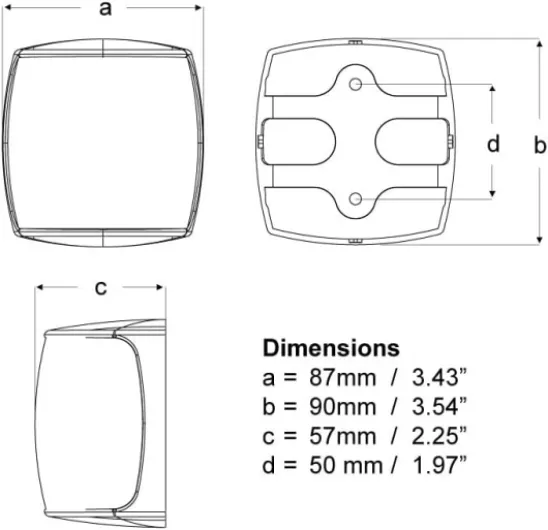
The unit is fairly compact but not tiny. The spec says roughly 45.7 x 25.4 x 15.2 cm, but that’s clearly including packaging or a generic dimension; the actual light housing on the transom is much smaller in footprint, closer to what you’d expect from a typical round/oval underwater light. Either way, it’s not some big brick hanging off the back of your boat. It sits fairly flush with just a modest profile, so it doesn’t catch lines easily, which was something I worried about for trolling and docking.
In terms of information, OceanLED is not the most talkative. You get the basics: 12 V, dual colour (ultra white and midnight blue), waterproof, LED, for boats. You don’t get a detailed breakdown of LED brand, thermal curves, or any of that nerdy stuff that higher‑end electrical gear sometimes shares. So you have to trust the brand’s reputation a bit. For a product at this price, I would’ve liked a clearer breakdown of expected lifespan in hours and maybe a better wiring diagram with example switch setups.
Overall, the presentation is functional: it feels like a marine product, not a toy from a random marketplace seller. But it’s also not trying to impress you with packaging. For the money, I think they could include a bit more in the box, like a tube of recommended sealant or at least a more helpful install booklet for people who aren’t used to drilling holes below the waterline. Still, if you’re comfortable around boats, what you get is enough to do a clean, safe install.
Pros
- Very bright, usable light with dual white/blue modes that actually light up the water
- Feels properly sealed and has held up well through a season in saltwater with no leaks or fogging
- Low‑profile design that sits cleanly on the transom and doesn’t snag lines easily
Cons
- High price compared to cheaper underwater lights with similar claimed lumens
- Plastic lens may be a long‑term weak point and needs careful cleaning
- Installation involves drilling below the waterline and isn’t ideal for beginners
Conclusion
Editor's rating
The OceanLED Sport S3124s is a solid underwater light for people who actually use their boat at night and want something reliable rather than a cheap gadget. The dual‑colour white/blue output is genuinely useful: white for visibility around the stern, blue for a calmer atmosphere and fishing. Brightness feels in line with the 5,600 lumen claim in real use, at least compared to lower‑end lights I’ve tried. After a season in saltwater, mine has stayed dry inside, the lens is still clear, and there’s been no flickering or random failures, which is more than I can say for the budget lights I’ve used.
It’s not perfect. The plastic lens might bother some people in the long run, the control method for changing colours is a bit basic, and the price is definitely on the high side for what you get on paper. Installation also isn’t for complete beginners – you’re drilling the transom and dealing with sealant and 12 V wiring. So who is it for? If you’re a casual boater who just wants a bit of glow a few nights a year and doesn’t mind replacing a light now and then, this might feel too expensive. But if you’re out in the evenings a lot, care about build quality, and want a light you can trust to work whenever you flip the switch, the S3124s makes sense.