
Summary
Editor's rating
Value for money: better than most used junk
Design: practical, but on the narrow side
Comfort and ease of use in real life
Materials and build: proper 316 stainless that feels ready for water
Durability after regular use and rough conditions
What you actually get in the box
Does it actually make getting in and out easier?
Pros
- 316 stainless steel construction handles water exposure well and resists rust
- Double handrails and deep 4-step design make climbing safer and easier for all ages
- Folding and telescoping system saves space and keeps the ladder out of the water when not in use
Cons
- Ladder is relatively narrow, less comfortable for big feet or those wanting more space
- Mounting hardware and backing plates are not fully provided, installation may require extra parts

Specifications
View full product page →| Brand | Haida |
A boat ladder that doesn’t feel sketchy for once
I put this Haida 4-step stainless ladder on my dock because I was tired of the wobbly, rusty junk that came with the place. I use it mainly for getting in and out of a small boat and sometimes just climbing out of the water after swimming. After a few weekends of use with different people (kids, heavier adults, older folks), I have a decent idea of what it can handle and where it falls short.
First clear point: it’s not fancy, but it feels safe. That’s the main thing I look for in a ladder over water. No one slipped, no one felt like it was going to bend or rip off the dock. The two handrails help a lot, especially for older people or anyone with bad knees. You grab both sides, and you don’t feel like you’re about to faceplant into the boat.
Second thing I noticed is the telescoping and folding system. In practice, it’s pretty straightforward. You pull it out when you need it, and you can fold it up against the dock or transom when you’re done. The included bungee strap is basic, but it works to keep it from rattling around or dropping into the water when you’re underway or when waves hit the dock.
It’s not perfect though. It’s a bit narrow for bigger feet or for people who want lots of space on the steps. Also, the measurements in the listing are a bit confusing, so you really need to measure your mounting spot and waterline before buying. Overall, though, if you just want a solid, rust-resistant ladder that feels stable, this one does the job without drama.
Value for money: better than most used junk
On value, I’d say this Haida ladder is good bang for the buck if you actually need a proper marine-grade ladder. I checked local classifieds and places like Marketplace before buying, and a lot of people were asking almost the same price for used, beat-up ladders with rust or missing hardware. For not much more, getting this new, with 316 stainless and solid construction, felt like a better deal.
You’re getting a 4-step telescoping design, stainless construction, and built-in handrails. A lot of cheaper ladders in the same price range either skip the handrails, use lower-grade metal, or don’t telescope (so they’re always in the water collecting growth). When you factor in the extra convenience and the likely longer lifespan in water, the price feels fair. It’s not the cheapest ladder you can buy, but it doesn’t feel overpriced for what it offers.
Where the value is slightly less impressive is around the extras. You don’t get fancy mounting hardware, backing plates, or detailed templates. You’ll probably spend a bit more on good stainless bolts and maybe some reinforcement if your dock or transom is thin. So keep that in mind when budgeting. Also, if you only need a ladder for very occasional use in a pool or a lake with no harsh conditions, you could probably get away with a cheaper, simpler model.
But if you’re near saltwater or you have family and friends using the ladder often, the stability and corrosion resistance justify the price. The real value here is peace of mind: people can climb safely, and you’re not replacing a rusty ladder every couple of seasons. For me, compared to the used options and the junky no-name ladders I’ve seen, this one lands in the “good value for money” category.
Design: practical, but on the narrow side
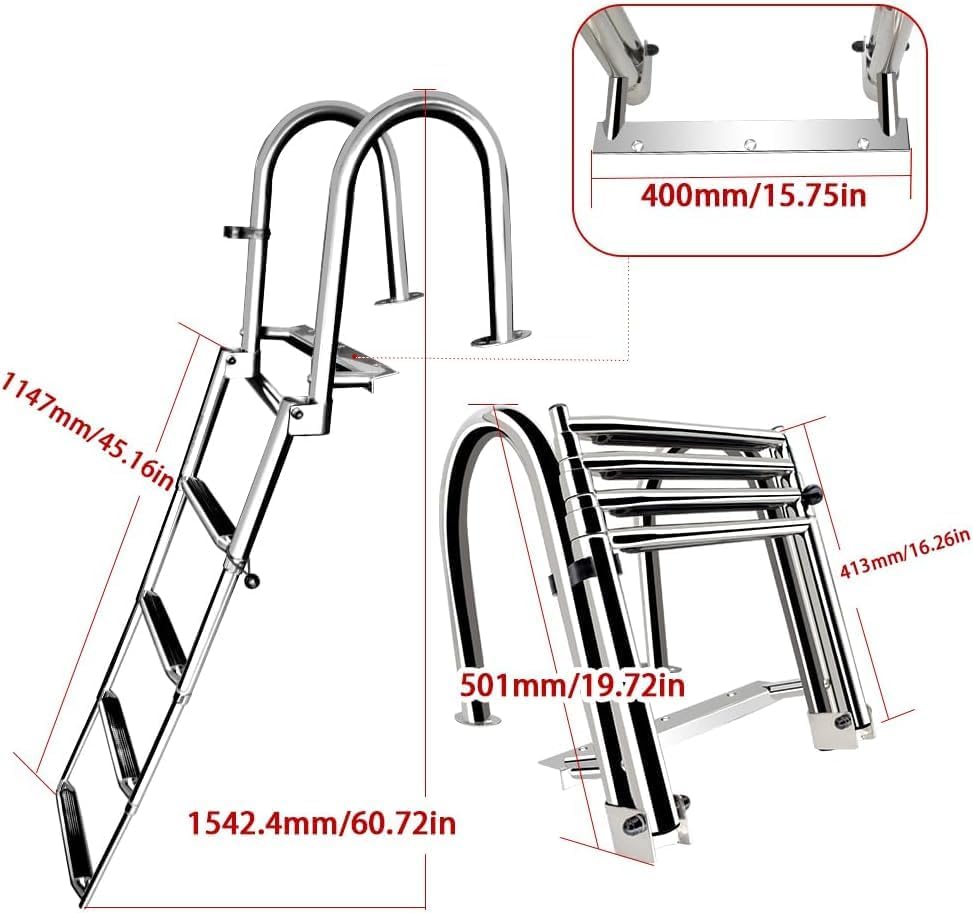
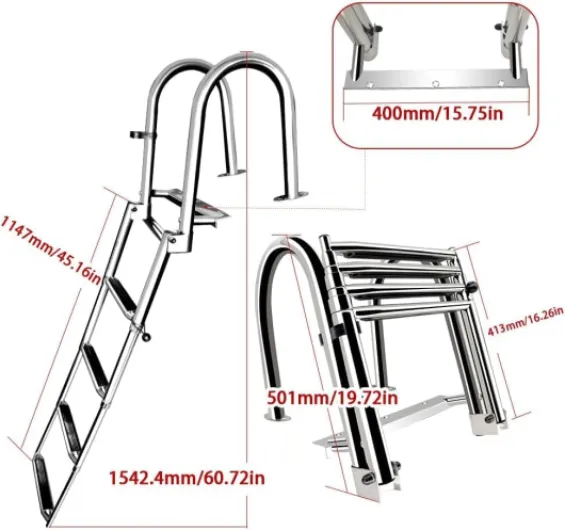
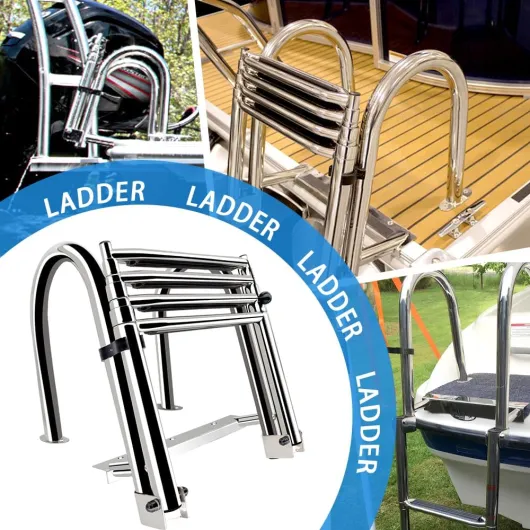
The overall design is pretty simple: two rigid side rails with handholds at the top, and four telescoping steps that slide in and out. The ladder folds up against the dock or transom, and then the steps slide back into themselves, so you’re left with a compact block. This is handy if you don’t want a ladder sticking down into the water all the time getting slimy or banging into things. The included bungee strap wraps around to keep it from dropping down when not in use. Not fancy, but it works.
One thing I really liked is the handrail layout. You get two vertical rails at the top, which you can grab from the dock or from the boat. When you’re stepping up from the water, having both hands on something solid on each side feels much safer than some of the single-rail designs. This is especially useful for kids and older people. One of my older relatives used it and specifically said the double rails made them feel more stable than our previous ladder, which had just a single center bar.
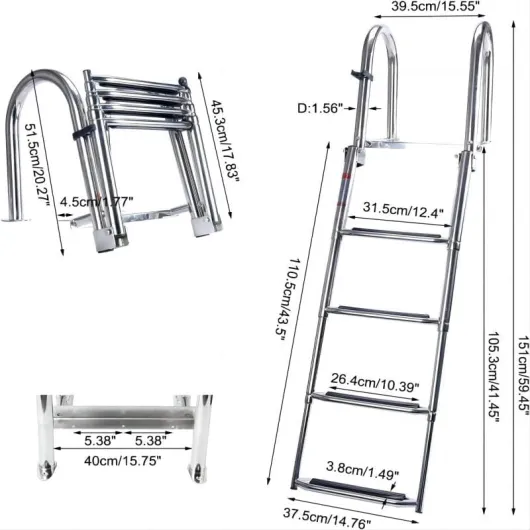
On the downside, the ladder is a bit narrow. The listed width is around 14 inches, and that’s pretty much what it feels like. If you’ve got big feet or you like to stand with your feet side by side, you’ll notice it. It’s fine for climbing one foot after the other, but don’t expect a wide, comfortable platform. Also, if your dock edge or boat transom is curved or has odd angles, you’ll need to think a bit about where to mount it so the steps drop straight down.
Another thing to note: the ladder uses a self-supporting design, meaning it doesn’t rely on extra tube supports underneath. That’s handy for simpler installations, but it also means your mounting surface needs to be solid. On a good, thick dock board or a reinforced transom, no problem. On a thin, weak surface, I’d be careful and maybe add backing plates. Overall, the design is practical and focused on function. It’s not pretty or stylish, but it’s clearly built to be used a lot without fuss.
Comfort and ease of use in real life
Comfort-wise, this ladder is decent and functional, but not luxurious. The first nice thing is how deep the steps go into the water when fully extended. You’re not trying to pull yourself up from chest-deep water with your first step barely under the surface. That alone makes a big difference for kids, older people, and anyone tired after swimming. My heavier friends and older relatives all managed to climb it without complaining about the height of the first step.
The handrails are the real comfort win. Being able to grab both sides and pull yourself up feels way more secure than the single-rail or no-rail ladders I’ve used before. Climbing out of the boat into the dock, you can keep three points of contact (two hands and one foot) the whole time, which is reassuring when the boat is moving a bit. One of the Amazon reviewers mentioned using it for seniors, and I agree: this design makes life easier for people who don’t have great balance or strength.
Where it’s less comfortable is the width and step size. The steps are a bit narrow side-to-side, so big-footed people might feel cramped. Also, the steps themselves are metal with a non-slip pad, not big flat platforms, so you feel the edges a bit if you’re barefoot. It’s not painful, just not super cushy. If you’re used to pool ladders with wide plastic steps, this will feel a bit more basic and utilitarian.
In daily use, climbing up and down several times while wet, I didn’t have any slips or scary moments. The anti-slip pads do their job, and the ladder doesn’t flex in a way that makes you nervous. So overall comfort is good enough for regular use, with the main limitations being the narrow width and the fact that it’s still a metal ladder, not a luxury stair system. For a dock or small boat, though, it’s perfectly fine for kids, adults, and older folks alike.
Materials and build: proper 316 stainless that feels ready for water
The big selling point here is the 316 stainless steel construction. Around water, especially salt or brackish, that matters. I’ve had cheaper ladders in the past that were some mystery metal or lower-grade stainless, and they started getting surface rust and pitting after one season. With this one, after being mounted on a dock that sees both fresh and slightly brackish water, I haven’t seen anything beyond the usual water spots that wipe off easily. No orange rust streaks yet, which is a good sign.
The tubing is 1.5 inches in diameter, and the welds on my unit looked clean enough. They’re not “showpiece” welds, but they’re even and don’t look rushed. When you shake the ladder side to side, it doesn’t rattle or feel loose. The hinges and sliding parts for the telescoping steps feel fairly tight, not sloppy. I greased the sliding parts lightly before first use, and that helped the steps move smoother without any grinding feeling.
The steps themselves are stainless as well, with black anti-slip pads on top. These pads are not super thick, but they have enough texture to give grip when your feet are wet. I used it barefoot and with water shoes, and in both cases I felt secure. The pads are glued or bonded on; time will tell how long they stay put, but so far, after several uses and some sun exposure, they haven’t peeled or bubbled.
Hardware-wise, don’t expect a full mounting kit with every bolt and backing plate you might want. You’ll likely need to buy your own stainless mounting bolts and possibly backing plates, depending on what you’re installing it on. The ladder itself is the main value here. For the price point, the material quality feels pretty solid. It’s not a super heavy industrial ladder, but for normal recreational use on a dock or small to medium boat, the materials seem more than enough.
Durability after regular use and rough conditions
On the durability side, this ladder holds up well so far. I’ve had it mounted through a couple of months of mixed weather: sun, rain, and some rough boat traffic. The stainless steel still looks clean, with no obvious rust spots or pitting. I do rinse it occasionally, especially after any brackish or dirty water exposure, but nothing obsessive. The 316 stainless claim seems legit based on how it’s aging compared to cheaper metal stuff I have on the same dock.
The moving parts (the telescoping steps and the folding joint) still operate smoothly. I gave them a light lubrication when I installed it, and they haven’t started grinding or seizing up. The steps lock into place by fully extending, and they don’t feel loose or wobbly. The anti-slip pads are also still firmly attached. No peeling at the edges, even with sun and wet feet on them. I’ve seen cheaper ladders lose their pads quickly; this one seems better in that area.
There’s also that Amazon review where someone said it survived Hurricane Sally even when their slip was ripped off the pier. Obviously I didn’t replicate that, but it does line up with how solid the ladder feels in hand. It doesn’t give off that thin, bendy vibe. As long as your mounting hardware and surface are strong, the ladder itself feels like the last thing that will fail.
If I had to nitpick on durability, I’d say the included bungee strap is probably the weakest link over the long term. Bungees always wear out with sun and tension. I expect to replace that at some point with a new strap or a better securing method. But the core structure—the stainless tubing, welds, and steps—seems built to last several seasons without babying it. For the price, I’d call the durability pretty solid, especially compared to used ladders people try to sell for similar money.
What you actually get in the box
Out of the box, this Haida ladder is pretty straightforward. You get the 4-step stainless steel ladder with integrated side handrails, the telescoping steps, and a basic bungee strap to hold it in the folded position. Mine did not come with fancy packaging or lots of paperwork, just the usual simple instructions. Don’t expect a luxury unboxing; it’s more like “here’s your ladder, go install it,” which is fine for this kind of product.
The ladder tubing is about 1.5 inches in diameter, which feels solid when you grab it. The width is around 14 inches, so it’s not super wide, but enough for one foot at a time. The telescopic length goes from roughly 19 inches to about 64 inches, so you can have a decent amount of ladder underwater, which helps a lot when you’re climbing up from deep water or from a low-floating boat. The manufacturer says the load capacity is about 226.8 kg (around 500 lbs). I didn’t push it that far, but we had a few heavier adults use it and it didn’t flex in a worrying way.
In terms of info, the product page lists it as 316 stainless steel, which is what you want around saltwater or brackish water. It’s meant for boats, yachts, and docks, and you can tell from the shape that it’s designed to mount on a flat surface, either at the stern of a boat or on the edge of a dock. There’s no complicated system or moving parts beyond the telescoping steps. No hinges on the rails themselves, just a fold-down ladder with pull-out steps.
Overall, the presentation is no-nonsense: basic instructions, no extra tools, no marketing fluff. It’s the kind of product where you look at it for 30 seconds and you understand how it works. If you like lots of documentation and templates for drilling holes, you might find it a bit barebones. If you just want a sturdy piece of stainless steel to climb on, it’s exactly that.
Does it actually make getting in and out easier?
In terms of effectiveness, this ladder basically does what you buy it for: it makes getting in and out of the water or boat a lot less awkward. Compared to the fixed, shallow ladder I had before, the extra depth of the 4 steps and the telescoping design make a clear difference. You don’t have to pull yourself up with your arms as much; you can actually climb like a normal ladder. For anyone who swims a lot or has people with weaker upper body strength, that’s a big plus.
The folding and telescoping parts are also effective in real life. When the ladder is not in use, I just fold it up and secure it with the bungee. It stays out of the way, doesn’t bang around in waves, and doesn’t sit in the water collecting algae. When I need it, it takes maybe 10 seconds to pull it down and extend the steps. No tools, no pins to pull, just gravity and a bit of guidance. After a few uses, it becomes second nature.
Several users mention it being sturdy enough to handle storms and rough conditions, and I can see why. The structure feels solid. I haven’t had a hurricane hit it, but it’s been through some rough weather and boat wakes, and it hasn’t loosened up or bent. As long as it’s mounted properly with good hardware and a solid backing, it feels like it can take some abuse. The claimed 226.8 kg (500 lb) capacity seems believable based on how little it flexes under heavier people.
The only part where effectiveness might be limited is for people who want a super wide, super comfortable ladder that feels like stairs. This is still a compact marine ladder, not a big swim platform. For most boaters and dock owners, though, it gets the job done: safe entry and exit, quick to deploy, and minimal hassle. If your main goal is function over comfort, it does very well.
Pros
- 316 stainless steel construction handles water exposure well and resists rust
- Double handrails and deep 4-step design make climbing safer and easier for all ages
- Folding and telescoping system saves space and keeps the ladder out of the water when not in use
Cons
- Ladder is relatively narrow, less comfortable for big feet or those wanting more space
- Mounting hardware and backing plates are not fully provided, installation may require extra parts
Conclusion
Editor's rating
Overall, the Haida Stainless Steel 4-Step Folding Marine Ladder is a solid, practical choice if you want a safe way to get in and out of a boat or off a dock. The big positives are the 316 stainless construction, the double handrails, and the telescoping steps that go deep enough into the water. In daily use, it feels stable, doesn’t flex in a scary way, and the anti-slip steps do their job. It’s not fancy, but it clearly focuses on function and safety.
It’s not perfect. The ladder is on the narrow side, and barefoot comfort is just okay, not great. You also need to sort out your own mounting hardware and possibly backing plates, so it’s not a plug-and-play kit for total beginners. And if you’re only using it in a calm pool a few times a year, it might be more ladder than you really need.
I’d recommend it for people with docks or boats in fresh or saltwater who want something that feels sturdy and won’t rust quickly—especially if older folks, kids, or heavier users will be climbing it. If you’re after a wide, stair-like setup with big platforms, or you’re on a tight budget and only need occasional use, you might want to look at simpler ladders. But for most regular boaters and dock owners, this Haida ladder is a pretty solid, reliable option that should last several seasons without drama.