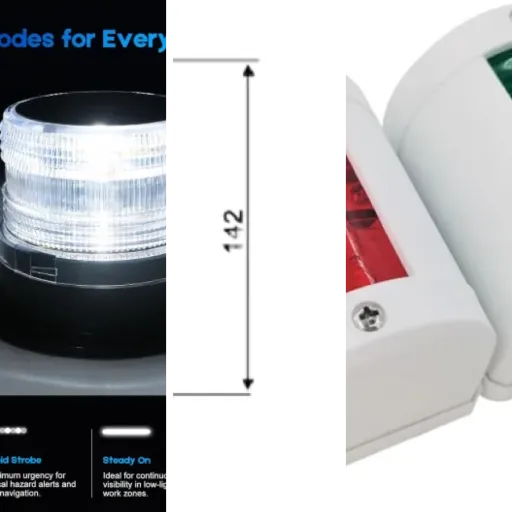

Summary
Editor's rating
Value: not cheap, but makes sense if you care about reliability
Design: chunky, serious, and clearly made for rough use
Power draw and electrical behavior: good news for small battery banks
Durability: feels overbuilt, in a good way
Performance: bright, clear, and easy on the battery
What you actually get out of the box
Pros
- Very low power consumption with stable, bright 3 nm red light
- Rugged, waterproof construction that feels built for heavy use
- Clean optics with well-defined sector and proper color for navigation rules
Cons
- More expensive than many generic LED nav lights
- Bulky, industrial look that may not suit all boat styles

Specifications
View full product page →| Brand | HELLA |
A nav light you install once and forget about
I put this Hella Marine NaviLED PRO Port navigation lamp on a small sailboat that does a mix of coastal cruising and evening races. So it’s not a mega-yacht setup, just a regular boat that sees some rough chop, mooring balls, and the usual bumps and vibrations. I mainly wanted to get rid of the old incandescent side lights that kept blowing bulbs and eating up power when I was on anchor light plus nav lights.
First impression: it looks like a pretty serious piece of kit, not some cheap plastic Amazon special. It’s heavier than you’d expect for its size (about 270 g), and the housing feels dense and solid in the hand. I mounted it on the port side, wired it into the existing switch panel, and then used it for a few night outings over several weeks. Nothing fancy, just normal sailing and motoring in the dark.
What stood out for me is how boring it is in the best possible way. You flip the switch, it turns on instantly, no flicker, and that’s it. No bulb to worry about, no loose socket, no weird color. On the water it’s clearly visible at a distance, and my crew immediately commented that it looked sharper and more defined than the old light. It’s rated for 3 nautical miles, and based on what I’ve seen compared to other boats around, that seems realistic.
It’s not perfect though. The price is on the high side compared to basic nav lights, and the design is a bit bulky if you’re trying to keep a classic or very minimal look. But if your priority is a reliable LED nav light that doesn’t chew through your battery, this one does the job very well. It feels like something you install once and then stop thinking about, which on a boat is honestly what I’m after.
Value: not cheap, but makes sense if you care about reliability
Let’s be honest: this Hella NaviLED PRO isn’t the cheapest option in the navigation light aisle. You can find far cheaper LED nav lights online that claim similar visibility and power consumption. So the question is whether the extra cost is justified. After using it, I’d say: if you’re the type who keeps a boat for more than a couple of seasons and you actually go out at night, the price starts to make sense. You’re essentially paying for build quality, consistent optics, and a brand that has a decent track record on workboats and commercial craft.
Where the value shows up is in what you don’t have to do: no bulb changes, no chasing intermittent connections because a cheap socket corroded, and no guessing if your light is still properly visible at the right angles. That kind of hassle is annoying at the dock and potentially dangerous at sea. For me, spending more once to avoid those small but regular headaches feels reasonable. Also, the energy savings vs incandescent bulbs are real. If you add up the cost of bulbs, potential fines or issues for non-compliant lighting, and the extra battery cycling, the LED starts to pay for itself over time.
That said, if you’re on a tight budget, have a small lake boat that rarely goes out at night, or you’re just trying to get through one season, there are cheaper options that will basically do the job. This Hella unit is more for someone who wants to set up a robust, low-maintenance navigation setup and then not think about it for years. In that context, the value is pretty good. It’s not a bargain, but it feels fair for what you get.
In short: price is on the high side compared to generic lights, but you’re paying for reliability, proper optics, and long-term durability. If those matter to you, it’s money reasonably spent. If you just want the cheapest red light that turns on, this will feel overpriced.
Design: chunky, serious, and clearly made for rough use
Design-wise, this NaviLED PRO is more about function than style. The housing is black, fairly thick, and looks like it’s built to be smacked by a dock line or an elbow without cracking. It’s not slim or sleek; it has that industrial feel you see on workboats. On my sailboat, it doesn’t look bad, but it definitely doesn’t disappear into the lines of the hull either. If you’re super picky about aesthetics, you might find it a bit bulky, especially on a smaller or classic boat.
The shape is made to give the correct light sector for a port side navigation light, and Hella’s optics seem well thought out. When you look at it from ahead on the water, the boundary between red and dark is quite sharp, unlike some cheap LED nav lights where the light spills into angles it shouldn’t. That’s important for collision rules: other boats need to see clearly whether they’re looking at your bow, port side, or stern. From what I’ve tested by walking up and down the dock and by looking from a dinghy, this light stays within its proper arc very cleanly.
One thing I liked is the lens material: they use Grilamid, which is a tough plastic often used in good sunglasses and industrial parts. It doesn’t feel brittle at all, and it doesn’t have that cheap milky look some plastics get. After some time in the sun and salt spray, I haven’t seen any yellowing or hazing yet, but to be fair, I haven’t had it on for years. Still, just from the feel and look, it gives a bit more confidence than the usual thin lens you see on budget nav lights.
Design downside: there’s no real attempt to make cable routing super neat or hidden. It’s basically a solid block you screw to the surface and run the wires. That’s standard, but for the price I wouldn’t have minded some little touches like better gasket design or a more flexible mounting base to fit curved surfaces. It works, and once it’s on you stop thinking about it, but it’s not what I’d call pretty. It’s a practical, workboat-style design that focuses on doing the job reliably rather than matching your shiny stainless fittings.
Power draw and electrical behavior: good news for small battery banks
This light is rated at around 3 watts, and Hella claims that a full set of port, starboard, and stern lights together stay under 3.2 watts. On a real boat, that basically means the impact on your battery is close to negligible, especially compared to traditional incandescent nav lights that can easily pull ten times more. On my 12 V system with around 200 Ah of house battery, running all nav lights plus instruments all night is no longer something I even think about. Before switching to LED, I was more cautious, especially if the batteries hadn’t been topped up fully.
In practice, I watched the battery monitor over a few night sails. With the old bulbs, I’d see a noticeable drop in voltage after several hours, especially if the engine was off and I was just sailing. With the LED setup including this Hella port light, the voltage drop over the same time period is clearly smaller. It’s not magic, it’s just basic math: lower current draw means less discharge. If you’re on a small boat or you spend a lot of time at anchor with limited charging (solar only, small alternator, etc.), this kind of light makes your life easier.
The multi-volt electronics also help when your battery voltage isn’t perfect. When the battery is a bit low or there’s a sudden load (windlass, autopilot, or fridge compressor kicking in), the light doesn’t flicker or dim in any visible way. That’s something I’ve seen with cheaper LED retrofits that don’t have good drivers—they can be weirdly sensitive to voltage changes. Here, the light just stays steady. For me, that’s a big win: less fiddling, less wondering if the light is actually on or if it’s having a moment.
So if you’re wondering whether it’s worth paying more for a LED nav light from a known brand instead of a budget one, the battery side of the story is a clear yes. Over time, lower power draw and stable behavior add up to less stress on your batteries and fewer surprises. It doesn’t magically fix a bad electrical system, but it definitely removes one more source of hassle.
Durability: feels overbuilt, in a good way
The whole point of paying for something like this instead of a cheap light is durability, and here it does feel like you’re getting what you pay for. The housing is thick and rigid, and the unit has a bit of weight to it (around 270 g). It doesn’t flex when you tighten it down, and it doesn’t feel like it’s going to crack the first time someone grabs a lifeline and smacks into it. Hella pushes the “shock and vibration resistant” angle, and based on how it’s built, that claim makes sense.
I’ve had it mounted through some choppy conditions, including a few solid slams into short waves where the whole boat vibrates. The light hasn’t moved, hasn’t loosened, and there’s been no water ingress that I can see. It’s sold as waterproof, and I’ve had it sprayed with saltwater plenty of times, plus a few full washdowns with a hose. No fogging inside the lens, no condensation, no signs of corrosion around the screws or contacts so far. The seal between the housing and the lens looks tight and well-finished.
Because it’s LED with no filament, it should, in theory, last a very long time. I obviously can’t claim multi-year experience yet, but I’ve used other Hella Marine lights on different boats, and they tend to just keep working. Compared to old incandescent fixtures where the bulb socket rusts, the lens crazes, and the gasket disintegrates after a couple of seasons, this feels like a solid upgrade. You’re paying more up front but likely replacing it far less often.
On the downside, if something does go wrong, this isn’t a “just swap the bulb” situation. The unit is basically sealed, so if it fails, you’re probably replacing the entire fixture. That’s the trade-off with these integrated LED nav lights. Personally, I’m fine with it because the failure rate on decent marine LEDs is low, but it’s worth keeping in mind. Overall, though, build quality and durability are clearly strong points here. It feels like it was made with commercial or military boats in mind, not just weekend pleasure craft.
Performance: bright, clear, and easy on the battery
On the water, the performance is solid and predictable. The light comes on instantly, with a clear, deep red color that is easy to pick out even when there are other lights around. I did a few tests with friends coming in by dinghy and from another boat: from a reasonable distance, the port light is clearly visible and easy to distinguish from deck lights or cabin lights. There’s no weird pinkish tint or washed-out color, which I’ve seen on some cheaper LED nav lights.
The 3 nm rating feels realistic. I obviously didn’t measure with a rangefinder, but comparing it to other boats’ nav lights in a busy anchorage, the Hella unit holds its own easily. From a mile or so away, you can still see it cleanly. That’s reassuring when you’re under sail or motoring at night and relying on other boats seeing you early enough. Also, the beam pattern is very controlled: when you move out of the legal sector, the light drops off sharply instead of gradually fading. That’s exactly what you want for proper COLREG compliance.
Power-wise, the low consumption is noticeable if you watch your battery monitor. With this LED port light, a matching starboard, and a LED stern light, the total draw is just a few watts. On my small 12 V system, I can run lights, instruments, and a small fridge at night without feeling like I’m draining the bank too fast. With the old incandescent nav lights, I always had this little voice saying: “Turn them off as soon as you can.” With these, I just leave them on whenever they’re needed and stop worrying.
In terms of electrical stability, I deliberately switched on heavy loads (windlass, cabin blower, etc.) while the light was on. No visible flicker or dimming. The internal electronics seem to handle voltage dips well. For anyone with an older alternator or a battery that’s not always at 100%, that matters. Overall, the performance is very much “install and forget”: bright, consistent, and efficient. Not flashy, just reliable and clear, which is exactly what I want from a navigation light.
What you actually get out of the box
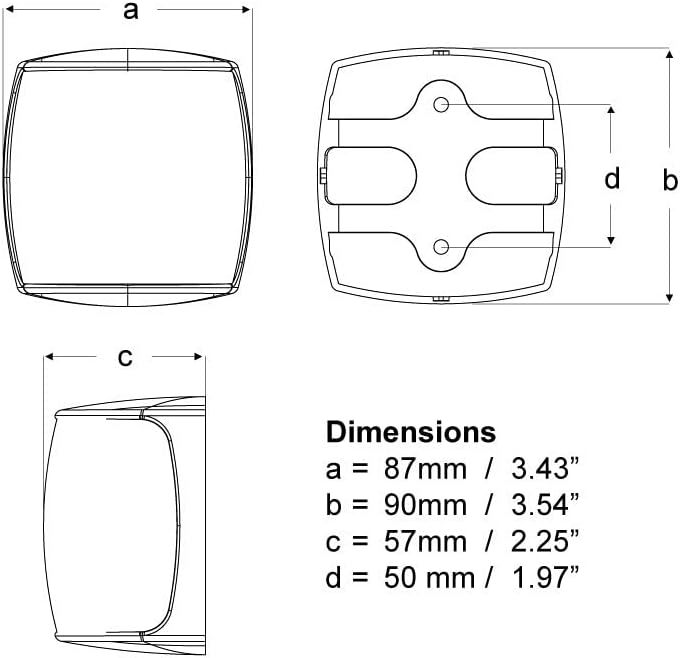
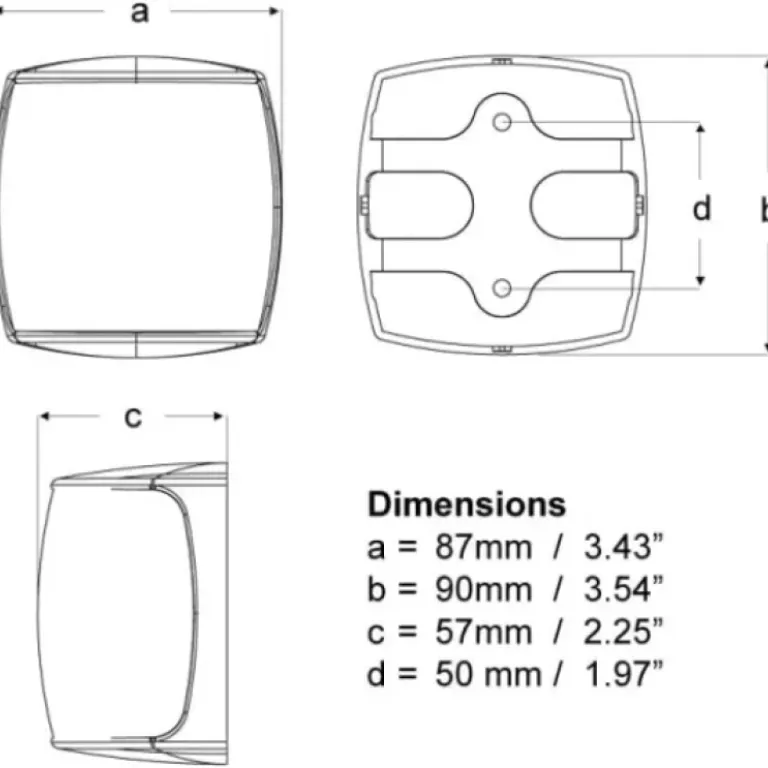
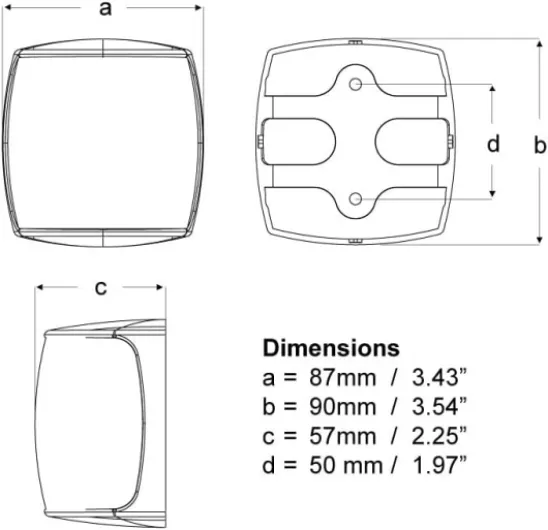
Out of the box, the Hella Marine NaviLED PRO Port light is pretty straightforward. You get the light unit itself with a black housing and red lens, plus the mounting hardware and basic instructions. No fancy extras, no wiring harness, just the essential stuff. The lamp is fairly compact in footprint but chunky in depth, and you can tell it’s built more for durability than for being low profile. It’s clearly marked as the port (red) side unit, so you’re not going to mix it up with the starboard one.
The lamp is rated for 3 nautical miles visibility, which puts it in the more serious category compared to some cheaper 1–2 nm lights. It runs on LED with about 3 watts of power draw, and according to Hella, the full set of port, starboard, and stern together use less than 3.2 W. On paper that’s very low, and in practice on my boat I barely see any change in the battery monitor when the nav lights are on. It’s not going to save your whole electrical system, but if you’re on a small battery bank or doing a lot of night motoring, every bit helps.
The marketing talk about “multi-volt electronics” and “no filaments” boils down to this: it should handle voltage swings and vibrations a lot better than old-school bulbs. On my setup (12 V system with a sometimes tired battery), I never saw it dim or flicker, even when the windlass or fridge kicked in. That’s exactly what I wanted—turn it on, forget it. No warm-up time, no messing around. Just a solid red light where it should be.
Overall, the presentation is very utilitarian. No fancy branding inside the box, no glossy brochure. It feels like something made for commercial and work boats first, and pleasure boats second. If you’re looking for a plug-and-play, idiot-proof nav light with clear specs and a solid reputation, this package lines up with that. If you want something cheap and pretty with chrome trim, this isn’t it.
Pros
- Very low power consumption with stable, bright 3 nm red light
- Rugged, waterproof construction that feels built for heavy use
- Clean optics with well-defined sector and proper color for navigation rules
Cons
- More expensive than many generic LED nav lights
- Bulky, industrial look that may not suit all boat styles
Conclusion
Editor's rating
After using the Hella Marine NaviLED PRO Port Navigation Lamp for a while, my overall impression is that it’s a serious, no-nonsense nav light for people who actually use their boats at night and care about reliability. It’s bright, the red color is clean, the sector is well defined, and the 3 nm rating feels realistic on the water. The power draw is tiny, which is a real plus if you’re on a modest battery bank or do a lot of sailing without the engine running. You install it, wire it once, and then it just does its job without drama.
It’s not perfect. The housing is a bit bulky and very utilitarian, so if you’re trying to keep a super sleek or classic look, it might bother you. The price is clearly higher than generic LED nav lights, and if something fails, you’re not just swapping a cheap bulb—you’re dealing with a whole fixture. But the build quality, waterproofing, and overall feel are a step above the bargain stuff. For me, that trade-off is worth it on a boat that sees real use.
I’d recommend this to boat owners who: go out at night regularly, care about being properly visible and compliant, and prefer to spend more once rather than tinker with lights every season. If you’re running a workboat, a cruising sailboat, or a motorboat that does night passages, it fits well. If you’re on a tight budget, mostly day-sail on a lake, or are flipping the boat soon, you might be happier with a cheaper unit. Overall, it’s a pretty solid, long-term nav light that focuses on reliability and low power use rather than looks or price.