
Summary
Editor's rating
Value: decent deal if you really need flexible panels
Design: thin, bendy, and pretty discreet
Durability: fine so far, but treat them gently
Real-world performance: good in sun, typical flexible panel limitations
Installation: light and simple, but you need your own mounting plan
What you actually get in the box
Pros
- Very light and low-profile, easy to install on curved or awkward surfaces
- Decent real-world output with simple MC4 wiring and 12 AWG cables
- All-black design looks clean and doesn’t add much height to vans or boats
Cons
- More expensive per watt than rigid panels and likely shorter lifespan
- No mounting hardware or adhesive included, you must figure out installation yourself

Specifications
View full product page →| Brand | Renogy |
Flexible power for people who hate drilling big brackets
I’ve been slowly upgrading the power setup on my camper van, and I wanted something that didn’t require big metal racks or punching more holes in the roof. That’s why I went for this Renogy 2x200W flexible solar panel kit. Two panels, rated 200W each, meant in theory I could get a decent 400W system without adding much weight or height. On paper it looked like a nice balance between power and convenience.
I’ve used rigid Renogy panels before, so I wasn’t scared of the brand, but I was curious how these flexible ones would actually behave in real life. Specs always look nice: 200W, monocrystalline, IP67 connectors, bendable up to 240 degrees, blah blah. What matters is: do they actually charge the batteries properly, do they survive being on a moving van, and are they a pain to install or not.
I’ve had these panels on my van roof for a few weeks now, and I also tested one temporarily on a curved fiberglass roof on a friend’s small boat. So this is not lab testing, just normal use: driving, parking, a bit of rain, some cloudy days, some full sun. I’m running them into a Renogy MPPT controller and a 12V lithium battery bank, so I can see roughly what they’re putting out.
Overall, they do the job, but they’re not magic. You get good output in solid sun, some compromises in heat and shade, and the usual flexible panel trade-offs: easier to mount, more fragile than rigid, and not the best idea if your roof turns into an oven. If you know that going in, they can be a pretty solid option for vans, boats, and odd-shaped roofs.
Value: decent deal if you really need flexible panels
Price-wise, these sit in that middle ground where you’re clearly paying more per watt than basic rigid panels, but not as much as some niche marine brands. For two 200W flexible panels, the cost per watt is higher than a simple framed 400W setup, which is normal. You’re basically paying for low weight, flexibility, and easier mounting on curved or awkward surfaces. If you have a flat roof and don’t care about height, rigid is still the cheaper and tougher option.
For my use (camper van with a slightly curved roof and limited space), I’d say the value is pretty solid but not mind-blowing. I saved time on installation, avoided building or buying a rack, and kept the van profile low. That alone has value for me. On the other hand, I’m realistic that I’m probably giving up some long-term lifespan compared to rigid glass panels, and I paid extra for that convenience.
Compared to some no-name flexible panels I’ve seen online, I do feel a bit better paying for a known brand like Renogy. At least there’s some support, documentation, and a track record. Cheaper panels might save a bit of money upfront but can be a headache if they delaminate or fail after a year. I’ve had decent luck with Renogy stuff in the past, so I’m okay paying a small premium for that.
If your situation is something like: van, boat, curved cabin roof, or a surface where drilling big brackets doesn’t make sense, then the value is there. If you have a big flat shed roof or a static off-grid cabin, I’d honestly say skip these and go rigid. You’ll get more watts for less money and probably longer life. So the value really depends on whether you actually need the flexibility and low profile or you just think it looks cool.
Design: thin, bendy, and pretty discreet
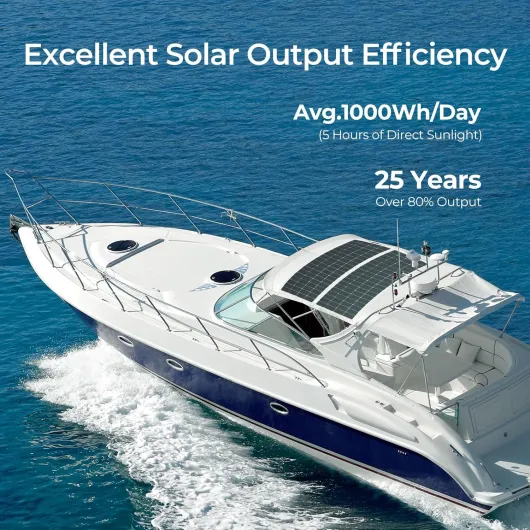
The main thing with these is the low profile and flexibility. They’re only about 3 mm thick, so once they’re mounted, they sit almost flush with the surface. On my van roof, they add basically no extra height compared to the roof vents, which is nice for clearance and for not making the van look like a science project. The all-black front also looks cleaner than a lot of older blue-ish panels.
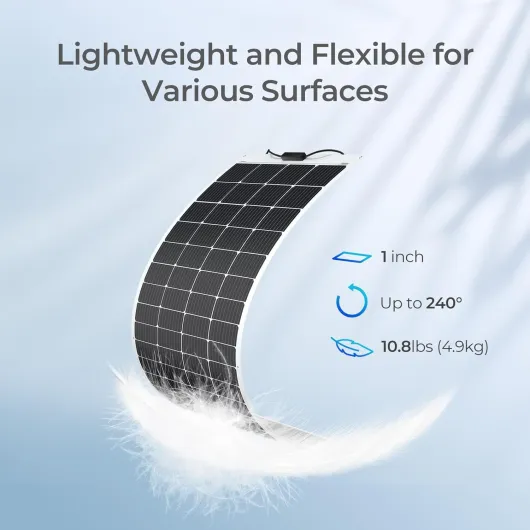
Renogy says they can bend up to 240 degrees, which is a weird way to phrase it, but in practice it means they’re fine on gently curved surfaces like van roofs, boat cabins, or slightly arched metal roofs. I wouldn’t try wrapping them around a tight radius. On my van, the roof curve is pretty mild, and the panel flexed enough to sit flat without fighting back. On my friend’s small boat, we mounted one over a slightly curved fiberglass section, and it followed the curve without feeling stressed.
There are pre-drilled mounting holes along the edges, which is both good and slightly annoying. Good because you can just use screws and washers with some sealant and you’re done. Annoying because if you want a totally glued-down, no-holes install, those holes are just more spots to seal carefully so water doesn’t sneak under. I ended up using a mix: VHB-style tape plus a few screws on the corners with sealant. They do not include any corner protectors or stiffeners, so if you’re worried about wind lift, you’ll want to think about how you secure the edges.
Overall, the design is very focused on being low weight and easy to fit where rigid panels don’t fit. There’s no frame, no glass, no big junction box hanging out. That’s the appeal. The trade-off is that the panel feels more like a big, somewhat fragile sheet than a solid panel. If you’re the type who likes to stand on your roof, you need to plan your steps around them, because they’re not designed to be walked on. As long as you accept that, the design does what it’s supposed to do.
Durability: fine so far, but treat them gently
Durability is the part that always makes me a bit cautious with flexible panels. Renogy says these can handle 5400 Pa snow load and 2400 Pa wind load, which sounds tough, but that’s in controlled testing. In real life, they’re still plastic-backed panels without a rigid frame. On my van, they’ve been through some rain, highway speeds, and a bit of light hail. So far, no cracks, no peeling, and the junction boxes still look sealed. No water ingress that I can see, and the MC4 connectors feel secure.
The IP67 rating on the junction box and connectors is reassuring. I hosed them down a couple of times to clean off dust and pollen, and nothing weird happened. The surface doesn’t scratch super easily, but I wouldn’t drag stuff across them. I made the mistake of putting a folding chair on top of one briefly while packing, and you can see a faint mark where the feet were. It still works fine, but it reminded me these aren’t meant to be load-bearing.
The big unknown is long-term UV and heat exposure. Flexible panels in general tend to have a shorter lifespan than rigid glass panels, especially if they’re glued directly to a hot metal roof with no airflow. I left a small gap at the edges to help with some airflow, but it’s still going to run hotter than a framed panel. If you’re planning to keep a van or boat for 10+ years and want set-and-forget solar, I’d still lean toward rigid. For a 3–5 year horizon, I think these are fine if you install them decently and don’t abuse them.
So far, after a few weeks, there are no signs of delamination or yellowing, which is a good start. But I’m not going to pretend they’re as tough as a rigid panel with tempered glass. If you’re okay with being a bit careful—no walking on them, don’t bend them sharply, avoid scraping them with gear—then the durability is acceptable. If you’re rough on your roof, you might want something more rugged.
Real-world performance: good in sun, typical flexible panel limitations
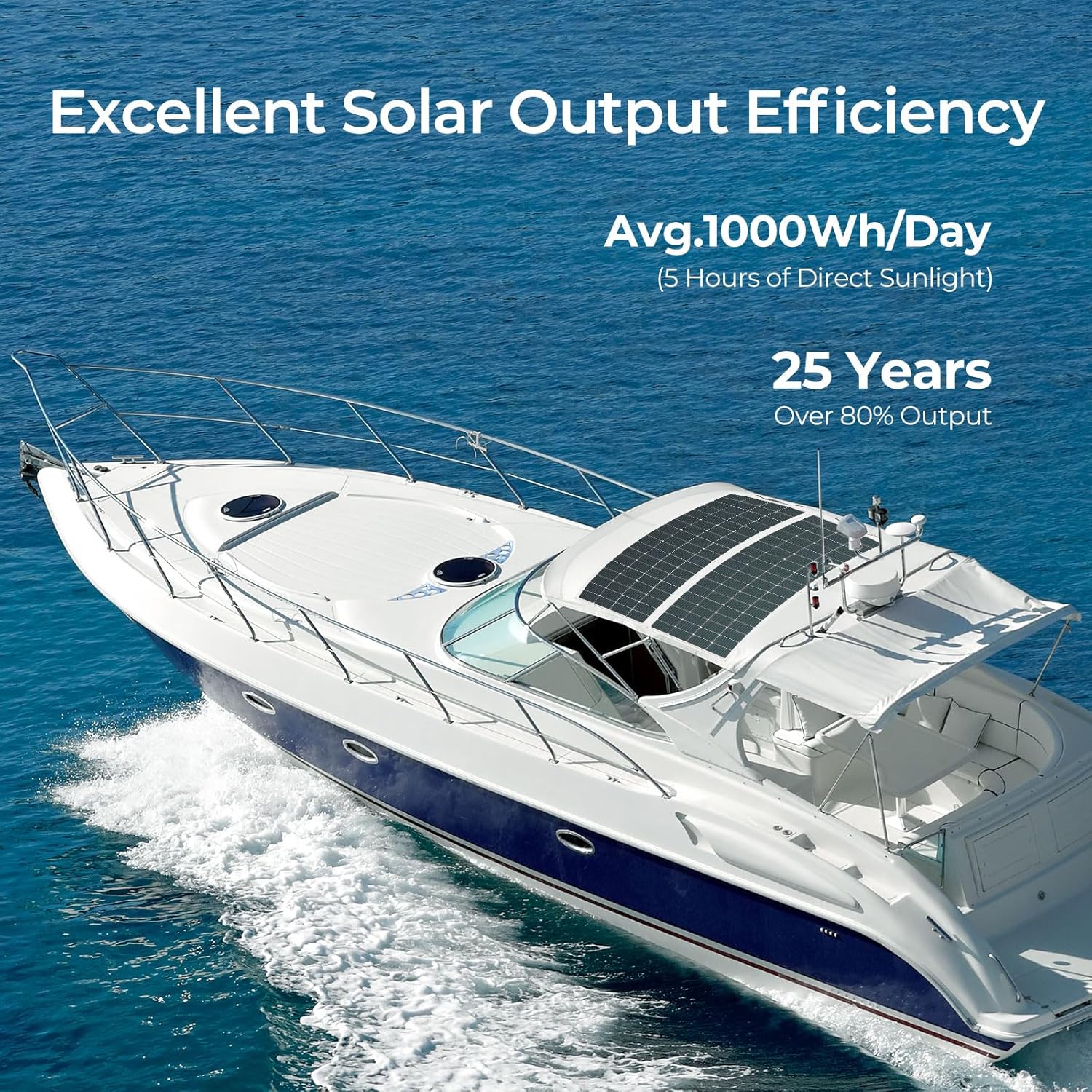
In terms of actual power output, these behaved about how I expected for flexible panels. With both panels wired in parallel into an MPPT controller on a clear, cool day around midday, I was seeing roughly 280–320W total on my monitor. That’s not the full 400W, but that’s pretty standard. Solar ratings are always under perfect lab conditions. Renogy’s own claim of about 1000 Wh per day per 200W panel (with 5 hours of sun) is a bit optimistic in my climate, but not totally crazy in summer if you’re somewhere sunny.
On a warmer day with the roof heating up, the output dropped, which is normal. These flexible panels run hotter than glass rigid panels because they sit right on the surface with less airflow. With the van roof baking, I was more in the 220–260W combined range at midday. Still usable, but if you’re chasing every last watt, that’s something to remember. I also noticed they’re pretty sensitive to shade. A bit of shade from a roof vent or a tree branch and the output dips fast, again pretty standard for panels but worth mentioning.
Charging-wise, for my setup (about 200Ah of LiFePO4), this pair is enough to keep me going if I’m not going crazy with power use. Fridge, lights, fan, and laptop charging are fine. If I park for multiple cloudy days in a row, I can still run low, but that’s more about weather than the panels. Compared to a friend’s 400W rigid setup, I’d say I’m getting slightly less average power, but I gained a lower profile and easier install.
Overall, I’d call the performance solid but not mind-blowing. If you’re expecting rigid-panel efficiency in all conditions, you’ll be a bit let down. If you just want panels that reliably put in a few hundred watts when the sun is out, they get the job done. Just install them where they get full sun, avoid shade from racks or vents, and accept that heat will shave some output off the top.
Installation: light and simple, but you need your own mounting plan
One of the nicest parts here is how easy they are to move and position. Each panel is light enough to handle alone, even on a ladder. Compared to hauling a big glass framed panel onto a roof, this is way less stressful. The pre-attached 12 AWG cables with MC4 connectors also make wiring straightforward if you’ve done any solar before. I wired both panels in parallel on the roof, then ran an MC4 extension pair down to the charge controller.
The flip side is that Renogy doesn’t give you any mounting hardware or real guidance. There are pre-drilled holes along the edges, so you can just screw them down with stainless screws and rubber washers, then seal everything. I used a combo: VHB-style tape strips under most of the panel and four screws with sealant on the corners and midpoints. That felt like a good balance between secure and not punching too many holes in the roof. On the boat, we skipped screws and used only adhesive, but we spent more time cleaning and prepping the surface so it would actually stick.
You do have to think about cable routing and strain relief. The junction box is on the front side, near one end, not hidden underneath. That means you need to plan where the cables go so they’re not flapping in the wind or rubbing on sharp edges. I used some adhesive cable clips and a bit of extra UV-resistant tape to keep everything tidy. It’s nothing complicated, but it’s not plug-and-play either.
In practice, if you’re comfortable drilling a few holes and running wires, installation is pretty straightforward and faster than dealing with a rack and rigid panels. If you’ve never touched 12V systems before, you’ll probably need to watch a couple of install videos and maybe get help with the electrical side. I’d give the install experience a thumbs up overall, but just remember you’re buying panels only, not a full kit with all the bits.
What you actually get in the box
When the package showed up, it was basically just two large flexible panels with cables already attached. No fancy extras. You don’t get mounting hardware, no adhesive, no controller, nothing. So be aware: this is just the panels themselves. If you’re starting from scratch, you’ll still need a charge controller, fuses, wiring, and either screws, eyelets, or adhesive tape/sealant to mount them.
Each panel is about 160.5 x 74.8 cm and only a few millimeters thick. They’re surprisingly light for the size, about 2.5 kg per panel (4.9 kg listed for both). The back is a plain white-ish flexible backing, the front is an all-black face that looks clean and doesn’t reflect a ton of light. The cables are about 70 cm (Renogy says 27.6 inches) and use standard MC4-type connectors, so they plug right into normal solar setups without adapters.
One thing to note: the listing calls this 2x200W, which is correct, but if you’re new to solar, don’t expect 400W all the time. In reality, I was seeing more like 260–320W combined in good sun on a mild day, which is pretty normal for any panel. Just keep that in mind so you don’t oversize your expectations. The spec sheet numbers always assume perfect conditions you almost never see in real life.
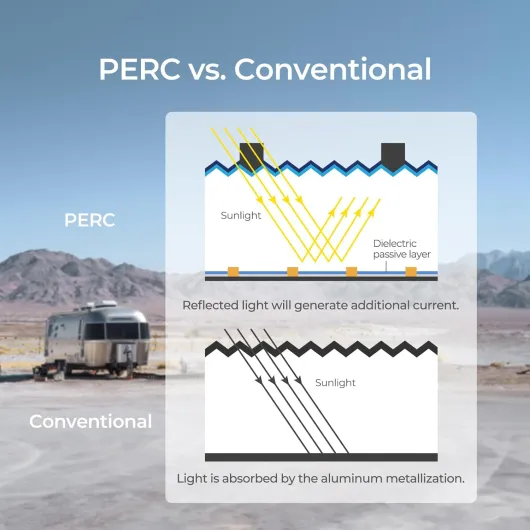
In terms of info, Renogy gives you the basic numbers: 12V nominal, 200W max, half-cut PERC cells, IP67 junction box. There’s nothing fancy in the box like a quick-start guide with mounting tips for flexible panels, which would actually be helpful. If you’ve never done solar before, you’ll probably end up on YouTube or Renogy’s website looking for install advice. So the presentation is basic and functional: you get panels that are ready to wire, but you’re on your own for the rest.
Pros
- Very light and low-profile, easy to install on curved or awkward surfaces
- Decent real-world output with simple MC4 wiring and 12 AWG cables
- All-black design looks clean and doesn’t add much height to vans or boats
Cons
- More expensive per watt than rigid panels and likely shorter lifespan
- No mounting hardware or adhesive included, you must figure out installation yourself
Conclusion
Editor's rating
After living with the Renogy 2x200W flexible panels for a bit, my take is pretty straightforward: they do what they say, with the usual pros and cons of flexible panels. They’re light, easy to handle, and much simpler to mount on curved or awkward roofs than rigid panels. Performance is decent—good output in proper sun, some drop in heat and shade, but nothing out of the ordinary. For a van or boat where height and weight matter, they make sense.
The downsides are also clear. You pay more per watt than rigid panels, and you’re likely giving up some long-term durability, especially if they’re glued to a hot metal roof with little airflow. They’re not something you can walk on, and you do have to be a bit more careful about how you mount and protect them. You also don’t get a full kit—no hardware, no controller—so you need to plan the rest of the system yourself.
I’d recommend these to people with vans, RVs, boats, or curved cabins who want a low-profile solar setup and are okay with the trade-offs. If you have a flat, solid surface and don’t care about a few extra centimeters of height, I’d say go with rigid panels instead and save some money. For my use, they’re a good compromise: not perfect, not cheap, but practical and effective enough that I’d buy them again for a similar project.