
Summary
Editor's rating
Cheap watts, if you accept the compromises
Flexible design that’s handy, but a bit flimsy
Charging behavior and controller quirks
Light polymer panels with some trade‑offs
Short‑term okay, long‑term still a question mark
Real‑world output: decent, but nowhere near the label
What you actually get in the box
Pros
- Lightweight flexible panels that are easy to mount on vans, boats, or curved surfaces
- Low upfront cost for a complete basic kit (panels + controller + connectors)
- Provides enough real‑world power for lights, phone charging, and light 12V loads on sunny days
Cons
- Real output is far below the advertised 300W/600W rating
- Very basic no‑name PWM controller with poor documentation
- Materials and build feel more suited to short‑/medium‑term use than a long‑term permanent install

Specifications
View full product page →| Brand | UIBAO |
A cheap way to test solar on a van or boat
I picked up this 300W/600W solar panel kit mainly because I wanted something cheap to throw on a small camper setup without overthinking brands and specs. The listing is a bit messy, the brand is basically unknown, and the description looks like it was translated in a hurry, but the price was low enough that I was willing to gamble. My idea was simple: run lights, charge phones, a laptop, maybe a small fridge on sunny days, and see if this thing could handle basic off‑grid life.
I used the kit on a small trailer and also tested one panel on its own to see what it could really deliver. I paired it with a basic 12V lead‑acid battery I already had and a cheap 300W inverter. Nothing fancy, just a realistic budget setup like most people would actually build when they don’t want to drop a fortune on branded solar gear. I’m not an engineer, but I do have a bit of experience with other portable solar panels and power stations, so I had something to compare it to.
In practice, this kit does work, but it doesn’t hit the numbers printed on the box, which honestly I expected at this price. The controller is basic, the cables are short, and the documentation is vague. But if you’re okay with tinkering a bit, checking polarity twice, and not expecting full 300W/600W output, it can still be useful. It’s the kind of gear where you need to manage your expectations and be ready to troubleshoot a little.
So this review is from that angle: not as a pro installer, but as someone who just wanted affordable solar for a van/trailer setup and actually wired it up, measured some output, and lived with it for a bit. I’ll go through what you really get, how it performs on a normal day, what annoyed me, and in which situations I think it still makes sense despite its flaws.
Cheap watts, if you accept the compromises
From a value point of view, this kit sits in that grey area where it’s not fake junk, but it’s also clearly not on the level of big brands. You pay a relatively low price for what is advertised as 300W or 600W of solar, plus a controller and basic accessories. In real use, you’re getting something closer to a ~250W system (for the 600W version) with a very basic controller. So the cost per real watt is still okay, but not as crazy cheap as the listing makes it sound if you believe the nominal numbers.
Where it does make sense is for people who want to experiment with solar without dropping a lot of money. If you’re just trying to get some power on a weekend camper, a small boat, or a garden shed, this kit is a low‑risk way to start. You’ll likely need to spend a bit more on extra cables, fuses, and maybe a better controller later, but you can get something working pretty fast. Compared to buying everything separately from big brands, you’re saving money, but you’re paying with your time and a bit of tinkering.
Compared to other budget panels I’ve used (no‑name rigid 100W panels, for example), this set is competitive, mainly because it’s flexible and lighter. If you don’t need the flexible aspect and have space, a couple of cheap rigid panels plus a decent MPPT controller might actually give you better real‑world performance for roughly the same overall budget. So it really depends on your use case: if weight and shape matter, this kit has a place; if not, there might be smarter ways to spend your money.
In the end, I’d call the value pretty solid but not outstanding. It’s good for tinkerers and budget vanlifers who know what they’re getting into. For someone who wants reliability, clear documentation, and support, I’d say spend more on a known brand. This kit is more like an entry ticket into solar than a finished, polished solution, and if you see it that way, the price makes sense.
Flexible design that’s handy, but a bit flimsy
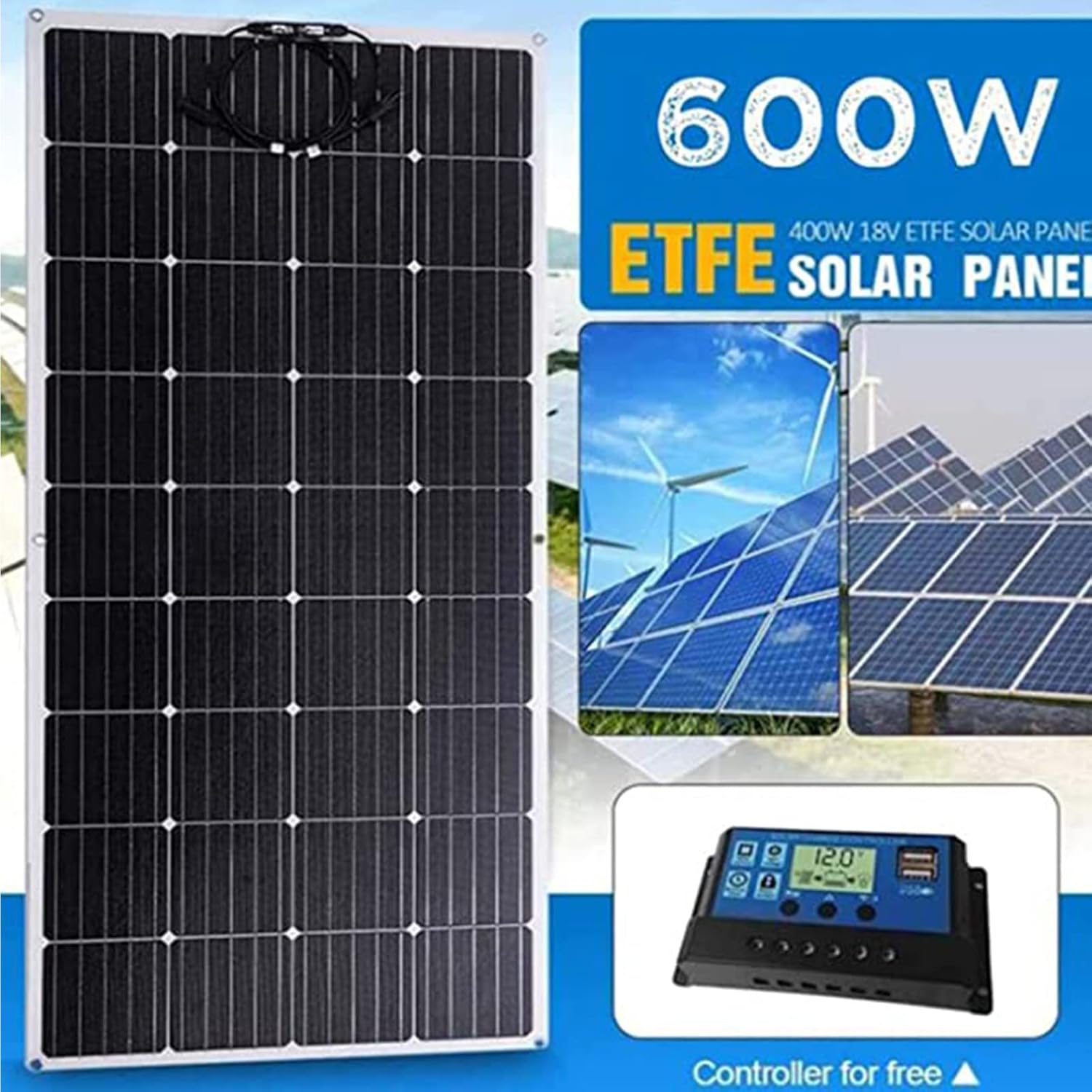
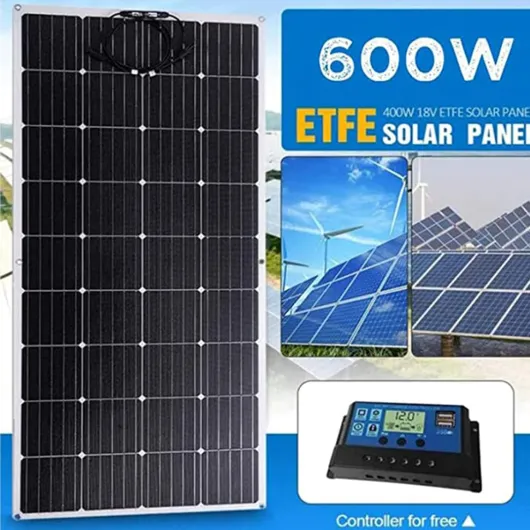
The main selling point here is the flexible design. Each panel is thin and can bend up to about 20 degrees, which is handy for slightly curved van roofs or boat decks. I tried one panel on a gently curved trailer roof, and it sat pretty well once I secured it with adhesive plus a few extra mechanical fixings. The six copper eyelets (10 mm) on each panel are useful for temporary setups; I used them with the included carabiners and some extra rope to lash a panel onto a roof rack for a weekend trip.
Visually, it’s very generic: black cells with a white backsheet, no real branding. The front surface feels like a plastic laminate rather than glass, which is expected for flexible panels. It’s light and easy to carry, but it also gives you the feeling that you shouldn’t throw heavy stuff on top of it. Compared to rigid framed panels I’ve used before, these are much easier to handle solo, especially if you’re climbing onto a van roof, but they don’t inspire the same confidence in long‑term toughness.
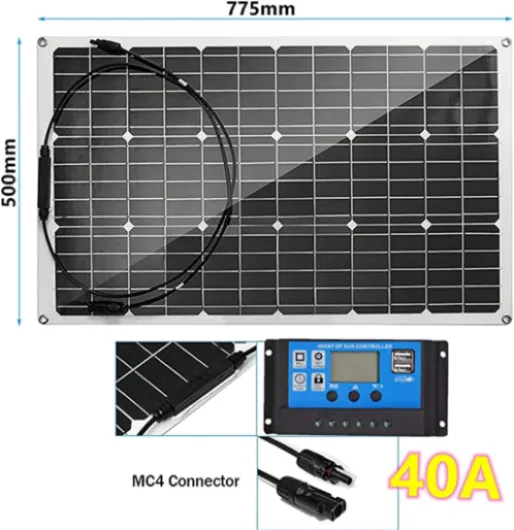
The connector layout is simple: a short length of cable ending in MC4 connectors. The problem is the cables are pretty short, so unless your controller is right next to where you mount the panels, you’ll need extension leads. That’s not a drama, but it’s one of those things you only realize once you’re actually on the roof trying to reach your wiring point. The kit doesn’t include those longer cables, so factor that into the real cost.
As for the controller, the design is just okay. The screen is small but readable indoors; in bright sun it’s a bit hard to see. The buttons are stiff and the interface is clunky – you have to tap through menus to set battery type and voltage. It works, but it feels like something that costs a few euros and that’s probably accurate. In short: the design is practical and lightweight, but feels budget. It’s fine if you just want something that works and doesn’t take much space, but don’t expect premium build or super polished details.
Charging behavior and controller quirks
Just to be clear, there is no battery included in this kit. You need to bring your own 12V battery (or a small bank) and possibly an inverter if you want 230V AC. I used a 100Ah lead‑acid deep‑cycle battery for my tests. With both panels connected, on a good sunny day, I could bring the battery from around 50% to near full over the course of the day while running light loads. That’s acceptable for weekend camping, but not enough if you’re running power‑hungry stuff constantly.
The included 40A controller is basic but functional. It recognizes the battery, starts charging automatically, and the little LCD shows voltage, charge current, and a rough battery icon. You can set the battery type (sealed, gel, flooded, etc.), but the instructions are minimal, so you need to be a bit careful and maybe cross‑check online what each icon actually means. I didn’t test it with lithium, and frankly, I wouldn’t. For LiFePO4 batteries, I’d invest in a better, clearly documented controller with proper charge profiles.
One thing I did like is that the controller has basic load terminals, so you can connect small 12V devices directly and set timers. I used it to run a strip of LED lights and a USB adapter. It worked fine, and the controller cut the load when the battery got too low, which is good for protecting cheaper batteries. The downside is that the screw terminals are small and feel a bit weak. If you’re planning to pull anything close to 40A, I’d be nervous. For modest loads, it’s okay, but don’t expect industrial‑grade hardware.
In terms of safety, the seller mentions overcurrent and reverse protection, plus a built‑in diode to prevent backflow at night. I didn’t have any issues with reverse current or overheating during my tests, but I also didn’t push it to the limit. My advice: double‑check all wiring, use proper fuses between panel–controller–battery, and don’t rely solely on the controller’s built‑in protections, especially if you’re leaving the system unattended for long stretches. As a basic charger for a cheap 12V battery bank, it’s fine; for anything more serious, I’d upgrade components.
Light polymer panels with some trade‑offs
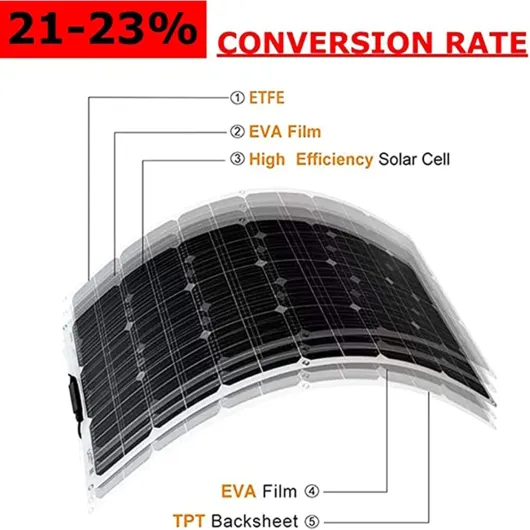
The panels are made from monocrystalline silicon cells laminated in a polymer material. That’s why they’re so thin and light. On the positive side, this makes them easy to move, store, and mount. I could carry both panels in one hand without effort, and installing them on the trailer roof was a lot simpler than dealing with heavy rigid aluminum‑framed panels. For mobile setups – camper, boat, temporary camping tents – that low weight is genuinely useful.
The downside is durability. Polymer‑laminated flexible panels are known to age faster than rigid glass panels, especially under strong sun and heat. The seller claims UV resistance, IP67 water protection, and a wide temperature range from -40°C to +80°C. I obviously didn’t test them at those extremes, but I did leave one panel outside for about two weeks in mixed weather (sun, some rain, a couple of windy days). It held up fine, no visible peeling or warping, and no water issues at the junction box. That’s encouraging, but it doesn’t guarantee years of trouble‑free use.
The copper eyelets feel decent but not heavy duty. If you plan to hang or lash these panels long‑term, I’d avoid putting too much stress on a single eyelet and spread the load. I also noticed that the surface scratches if you drag it over rough metal or gravel, so you need to be a bit careful when moving it around. It’s not fragile like glass, but it’s not bulletproof either. Think of it as “okay for regular use” rather than something you can abuse without thinking.
Overall, the materials match the price: light, reasonably weatherproof, but not on the same level as rigid, framed panels from big brands. For a van or boat that’s used seasonally or on weekends, I think it’s acceptable. For a permanent rooftop install where you want 10+ years of service, I’d probably go with rigid panels instead and treat this kind of kit as more temporary or backup gear.
Short‑term okay, long‑term still a question mark
I’ve only had the kit for a few weeks, so I can’t pretend I know how it will look in five years. What I can say is that after about two weeks outside – rain, sun, some wind – the panels still worked the same as on day one. No moisture in the junction box, no delamination, and no obvious discoloration. The IP67 claim for the panel itself seems plausible so far, at least for regular rain and splashes. I also sprayed the panel with a hose to mimic a storm, and it kept working fine.
Where I’m less confident is mechanical durability. Flexible panels in general don’t like being bent back and forth repeatedly. I tried not to bend them more than necessary, and I wouldn’t roll or fold them. If you plan to mount them semi‑permanently on a roof and leave them alone, they’ll probably last longer than if you’re constantly moving them around. The thin laminate also collects small scratches and marks pretty easily, which isn’t a big deal, but it shows they’re not very tough against abrasion.
The controller survived being in a slightly damp storage compartment, but I wouldn’t call it waterproof. It’s more “keep it out of direct rain and you’ll be fine.” The casing is simple plastic, and the ventilation slots are open, so dust and moisture can get in over time. If you’re installing this in a boat or a very humid van, I’d mount it in a protected spot and maybe consider a better housing or a different controller down the line.
So my honest take: for the price, the durability is acceptable, but this isn’t a long‑term, install‑and‑forget system. It feels more like gear you use for a few seasons, or as a backup/secondary setup. If you’re okay with that and don’t expect it to match the lifespan of premium rigid panels, it’s fine. If you want something to last a decade on your roof, I’d look at more robust options and treat this as more of a budget, semi‑temporary solution.
Real‑world output: decent, but nowhere near the label
This is the part most people care about: how much power does it actually produce. I tested one “300W” panel on a clear midday in early spring, panel angled roughly towards the sun, hooked to a 12V lead‑acid battery through the included controller. Using a simple inline watt meter on the battery side, the highest I saw was around 120–140W. That’s less than half the rated 300W. With both panels in parallel, peak combined was in the 230–260W range. So yes, they do charge, but the numbers on the listing are very optimistic.
On cloudy or hazy days, the output drops quickly. With full overcast, I was getting 15–40W from both panels combined. That’s normal to some extent, solar always suffers in bad weather, but it’s worth knowing if you’re planning to power a fridge or heavier loads. The claim about “optimum yield even in low light” is a bit generous. It works, but it’s nothing magical. It’s roughly in line with other budget panels I’ve tried, maybe slightly lower than some name‑brand rigid panels of similar real wattage.
The 40A PWM controller also limits performance. It’s not MPPT, so you’re not squeezing the maximum possible power out of the panels, especially when battery voltage is lower. For a cheap setup with a lead‑acid battery, it’s okay, but if you paired these panels with a decent MPPT controller, you’d likely see a noticeable bump in usable wattage. The flip side is that the included controller is simple and doesn’t draw much power itself, so at least it’s not wasting too much on its own.
In day‑to‑day use, I could comfortably run LED lights, charge phones, and top up a laptop battery. On sunny days, I could also run a small 12V fridge for several hours, but I had to watch the battery level. If you’re expecting a true 600W array that feeds energy like a rooftop home system, you’ll be disappointed. If you treat it more like a ~250W real‑world kit, it makes more sense. So in short: it gets the job done for light off‑grid use, but the rated power is more marketing than reality.
What you actually get in the box
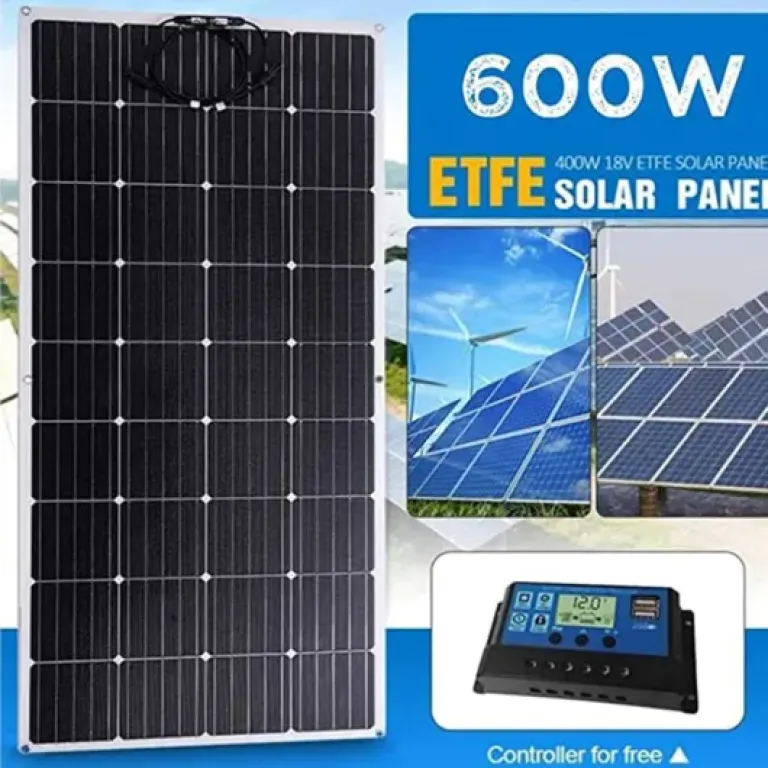
On paper, this is sold as a 300W or 600W 18V solar power system with a 40A charge controller. In reality, what I received was: two flexible panels labeled 300W each, a very generic 40A PWM charge controller, a pair of MC4 connectors, a short cable with alligator clips for the battery, four small carabiners, and a Y‑type MC4 splitter for wiring panels in parallel. No battery, no inverter, and no long extension cable – so if you’re new to this, know you’ll still need extra stuff.
The panels are very thin (around 2.5 mm) and use monocrystalline cells. They’re advertised as 18V, which basically means they’re meant for charging 12V batteries through the controller. The listing throws a lot of numbers (Voc 18V, IP67, temperature range -40°C to +80°C), but there’s no detailed datasheet in the box. You get a tiny leaflet with almost no real installation guidance, so if you’ve never touched solar before, you’ll probably end up on YouTube trying to figure out basic wiring and settings.
The 40A controller looks like every no‑name PWM controller you see on AliExpress: small LCD, a few buttons, screw terminals for solar, battery, and load. No brand, no clear manual, and the labeling is a bit cramped. It does have basic protections (overcurrent, reverse polarity, etc.), but I wouldn’t trust it with expensive batteries without keeping an eye on it. It’s fine for a cheap lead‑acid or AGM, but for lithium I’d personally upgrade the controller.
Overall, the kit is more of a “starter pack of parts” than a polished, plug‑and‑play system. You get enough to make something work if you already have a rough idea what you’re doing, but it’s not beginner‑friendly out of the box. If you’re expecting a full, guided solution with clear labels and a proper manual, this will feel a bit bare‑bones. If you’re used to budget gear and don’t mind figuring things out, it’s workable for the price.
Pros
- Lightweight flexible panels that are easy to mount on vans, boats, or curved surfaces
- Low upfront cost for a complete basic kit (panels + controller + connectors)
- Provides enough real‑world power for lights, phone charging, and light 12V loads on sunny days
Cons
- Real output is far below the advertised 300W/600W rating
- Very basic no‑name PWM controller with poor documentation
- Materials and build feel more suited to short‑/medium‑term use than a long‑term permanent install
Conclusion
Editor's rating
After using this 300W/600W flexible solar kit for a bit, my feeling is pretty straightforward: it works, but you have to take the specs with a big grain of salt. The panels do charge a 12V battery, they’re light, easy to mount on a van or boat, and the included controller is enough to get you going. On the other hand, the real output is far below the printed wattage, the documentation is weak, and the whole thing feels more like a DIY bundle than a polished system.
If you’re the type who doesn’t mind tinkering, checking connections, maybe swapping the controller later, and you mainly need power for lights, phones, a laptop, and light 12V loads, this kit is decent for the money. It’s especially handy if weight and flexibility matter, like on curved roofs or temporary camping setups. Just budget for extra cables and basic protection (fuses, etc.), and don’t rely on the advertised wattage when planning your power needs.
If you want something long‑term, with realistic ratings, solid support, and clear manuals, I’d skip this and look at known brands with rigid panels and a proper MPPT controller. Also, if you’re running expensive lithium batteries or mission‑critical gear, I wouldn’t trust this as the core of your system. In short: good entry‑level kit for casual off‑grid use and experimentation, but not the right choice if you’re chasing reliability and accurate performance numbers.