
Summary
Editor's rating
Value for money: not cheap, but cheaper than losing someone
Design: compact and light, but installation is a bit fiddly
Battery and reliability: you won’t think about it often, but you should
Durability and waterproofing: built for abuse, but still just plastic
Performance: AIS, DSC and GPS that actually talk to your boat
What this beacon actually does (in real life, not just on the box)
Pros
- Compact and light, fits on modern lifejackets without feeling bulky
- AIS + DSC + multi-constellation GNSS give clear position and alerts to your own boat and nearby vessels
- Bright strobes and clear LED indicators for status and visibility during a rescue
Cons
- Installation on the lifejacket is a bit fiddly and takes time to get right
- Real value depends heavily on having AIS and a compatible DSC VHF already installed on the boat

Specifications
View full product page →| Brand | Ocean Signal |
A small gadget you hope you never need, but probably should have
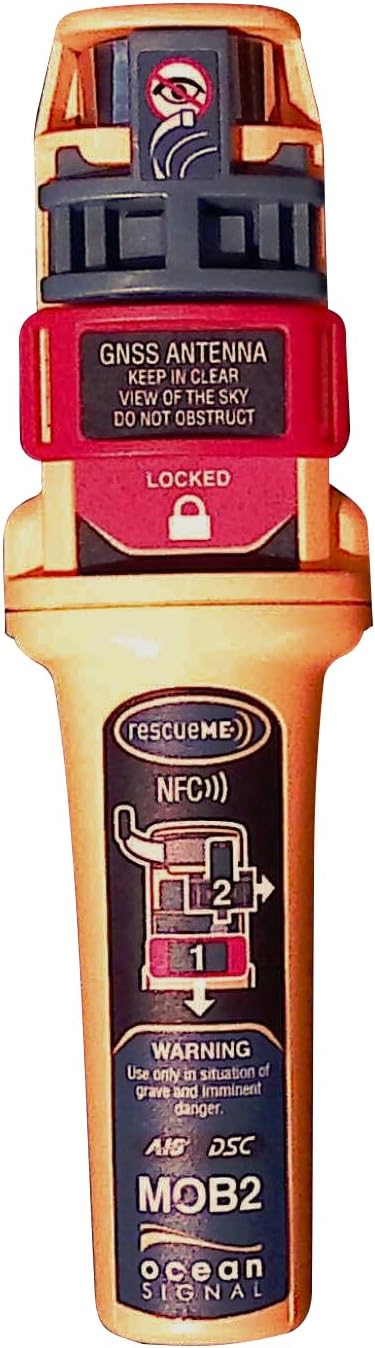
I picked up the Ocean Signal rescueME MOB2 mainly for offshore sailing and some coastal trips where we’re often shorthanded at night. It’s the kind of product you buy, install once, and then pray it never gets used for real. Still, I wanted something that talks directly to my boat’s AIS and DSC, not just a random light bobbing in the dark. On paper, this beacon ticks all those boxes: AIS, DSC, GPS/Galileo, strobes, automatic activation – the whole safety checklist.
In practice, I’ve had it mounted on a Spinlock lifejacket for a few weeks, did some test drills, and checked how it behaves with the plotter and VHF. I’m not a professional tester, just a regular sailor who’s slightly paranoid about falling overboard at night. So my opinion is based on real-world fiddling on a messy deck, not a lab bench with perfect conditions.
The first thing that struck me is how small it is compared to older AIS beacons I’ve seen. It doesn’t feel like you’re strapping a brick to your lifejacket. That helps a lot when you’re already dealing with tethers, harnesses, knives, and all the other stuff clipped to you. But small doesn’t automatically mean convenient; mounting it is still a bit of a faff, especially if you’ve never done it before.
Overall, my impression so far is that it’s a serious bit of safety gear that feels modern, but it’s not plug-and-play magic. You need to take the time to mount it properly, test it, and brief the crew. If you’re willing to do that, it looks like a solid layer of extra security. If you just want something you throw in a bag and forget, this probably isn’t for you.
Value for money: not cheap, but cheaper than losing someone
In terms of price, the rescueME MOB2 sits in the higher-but-normal range for AIS MOB beacons. It’s not bargain-bin cheap, but it’s also not the most expensive safety device you can buy for a boat. Considering you get AIS, DSC, GNSS, strobes, and automatic activation in a pretty compact form, I’d say the feature-per-pound ratio is decent. You’re paying for integration and standards compliance, not for fancy looks or branding fluff.
Where the value really shows is if your boat is already set up with AIS and DSC-capable VHF. In that case, this beacon plugs straight into a system you already have, and the benefit is clear: your own boat can find you faster if you go overboard. If you don’t have AIS or a compatible VHF, the value drops, because you’re not using the full potential of the device. It still helps nearby AIS boats, but you’re missing the direct connection to your own gear.
There are cheaper safety options, like basic lights or non-AIS beacons, but they don’t give you that clear position on the plotter. On the other side, full EPIRBs or satellite PLBs can be pricier and serve a different role (alerting rescue services over long distances rather than just your own boat). So I’d position the MOB2 as good value if your priority is man overboard recovery by your own crew, especially for offshore rallies and night passages.
Is it perfect for the money? No. Installation is still a bit of a hassle, and long-term battery replacement might not be cheap, depending on service options where you live. But taking into account the compact size, the feature set, and the peace of mind of having AIS + DSC + GPS on the person, I’d say the value is pretty solid for serious sailors. If you’re mostly pottering around a sheltered bay in daylight, it’s probably overkill. For regular offshore or night sailing, the price makes sense.
Design: compact and light, but installation is a bit fiddly
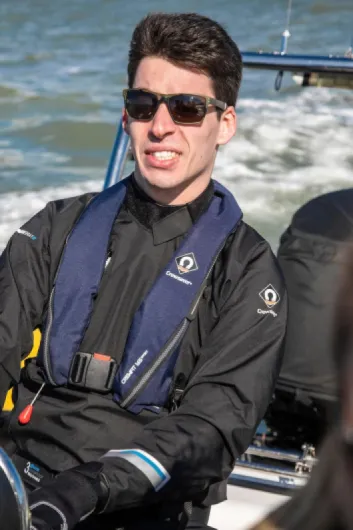
The size is the big plus here. At about 2.7 x 3.8 x 13.4 cm and 94 g, it’s genuinely small for what it does. Compared to older AIS MOB units I’ve seen on friends’ jackets, this one is noticeably slimmer and less chunky. When it’s mounted on a Spinlock lifejacket, it doesn’t dig into your ribs or catch too much when you move around the cockpit. That sounds minor, but if something is annoying to wear, people quietly stop wearing it – and then it’s useless.
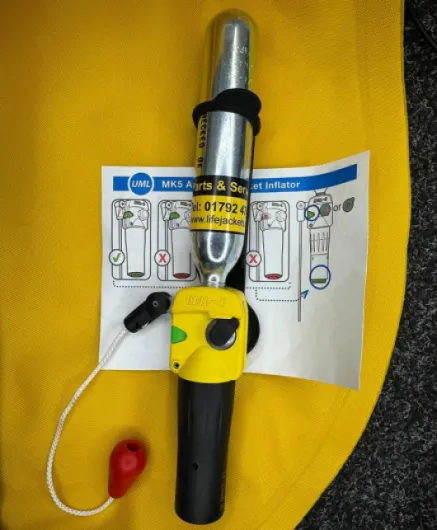
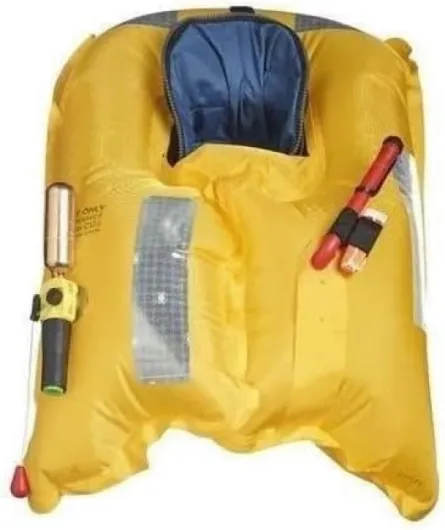
That said, the design of the mounting and release is not completely idiot-proof. The product page and the Amazon review both mention it being “a little fiddly to install”, and I agree. Getting the bracket in the right place on the bladder, routing the strap correctly, and making sure the antenna can swing free on inflation takes patience. First time, I needed about 30–40 minutes with the manual open, plus a couple of re-positionings. After that, you understand the logic, but it’s not something you just slap on in 5 minutes before casting off.
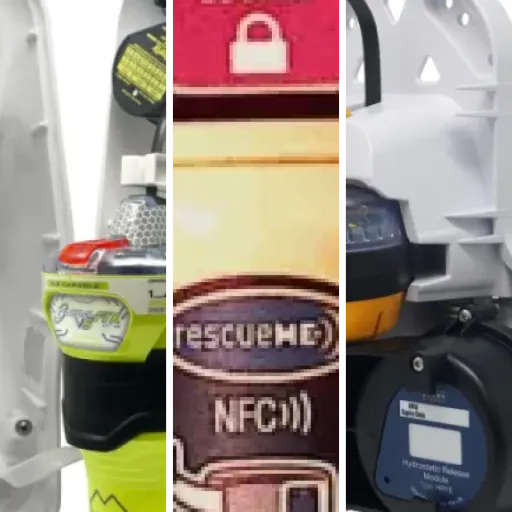
The housing itself feels like standard marine plastic: functional, not fancy. It’s high-vis yellow, which makes sense if someone is trying to spot it in a pile of gear or in the water. The buttons are fairly small but protected, so you’re unlikely to trigger it accidentally while moving around. The strobes are placed in a way that looks like they’ll be visible even if the unit is half-submerged or bobbing around, which is important in choppy water.
Overall, the design is practical but clearly thought through for lifejacket integration, not for handheld use. If you’re expecting a big screen, chunky buttons, or a device you use in your hand like a PLB, this will feel different. It’s more like a tucked-away module that you trust to do its thing when needed. I’m fine with that, but the trade-off is that the installation step is where you pay the price for the compact size and integrated mounting system.
Battery and reliability: you won’t think about it often, but you should
The beacon runs on a lithium metal battery that’s included, which is standard for this type of safety gear. You’re not recharging this like a phone; it’s a long-life battery meant to sit there quietly for years and then deliver when needed. The exact replacement interval will be in the manual (typically several years for these devices), and that’s something you really have to take seriously. Once it hits the expiry date, you either replace the battery via an approved service or consider replacing the unit altogether, depending on costs and availability.
In day-to-day use, you basically don’t interact with the battery at all. The only time I poked at it was when running the self-test function, which uses a tiny bit of power but is necessary to make sure the thing is alive. The LED indicators are handy here: you can quickly see if the test passed or if there’s an issue. I’d recommend doing a test at the start of the season and maybe before a big passage. It’s easy to forget, especially with gear that just sits there screwed to your lifejacket.
One thing to keep in mind: if you’re the kind of person who never checks expiry dates on flares or EPIRBs, this is another item to add to the list. The unit is small and light, which is great, but also means it’s easy to forget it exists until you’re doing a gear audit. Personally, I’ve added the battery expiry date to a simple boat maintenance spreadsheet so I don’t get caught out in five years with a dead beacon and no idea.
As for runtime once activated, the brand usually designs these to broadcast long enough for a proper rescue window, but I didn’t run a full discharge test – that would be wasteful and expensive. Based on the type of product and the Class M compliance, I trust it to run for the stated duration, but that’s more faith in standards than personal measurement. If you’re extremely cautious, you might want to read the full technical sheet and compare to other AIS MOB beacons, but for typical cruising and offshore rallies, the battery setup feels adequate and in line with what others use.
Durability and waterproofing: built for abuse, but still just plastic
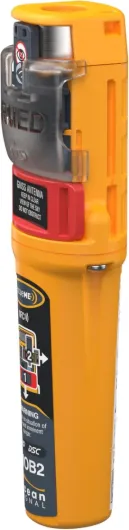
The MOB2 is clearly designed to be waterproof and live in a harsh environment – it’s meant to sit on an inflatable lifejacket that gets splashed, shoved into lockers, and occasionally dropped. The housing feels solid enough for that kind of abuse. It’s not some metal tank, but the plastic shell doesn’t feel flimsy or toy-like. I’ve had it rubbing against other gear on the rail and bouncing around in a damp cockpit locker, and there’s no sign of water ingress or corrosion so far.
That said, you can tell it’s still a compact plastic device with electronics inside, not an indestructible brick. I wouldn’t deliberately bang it hard against winches or step on it. The moving parts, like the antenna and mounting bracket, are the bits I’d be most careful with. If you’re rough with your lifejackets, throwing them around the deck or crushing them under heavy gear, you might shorten the life of the bracket or risk weakening the release mechanism. It’s not fragile, but it’s not bulletproof either.
From a standards point of view, it’s Class M AIS compliant, which usually implies it’s been tested for proper waterproofing and operational conditions. That gives some peace of mind, but real-world durability will also depend on how often you sail and how you store your kit. If your jackets live in a damp, salty sail locker all winter, check the beacon visually at the start of the season: look for cracks, salt crust, or signs of stress on the antenna hinge or mounting points.
After a few weeks of regular use, including a couple of wet, windy days where everything got soaked, the MOB2 still looks and behaves like new. No fogging, no weird condensation under the plastic. For now, I’d say durability is good for normal cruising and offshore use, as long as you’re not abusing your lifejackets. If you’re on a commercial boat with heavy daily use, I’d keep a closer eye on it and maybe plan for more regular inspections or replacements than a weekend sailor would.
Performance: AIS, DSC and GPS that actually talk to your boat
Performance-wise, what matters with this kind of beacon is pretty simple: Does it get a position fix quickly, and do other devices actually see it? The MOB2 uses multi-constellation GNSS (GPS + Galileo), which is modern enough. During tests on deck, the unit locked GPS reasonably fast; I’m not timing it with a stopwatch, but we’re talking tens of seconds, not minutes. For a man overboard situation, that’s important – you don’t want to drift half a mile before your first proper position gets sent out.
The AIS side worked as expected in test mode: my chartplotter picked up the test signal and displayed it as a target. That’s the key thing for me – I want the boat to have a clear dot on the screen with distance and bearing to the person in the water. Without that, you’re just doing circles and guessing. Obviously I didn’t do a full live test overboard with someone in the water (there’s a limit to how far I’ll go for a review), but the basic communication with the boat’s electronics seems solid.
DSC is a bit more involved because you have to set up your MMSI and make sure your VHF supports the right features. The unit is an integrated DSC transceiver, so it can send and receive. In theory, it can call your boat directly and alert surrounding boats. That’s great, but only if your radio is configured properly and everyone on board knows what the alarm means. In my case, I went through the manual and checked the settings; again, not hard, but not “out of the box” either. This is where the product depends heavily on the rest of your setup.
In bad visibility or at night, the infrared and white strobes are a big plus. I didn’t test infrared with proper gear, but the white strobe is very bright to the naked eye. Think more “emergency light” than “little LED toy”. Combined with the AIS target, this gives you two layers: one to get you in the area, and one to visually pick the person out of the waves. Overall, I’d say the performance is pretty solid for coastal and offshore sailing, as long as your boat is already kitted out with AIS and DSC and you’re willing to spend a bit of time configuring everything.
What this beacon actually does (in real life, not just on the box)
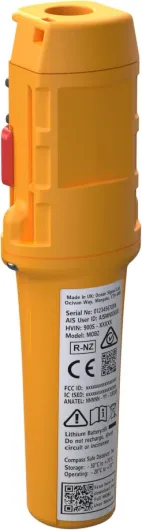
On the spec sheet, the rescueME MOB2 is pretty loaded: AIS transmitter, DSC transceiver, GPS + Galileo GNSS, infrared and white strobes, automatic activation, and Class M compliance. In normal words, if you go overboard and the unit triggers, it should send your position to nearby AIS-equipped boats and ping your own VHF via DSC, while flashing like crazy so someone can actually see you in the water. That’s the theory.
In real use, the key thing for me is that it integrates directly with the lifejacket and is meant to fire automatically when the jacket inflates. You’re probably not going to be calmly pressing buttons if you fall overboard at night in rough seas. I did a dry run on deck with the jacket (no real water, just manual inflation) and checked that the beacon had space to deploy and wasn’t blocked by straps or crotch belts. You really have to think about routing and orientation; if you just slap it anywhere, it might not pop out cleanly.
On the electronics side, I set my VHF and plotter to test modes and walked through the manual and the test function. The LED indicators are clear enough: you can see when the unit is on, when GNSS is locked, and when it’s sending. It’s not a full display, more like status lights, but that keeps it simple and less fragile. I didn’t do a full live MOB activation (don’t want the coastguard on my back), but I did a limited-range test and could see the AIS test signal on my plotter, which is reassuring.
So in terms of features, it’s not just a light or a basic PLB. It’s more targeted: it’s focused on MOB recovery by your own boat and nearby vessels. If you’re expecting some kind of global satellite rescue beacon, that’s not what this is. It’s more of a short- to medium-range, “find the person quickly” tool for people actually out on the water around you. For offshore rallies like the ARC, that’s exactly the use case, and that’s why I bought it.
Pros
- Compact and light, fits on modern lifejackets without feeling bulky
- AIS + DSC + multi-constellation GNSS give clear position and alerts to your own boat and nearby vessels
- Bright strobes and clear LED indicators for status and visibility during a rescue
Cons
- Installation on the lifejacket is a bit fiddly and takes time to get right
- Real value depends heavily on having AIS and a compatible DSC VHF already installed on the boat
Conclusion
Editor's rating
The Ocean Signal rescueME MOB2 is a serious safety tool for people who actually spend time offshore or sailing at night, not a gadget you buy just to feel good. It’s compact, light, and integrates well with modern AIS and DSC setups, which means if you go overboard, your own boat and nearby vessels have a real chance of tracking you quickly on their screens. In my tests, it talked to the plotter and VHF as expected, locked onto GPS/Galileo fast enough, and the strobes are clearly visible to the naked eye.
It’s not perfect. Installation on a lifejacket is a bit fiddly the first time, and this isn’t a plug-and-play toy: you need to read the manual, configure your MMSI, and run tests. Long-term, you also have to stay on top of battery expiry and inspect the mounting and antenna now and then. But once set up properly, it just sits there quietly and doesn’t get in the way, which is exactly what you want from something you hope never to trigger for real.
I’d recommend the MOB2 to offshore cruisers, racers, and anyone doing overnight passages who already has AIS and a DSC radio on board. For that crowd, the extra layer of protection is worth the price and the setup hassle. If you only sail close to shore in daylight and don’t have AIS, this is probably more tech than you need, and your money might be better spent on basic gear and training first. Overall, for the right type of sailor, it’s a solid, no-nonsense safety upgrade that gets the job done.