
Summary
Editor's rating
Value for money: loaded with tech, not the cheapest ticket
Design and usability: lots of features, a bit busy
Battery life and checks: long shelf life but not magic
Build quality and durability: feels ready for abuse
Performance and signals: AIS and RLS are the real selling points
What you actually get out of the box
Pros
- Loaded with useful safety features: 406 MHz, 121.5 MHz, AIS, GNSS, MEOSAR, RLS, visible and IR strobes
- AIS and RLS provide faster local awareness and confirmation that your distress has been received
- Rugged, waterproof build and solid bracket that stand up well to real onboard conditions
Cons
- More complex interface than basic EPIRBs; you really need to read the manual and brief crew
- Higher price than simpler models, plus future battery replacement service costs

Specifications
View full product page →| Brand | Ocean Signal |
Serious safety gear for when things go really wrong
I bought the Ocean Signal rescueME EPIRB3 for one simple reason: I do a fair bit of offshore sailing and I finally got tired of relying only on a PLB and faith. This is the kind of bit of kit you hope you never have to use, but if you do, it either works or it doesn’t. There’s no “almost”. I’ve had it on board for one season now, did a couple of test self-checks, and mounted it in the manual bracket on a 36-foot cruiser that sees North Sea chop and a lot of spray.
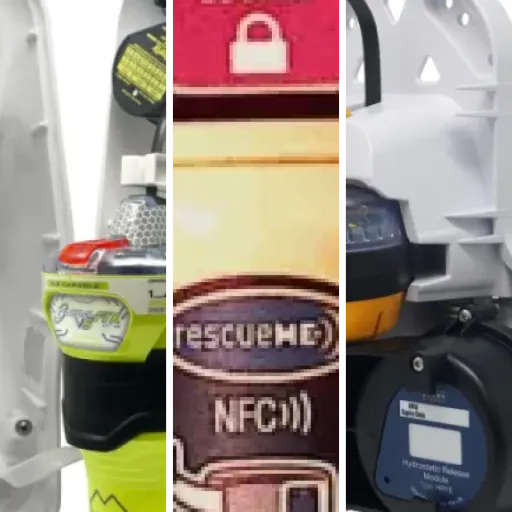
Right away, what stands out is that this EPIRB is loaded with features: 406 MHz, 121.5 MHz homing, AIS, GNSS, RLS, visible strobe, IR strobe, NFC check via phone… it’s like they crammed every current safety buzzword into one yellow brick. In practice though, most of that actually makes sense, especially the AIS and RLS. I’m less excited about having to remember which light does what, but I’ll get to that.
To be clear: I haven’t triggered a real distress alert (and I hope I never do), so my opinion is based on test modes, how easy it is to mount and operate, and comparing it to older EPIRBs I’ve used on delivery trips. I’ve used McMurdo and older Ocean Signal units on other boats, so I’m not coming to this fresh. The EPIRB3 feels like a modern step up, but it’s not perfect.
If you’re looking for a simple “push button, forget the rest” beacon, this might feel a bit over-specified. If you want more feedback and extra ways to be found (especially AIS for nearby ships), this model starts to make sense. My overall feeling after a season is: it’s solid, gives me more peace of mind than the older gear, but the complexity and price mean it’s not automatically the best fit for everyone.
Value for money: loaded with tech, not the cheapest ticket
Let’s be honest: this is not a budget EPIRB. You’re paying for a long list of features – AIS, RLS, GNSS, MEOSAR compatibility, dual strobes, NFC – and that pushes the price above simpler 406 MHz-only units. If you just want the minimum legal requirement and never leave coastal waters, a cheaper EPIRB will do the job on paper. The EPIRB3 makes more sense if you actually go offshore or sail in busy shipping lanes where AIS and faster detection matter.
Compared to older models I’ve used, the extra cost mostly comes down to AIS and RLS. AIS means nearby ships can see you directly on their plotter. RLS means you get confirmation your distress has been received. For me, those two are worth paying for on a boat that does night passages and cross-channel trips. If I were just pottering around in a bay, I probably wouldn’t spend the extra.
Where the value feels decent is in the fact that you get a very complete package in one unit. You don’t need a separate AIS MOB device for the boat itself, you don’t need to guess if your alert was heard, and you can check status with your phone. The included mounting bracket and hardware mean no hidden extras at purchase. The hidden cost is later: battery replacement service when it expires, which is standard for all EPIRBs but still something to budget for.
Overall, I’d call the value good but not outstanding. If you actually use the advanced features (or at least care about them), the price makes sense. If you just want to tick a safety box, it’s probably overkill. For serious cruising or offshore racing, I think the extra money is justified by the extra ways rescuers can find you. For casual weekend sailors on a tight budget, I’d look at something simpler and cheaper.
Design and usability: lots of features, a bit busy
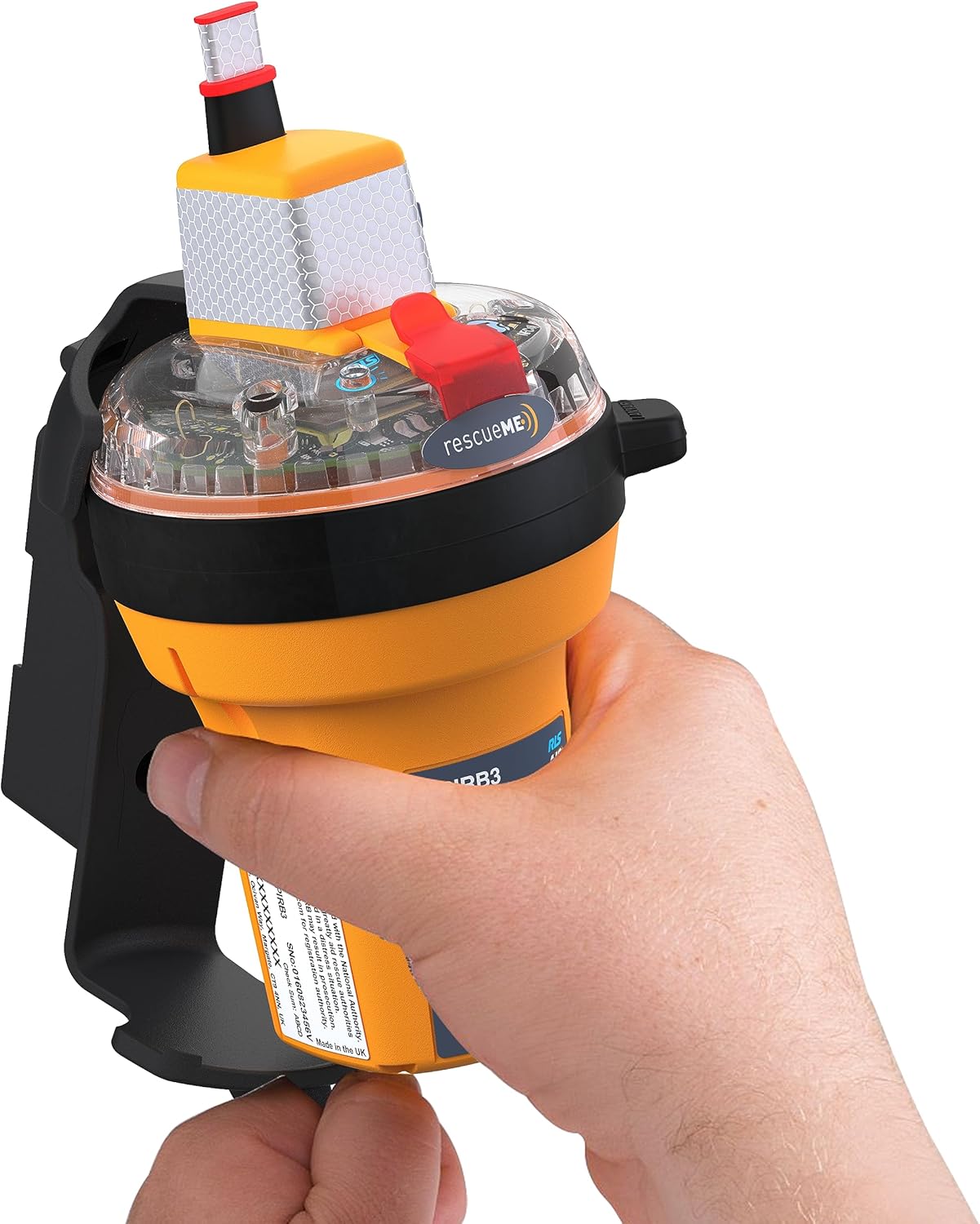
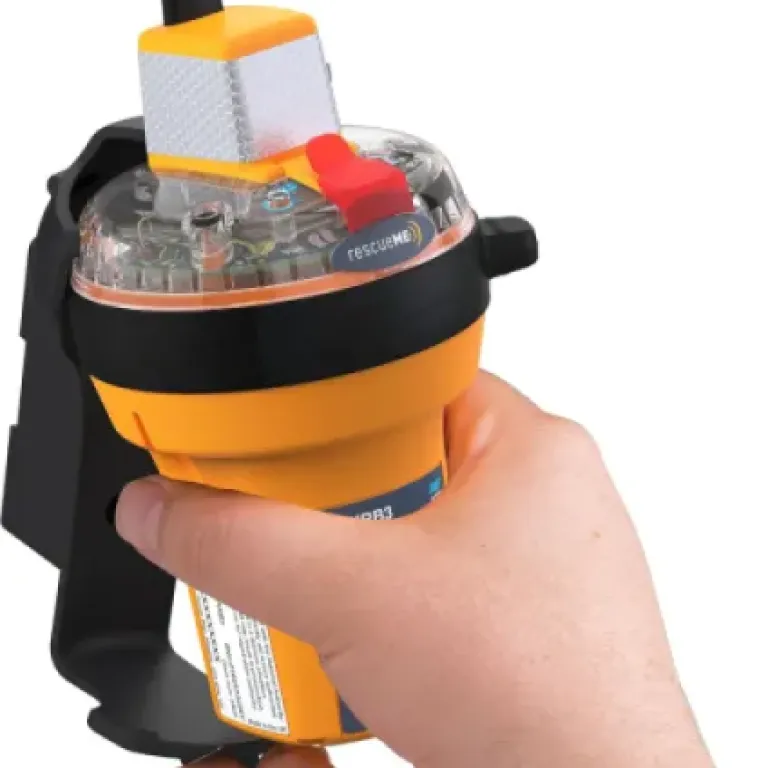
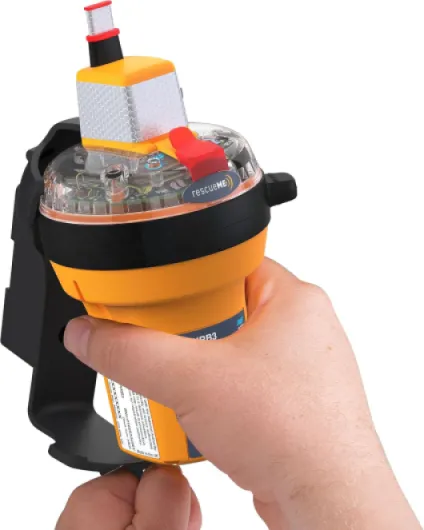
The design is very typical EPIRB: chunky yellow body, clear dome at the top for the antenna and strobes, and a flip-up or twist-type protective cover for the activation switch. It’s not pretty, but it’s supposed to be visible and easy to grab, which it is. The bright yellow color stands out against pretty much everything on the boat, which is the point. In the cockpit locker or near the companionway, you can’t miss it.
What sets this one apart is how much they’ve packed into the housing. You’ve got AIS, GNSS, 406 MHz, 121.5 MHz, RLS, visible and IR strobes, and NFC all living in this one plastic shell. The downside is it ends up with a fair amount of labeling, LEDs, and icons. If you’re used to older EPIRBs with one big button and a test light, this will feel a bit busy at first. The test button and status LEDs are small but clear enough once you know what you’re looking at, though I’d prefer slightly bigger icons for quick checks in poor light.
The NFC feature is actually a clever design choice. You tap your smartphone to the beacon (like contactless payment), and with the right app you can see status information without pressing physical buttons. In practice, I used this once after mounting it and then maybe twice more over the season, mostly just to see if it still worked. It’s nice, but not something I rely on day to day. Still, for checking battery and self-test logs without digging out the manual, it’s handy.
In terms of operation in an emergency, the main thing is the protected activation control. It’s designed so you don’t set it off by accident, but you can still get to it quickly with cold, wet hands. I tried it with gloves on; it’s doable, though you’ll want to have mentally rehearsed the steps. That’s my main gripe with the design: it’s safe from accidental activation, but not totally intuitive if you’ve never touched it before. This is the kind of device where you really should brief your crew and physically show them how it works, not just point and say “EPIRB is there.”
Battery life and checks: long shelf life but not magic
The EPIRB3 runs on internal lithium batteries that are already installed, and you’re not meant to change them yourself. That’s standard for this kind of device. The battery service life is several years (check the exact expiry date on the unit), and you’re expected to send it in for a battery replacement service when the time comes. That means additional cost down the line, which is normal but worth remembering when you look at the purchase price.
What I liked is that self-tests don’t seem to drain the battery in any noticeable way, at least with reasonable use. I’ve done a couple of short self-tests during the season and checked the status via NFC afterwards. The app shows test history and battery status, which is more reassuring than just a blinking LED and guessing. Of course, if you spam the self-test function every weekend, you’ll eat into the battery, but that’s true of any EPIRB.
There’s no user-accessible charging or anything like that; it’s a sealed emergency battery, which is exactly what you want in a device that might sit for years and then suddenly be expected to run for hours in the worst conditions. The spec claims enough operating time once activated to cover a realistic rescue window. I can’t run it to empty without causing chaos, but Ocean Signal has a decent track record on this stuff, and the certification process is pretty strict.
Overall, the battery setup is practical but not cheap in the long run. You buy once, then budget for a service when the expiry date comes up. If you’re the kind of boat owner who forgets about safety gear until survey time, at least the NFC and status lights give you simple ways to confirm you’re still within date and the battery isn’t compromised. It’s not exciting, but for this kind of product, stable and predictable is all you really want.
Build quality and durability: feels ready for abuse
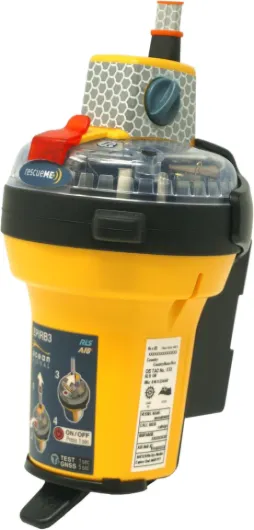
I’ve had the EPIRB3 mounted in the cockpit area where it gets a fair bit of spray, UV, and general boat grime. After one season, the casing still looks fine: no fading, no cracks, and the clear top hasn’t gone cloudy. The unit is rugged and fully waterproof, as you’d expect. I haven’t dropped it overboard or dragged it behind the boat, but it has taken some knocks from foul weather gear and a stray winch handle without any obvious damage.
The manual release bracket is solid enough, though it’s still just plastic. The latch mechanism feels firm, not loose, and there’s no rattle when the boat is slamming into chop. I did a couple of deliberate removal tests to see how easy it is to grab in a hurry. You need a deliberate pull, which is good: it won’t just fall out. I wouldn’t mind slightly beefier mounting holes on the bracket, but that’s a minor gripe and more about overkill than necessity.
In terms of waterproofing and sealing, everything looks well thought out. There are no random openings or flimsy rubber flaps. The antenna section is protected under the clear dome, and there’s no sign of moisture inside. On a humid, salty boat, that’s important. I’ve seen cheaper electronics grow green corrosion in a season; this hasn’t shown any of that so far.
Weight-wise, at around 1.5 kg, it’s not light, but that weight actually makes it feel more solid. It’s not something that’s going to blow away or bounce around easily. For offshore use where gear gets slammed around a lot, the EPIRB3 feels up to the job. Time will tell over many seasons, but based on the first year, I’d say the durability is pretty solid and matches what I expect from a serious marine safety brand.
Performance and signals: AIS and RLS are the real selling points
Since I didn’t trigger a real distress alert (and I’m happy about that), my view on performance is based on test mode, signal acquisition times, and comparing the feature set with other EPIRBs I’ve sailed with. In test mode, the GPS (GNSS) lock times were reasonable. Outside on deck, it locked within a couple of minutes the first time, and quicker on later tests. That’s important: a beacon that takes ages to get a position fix is not very helpful in a fast-moving emergency.
The AIS integration is, in my opinion, the main practical upgrade over older units. Once activated in a real distress, nearby AIS-equipped vessels should see a target pop up on their plotter. That means you’re not just relying on distant satellites and coordination centers; you’re also shouting directly at the ships around you. I can’t fully test that without actually broadcasting a distress, but the concept is sound and lines up with what I’ve seen on other AIS SAR devices like AIS MOB beacons. For crowded waters or busy shipping lanes, this is a big plus.
The Return Link Service (RLS) is another important feature. In theory, once your distress is picked up and processed, the beacon can give you a confirmation that your signal has been received. Psychologically, that matters a lot. When you’re in a liferaft, knowing someone has actually seen your alert is a big step up from just hoping. In practice, I can only test the RLS indicator in self-test mode, but it behaves as described in the manual. You need to understand the light codes, which again means reading the manual properly.
Overall, in terms of performance features, this thing is stacked: MEOSAR-compatible 406 MHz, 121.5 MHz homing, AIS, GNSS, RLS, and dual strobes (visible and IR). On paper, it’s way ahead of older “basic” EPIRBs. The trade-off is more complexity and a bit of a learning curve. If you’re willing to spend an hour with the manual and maybe a short crew briefing, you get a beacon that gives rescuers several different ways to find you, both globally and locally.
What you actually get out of the box
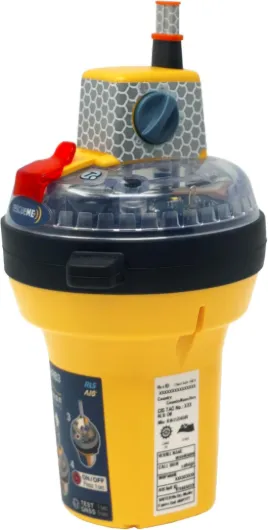
Out of the box, the rescueME EPIRB3 is pretty straightforward: the unit itself, the manual-release bracket, mounting hardware, and documentation. No fancy extras, just the basics you need to get it on a bulkhead and ready. The manual is fairly clear, but like all safety manuals, it’s dense and not exactly fun reading. I had to go through a couple of sections twice, especially around test modes and NFC use, to be sure I wasn’t going to accidentally set off a real distress alert.
The beacon is bigger than it looks in photos, but not ridiculous. The listed dimensions (around 24 cm tall and 12–13 cm deep) match what I measured. On my boat, it took a bit of planning to find a spot where it’s visible and reachable but not in the way of foul weather gear. Once you commit to the mounting spot, the supplied hardware is decent enough. I used my own stainless screws instead of the ones in the box, more out of habit than necessity.
One thing I did like is that batteries are included and already installed, so you’re not messing around with opening anything. You basically register the EPIRB with your national authority, mount it, and you’re good. It’s MEOSAR compatible, has AIS, RLS, and GNSS – all the acronyms you see in the product page are actually present on the casing and in the manual, so you’re not dealing with some stripped-down version.
In terms of first impression, it feels like serious equipment rather than a gadget. No glossy marketing nonsense in the box, just a pretty plain cardboard package and practical documentation. For an item that’s effectively a last-resort life insurance, I actually prefer this low-key presentation. It doesn’t feel cheap, but it also doesn’t feel like they wasted money on packaging instead of the internals.
Pros
- Loaded with useful safety features: 406 MHz, 121.5 MHz, AIS, GNSS, MEOSAR, RLS, visible and IR strobes
- AIS and RLS provide faster local awareness and confirmation that your distress has been received
- Rugged, waterproof build and solid bracket that stand up well to real onboard conditions
Cons
- More complex interface than basic EPIRBs; you really need to read the manual and brief crew
- Higher price than simpler models, plus future battery replacement service costs
Conclusion
Editor's rating
The Ocean Signal rescueME EPIRB3 is a feature-heavy, modern EPIRB aimed at people who actually go offshore and care about more than just meeting the bare legal minimum. The big selling points are AIS transmission, Return Link Service confirmation, MEOSAR compatibility, and the ability to check status via NFC on your phone. In daily use, it just sits there quietly on the bulkhead, but the self-tests, clear indicators, and solid build give a fair bit of peace of mind.
It’s not perfect. The interface is a bit busy compared to older, simpler EPIRBs, and you really do need to read the manual and brief your crew properly. The price is on the higher side, and you’ll eventually pay for a battery replacement service. If you mostly sail inshore and are just ticking a box, this is probably more beacon than you need. But if you’re doing offshore passages, night crossings, or sailing in busy shipping routes, the extra location options (especially AIS) and RLS feedback are hard to ignore.
So, who is it for? Offshore cruisers, delivery skippers, and anyone running a boat where a proper, modern EPIRB is part of a layered safety setup (PLBs, AIS MOBs, liferaft, etc.). Who should skip it? Casual day-sailors on lakes or sheltered waters who just want the cheapest beacon that passes inspection. For my kind of sailing, I’m happy with it and would buy it again, but I’d also say: don’t buy this and then ignore the manual. The tech only helps if you understand what it’s doing.