
Summary
Editor's rating
Value: expensive upfront, but cheaper than chasing flare dates
Design: built for real boats, not just the catalog
Battery life and Bluetooth: useful, but a bit overcomplicated
Materials and build: feels solid, not fragile
Durability and real-world abuse potential
Performance: brightness, visibility and real-world use
What you actually get in the box
Pros
- Legally replaces pyrotechnic flares and includes flag + whistle to cover USCG night, day, and audible requirements
- Bright two-color 360° SOS signal that stands out better against shoreline light clutter than white-only strobes
- Long runtime (around 6 hours) with included lithium CR123 batteries and rugged, IP68-rated floating construction
Cons
- Higher upfront cost than a simple flare kit
- Uses CR123 batteries, which are less common than AA/AAA and require a bit of planning for replacements
- Bluetooth and app features add complexity that many users may not really need or use beyond basic testing

Specifications
View full product page →| Brand | SIRIUS SIGNAL FOR LIFE |
An LED “flare” so you can finally ditch the pyros?
I picked up the Sirius Signal C-1002 because I was tired of dealing with expired flares and the whole “is this still legal?” question every season. On my small center console, storage is tight and I don’t love having a box of explosives rolling around in a locker. This thing is pitched as a full legal replacement for pyrotechnic flares in the US and Canada, so I wanted to see if it actually feels like a real solution or just another gadget.
I’ve had it on the boat for a few outings now, including one late evening run back to the ramp and a couple of intentional tests at night from the dock. I haven’t had a real emergency (and I hope I never do), so my feedback is more about usability, brightness, and how it fits in with the rest of my safety gear. I also played with the Bluetooth app because if a safety device has an app, I at least want to know it works.
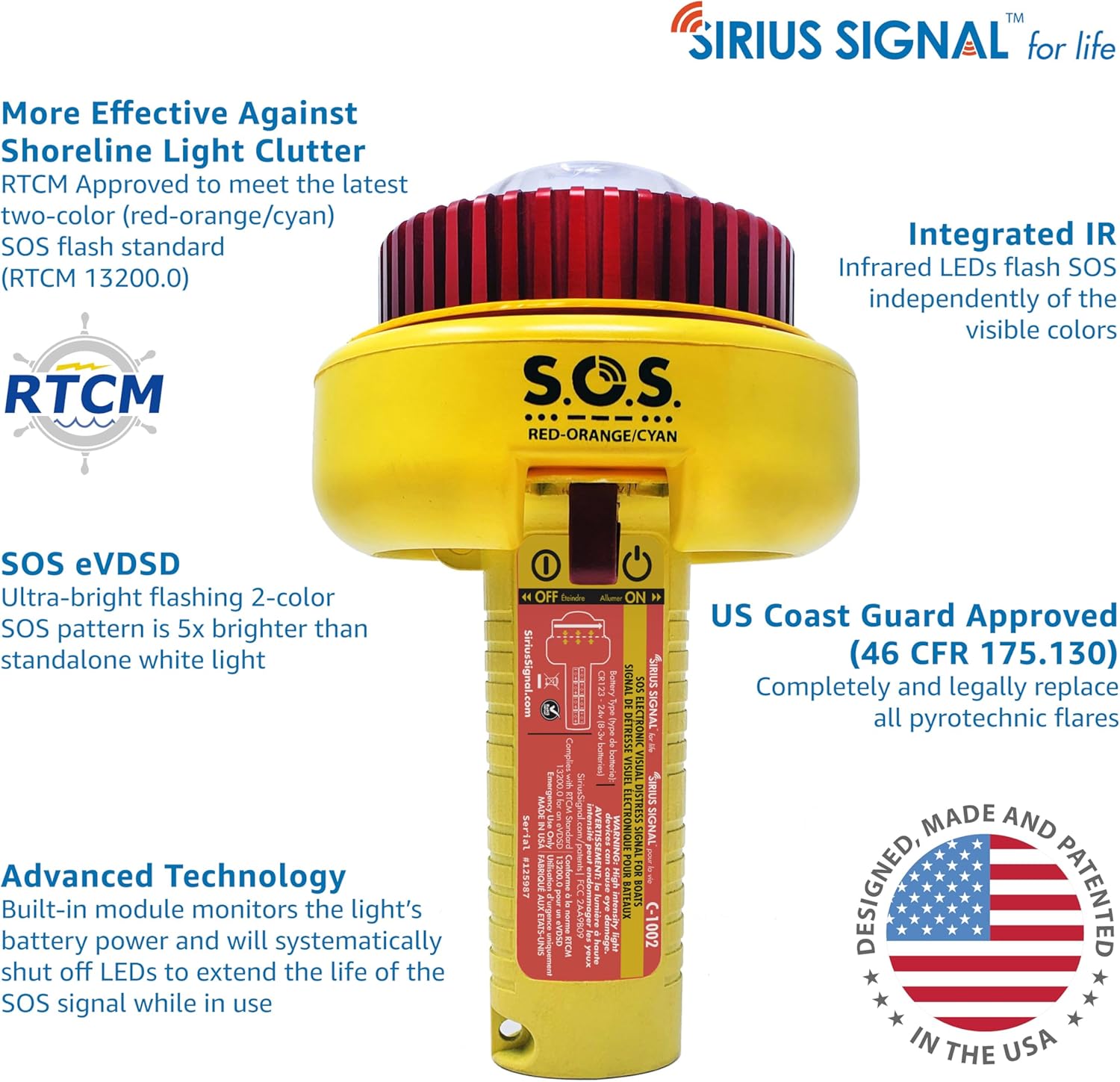
On paper, the C-1002 checks a lot of boxes: USCG and Transport Canada approved, two-color LED, infrared, includes flag and whistle, and they say it’s 5x brighter than the older white-only electronic signals. In practice, it’s more about: can I grab it quickly, turn it on in seconds under stress, and will other boats actually see it against shoreline lights?
Overall, it’s a pretty solid piece of kit, but it’s not perfect. There are a few design choices I liked a lot, and a couple of things that annoyed me, especially considering the price. If you’re thinking about ditching traditional flares, I’ll walk through what stood out to me, good and bad, after actually handling and testing it on the water and at the dock.
Value: expensive upfront, but cheaper than chasing flare dates
Let’s be honest: the C-1002 is not cheap. Compared to a basic set of pyrotechnic flares, the upfront cost is noticeably higher. That said, when you factor in that flares expire every 3–4 years and you’re supposed to replace them to stay legal, the math starts to tilt in favor of something like this. With this kit, you’re basically paying more now to avoid buying flare packs over and over, plus you get the flag and whistle included.
From a value perspective, I look at three things: legal compliance, ease of use, and how likely I am to keep it in good working order. On all three, the C-1002 scores pretty well. It’s fully USCG and Transport Canada approved as an eVDSD, and with the flag and whistle, it covers night, day, and audible requirements. It’s easier to use than flares in an emergency, which is hard to put a price on. And because you can test it and check battery status without wasting anything, you’re more likely to actually verify it works once in a while instead of just hoping your old flares still light.
Where the value feels a bit weaker is if you rarely boat at night or only go out on small lakes with other boats always nearby. In that case, spending this much on a high‑end distress signal might feel like overkill. For coastal or offshore use, or if you regularly run at dawn/dusk or after dark, it makes more sense. The added visibility from the two‑color pattern and the long runtime start to feel worth the extra money.
Overall, I’d say the value is good but not mind‑blowing. You’re paying for technology, approvals, and convenience, not for fancy packaging or brand prestige. If you just want to be barely legal, cheaper options exist. If you want a reusable, low‑stress alternative to flares that you can trust for years, then the price is easier to justify, especially when you spread it over the likely lifespan of the unit.
Design: built for real boats, not just the catalog
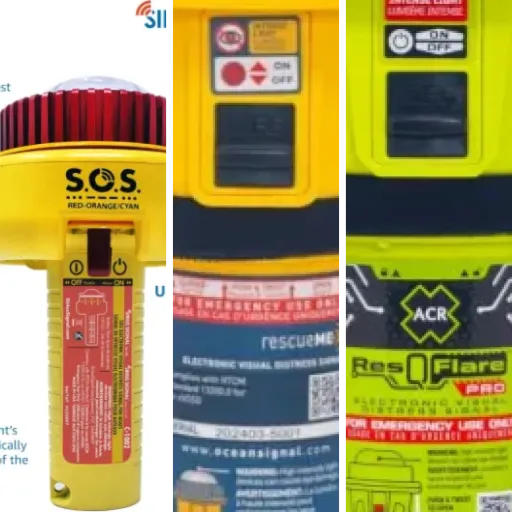
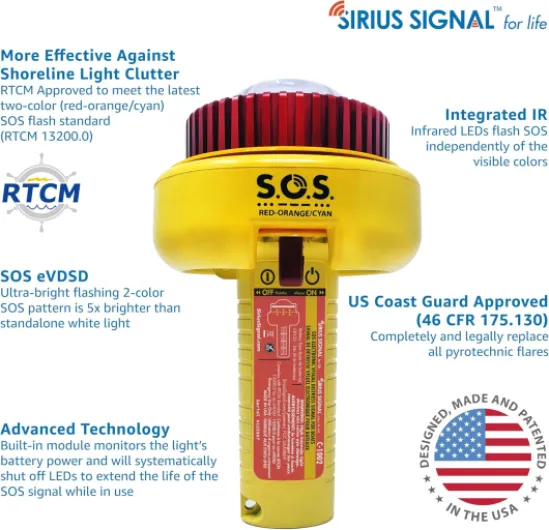
The design of the C-1002 is clearly focused on being visible and tough rather than pretty. The head is square, with LEDs arranged to give a 360-degree signal, and there’s a flotation collar that gives it some bulk but also keeps it from sinking if it goes overboard. In the hand, it’s a bit chunky but not uncomfortable. I could operate it easily with one hand, even with slightly wet fingers. The switch is straightforward, which is important – in a stressful situation, I don’t want to be fiddling with modes or tiny buttons.
One thing I like is the omnidirectional beam. When I tested it at the dock at night, I walked around it and the brightness looked pretty even all the way around. You don’t have to hold it at a perfect angle like you do with some spotlights or cheap strobes. The two-color flash pattern (red‑orange and cyan) is noticeable. Against a shoreline with a bunch of white and yellow lights, that alternating color makes it stand out more than a single white strobe in my opinion. It’s not magic, but it’s clearly more eye‑catching than the older white‑only LED distress lights I’ve seen.
The suction cup mount is a simple but smart addition. I stuck it to my console and left the light running for about 20–30 minutes. The mount didn’t slip, and the light stayed upright and visible. I’d still back it up with a lanyard or strap in rough weather, but for normal use it’s fine. The mount basically turns the light into a mini beacon you can set and forget while you handle the radio, life jackets, etc. That’s much better than trying to hold a flare or flashlight the whole time.
On the downside, this is not a small or sleek device. If you’re expecting something that tucks into a tiny pocket, this isn’t it. It needs a dedicated spot in your safety locker or bag. Also, the Bluetooth feature is a bit odd from a design perspective: the light itself doesn’t show much about that, and you’d never guess it has Bluetooth just by looking. That’s fine, but it also means all that tech doesn’t really improve the physical user experience in an emergency – it’s more for testing and checking battery status when you’re at home or at the dock.
Battery life and Bluetooth: useful, but a bit overcomplicated
The C-1002 runs on CR123 lithium batteries, and it comes with them pre-installed. That’s eight cells, which sounds like overkill, but the upside is solid runtime. The spec says around 6 hours of SOS signaling at full power. I did one long test where I left it running in my backyard for just under 4 hours, and it was still going strong with no obvious dimming. For a real emergency, 6 hours of continuous, full‑power signaling is actually quite reassuring – you’re not stuck rationing your flares and hoping you time them right.
CR123 batteries are not as common as AA or AAA, but they’re not exotic either. You can find them online easily, and the fact that they’re user‑replaceable is a big plus. Compared to buying and disposing of pyrotechnic flares every few years, swapping batteries every now and then feels cheaper and less annoying. The 10‑year claim is more about shelf life and overall system longevity than a single set of batteries, but for a safety device that mostly sits unused, that makes sense.
The Bluetooth feature is… interesting. You can pair it with the Afloat Plan Home app and remotely turn it on/off for testing and check battery status. For regular pre‑season checks, that’s actually handy: you can quickly verify it lights up and see if the batteries are still good without digging it out and blinding yourself. I got it paired after a couple of tries; it’s not as smooth as pairing headphones, but once it’s set up it works. Just keep in mind that in a real emergency, you’re not going to be fumbling with a phone app – you’ll just use the physical controls.
On the downside, relying on CR123s means you probably won’t find replacements at a random gas station on a road trip, so you need to plan ahead and keep a spare set in your boat bag. And the Bluetooth stuff adds complexity that some people simply don’t care about in a distress light. Personally, I like the battery check feature, but I could live without the remote control. Overall though, battery life and practicality are strong points, especially if you compare it to flares that expire every few years and can’t be “tested” in any meaningful way.
Materials and build: feels solid, not fragile
The C-1002 is built with ABS, Lexan (polycarbonate), and aluminum, and you can feel that it’s made to be knocked around a bit. The housing doesn’t flex or creak when you squeeze it, and the seams look well sealed. It’s IP68 rated, which basically means it’s dust‑tight and can handle being submerged for a while. I didn’t sink it to the bottom of the bay, but I did dunk it in a bucket and rinse it with a hose after a salty evening run, and there were no issues with fogging or water inside.
The flotation collar is a nice touch. It’s a bit bulky, but on a moving boat I’d rather have bulk than watch my only distress light sink if I fumble it. I actually dropped it into the water next to the dock on purpose, and it floated as advertised, with the light head sitting reasonably high in the water. That gives me some confidence that if things go sideways and this slips out of someone’s hand, it’s not gone forever.
The lens and body feel tough enough for real-world abuse – tossed into a locker, banged against other gear, etc. It’s not bombproof, but it doesn’t feel like a cheap plastic flashlight either. The aluminum parts add a bit of weight, but also give it that solid feel. After a few trips, I don’t see any corrosion or weird discoloration, which is a good sign for something that will live in a damp environment.
If I had to nitpick, I’d say the overall build is more “industrial” than “refined.” Edges are a bit squared off, and it’s not the most comfortable thing to hold for a long time. But for a distress signal, I care a lot more about it surviving a few seasons of neglect in a boat compartment than about perfect ergonomics. On that front, the materials and build quality seem well thought out and appropriate for the price, even if they’re not mind‑blowing.
Durability and real-world abuse potential
In terms of durability, the C-1002 gives the impression that it can survive a few seasons of neglect, which is often what actually happens with safety gear. I kept mine in a side compartment with life jackets, dock lines, and a throwable cushion – not exactly gentle treatment. After a few trips, including some bumpy rides, there are a few scuffs but nothing that affects function. The housing hasn’t cracked, and the lens is still clear.
The IP68 rating is a strong point. I rinsed it with a hose after saltwater trips and did a couple of dunk tests in a bucket. No leaks, no condensation, and the battery compartment stayed bone dry. Given how often things in a boat locker end up damp or salty, that’s important. The materials don’t feel like they’ll crumble under UV exposure quickly either, though that’s something only long-term use will fully prove. Still, it feels more like a marine tool than a cheap camping gadget.
I also like that it floats with the head up. That’s a durability factor in a way – if it falls overboard in rough water, the fact that it doesn’t sink and still signals is part of it “surviving” the situation. I tossed it into the water from the dock a couple of times, let it bob around, then fished it out. No issues restarting it or opening the battery compartment afterwards.
The only concern I have long term is the suction cup mount. Suction cups always have a limited life, especially in sun and salt. I wouldn’t be shocked if, after a few seasons, it doesn’t stick as well. But that’s more about the accessory than the signal itself. The main unit feels like it should last many years if you give it basic care: rinse after salt, don’t drop it from the top of the cabin onto concrete, and change batteries on a reasonable schedule.
Performance: brightness, visibility and real-world use
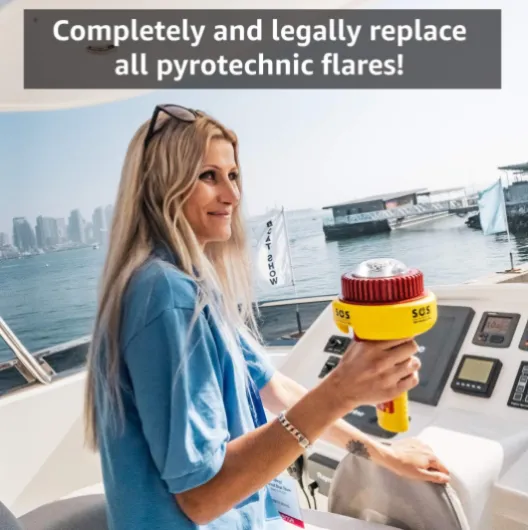
Performance-wise, the C-1002 does what it says on the tin. The light is bright enough that you don’t really want to stare at it directly at night. Sirius claims 50 candelas and up to 10 nautical miles visibility under the right conditions. I can’t measure that exactly, but I did a simple test: I left it running on my dock and took the boat out about a mile. Even with some background shore lights, I could easily pick it out. The two‑color flash pattern really helps – it doesn’t just blend into the sea of white lights like a regular strobe might.
The SOS pattern is automatic, so you just turn it on and it flashes the proper USCG‑spec sequence. There’s no guesswork or mode cycling in an emergency, which I like a lot. In practice, that means when things go wrong, you flip one control and you’re broadcasting a recognizable distress signal. No manuals, no remembering how many clicks for SOS. That’s exactly how a safety device should behave.
The infrared part is harder for a normal boater to judge, since you need night‑vision equipment to really see it. The idea is that search and rescue with IR gear can pick you up more easily. I don’t have that gear, so I can’t confirm, but at least it’s there. If you mostly boat in busy coastal areas where responders are reasonably equipped, it’s a nice extra layer of visibility that traditional flares don’t give you for as long.
In actual use, the main thing I noticed is that this is much less stressful than a flare. You don’t have to worry about holding a burning stick, dropping hot slag on a fiberglass deck, or timing it because it only lasts a minute or two. You can switch this on, mount it with the suction cup, and then focus on calling for help, managing the boat, and keeping people calm. That alone, for me, is a big performance win over pyrotechnic flares, even if the raw brightness of a flare is still higher for that short burst.
What you actually get in the box
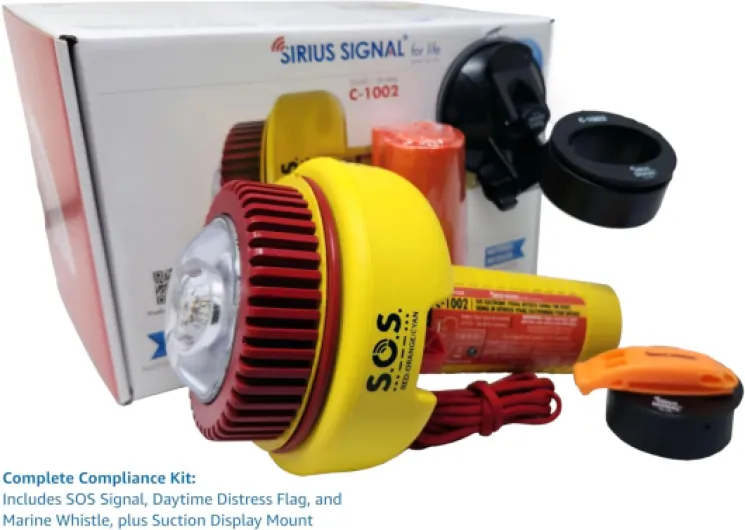
Out of the box, the Sirius Signal C-1002 feels like a complete kit rather than just a light. You get the LED distress signal itself, a suction cup display mount, an orange daytime distress flag, and a basic whistle. The batteries (CR123 lithium) are already included, which I appreciated because you can literally pull it out and start testing it right away instead of hunting for specialty batteries. For a safety device, that matters – you don’t want it sitting unused because you forgot to buy batteries.
The light is bigger and a bit heavier than it looks in pictures. It’s not tiny; it’s a fairly chunky handheld unit with a kind of square-ish head and a flotation collar around it. In the hand, it feels more like a small spotlight than a flare. The suction mount is simple but useful: you can stick it on a smooth surface like a windshield or cabin window so the signal can flash hands‑free. On my open boat, I stuck it on the console, and it held up fine during a calm evening test. I wouldn’t trust the suction alone in rough seas, but as a way to keep it upright and visible while you deal with other stuff, it’s handy.
The flag and whistle are nothing fancy. The flag is the standard orange distress style with a black square and circle, and it folds up small enough to stuff in a zip bag or side pocket. The whistle is just a plastic one – it works, it’s loud enough, but it’s not some premium survival whistle. The key point is that this combo (light + flag + whistle) checks the USCG boxes for night, day, and audible signals, which means you’re legally covered without having to buy separate items.
Overall, the presentation is practical: nothing looks cheap, but it’s obvious that most of the cost is in the light itself. If you’re expecting a fancy carrying case or super polished accessories, you’ll be a bit underwhelmed. If you just want something that’s ready to toss into your boat’s safety bag and be compliant, it gets the job done without much drama.
Pros
- Legally replaces pyrotechnic flares and includes flag + whistle to cover USCG night, day, and audible requirements
- Bright two-color 360° SOS signal that stands out better against shoreline light clutter than white-only strobes
- Long runtime (around 6 hours) with included lithium CR123 batteries and rugged, IP68-rated floating construction
Cons
- Higher upfront cost than a simple flare kit
- Uses CR123 batteries, which are less common than AA/AAA and require a bit of planning for replacements
- Bluetooth and app features add complexity that many users may not really need or use beyond basic testing
Conclusion
Editor's rating
The Sirius Signal C-1002 is a solid choice if you’re serious about marine safety and tired of dealing with traditional flares. It’s bright, easy to operate, and clearly visible, especially with the two‑color flash pattern that stands out against shoreline lights. The fact that it comes as a complete kit – light, daytime flag, and whistle – means you’re legally covered for night, day, and audible signals without having to piece everything together. Add in the long runtime, floating design, and rugged construction, and you get a device that feels ready for real‑world use, not just for sitting pretty in a catalog.
It’s not perfect. The upfront price is on the high side, the CR123 batteries aren’t the most convenient type to replace on a whim, and the Bluetooth features feel a bit like extra tech that most people will only use for basic testing. If you rarely go out at night or stay on small, busy lakes, this might be more than you really need. But if you run coastal, offshore, or just want a safer, reusable alternative to pyrotechnic flares, the C‑1002 makes a lot of sense. It trades the short, intense burn of a flare for steady, long‑lasting visibility and far less stress in an emergency. For me, it earns a strong rating overall and has replaced flares as my main visual distress signal on board.