
Summary
Editor's rating
Is it worth the money compared to other options?
Compact form factor and that retractable antenna
10‑year battery: reassuring but with a catch
Build quality, waterproofing and the float‑free bracket
Signal, GPS lock and real‑world confidence
What you actually get and how it works in practice
Pros
- Compact EPIRB with retractable antenna and included Cat 1 float‑free bracket, easy to fit on smaller boats
- 10‑year battery and 48+ hour operation provide long‑term readiness with no charging or subscription
- Full feature set (406 MHz with GPS + 121.5 MHz homing) and UK programming for straightforward registration
Cons
- Bracket placement and hydrostatic release expiry add extra things to manage and think about
- Old‑school interface with LED codes and no screen can feel basic compared to newer connected devices

Specifications
View full product page →| Brand | Ocean Signal |
The bit of kit you hope you never use
I picked up the Ocean Signal RescueME EPIRB1 Pro as the main EPIRB for a small cruising boat that does regular Channel crossings and the odd trip further offshore. This is not the sort of gadget you buy for fun; you buy it because if everything goes wrong, this is the thing that shouts for help when nothing else can. I’d been putting it off for ages, but a couple of night crossings in rougher weather finally pushed me to stop relying only on a DSC VHF and PLBs.
Over a few weeks, I installed it on the boat, went through the self-tests, did a registration with the UK authorities, and basically lived with it on board to see how practical it is in real life. Obviously I didn’t trigger a real distress alert (no interest in getting a bill or a lecture from the coastguard), so this review is more about usability, design, mounting, and overall confidence factor, not a real rescue story.
The first clear impression: it’s compact and straightforward, but the documentation and some of the details are a bit dry if you’re not used to safety gear. Nothing dramatic, but you do need to sit down for 20–30 minutes and actually read the manual properly, especially for the float-free bracket and the test procedure. If you’re used to plug‑and‑play consumer electronics, this will feel more old-school and serious.
In daily use on the boat, it just sits there quietly in its Category 1 bracket, and after a while you kind of forget about it, which is the whole point. Still, I’ll go through what I liked and what bothered me a bit, because for the price, and for something this critical, you want to know exactly what you’re getting into and what corners they did or didn’t cut.
Is it worth the money compared to other options?
Price‑wise, the RescueME EPIRB1 Pro sits in the mid to upper range of EPIRBs, depending on where you buy it. It’s not the cheapest unit you can get, but you’re paying for the compact design, the float‑free Category 1 bracket being included, the 10‑year battery, and the full feature set (GPS + 121.5 MHz homing + 48+ hours operation). When you compare it to cheaper Category 2 EPIRBs (manual release only), the gap isn’t massive once you factor in having to buy a separate bracket or compromise on deployment.
For a UK‑based boat doing regular offshore trips, I’d say the value is pretty solid. The lack of subscription is important: once you’ve bought it and registered it, that’s it. No ongoing cost, no renewal reminders, no app fees. Compared to satellite messengers that need a monthly plan, this feels like a one‑off safety investment. If you add up 10 years of potential use, the yearly cost is actually low for something that might save your life or at least give your family a better chance of seeing you again.
There are definitely cheaper EPIRBs out there that will also send a 406 MHz signal, and if you’re on a strict budget, you might question paying extra for the compact size and the Cat 1 float‑free mount. For coastal day sailing only, I’d probably go cheaper or even just rely on a good PLB plus DSC VHF. But once you’re talking about night passages, winter sailing, or further offshore trips, the automatic float‑free element starts to feel like a sensible upgrade, especially if you sail short‑handed.
So overall, I’d rate the value as good but not mind‑blowing. You’re not getting a bargain, but you are getting a well‑thought‑out package that should last a decade and cover serious offshore scenarios. If you care more about saving money than having a Cat 1 setup, you might find better deals. If, like me, you want a compact, UK‑programmed, no‑subscription EPIRB that’s ready to go out of the box, the price feels fair for what you get.
Compact form factor and that retractable antenna
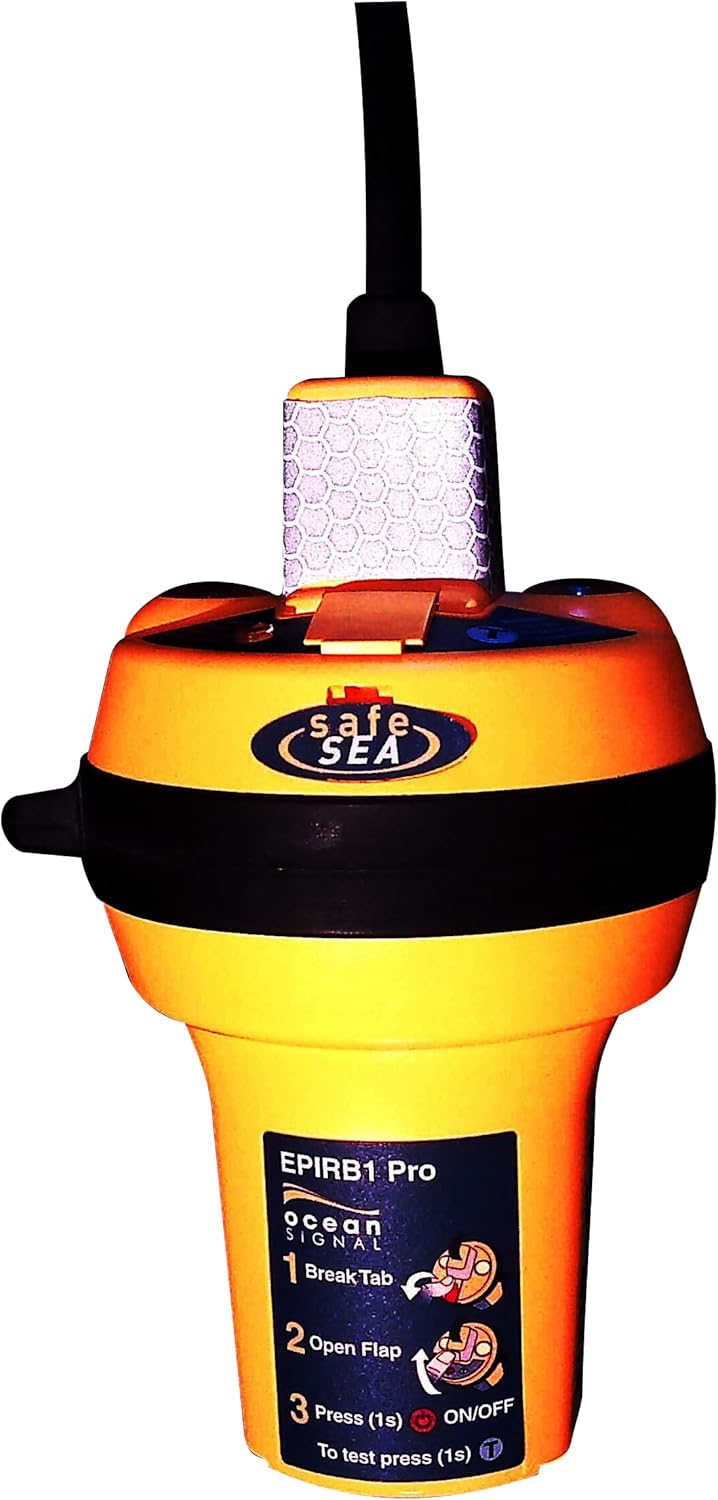
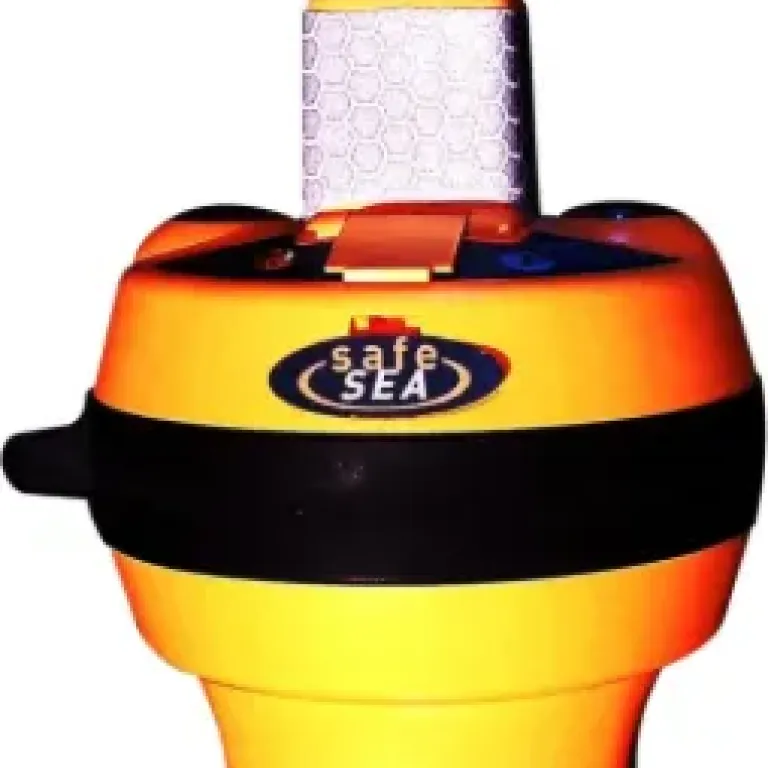
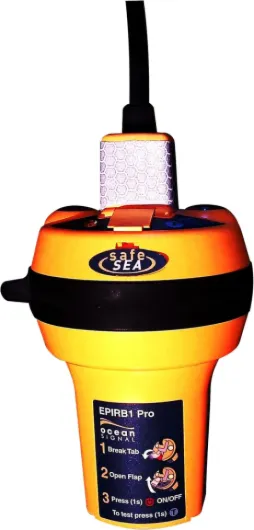
The first thing that stood out compared to older EPIRBs I’ve seen is the size. The RescueME EPIRB1 Pro is genuinely compact for what it is. On a 30‑something‑foot cruiser where every bit of bulk on the bulkhead is annoying, the smaller footprint is welcome. It doesn’t dominate the cabin like some of the older yellow bricks you still see on charter boats. The weight (around 1.5 kg including the mount) feels solid but not ridiculous when you hold it in one hand.
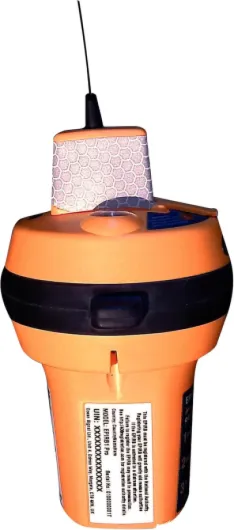
The retractable antenna is a nice touch. When it’s stowed, the beacon is much less likely to snag on jackets or random gear. To deploy it, you pull it out and it extends to a proper length for transmission. It clicks into place firmly enough that you feel confident it won’t flop around in rough weather. I tried deploying and stowing it a few times with cold hands; it’s doable, though with gloves it’s a bit fiddly, so worth practising before you need it for real.
The controls are straightforward: one main activation area and a test button. The labelling is clear, but the icons are still a bit “safety manual” style. I’d say anyone with basic common sense can figure it out, but I still made a point of explaining it to my regular crew and showing them how to remove it from the bracket and how not to trigger it by accident. There’s a protective cover over the activation area, which helps prevent mistakes, and it feels reasonably tough, not flimsy.
Overall, the design is practical and boat‑friendly. It’s not pretty, but I don’t care. What matters is that it’s compact, easy to grab, and you can tell what to do with it even under stress. If I had to nitpick, the LED indicators could be a bit brighter or more intuitive for someone who hasn’t read the manual, but that’s a minor point for something you hopefully never touch in anger.
10‑year battery: reassuring but with a catch
The 10‑year battery life is one of the main selling points, and honestly, it’s a big reason I chose this unit. For a boat that’s used regularly but not lived on full‑time, I don’t want another yearly chore or something that needs constant charging. Knowing that, in theory, I can install this and not worry about a battery replacement for a decade is very appealing. It fits well with the idea of “fit and forget” safety gear, as long as you still do your periodic tests.
In practice, what this means is you get a clear expiry date printed on the unit, and you basically treat that as a hard deadline. After that, you’re looking at either sending it in for a battery replacement (if supported and cost‑effective) or replacing the whole unit. Given the typical prices for battery service on EPIRBs, I’m half‑expecting that in 10 years it might be simpler just to buy a newer model. That’s not unique to this brand; it’s just how EPIRBs are right now.
The self‑test procedure is designed to use only a tiny bit of battery each time, but Ocean Signal still tells you not to overdo it. I ran the recommended tests (initial install, then before a longer trip), and it’s quick: press, wait, confirm the blink pattern. There’s no battery percentage indicator or anything fancy, so you’re basically trusting the design and sticking to the expiry date. If you’re the type who wants constant battery stats, you won’t get that here.
Overall, I see the battery situation as practical but slightly wasteful in the long term. Ten years of not thinking about it is great; the idea of probably binning a working device at the end of that period is less great. Still, for safety gear, I’d rather have a sealed, controlled battery that’s been tested to death than something user‑replaceable that can be installed wrong or forgotten about. For me, the 10‑year life is a strong positive, as long as you budget mentally for eventual replacement.
Build quality, waterproofing and the float‑free bracket
On the build quality side, the EPIRB1 Pro feels solid. The plastic housing doesn’t flex, and the seals look decent. I didn’t dunk it for hours, but it’s rated waterproof and obviously built for marine use. It’s been on board for a few wet trips, including some heavy spray and a bit of condensation in the cabin, and there’s been no sign of fogging inside the lens or corrosion on contacts. You can tell it’s made to sit on a boat for years, not to live in a dry cupboard.
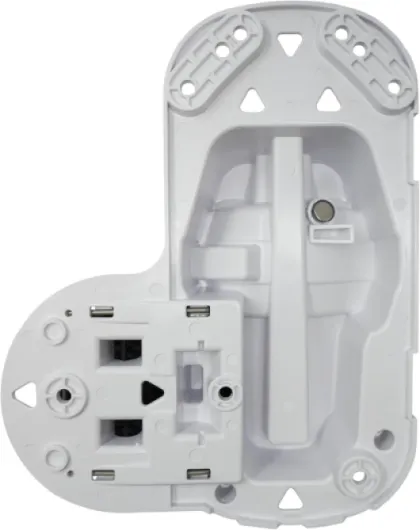
The float‑free Category 1 bracket is where things get more interesting. Installation isn’t complicated, but you do need to think about where to mount it: it needs a spot where it can actually float free if the boat sinks. On many small boats, that’s easier said than done. I ended up mounting it on the outside of the cabin, under the boom but high enough that it’s clear of most obstacles. Drilling and fixing was straightforward, but I did spend a good while visualising how it would behave if the boat went down. This is not really Ocean Signal’s fault; it’s just reality with any float‑free EPIRB.
The hydrostatic release is sealed, with its own expiry timeline. That’s another thing you have to track: not just the EPIRB battery date, but also the release unit replacement date. The build of the bracket itself feels sturdy enough, and the latch mechanism holds the EPIRB securely. I tried removing and replacing the beacon a bunch of times, and it doesn’t feel like it will wear out quickly. There’s enough resistance that it won’t pop out on its own, but you can still grab it in a hurry with one hand.
Overall durability impression: reassuring. It feels like gear meant to be forgotten in bad weather, not an indoor gadget. The only downside is the maintenance dates you have to track (battery and hydrostatic release). If you’re disorganised with that kind of stuff, you’ll need reminders. But as a physical object that lives outside and might go through hell if it ever actually deploys, it seems properly built for the job.
Signal, GPS lock and real‑world confidence
Obviously, I didn’t set this thing off for real, so I can’t tell you “SAR found me in 12 minutes”. What I can talk about is how it behaves in tests and what features it brings on paper that matter in the real world. During self‑tests, the beacon goes through its routine, and you get clear confirmation it passed. The manual explains how often you can test without eating too much into the battery life, which is useful. I ran several tests over a month and didn’t see any issues—no failed tests, no random alarms.
On paper, the big plus is the 406 MHz distress signal with GPS (GNSS) position sent to the Cospas‑Sarsat network. That’s the global standard, used by proper rescue services, not some private subscription service. The GPS position means rescuers aren’t just guessing from a wide satellite fix; they get coordinates that should be reasonably accurate, which massively shrinks the search area. Add the 121.5 MHz homing signal, and once they’re in the area, they can lock onto you more precisely. For me, this combination is the main reason to carry a full EPIRB instead of just relying on a PLB and VHF.
Another performance factor is the 48+ hour operation claim. That’s more than many older units and basically means if you end up in a raft or clinging to something, the beacon should keep transmitting for two days or more. Obviously I didn’t run it for 48 hours straight, but this is standard spec territory that’s regulated, not just marketing. For offshore sailing or fishing, that extra runtime is worth paying for, especially if conditions slow down the rescue.
In terms of confidence, I’d say it sits in the “I trust it” category. It’s not flashy, but the specs line up with what you’d expect from a serious EPIRB. If you want the comfort of a live tracking app and constant pings to friends and family, you’ll need a satellite messenger on top of this. But as a pure, regulated emergency beacon whose job is to wake up rescue services when everything else has failed, the performance features are exactly what they should be.
What you actually get and how it works in practice
Out of the box, you get the EPIRB1 Pro beacon itself and the hydrostatic float‑free mounting unit. No fancy extras, no batteries to install, it’s basically ready to go. It’s already programmed for the UK, which means when you register it with the UK beacon registry, the ID matches what they expect. This part was pretty painless: I went online, entered the HEX ID from the label, filled in boat details, emergency contacts, and that was it. Took maybe 15–20 minutes including double‑checking the numbers.
The core of the thing is simple: if you manually activate it or if your boat sinks and the float‑free bracket releases it, the beacon sends a 406 MHz distress signal with your ID and GPS position via the Cospas‑Sarsat satellites. On top of that, it has 121.5 MHz homing so rescue teams can home in on you once they’re in the area. This is pretty standard for modern EPIRBs, but the combo of GPS + 121.5 + 48+ hour operation ticks the main boxes you actually care about offshore.
The user interface is basic but functional: a couple of buttons, an LED indicator, and no fancy screen. You’ve got a self‑test function which you’re supposed to do periodically (monthly or before a big trip). I ran the self‑test several times; it’s noisy enough and flashes enough to make you a bit nervous the first time, but once you understand the pattern, it’s fine. The manual explains the test result using LED blinks, which is slightly old‑fashioned but reliable.
In terms of day‑to‑day feel, it’s a no‑nonsense safety tool. There’s no app, no subscription, no configuration wizard. You mount it, register it, and then you leave it alone apart from tests. If you’re looking for something packed with smart features and connectivity, this isn’t that. But if you want a dedicated, stand‑alone beacon that doesn’t rely on phones or networks, it does exactly that job without trying to be clever.
Pros
- Compact EPIRB with retractable antenna and included Cat 1 float‑free bracket, easy to fit on smaller boats
- 10‑year battery and 48+ hour operation provide long‑term readiness with no charging or subscription
- Full feature set (406 MHz with GPS + 121.5 MHz homing) and UK programming for straightforward registration
Cons
- Bracket placement and hydrostatic release expiry add extra things to manage and think about
- Old‑school interface with LED codes and no screen can feel basic compared to newer connected devices
Conclusion
Editor's rating
After living with the Ocean Signal RescueME EPIRB1 Pro on board for a while, I’d sum it up as reliable, compact and sensible, with a few practical quirks but no real red flags. It’s not flashy and it doesn’t try to be clever; it’s just a solid EPIRB that feels like proper safety gear rather than another gadget. The 10‑year battery, 48+ hour operation, GPS + 121.5 MHz homing, and the included Category 1 float‑free bracket tick the main boxes for serious offshore use. Once it’s mounted and registered in the UK system, you basically forget about it apart from periodic tests and keeping an eye on the expiry dates.
It’s not perfect. Mounting the float‑free bracket in a truly clear spot on a small boat takes some thought, the interface is a bit old‑school, and in ten years you’ll likely be replacing the whole unit rather than just a battery. Also, if you mostly day sail close to shore, this is arguably more beacon than you strictly need, and a cheaper Cat 2 EPIRB or even a PLB might make more sense. But if you do regular Channel crossings, coastal passages at night, or any offshore trips where you worry about being found quickly if things go bad, this model hits a good balance of features, size and long‑term cost.
So, who is it for? I’d recommend it to cruising sailors and small motorboat owners who actually leave the bay and want a proper, registered, no‑subscription EPIRB with automatic deployment. Who should skip it? Casual inshore weekend boaters on a tight budget, or people who think a satellite messenger with tracking will cover all their needs. As a core emergency beacon, though, the RescueME EPIRB1 Pro feels like a dependable choice you can bolt on and trust to be ready when everything else stops working.