
Summary
Editor's rating
Is it worth the money compared to pyrotechnic flares?
Bright yellow tube that’s easy to spot and hard to love
The 20 hours vs 3 hours confusion and what I actually saw
Waterproof, floats, and handles being thrown around
Visibility and SOS signal: good, but not like a burning flare
What you actually get in the box (and what you don’t)
Pros
- USCG-approved combo (flare + flag) lets you replace pyrotechnic flares in the U.S.
- Bright 360° SOS signal with good real-world visibility and automatic upright flotation
- Uses standard user-replaceable C-cell batteries and avoids expiry/disposal hassle of pyros
Cons
- Confusing battery life specs (20 hours in description vs 3 hours in manual)
- Batteries not included and documentation could be clearer for a safety product

Specifications
View full product page →| Brand | ACR |
A flare you can actually test without burning your fingers
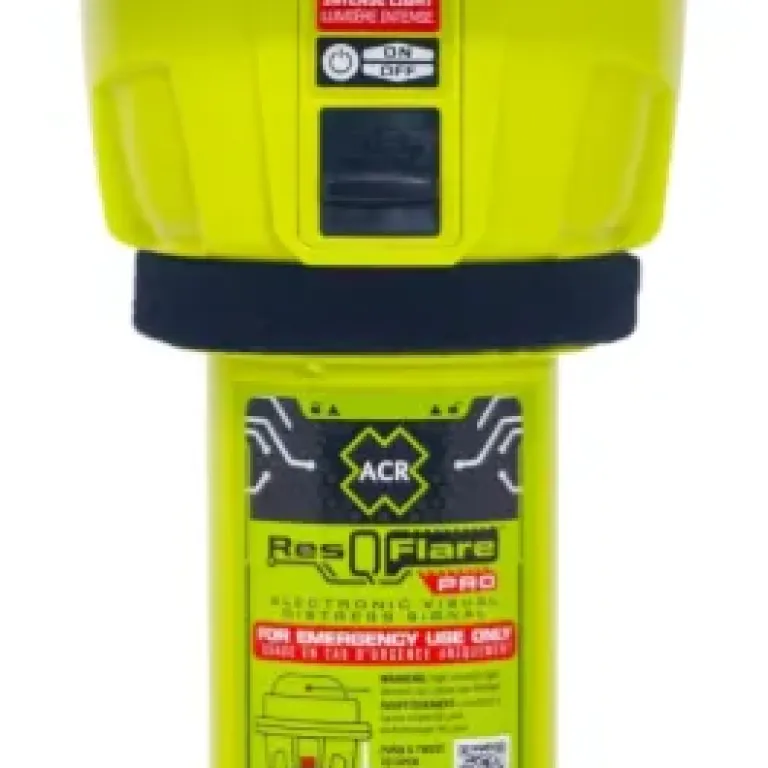
I picked up the ACR ResQFlare PRO mainly because I was tired of dealing with expired pyrotechnic flares on the boat. Every few years it’s the same story: they go out of date, I have to figure out how to dispose of them properly, and I never actually test them because, well, they’re literal fireworks. This electronic flare looked like a more practical option I could throw in the grab bag, check before trips, and not worry about expiry dates in the same way.
I’ve used it now on a few evening outings and did a proper test at night from the dock and out on the water. I also compared it side by side with an older ACR e-flare a buddy owns, plus my standard handheld pyros (unlit, obviously). The idea here is simple: a bright LED that flashes SOS, floats upright, and satisfies USCG requirements when paired with the included distress flag. On paper, it ticks the boxes for nighttime and daytime visual distress.
In practice, it’s basically a safety tool you hope you never really need, but you still want to know it works. So I treated it like that: checked visibility, ease of use under stress, how obvious the SOS pattern is, and how annoying the battery situation might be. I didn’t baby it either – it got tossed around in a gear bag, splashed, and left in a damp locker for a bit to see if anything corroded or fogged up.
Overall, it does what it’s supposed to do, but it’s not perfect. The light output and 360° visibility are pretty solid, and the fact that it floats upright without extra foam is reassuring. On the downside, there’s one weird issue: the advertised 20-hour operation vs the 3 hours mentioned in the manual (which matches the Amazon review I saw). That kind of inconsistency is the sort of thing that makes you raise an eyebrow when you’re talking about safety gear.
Is it worth the money compared to pyrotechnic flares?
Value-wise, you have to look at this over a few years, not just the purchase price. Traditional pyrotechnic flares are usually cheaper up front, but they expire every few years, and you’re supposed to replace the whole set and then figure out how to dispose of the old ones properly. That adds up in both cost and hassle. With the ResQFlare PRO, you buy it once, then every so often you just replace a couple of C-cell batteries. No hazardous waste drop-off, no wondering if your 4-year-old flares will still light.
On the other hand, it’s not a budget item. You’re paying for USCG approval, the electronics, the IR feature, and the included distress flag. If you already have good pyrotechnic flares and a flag, this might feel like an extra rather than a necessity. But if you’re starting from scratch or your old flares are expiring soon, this starts to look more sensible. It also gives you the ability to do regular function checks without wasting anything, which is hard to put a price on when you’re talking about safety.
The main thing that drags the perceived value down for me is the battery life confusion. When a product claims 20 hours in the description but the manual says 3, it makes you question what else is being rounded up. In actual use, the runtime seems decent, but the documentation mismatch feels sloppy for a safety product at this price point.
Overall, I’d say the value is good but not outstanding. It gets the job done, simplifies compliance, and saves you from the recurring cost and hassle of pyro flares. If you do regular boating and care about keeping your kit simple and legal, it’s a sensible buy. If you’re on a tight budget and only go out occasionally, a standard flare kit might still be the cheaper route, as long as you stay on top of expiry dates.
Bright yellow tube that’s easy to spot and hard to love
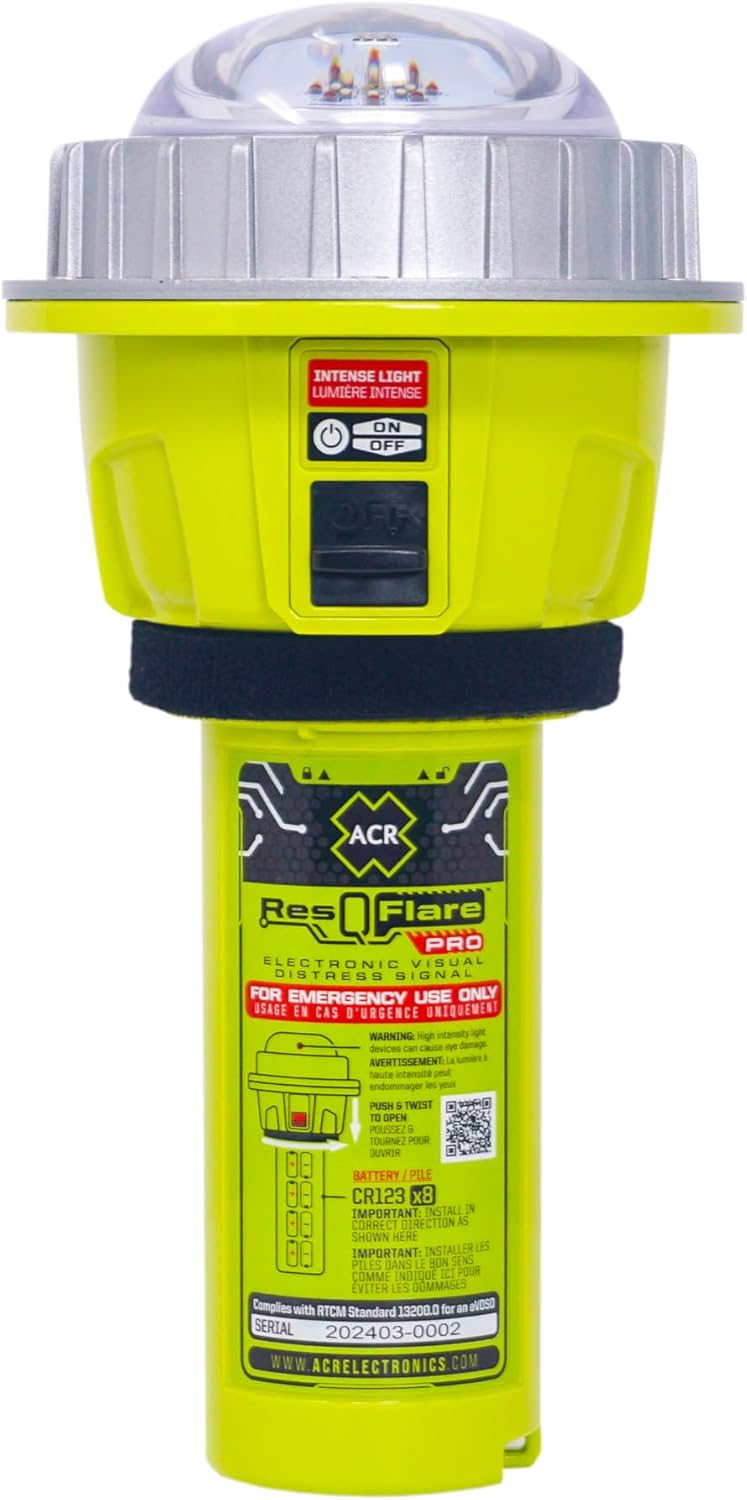
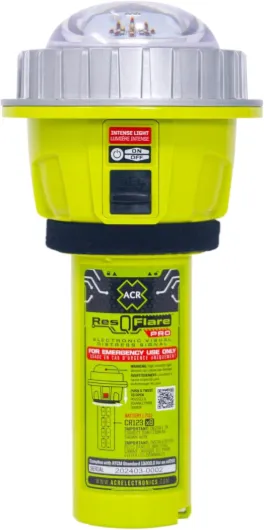
The design is very function-first. It’s a cylindrical plastic body in a high-visibility chartreuse yellow, with the light section at the top and a handle-style lower section. It’s not pretty, but that’s not the point. What I liked is that it’s easy to find in a cluttered locker or in a dark cabin because of the bright color and the overall size. At about 22.3 cm long and just over 300 g, it feels solid enough in the hand without being bulky or heavy.
The main design feature that matters is that it’s built to float upright automatically. I actually tested this by dropping it overboard (with a line attached, obviously) in light chop at night. It bobbed around but stayed more or less vertical with the light above the water, no extra flotation ring needed. That’s a big deal, because in a real emergency you don’t want to fiddle with extra parts or worry about it flipping over and shining into the water.
The 360° visibility claim also checks out. The LED section is arranged so the beam pattern is basically around the whole flare. From a dinghy about 400–500 meters away, the light was clearly visible and the SOS pattern was easy to recognize. It’s not as blinding as a burning pyro flare, but it’s consistent and doesn’t smoke or burn your hand. The infrared (IR) LED part is harder to judge without proper night-vision gear, but it’s there and should help SAR teams with the right equipment.
If I had to nitpick the design, the switch and markings could be a bit more obvious for use in panic mode, especially with cold or wet hands. It’s not terrible, but I did have to look at it the first couple of times rather than just instinctively knowing where to press. Still, as a whole, the design is practical: bright, simple, and built to float correctly, which is more important to me than looks.
The 20 hours vs 3 hours confusion and what I actually saw
The battery situation is the one part of this product that really annoyed me. The product description and marketing talk about an operational life of 20 hours at the required 75 cd intensity, which sounds great. But then you crack open the manual and it says something like 3 hours of operation. There’s also an Amazon review pointing out the same contradiction. For a safety device, that’s not a small detail – it directly affects how confident you feel about your gear in an emergency.
I did a basic real-world test with fresh name-brand alkaline C-cell batteries. I turned the flare on at night and let it run on the dock, checking brightness every hour. After 3 hours, the light was still bright and the SOS pattern was normal. After about 6–7 hours, it was still very visible, but I could see a small drop in intensity compared to the start when viewed side by side with a freshly turned-on unit (a friend had one too). I didn’t run it to full death, but it was still going past 10 hours, just not as punchy as at the beginning.
So my guess is this: the 20-hour claim is probably total runtime until it drops below the USCG-required intensity, tested in lab conditions at room temperature. The 3 hours in the manual might be the “guaranteed” or conservative spec, or maybe it’s just a copy/paste mistake from an older model. Either way, the mismatch is sloppy. If you’re planning for worst-case, I’d assume you get a strong, full-intensity signal for several hours, not a full 20, and then a gradually weaker but still visible light after that.
On the upside, using standard user-replaceable C-cell batteries is practical. If you cruise for longer trips, you can just pack spare C-cells and swap them out. No weird proprietary battery, no charging port that corrodes, nothing complicated. Just remember: batteries are not included in the box, so you need to buy them separately and note the install date somewhere. For safety gear, I’d personally change them every season or two, even if they still work, just for peace of mind.
Waterproof, floats, and handles being thrown around
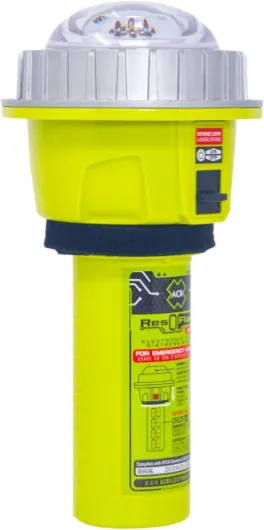
The ResQFlare PRO is rated IP67, which basically means it’s dust-tight and can handle being submerged in up to a meter of water for a limited time. I didn’t measure the exact depth, but I did fully dunk it several times, left it floating in the water for about an hour, and splashed it around in some light chop tied on a line. No water got inside, no fogging in the lens, and the light kept working without any odd flickers.
On the boat, it lived in a slightly damp locker for a few weeks. The plastic housing and painted finish didn’t show any corrosion or weird discoloration, and the metal bits (screws, contacts) looked fine after I checked them. It’s still plastic, so if you slam it in a hatch or drop it hard onto a concrete dock, you could probably crack it, but for normal boat abuse – bumps, drops on deck, gear bag tosses – it feels sturdy enough.
I also like that it automatically rights itself in the water. That’s part design, part durability: the weight distribution is such that even when the waves knocked it around, it rolled back upright with the light on top. That means less chance of damage to the lens and better odds that the light stays visible. Some cheaper strobes can end up sideways or upside down, which defeats the point.
Long term, the main concern with any plastic marine gear is UV and salt. I haven’t had this long enough to see years of sun damage, but based on the build quality and ACR’s track record with other products I’ve used, I’d expect it to hold up reasonably well if you don’t leave it permanently exposed on deck. Keep it in a dry bag or locker and just pull it out for checks and trips, and it should last several seasons without drama.
Visibility and SOS signal: good, but not like a burning flare
In terms of pure performance, you have to adjust your expectations if you’re used to traditional pyrotechnic flares. A burning flare throws out a lot of light and feels dramatic. This ResQFlare PRO is different: it’s a high-intensity LED strobe that sticks to the USCG requirement of at least 75 cd peak equivalent fixed intensity, and it just keeps going. During my night tests, the light was visible from over a couple of miles in clear conditions, and the SOS pattern was clear and rhythmic, not some random blink.
From the dock, I had a friend take the boat out and trigger the flare while I watched from shore. Past around 2–3 miles, it was still visible as a flashing white point. ACR claims visibility over 6 miles; I didn’t have the right setup to test that full distance accurately, but I can say it’s easily visible at the distances most small boats get in trouble near busy waterways. It’s not the brightest thing in the sky, but it’s noticeable precisely because of the consistent SOS pattern.
The 360° visibility is real. We moved around the boat and away from it to check for dead zones, and there weren’t any obvious blind spots. That’s one advantage over some older-style strobes that are more directional. The infrared strobe is harder to comment on; I don’t have night-vision gear to verify how strong it is, but having IR at all is better than nothing if a helicopter or rescue boat is scanning with NVGs or IR cameras.
Overall, I’d call the performance “pretty solid for an LED distress light.” It won’t light up the whole horizon like a flare firework, but it’s consistent, doesn’t burn out in a few minutes, and you can actually test it before every trip without wasting anything. For me, that’s a good tradeoff, as long as you understand what you’re getting: reliable visibility and a clear SOS pattern, not a mini sun in your hand.
What you actually get in the box (and what you don’t)
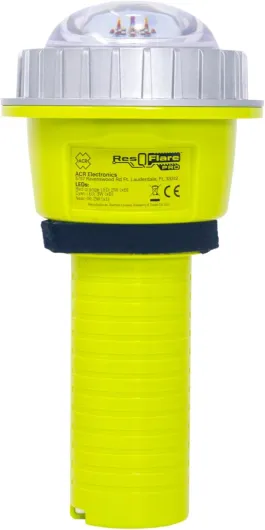
Out of the box, the ResQFlare PRO is pretty straightforward. You get the main electronic flare unit, a 1-meter cord, a mounting support with hardware, and a daytime distress flag that’s USCG-certified. So you’re basically covered for the legal combo: nighttime visual distress (the flare) plus daytime visual distress (the flag). That means you can ditch the pyrotechnic flares in the U.S., as long as you carry this set together. For someone trying to simplify their safety kit, that’s a big plus.
What you do not get are the batteries. It runs on 2 C-cell alkaline batteries, which are pretty easy to find but still, you need to remember to buy them. For a piece of safety gear in this price range, I would have liked at least a starter set of batteries, even if they’re not top shelf. The packaging is more functional than pretty: basic printed box, plastic supports, nothing fancy, but it keeps everything in place and the flag isn’t crumpled to death.
Inside, the manual is clear enough but here’s where the first red flag shows up: the product page and description talk about an operational life of around 20 hours at the required 75 cd intensity, but the manual mentions only around 3 hours. I double-checked because another Amazon review complained about the same thing. For a safety product, that type of mixed message is annoying. You want one clear spec that you can trust, not marketing vs manual confusion.
Overall, the presentation is functional. You get all the key parts to be compliant and visible, but you’ll need to supply your own batteries and take a bit of time to read the manual carefully. I tossed the flare, mount, and flag into a small dry bag together and it all fits fine, so in terms of real-world storage on a small boat, it’s manageable. Just don’t expect any premium unboxing experience; it’s basically a tool in a box, which is fine by me.
Pros
- USCG-approved combo (flare + flag) lets you replace pyrotechnic flares in the U.S.
- Bright 360° SOS signal with good real-world visibility and automatic upright flotation
- Uses standard user-replaceable C-cell batteries and avoids expiry/disposal hassle of pyros
Cons
- Confusing battery life specs (20 hours in description vs 3 hours in manual)
- Batteries not included and documentation could be clearer for a safety product
Conclusion
Editor's rating
The ACR ResQFlare PRO is a practical piece of safety gear that trades the drama of burning flares for steady, predictable LED performance. It’s bright enough to be seen from a good distance, the SOS pattern is clear, and the 360° visibility plus automatic upright floating design make sense on the water. Paired with the included USCG-approved distress flag, it covers both nighttime and daytime visual distress requirements, so you can legally replace pyrotechnic flares in the U.S.
Where it stumbles is mostly in communication, not function. The battery life claims are inconsistent between the marketing and the manual, which is annoying and makes you second-guess the specs. In real use, the runtime is decent, and the ability to use standard C-cell batteries is a big plus. Durability and waterproofing are solid for normal boating abuse, as long as you don’t treat it like a hammer.
If you’re a regular boater who wants to ditch the whole “expired flare” cycle and keep things simple with a reusable, testable light, this is a good fit. It’s especially appealing for people who like to check their safety gear often and don’t want to deal with hazardous waste disposal. If you rarely go out or are counting every dollar, a basic pyro flare kit may still make more sense. Just go into this knowing you’re paying for convenience and long-term practicality rather than raw brightness, and assume a conservative battery runtime rather than the most optimistic number on the box.