
Summary
Editor's rating
Is it worth the money compared to other safety options?
Bulky, bright, and functional more than pretty
10-year battery claim vs real ownership costs
Build quality and how it feels on a real boat
Signals, AIS, RLS: how it behaves in real use (without calling the coastguard)
What you actually get out of the box
Pros
- Combines 406 MHz satellite distress, AIS broadcast, GNSS, and RLS in one beacon
- Float-free Category 1 bracket with hydrostatic release included and ready to mount
- 10-year battery with no subscription keeps long-term running costs low
Cons
- Bulky float-free bracket takes up space and needs careful mounting on smaller boats
- Documentation is dense and not very beginner-friendly, with a bit of a learning curve

Specifications
View full product page →| Brand | Ocean Signal |
A serious bit of kit you hope you never use
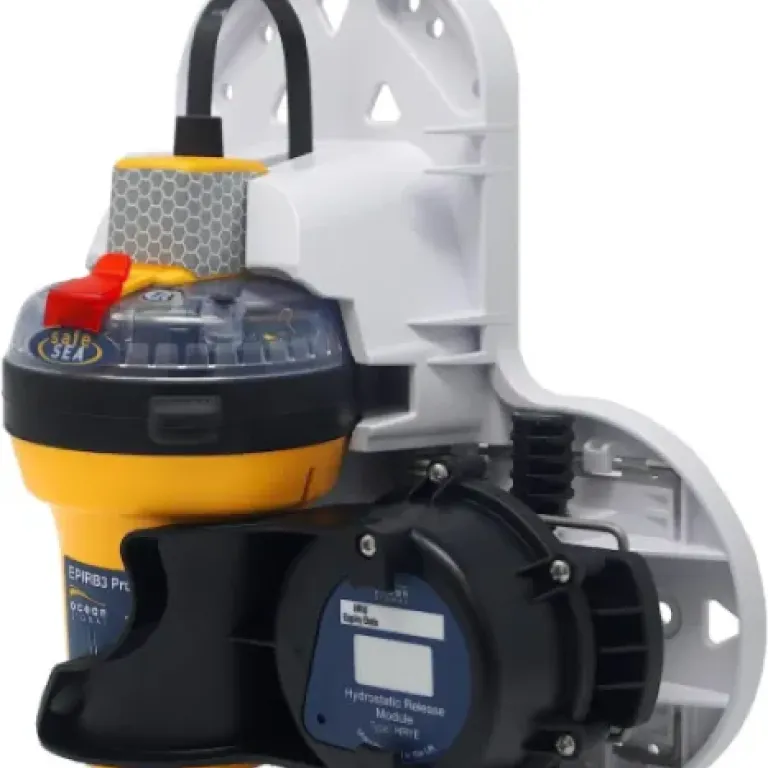
I’ve had the Ocean Signal SafeSea EPIRB3 Pro AIS on my boat for a few weeks now, and to be clear: this is not a fun gadget, it’s an insurance policy. You buy it hoping it sits on the bracket for 10 years and never gets touched. So I’m judging it on how easy it is to install, test, understand, and trust, not on how “cool” it looks on the bulkhead. I didn’t trigger an actual distress alert for obvious reasons, but I did go through all the self-tests and a full install with the float-free Category 1 bracket.
My setup: 10m sailing boat used for coastal cruising with the odd offshore hop, already fitted with AIS and a basic PLB. I wanted a full-size EPIRB with float-free release, AIS, and the new RLS feature so I know the signal got through. On paper, this unit ticks all that: 406 MHz to Cospas-Sarsat, AIS broadcast to nearby ships, GNSS position, and RLS feedback.
In reality, it’s a pretty serious piece of gear with a bit of a learning curve. The hardware itself feels solid enough, but the documentation and the whole registration/admin side are not “open the box and you’re done”. You need to sit down, read, and actually think about where and how you mount it. If you’re the type who throws manuals away, this is not that kind of product.
Overall first impression: it looks like proper safety kit, not a toy. It’s a bit bulky but that’s normal for an EPIRB with a 10‑year battery and float-free bracket. The features are stacked, but if you’ve never dealt with beacons before, expect to spend an evening getting to grips with everything. That’s not a complaint, just the reality with gear that can literally trigger a rescue operation.
Is it worth the money compared to other safety options?
Price-wise, this sits in the higher bracket of recreational EPIRBs, mainly because it includes AIS and RLS, plus the float-free Category 1 bracket. If you compare it to a basic EPIRB without AIS, you’re paying extra, no question. But if you tried to piece together the same capabilities with separate devices (EPIRB + AIS MOB beacon + something with confirmation), you’d likely end up spending more and having a mess of gear to manage.
For what you get—406 MHz satellite alert, AIS distress broadcast, GNSS, RLS, 10-year battery, and the float-free auto-release—it’s actually decent value for serious offshore or bluewater use. This is not aimed at people doing short day trips inside a bay. It’s more for those who might end up 50+ miles offshore or doing longer passages where rescue times are measured in hours, not minutes. In that context, the price feels fair.
Compared to carrying just a PLB or a handheld VHF with DSC, this is another level. Those are still useful, but a full EPIRB with float-free bracket means if the worst happens and the boat goes down fast, the beacon has a chance to deploy even if you’re not on top of things. Add in the AIS broadcast for nearby ships and the RLS reassurance, and you’re paying for layers of redundancy, not just one signal path.
If you’re mainly coastal, always in VHF range of shore, and on a tight budget, this might feel like overkill and not the best use of money. But if you’re planning longer trips or crossing busy shipping lanes, I’d say the overall package is good value for money. Not cheap, not flashy, but the feature set justifies the price better than some simpler units that don’t offer AIS or RLS.
Bulky, bright, and functional more than pretty
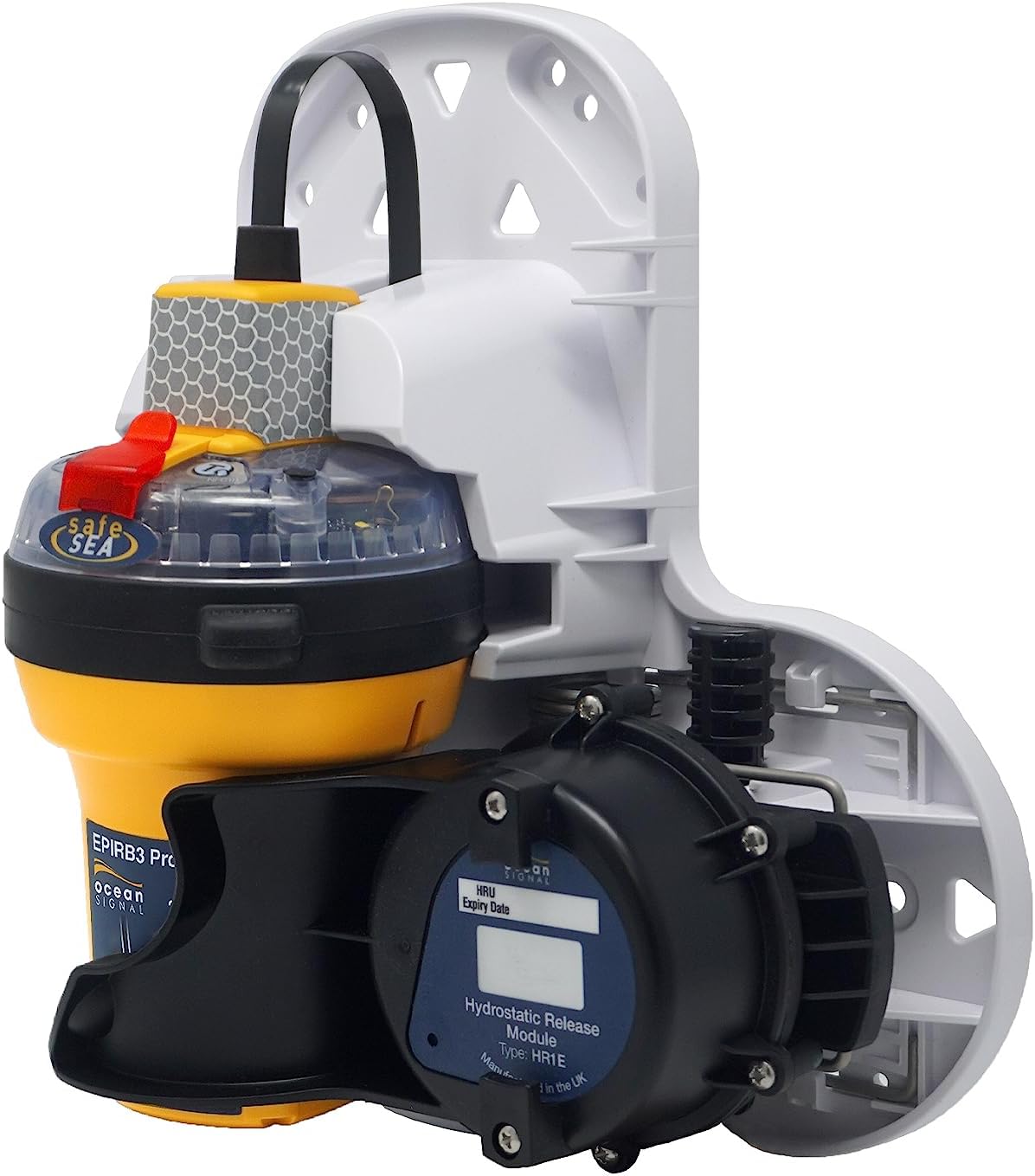
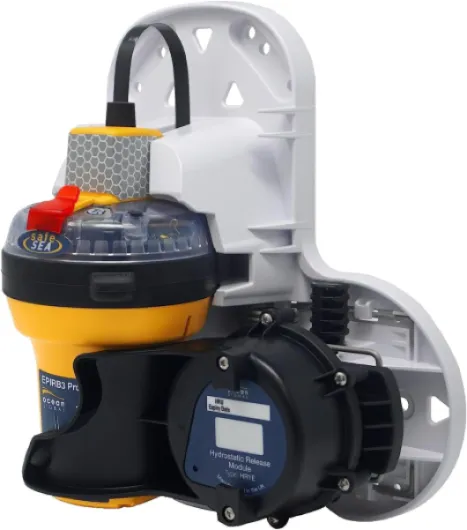
Design-wise, the EPIRB3 Pro AIS is very much “marine safety gear” and not trying to be pretty. The body is bright yellow plastic with a clear top section for the antenna and status lights. You can spot it instantly in a locker or on a dark deck, which is the whole point. It’s on the large side, but compared to older EPIRBs I’ve seen, it’s actually relatively compact for what it does, especially considering the AIS and RLS features.
The float-free Category 1 bracket is basically a tough plastic housing that the beacon clips into, with the hydrostatic release built in. It’s not small, so you need to plan where to mount it. On my 10m boat, finding a spot that’s both accessible and not in the way took a bit of head-scratching. You want it outside so it can float free if the boat sinks, but not somewhere it’ll get smashed by feet, lines, or fenders. The bracket has clear arrows and markings to show orientation and release path, which helps.
Controls are simple: a main activation switch under a protective cover, a test button, and clear status LEDs. At night, the LEDs are easy to see, and the layout is logical. You don’t need fine motor skills to use it, which is exactly what you want when you’re cold, wet, and stressed. The antenna deploys automatically when the unit leaves the bracket, and manually if you’re using it from a liferaft or held in your hand.
Overall, the design is practical and clearly focused on visibility and reliability. It’s not compact enough to throw in a small grab bag like a PLB, but it’s an EPIRB with float-free hardware, so that’s expected. The only downside for me is the space it takes on a smallish boat, and the fact that you need to be careful not to install it in a spot where crew will bang into it constantly. But in terms of usability in an emergency, the layout and markings are clear and straightforward.
10-year battery claim vs real ownership costs
The big selling line is the 10-year battery with no subscription. From an ownership point of view, that’s a big deal. You’re not paying yearly fees like with some satellite messengers, and you’re not changing batteries every couple of seasons. For a piece of kit that just sits there until something goes very wrong, that long interval makes sense. It’s the kind of thing you install, register, log the expiry dates, and then just do periodic tests.
I ran several self-tests over a few weeks, and there was no obvious drain or warning. The manual does say you shouldn’t spam the tests constantly because it does eat into the battery life, but for normal use (occasional tests plus the standard annual check), the 10-year spec seems realistic. Obviously I can’t confirm a decade in advance, but this is standard for modern EPIRBs and Ocean Signal is not new in this field.
One thing people forget: even with a 10-year EPIRB battery, you still have the hydrostatic release unit on the bracket that has its own replacement schedule, usually around 2 years. So you save on subscriptions, but you still have some maintenance costs. Compared to a subscription satellite messenger, though, this is mostly a one-off cost plus very occasional service, which I prefer for a pure distress device.
Overall, the battery setup is low hassle and long-term. For a boat that does offshore or bluewater every season, that’s pretty reassuring. Just don’t assume “10-year battery” means you can forget everything for ten years; you still need to track the expiry dates and plan for replacement or servicing. But in terms of day-to-day ownership, there’s nothing fiddly here, and no surprise bills from subscriptions.
Build quality and how it feels on a real boat
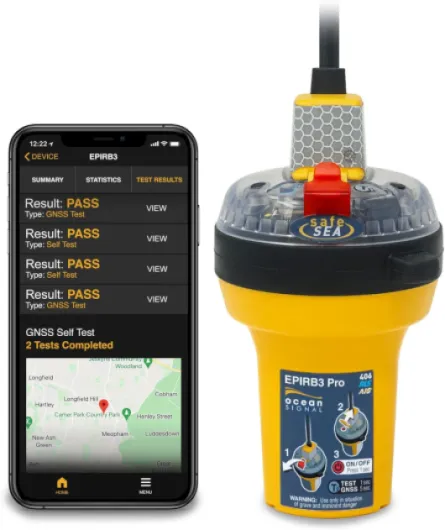
The unit feels solid in the hand. The plastic casing is thick, and the antenna housing doesn’t feel flimsy. I wouldn’t throw it around for fun, but it looks like it can take normal boat abuse: bumps, spray, and the usual grime. I’ve had it mounted in the cockpit area for a few weeks, exposed to sun, salt air, and the odd splash, and there’s no sign of anything loosening or discoloring yet. Obviously that’s a short test, but it doesn’t give off a “cheap” vibe.
The float-free bracket is the part that really matters for durability. The hinges, latch, and hydrostatic release area all feel sturdy enough, but you do have to be careful when you clip the EPIRB in and out so you’re not stressing the plastic more than needed. I tried removing and re-seating it several times to simulate checks and drills, and the mechanism stayed consistent. No weird flex or misalignment so far.
From a practical standpoint, the main risk is crew banging into it or hitting it with gear. On a small boat with limited mounting options, that’s a real concern. I mounted it where it’s somewhat protected by a grab rail, and that seems like a good compromise. The yellow plastic will probably fade a bit over years in the sun, but that’s cosmetic. The important parts (seals, latch, antenna) seem well thought out.
Overall, durability looks pretty solid for regular offshore use. It feels like something you can trust to sit there for years and still work when needed, as long as you don’t abuse it and you respect the maintenance intervals. It’s not some ultra-rugged brick you’d want to throw down a dock, but for its purpose—fixed on the boat, rarely handled—it feels up to the job.
Signals, AIS, RLS: how it behaves in real use (without calling the coastguard)
I obviously didn’t trigger an actual 406 MHz distress alert, but I did run the built-in tests and played with the AIS side using an AIS receiver. The main thing I looked for was: does it lock onto GNSS fast, are the status indicators clear, and does the AIS test show up reliably? On all of that, it did pretty well. GNSS lock during self-test was quick in open sky, noticeably faster than an older EPIRB I’ve used before.
The AIS distress part is a big selling point for me. In theory, if you go in the water, it not only pings satellites but also broadcasts your position to nearby AIS-equipped vessels. I can’t simulate a real distress, but using test mode and an AIS receiver, I could see the test messages pop up, which gave me some confidence the AIS side is working. That local signal is a big deal in crowded shipping lanes or busy coastal water, where the nearest help is another boat, not a helicopter.
The RLS (Return Link Service) is harder to judge because it depends on the satellite system and an actual distress. But the fact that it’s built in means that in a real emergency, you should get a confirmation that the alert has been received. That’s a huge mental boost if you’re floating in a liferaft. I can’t verify it without actually setting it off, but in terms of design, it’s there, and the manual explains how the feedback indicator will behave.
In practice, the unit feels like a serious multi-layer beacon: 406 MHz global alert, AIS local alert, GNSS for accurate position, and RLS for confirmation. For most recreational skippers, that’s probably more capability than they’ve ever had on board. The only thing I’d flag is that understanding all these layers takes a bit of reading. It’s not hard, but you need to spend the time so that in a real emergency you’re not guessing what lights mean what.
What you actually get out of the box
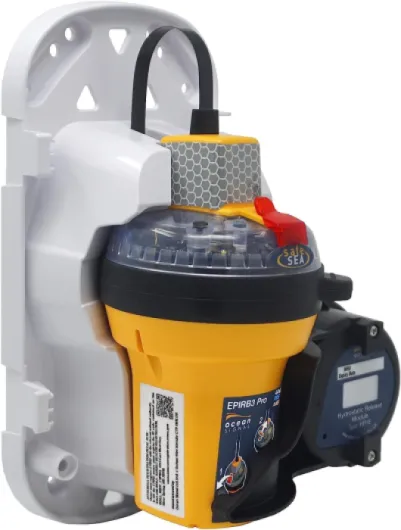
Out of the box, you get the EPIRB itself, the float-free Category 1 bracket, a hydrostatic release unit, and mounting hardware. No fancy extras, just what you need to bolt it to the boat and have it auto-release if the hull goes under. The beacon is roughly the size of a chunky thermos (about 19 x 18 x 12 cm) and weighs around 1.5 kg, so it’s not discreet, but that’s normal for this type of gear.
The documentation is a mixed bag. The quick-start bits are fine, but once you get into registration, MMSI linking, and understanding RLS and AIS behavior, it gets a bit dense. There’s a lot of information, but it’s not always laid out in the most user-friendly way. If you’re already familiar with EPIRBs, you’ll be fine. If this is your first, you’ll probably re-read some sections a couple of times. I did.
What I liked is that everything needed to make it functional on the boat is included. You don’t have to hunt for a separate bracket or release unit. The hydrostatic release is already integrated into the float-free setup, so once you’ve mounted it in a suitable spot, you’re basically covered. Just remember you’ll have to replace that hydrostatic release after a set number of years (usually 2–3, check the label), even though the main battery claims up to 10 years.
Overall, the presentation is practical: no frills, but complete. It clearly targets people who already take safety seriously, not casual weekend renters. If you’re expecting super polished, hand-holding guides like with some consumer electronics, this feels a bit more old-school and technical. It gets the job done, but you need to put in the effort to understand it.
Pros
- Combines 406 MHz satellite distress, AIS broadcast, GNSS, and RLS in one beacon
- Float-free Category 1 bracket with hydrostatic release included and ready to mount
- 10-year battery with no subscription keeps long-term running costs low
Cons
- Bulky float-free bracket takes up space and needs careful mounting on smaller boats
- Documentation is dense and not very beginner-friendly, with a bit of a learning curve
Conclusion
Editor's rating
The Ocean Signal SafeSea EPIRB3 Pro AIS is a serious bit of safety gear aimed at people who actually go offshore and think about worst-case scenarios. It packs a lot into one unit: global 406 MHz distress alert, AIS broadcast to nearby vessels, GNSS for accurate position, RLS to confirm your alert was received, and a 10-year battery with no subscription. In use, it feels like a solid, no-nonsense tool. The self-tests work, GNSS lock is quick, AIS test messages show up reliably, and the physical design is focused on visibility and straightforward operation.
It’s not perfect. The manual is a bit dense, the unit and float-free bracket take up noticeable space, and you still have to stay on top of hydrostatic release and service intervals. For purely coastal sailors who rarely leave sight of land, it might be more than you really need. But if you’re planning longer trips, night passages, or offshore legs, the combination of satellite alert plus AIS plus RLS makes a lot of sense and gives you more than one way to get found.
In short: if you want a modern EPIRB that covers both global alerting and local AIS pickup in one device, this is a strong option. It’s pretty solid value for serious cruising or offshore use, but it does require a bit of reading and careful installation. Casual weekend boaters might be fine with a simpler, cheaper EPIRB or just a PLB, but for those regularly heading offshore, this unit feels like a sensible long-term investment in not dying at sea.