
Summary
Editor's rating
Is the EVAQ8 GoBag Worth the Money?
Bag Design and Practical Use
Powerbank and Lighting: How the Electronics Hold Up
Build Quality and Materials
How Durable Does It Feel for Long-Term Storage?
Real-World Use: Light, Warmth, Food and Water
What You Actually Get in the EVAQ8 GoBag
Pros
- Well-balanced set of essentials for 2 adults for roughly 72 hours (food, water, light, warmth, first aid)
- Bag comes pre-packed but with spare room to add personal items like meds, clothes and documents
- Good value compared to buying all the components separately, especially for people starting from scratch
Cons
- Gear quality is mid-range; experienced campers or preppers will probably want to upgrade some items
- Food and water rations are functional but not pleasant to eat or drink, strictly emergency-grade
- Powerbank and electronics need occasional maintenance (recharging and testing) and are not rugged outdoor models

Specifications
View full product page →| Brand | EVAQ8 |
Why I Bought a 72h Go-Bag in the First Place
I picked up the EVAQ8 GoBag Emergency Kit for 2 people because I was tired of telling myself I’d “build my own kit one day” and never actually doing it. Between random power cuts, floods on the news, and the UK government quietly saying we should all be a bit more prepared, I just wanted something I could throw in a cupboard and forget about until needed. I’m not a prepper, I’m just someone who doesn’t want to be totally useless if the water or power goes out for a couple of days.
I’ve used basic camping gear for years, so I had a rough idea of what should go into a 72-hour bag, but buying everything separately is a pain and usually ends up costing more than you expect. That’s why this kit caught my eye: it claims to cover 2 adults for 72 hours with food, water, and basic gear, all packed in one rucksack. The idea of just adding personal meds, a change of clothes, and a few extras sounded appealing.
I’ve had it for a while now, opened everything, tried the torch, powerbank, checked the food and water, and repacked it a couple of times. I also tried carrying it on a 30–40 minute walk to see if the weight and straps were realistic for an actual evacuation. I didn’t use it in a real disaster (thankfully), but I treated it like I might actually have to rely on it. So this is coming from someone who’s actually handled the contents, not just stared at the Amazon listing.
Bottom line: it’s not perfect and it’s not some magic survival solution, but it is a decent shortcut to being more prepared than doing nothing. In the rest of this review I’ll go through what’s in it, how it feels in real life, what I think is missing, and whether I’d buy it again or recommend it to friends or family.
Is the EVAQ8 GoBag Worth the Money?
When you add up what’s inside this kit and compare it to buying things separately, the value looks pretty decent. You’re getting a rucksack, long-life food and water for two people, a wind-up torch, a powerbank, first aid kit, sleeping bags, foil blankets, purification tablets, and a few extras like gloves, masks, and wipes. If you tried to recreate this setup item by item from outdoor shops and pharmacies, you’d almost definitely spend more, plus you’d spend time researching each thing. So part of what you’re paying for here is convenience and the fact that someone has already done the basic thinking for you.
In terms of quality for the price, I’d call it solid mid-range. Nothing inside feels premium, but nothing feels like total rubbish either. The bag is decent, the electronics work, the food and water are proper emergency-grade rations, and the first aid kit is a normal, usable one, not just a couple of plasters. The Amazon rating around 4.7/5 with dozens of reviews lines up with my feeling: most people are happy because it covers the essentials without being overly expensive or overly fancy. A few more advanced users might want to customise or upgrade parts, but they’re starting from a good base.
On the downside, if you already own good camping gear, a torch, a powerbank, and a first aid kit, then the value drops a bit because you’re paying again for things you already have. In that case, you might be better off just buying rations, water, and some specific emergency items separately. Also, keep in mind that you will still need to add personal stuff like medicines, clothes, and documents, so this is not a complete all-in-one solution.
For someone starting from scratch, though – especially if you’re not into gear shopping – the value is pretty strong. You pay once, get a ready-to-go 72-hour base kit for two adults, and then just top it up with personal items. Considering the peace of mind it gives and the hassle it saves, I think the price is fair. I’d happily recommend it to family members who aren’t going to build their own kits but want something sensible in the house or car.
Bag Design and Practical Use
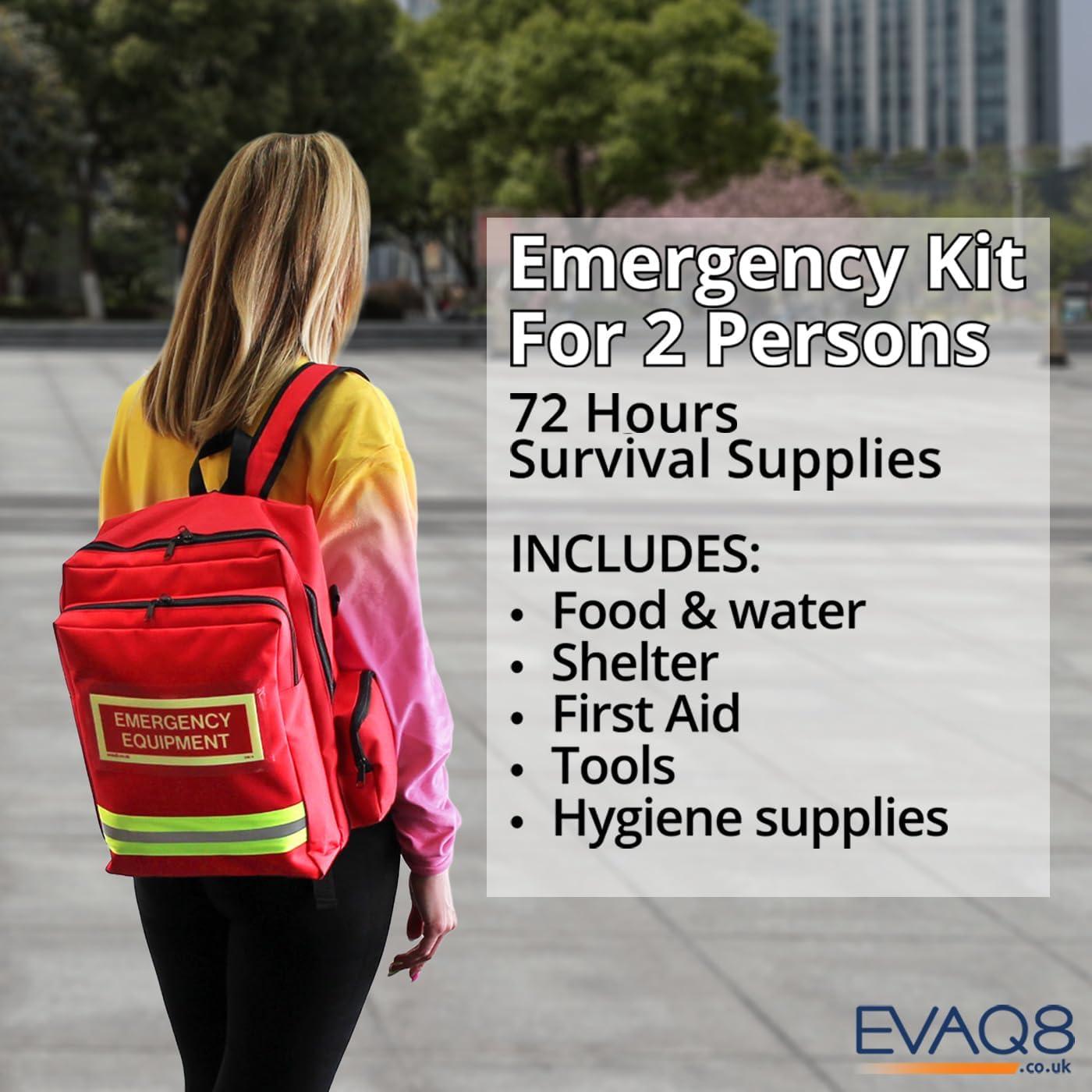
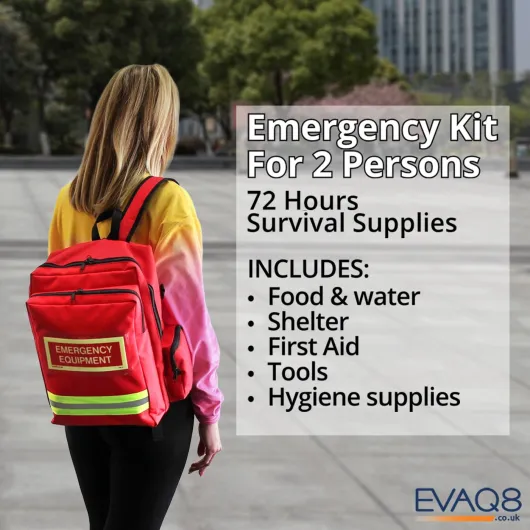
The rucksack design is pretty straightforward: a “new-style” daypack made from nylon/polyester with a few compartments and adjustable straps. It doesn’t scream military or tactical; it looks more like a regular everyday backpack, which I actually prefer for emergencies, because you don’t stand out as much. The size is reasonable for an adult of average build. Fully packed, it’s not tiny, but it’s not some huge trekking pack either. I’m average height and could carry it on a 40-minute walk without feeling like I was dying.
The straps are padded enough for short to medium use. You can tell it’s not a high-end hiking pack with a fancy frame or hip belt, but for what it’s meant for – quick evacuation, storing at home, or keeping in a car – it’s fine. The zips worked smoothly when I opened and repacked it a few times. There are a couple of pockets that make it easy to separate quick-access items like the torch, whistle, and first aid kit from the heavier bulk items like the food rations and water pouches.
In practice, the internal organisation is basic but workable. There aren’t tons of internal dividers, so if you’re picky about organisation, you’ll probably end up adding a few pouches or zip-lock bags to keep things tidy. I rearranged the contents once so the stuff I’d want fast (torch, whistle, first aid, masks) were near the top, and the rest deeper in the bag. There is enough room left over to add a small radio, some personal hygiene items, spare socks, and a copy of important documents in a waterproof sleeve, which is exactly what I did.
The best way to describe the design is: functional, not fancy. It’s clearly built to a budget but it gets the job done. It’s not something I’d use as my daily commuting bag, but as a dedicated emergency pack that sits ready to go, it’s good enough. If you’re very sensitive to comfort or have back issues, you might want to test-wear it loaded and consider moving some weight into a second bag or suitcase, but for most people, the design will be acceptable for the job it’s meant to do.
Powerbank and Lighting: How the Electronics Hold Up
The electronics in this kit are simple: a wind-up LED torch, an emergency powerbank, two light sticks, and a set of four AA batteries. There’s no fancy headlamp or solar panel included, so don’t expect a full power setup. That said, for a 72-hour emergency window, the combination is actually pretty practical if you manage it sensibly. I focused on testing the torch and powerbank, since those are the bits you’ll really depend on in a power cut.
The emergency powerbank is basic but useful. It’s not a huge capacity brick, but enough to give a modern smartphone roughly one full charge (maybe a bit more depending on your phone). I fully charged it from the mains, left it in the bag for a week, then used it to charge my phone from about 20% to nearly full. It did the job, and the connection felt stable. There’s no digital display, just simple LEDs to show charge level. This is not something you’d use every day, but as a backup in a blackout so you can call or check maps, it’s perfectly fine. I wouldn’t expect it to hold full charge for months without some loss, so it’s worth topping it up every few months.
The wind-up LED torch is where the kit shows its emergency focus. You don’t need spare batteries for it, just your own wrist power. I turned the crank for around 60 seconds and got a few minutes of bright light, then a longer period of dimmer but still usable light. If you sit there and crank for 3–5 minutes, you get more comfortable runtime. The beam is focused enough for walking around a house or a campsite. It’s not as nice as a good headlamp, because you have to hold it, but for a grab-bag, it’s fine. The fact that the kit also includes four AA batteries is handy, because you can feed another torch or small radio if you add one to the bag.
From a practical perspective, the power situation is basic but functional. You get: a way to generate light without batteries (wind-up torch), a way to keep a phone alive for at least one charge (powerbank), some passive light sources (light sticks), and extra batteries for any add-ons you bring. I’d personally add a small battery or solar radio and maybe a cheap headlamp to make it more complete. But even without extras, the included electronics give you a workable safety net, as long as you remember to maintain the powerbank every now and then.
Build Quality and Materials
The bag is made from nylon and polyester, which is pretty standard for this kind of kit. It’s not ultra-thick military-grade fabric, but it doesn’t feel flimsy either. I handled it quite roughly while unpacking and repacking, and I didn’t see any stitching coming loose or seams looking stressed. The material has that slightly stiff, wipe-clean feel, which is good if it ends up on a damp floor or in a dusty boot. I wouldn’t call it fully waterproof, but it should handle light rain or splashes without the contents getting soaked immediately.
The internal items are what you’d expect in a pre-assembled kit. The foil blankets and emergency sleeping bags are the classic shiny mylar type: thin, crinkly, not comfortable in a luxury sense, but compact and effective for trapping body heat. The food and water rations come in tough sealed packaging that looks like it can sit for years without trouble. The water purification tablets are in a proper blister pack, which makes them easy to count and keeps them protected. The gloves are basic work gloves – better than nothing if you have to move debris or handle rough surfaces, but not high-end safety gear.
The torch and powerbank feel like mid-range generic items. The wind-up torch casing is plastic but doesn’t feel like it will fall apart in your hand. I cranked it a few times and dropped it from waist height onto a hard floor; it survived fine and still worked. The powerbank casing is also plastic and light. It’s not some rugged, rubberised outdoor unit, but as long as you don’t abuse it, it should be okay sitting in the bag. The multi-function tool is clearly budget grade – think more “decent keyring tool” than “premium Swiss knife” – but the metal parts didn’t wobble when unfolded.
Overall, the materials match the price point and the purpose. You’re not getting high-end expedition gear, but you’re also not getting total junk. For a kit that’s meant to be stored and only used in emergencies, the quality feels acceptable. If you plan to use parts of it regularly (for example, using the bag as a daily backpack or the torch as your main household torch), then I’d say you might eventually want to upgrade individual items to something more robust. But as a ready-to-go emergency stash, I’m comfortable with the materials they chose.
How Durable Does It Feel for Long-Term Storage?
This kind of kit is weird because you’re not using it every day; you’re mostly storing it and hoping you never need it. So for durability, I looked at two things: how it holds up to a bit of rough handling now, and how confident I feel about it surviving a few years in a cupboard or car boot. Obviously I can’t fast-forward time, but you can get a sense from the build and packaging.
The rucksack itself feels like it can handle being dragged around, shoved in and out of a car, and carried in the rain for a bit. I didn’t baby it: I loaded it, picked it up by one strap, swung it around, and set it down hard a few times. The stitching at the straps didn’t show any stress or loose threads. The zips are medium-duty; I wouldn’t overstuff the bag to the point of bulging, but with the kit as supplied plus a few extras, they ran smooth and didn’t feel at risk of tearing. If you store it in a dry place and don’t pile heavy stuff on top, I don’t see it failing suddenly.
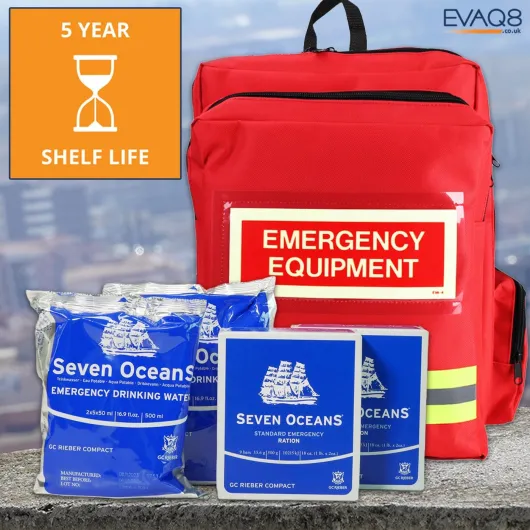
The sealed items (food rations, water pouches, purification tablets) are clearly designed for long shelf life. The packaging is tough, with clear expiry dates printed, so you know when to rotate them. I’d make a habit of checking the dates once a year. The foil blankets and sleeping bags are more fragile in the sense that they’ll tear if you snag them on something sharp, but that’s true of all mylar products. As long as they stay in their packaging until needed, they should be fine for years. The first aid kit contents are standard bandages, wipes, etc., so again, just check dates occasionally.
The electronics are the only things I’m slightly cautious about long-term. Cheap powerbanks can lose capacity over time, especially if stored fully charged for years. The wind-up torch is less of a worry because it doesn’t rely on stored power, just a mechanical crank and a small internal battery. My approach is simple: once every few months, I take the bag out, charge the powerbank, test the torch for a minute, and then put it back. That quick check gives me confidence that the kit will actually work when needed. Overall, for a kit at this price, the durability seems good enough for multi-year storage, as long as you treat it as something you maintain occasionally rather than “set and forget forever.”
Real-World Use: Light, Warmth, Food and Water
I did a basic “dry run” with the kit to see how it would perform if I actually needed it. I tried the torch, powerbank, light sticks, and tested how the sleeping bags and blankets felt in a cool room. I didn’t eat all the food rations, but I opened one to check the texture and taste, and I inspected the water pouches. In a short test, the kit did what it’s supposed to do: keep you lit, relatively warm, and with something to eat and drink, without taking up much space.
The wind-up LED torch is one of the more useful bits. After about a minute of cranking, I got several minutes of usable light. It’s not stadium-bright, but enough to move around a dark room or a staircase without tripping. I left it unused for a few days and tried again; it still held a bit of charge, but I wouldn’t rely on the internal battery for long-term storage. The light sticks are standard chemical glow sticks: I cracked one and it gave off a soft greenish light for a few hours. They’re handy for marking a room or a person, especially if you don’t want to rely only on the torch.
For warmth, the foil blankets and emergency sleeping bags are what they are: noisy, plasticky, but effective at trapping heat. I tried one of the sleeping bags over my normal clothes in a cool room for about 20–30 minutes. It warmed up quickly and felt noticeably better than just a blanket. They’re not breathable, so you’ll get condensation if you stay in them too long, but in an emergency where you just need to avoid getting chilled, they’re fine. The kit doesn’t include extra clothing, so you’ll definitely want to add socks, a hat, and maybe a fleece if you’re serious about cold-weather scenarios.
On the food and water side, this is very much “emergency only”. The food ration I opened tasted like a dense, slightly sweet, compressed biscuit bar. Edible, not pleasant, but it fills you up. It’s clearly designed to be compact and high-calorie rather than tasty. The water pouches are small but tough; you’re not getting luxury amounts of water here, just enough to keep you going if taps are off. The purification tablets are a big plus in my opinion, because they give you options if you can find another water source. In terms of pure performance, the kit does cover the basics for 72 hours, as long as you manage your expectations and don’t treat it like a camping holiday.
What You Actually Get in the EVAQ8 GoBag
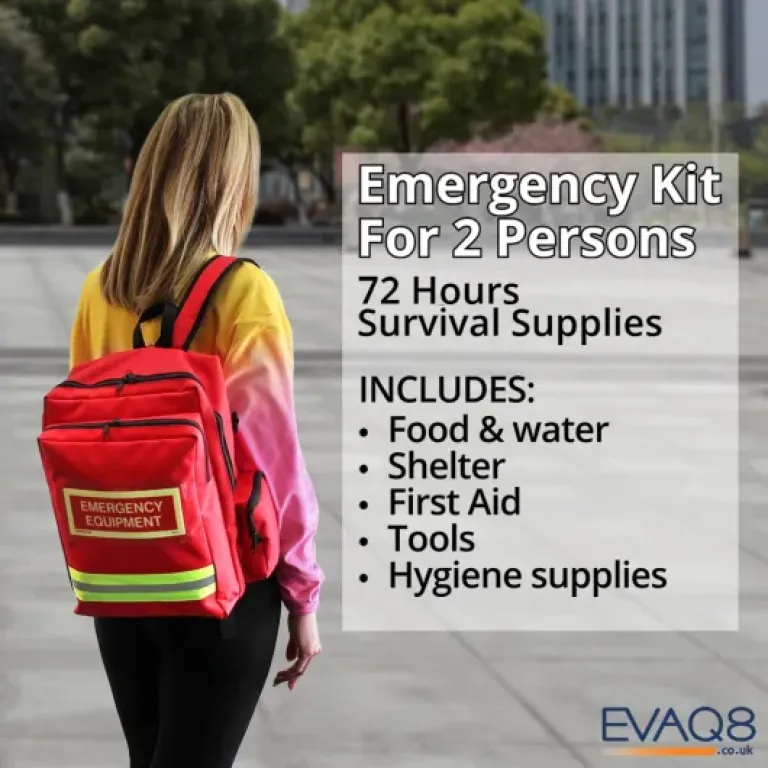
The main thing with this kit is that it tries to cover the basics for two adults for 72 hours: food, water, warmth, light, and a bit of first aid. Out of the box, everything is already packed inside a medium-sized rucksack. When you unzip it, you find the gear fairly neatly arranged in separate plastic bags: food rations, water pouches, first aid kit, torch, powerbank, and the rest. It doesn’t look like luxury camping gear; it looks like functional emergency stuff, which is what it’s supposed to be.
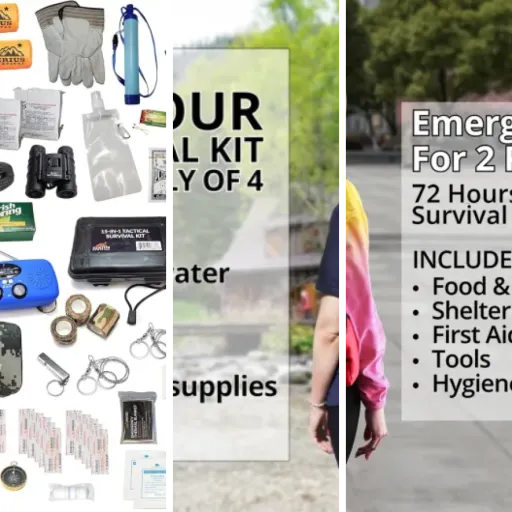
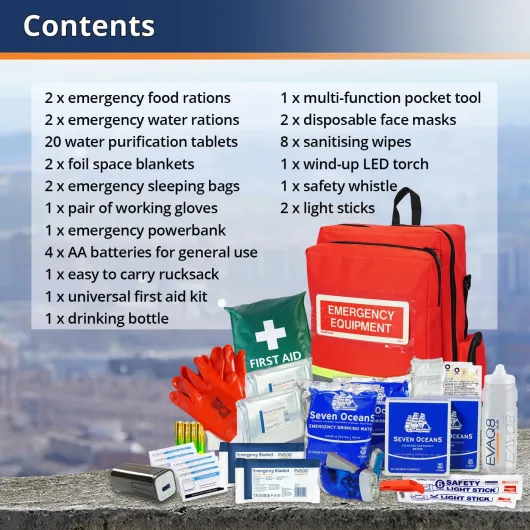
The included items are: a wind-up LED torch, an emergency powerbank, two emergency food rations, two emergency water rations, 20 water purification tablets, a drinking bottle, two foil space blankets, two emergency sleeping bags, two light sticks, a safety whistle, a basic universal first aid kit, a small multi-function pocket tool, two disposable face masks, sanitising wipes, a pair of work gloves, and four AA batteries. The rucksack itself is the container for everything. There’s still some spare room inside, which is actually useful because you’ll want to add your own bits like meds, documents, maybe a small radio, and some extra snacks.
In practice, the kit feels like a solid starting point rather than a fully finished solution. For example, the food and water are clearly emergency-grade, not something you’d choose to eat on a weekend hike, but they’re compact and have long shelf lives. The first aid kit is more “cover the basics” than “handle serious trauma”, but at least it’s there and organised. The powerbank and torch combo gives you some redundancy for light and phone charging, which is key in a blackout. You’re not getting top-tier equipment, but you’re getting a decent spread of essentials that work together.
What I liked is that the kit is clearly built around the idea of grab-and-go: you don’t have to think much, you just grab the bag and leave or move to a safer room. On the downside, if you’re already into camping or prepping, you’ll probably look at some items and think, “I’d replace this with a better version.” That’s fine, but out of the box, for someone who has nothing, it’s a fairly complete and practical base to start from.
Pros
- Well-balanced set of essentials for 2 adults for roughly 72 hours (food, water, light, warmth, first aid)
- Bag comes pre-packed but with spare room to add personal items like meds, clothes and documents
- Good value compared to buying all the components separately, especially for people starting from scratch
Cons
- Gear quality is mid-range; experienced campers or preppers will probably want to upgrade some items
- Food and water rations are functional but not pleasant to eat or drink, strictly emergency-grade
- Powerbank and electronics need occasional maintenance (recharging and testing) and are not rugged outdoor models
Conclusion
Editor's rating
Overall, the EVAQ8 GoBag Emergency Kit for 2 people does what it claims: it gives you a practical 72-hour base kit in one grab-and-go rucksack. The mix of food, water, light sources, warmth gear, and a basic first aid kit means you’re a lot better off than having nothing when something goes wrong. The bag and contents feel mid-range but reliable enough for long-term storage, as long as you check expiry dates and top up the powerbank every now and then. It’s not a luxury setup and it’s not aimed at hardcore survivalists; it’s built for normal people who want a simple, ready-made solution.
If you’re starting from zero and don’t want to spend weekends piecing together a kit, this is a good shortcut. You’ll still need to add personal meds, spare clothes, documents, maybe a small radio and some extra snacks, but the heavy lifting is done for you. If you already own good outdoor gear and like buying specific items, you might prefer building your own kit and only copying parts of this list. For everyone else – especially families, older people, or anyone who just wants a low-effort safety net in their home or car – this bag is a sensible buy that gets the job done without drama.