
Summary
Editor's rating
Is it worth the money compared to simpler EPIRBs?
Design: big, bright, and not exactly discreet
Battery life, tests, and what the 10-year claim really means
Build quality and how it should hold up on a real boat
Performance, tests, and how it behaves in practice
What this EPIRB actually does (in plain language)
Pros
- Combines 406 MHz satellite alert, GPS, 121.5 MHz homing, AIS distress, and RLS in one unit
- Cat 1 float-free hydrostatic bracket for automatic deployment if the boat sinks
- No subscription fees and a long 10-year battery life with clear status tests
Cons
- Bulky with the Cat 1 bracket, tricky to place neatly on smaller boats
- Higher upfront cost and future battery replacement/service adds to total ownership cost

Specifications
View full product page →| Brand | ACR |
A safety gadget you hope you never use
I picked up the ACR GlobalFix V5 AIS EPIRB mainly because I’m pushing further offshore and I didn’t want to rely only on a PLB and a half‑working VHF. It’s the kind of product you buy hoping it will sit there for 10 years and never fire. But still, when you’re a day’s sail from land, it’s nice to know the beacon is more than just a plastic box with a sticker.
What pushed me to this model is the combo of 406 MHz satellite, built‑in GPS, AIS alert, and Return Link Service (RLS). On paper, that means: satellites get your distress, nearby boats see you on AIS, and you get a visual confirmation that your SOS was received. Add to that the Cat 1 float-free bracket, and it looked like a decent long‑term safety upgrade for my boat.
I installed it on a 10m sailing boat and lived with it for a couple of weeks: mounting, playing with the self-tests, using the NFC/app stuff, and basically checking how annoying or simple it is in real life. Obviously I never triggered a real distress alert, but I did most of what a normal owner will do: tests, checks, and a lot of reading of the small print.
Overall, it feels like a serious bit of kit, but it’s not perfect. There are some small annoyances, especially around the app and the size of the unit. And compared to older EPIRBs or cheaper Cat 2 models, you really need to decide if the AIS + RLS + float-free bracket are worth the extra cost and bulk for the way you actually sail.
Is it worth the money compared to simpler EPIRBs?
In terms of price, the GlobalFix V5 AIS sits towards the higher end of recreational EPIRBs, especially once you factor in that this is the Cat 1 float-free version. You can find cheaper Cat 2 EPIRBs (manual-release only, no float-free) and models without AIS or RLS. So the question is basically: do you want to pay extra for AIS alerts, RLS feedback, and the automatic deployment bracket?
For offshore sailing or serious fishing, I think the package makes sense. The combination of global 406 MHz + local AIS + RLS is a strong mix: satellites get you, nearby boats see you, and you get confirmation it was received. If you’re regularly 20–50 miles offshore in busy shipping or fishing grounds, the AIS part alone could shave a lot of time off a rescue if someone is close by. In that scenario, the extra money isn’t crazy when you look at the overall cost of the boat and gear.
If you mostly coastal cruise within a few miles of shore, only go out in good weather, and already carry a PLB or a DSC VHF, then this might be overkill. A cheaper, simpler EPIRB without AIS and without Cat 1 might do the job just fine. You’d still have satellite distress coverage, just without the extra bells and whistles. So value really depends on how far and how often you head out, and how much redundancy you want in your safety setup.
Overall, I’d say the value is pretty solid for serious users, but casual weekend sailors might see it as expensive for something that sits on the wall and is never used. Don’t forget to factor in the future battery replacement/service cost too. It’s not outrageous, but it means the true cost of ownership is higher than the purchase price alone. If you’re okay with that and you actually sail offshore, then the feature set lines up fairly well with the money you’re putting in.
Design: big, bright, and not exactly discreet
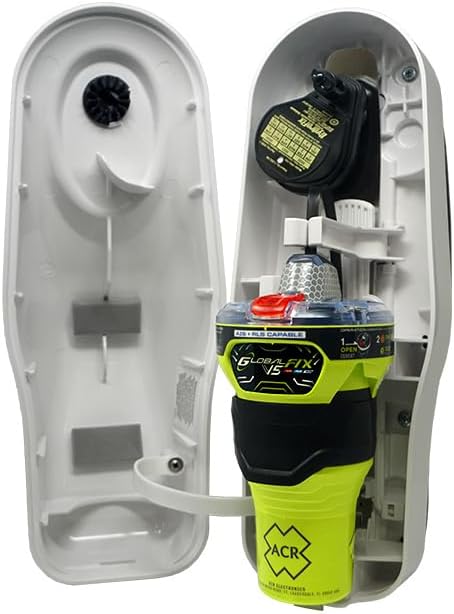
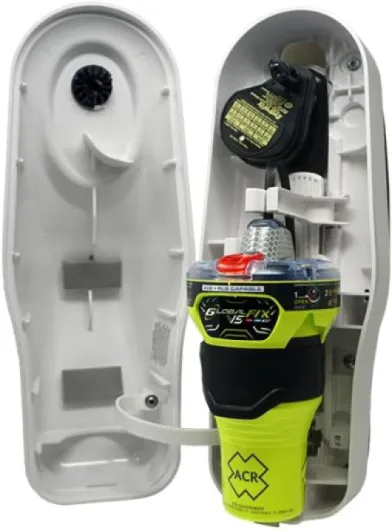
Physically, the GlobalFix V5 is not small. If you’re coming from a PLB or a compact EPIRB, be prepared: with the Cat 1 float-free bracket, it’s a chunky unit on your bulkhead. On my 10m sailboat, I had to think a bit before finding a spot where it wouldn’t catch every stray elbow. The upside is that in an emergency you’re not going to miss it: the housing is bright safety yellow, clearly labelled, and the activation slider and antenna are obvious.
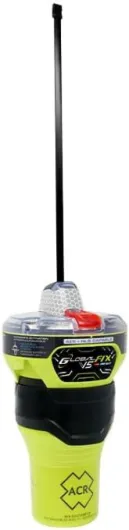
The controls are straightforward: there’s a test button, clear icons, and the LEDs are bright enough to see even in daylight. I ran several self-tests, and the feedback is simple: you get a clear pass/fail style response, not some cryptic code you need a manual for. I like that they didn’t overcomplicate the physical interface; in a panic, less is better. The antenna folds along the body and clips in the bracket, and it feels reasonably solid, not flimsy.
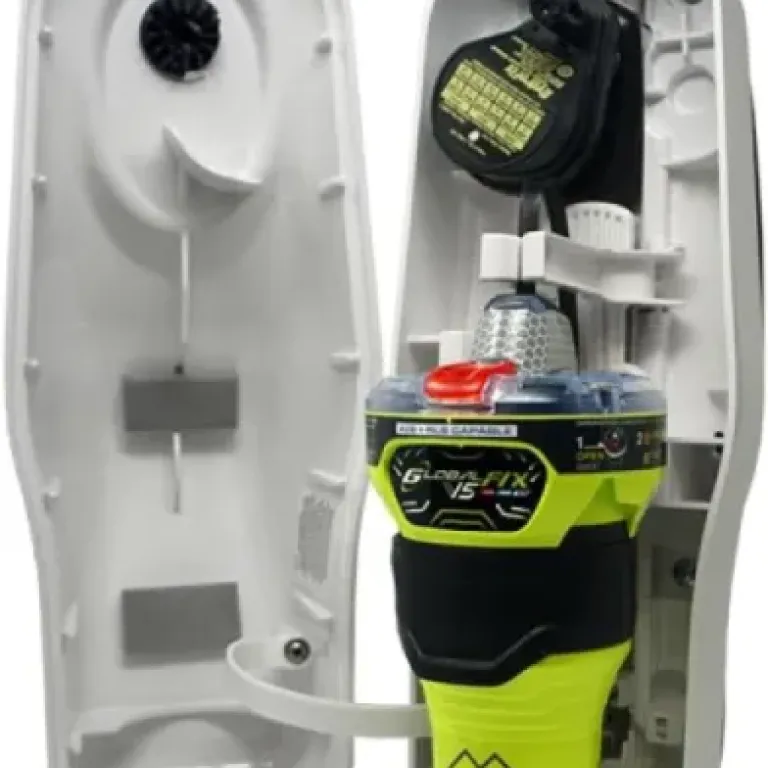
The Cat 1 hydrostatic bracket is where the bulk really comes from. It’s a solid plastic cradle that’s built to survive outside on a rail or cabin top if you want to mount it there. Personally I mounted it under the sprayhood, protected but still accessible. The mounting holes are standard, but you do need to plan the space. If you’re on a small boat with limited flat vertical surfaces, factor that in. It’s definitely more suited to medium to larger boats or wheelhouses where wall space is less of a problem.
In terms of overall design, I’d call it practical but a bit agricultural. It looks like safety equipment, not some fancy gadget, which is fine. No nonsense, no pretty finishes, just big plastic and clear labels. I’m okay with that, but if you want something discreet or super compact, this isn’t it. It’s clearly built with function and regulations in mind rather than aesthetics or minimalism.
Battery life, tests, and what the 10-year claim really means
The spec says 10-year battery life, which sounds great, but you have to read that as “10-year replacement interval under normal storage and test conditions,” not 10 years of constant use. For an EPIRB, that’s standard: you mount it, do regular self-tests, and basically forget about it unless something goes very wrong. On the sticker you get a clear battery expiry date, which is what most surveyors and inspectors will look at.
Over the couple of weeks I had it installed, I ran multiple self-tests and a GPS test. Each test uses a tiny bit of battery, but the unit is designed for that. The app (via NFC) shows the test history and battery status, and mine stayed firmly in the green. The beacon doesn’t give you a percentage like a phone, but more of a good/replace style status, which is fine for this kind of device. You don’t want something that nags you every month for a charge.
One thing to be aware of: this is not user-rechargeable. When the battery is up or has been used in an activation, you’ll need to send it to an authorised service centre for a battery change, which obviously costs money. That’s normal for EPIRBs, but if you’re used to rechargeables (like VHF handhelds or PLBs with USB ports), this feels a bit old school. Personally, I’m okay with it; I’d rather have a sealed, long-life battery that just sits there than something I’m constantly worrying about charging.
In terms of confidence, I’d say the 10-year shelf concept is reassuring, especially if you don’t sail year-round. I can leave the boat for winter and not think about it. Just be realistic: once you factor in a future battery replacement, this isn’t a one-time cost for life. If you plan to keep the boat and the EPIRB for a long time, you should mentally add the eventual service cost to the overall budget.
Build quality and how it should hold up on a real boat
Build-wise, the GlobalFix V5 feels tough and very purpose-built. The plastic housing is thick, the antenna hinge has a solid click, and the buttons don’t feel like they’ll fall apart with a bit of salt and grime. I didn’t baby it: I mounted it, knocked it a couple of times moving sails around, and it didn’t show any sign of looseness or creaking. It’s clearly designed to live outside or in a damp cabin environment.
The Cat 1 float-free bracket is chunky but feels sturdy. The latch mechanism that holds the EPIRB in place is firm; you need a deliberate pull to release it, so it’s not going to drop out just because you slammed a wave. At the same time, it’s not so stiff that you can’t grab it in a hurry. I’d say they got the balance about right. The hydrostatic release is, of course, something you hope never to test for real, but that’s a standard piece of kit with known reliability in the industry.
ACR gives a 5-year warranty, which is decent and suggests they’re not expecting them to fail left and right. Given the US manufacturing and the general feel of the plastics and seals, I’d expect it to handle years of UV, spray, and temperature changes. I’d still mount it somewhere not in constant direct sun if possible, just because any plastic gets tired eventually, but it doesn’t feel cheap or fragile.
After a couple of weeks on board with normal use, there were no signs of corrosion on screws or fittings, and the bracket didn’t rattle or flex. Obviously that’s a short test period, but compared to some cheaper safety gear I’ve used, this feels like the kind of item you bolt on and stop worrying about. I’d just make it part of my regular safety gear check: inspect seals, bracket, and expiry dates once or twice a season, and it should be fine.
Performance, tests, and how it behaves in practice
Obviously I didn’t set it off for real, so I can’t tell you how fast a rescue helicopter shows up. But I did all the self-tests, checked GPS lock, and played with the app and NFC. The GNSS (GPS) fix during tests came in quickly each time—usually within a minute or two with a decent sky view in the cockpit. The beacon indicates that it has position, and that’s about all you can see as an end user, but it’s reassuring it doesn’t struggle to find satellites.
The 121.5 MHz homing isn’t something you really test as a normal boater unless you have a separate direction finder, which I don’t. What I can say is the test mode runs without issues and doesn’t drain the battery much according to the status checks. Over two weeks of occasional testing, the status remained healthy and the test sequence always completed cleanly. So from a user perspective, it feels consistent and reliable, not temperamental.
The interesting bit is the AIS part. You can’t fully simulate a distress AIS target without actually setting it off, but what you can do is check that your AIS receiver picks up the test transmissions where allowed. On my boat, the chartplotter didn’t show anything in normal test mode (which is expected; it’s designed not to spam AIS in self-test), so you have to trust the spec sheet here. That’s a downside: you can’t easily verify AIS functionality yourself without doing something you really shouldn’t.
Where it does score points is RLS. During the RLS self-test, the unit checks its ability to process the return link messages. Obviously you don’t get a real satellite return on a test, but the fact that it’s RLS-capable is a genuine plus. If I ever hit that button for real, knowing there’s a chance of seeing a confirmation light instead of just hoping the signal got through is reassuring. Overall, performance-wise, it feels solid and predictable in normal use, but like all EPIRBs, there’s a limit to what you can actually verify without a real emergency.
What this EPIRB actually does (in plain language)
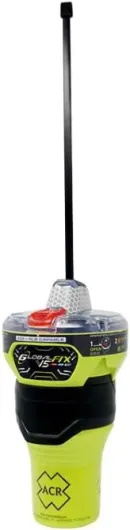
The GlobalFix V5 AIS is basically a marine distress beacon that works on several layers. When you trigger it (manually or because the boat sinks and it floats free), it sends a 406 MHz distress signal via the Cospas-Sarsat satellite system, with your GPS position. That’s the global part: it goes to the rescue coordination centres, no subscription needed. On top of that, it also broadcasts a 121.5 MHz homing signal, which is what rescuers can use at close range to home in on you.
The extra bit on this model is the AIS MOB alert. Once activated, it sends an AIS message so nearby AIS-equipped vessels can see a distress target pop up on their chartplotter, with position updates. In practice, that means if you’re in busy waters or within a few miles of other boats, they don’t have to wait for official SAR; they can see you and potentially come help.
Another key feature is Return Link Service (RLS). That’s a feedback signal from the satellite system back to your beacon. The EPIRB then shows a visual confirmation (LED pattern) that your distress was received. You don’t get a message like on WhatsApp, but you at least know the alert made it into the system. When you’re offshore with no phone signal, that’s not a bad bit of reassurance.
Last point: it comes as a Cat 1 float-free setup, meaning the supplied hydrostatic release bracket is designed to let the EPIRB float free and activate if the boat actually sinks and goes under. You can still use it manually, but this is clearly aimed at people doing offshore cruising, fishing, or bluewater passages where you might not have time to grab a grab-bag in a panic. On paper, the feature list is pretty full: GPS, AIS, RLS, 121.5 MHz, 10-year battery life, no subscription, app support via NFC. The challenge is just living with it on a small boat.
Pros
- Combines 406 MHz satellite alert, GPS, 121.5 MHz homing, AIS distress, and RLS in one unit
- Cat 1 float-free hydrostatic bracket for automatic deployment if the boat sinks
- No subscription fees and a long 10-year battery life with clear status tests
Cons
- Bulky with the Cat 1 bracket, tricky to place neatly on smaller boats
- Higher upfront cost and future battery replacement/service adds to total ownership cost
Conclusion
Editor's rating
The ACR GlobalFix V5 AIS EPIRB feels like serious safety gear for people who actually go offshore, not just a token box to tick. The mix of 406 MHz satellite alert, built-in GPS, 121.5 MHz homing, AIS distress signal, and Return Link Service gives you several layers of backup if things go wrong. In normal use it’s straightforward: tests are easy, the LEDs are clear, and the app via NFC is handy for checking status without digging through manuals.
It’s not perfect. The unit with the Cat 1 float-free bracket is big and a bit clunky, so on a small boat you really need to plan where to put it. It’s also not cheap, and you’ll eventually have to pay for a battery replacement, which pushes up the long-term cost. You also can’t really test the AIS distress function yourself without doing something you shouldn’t, so there’s a bit of trust involved there.
If you’re doing bluewater passages, regular offshore runs, or professional fishing, I think this beacon makes sense: you get more ways to be found and clear confirmation that your signal was received, all without subscription fees. If you’re mainly day-sailing near the coast and rarely leave VHF range of shore, a simpler, cheaper EPIRB or just a PLB plus DSC VHF might be enough. In short: solid piece of kit aimed at serious use, good feature set for the money if you’ll actually benefit from AIS and RLS, maybe a bit overkill for casual coastal pottering.