Summary
Editor's rating
Value for money: not cheap, but you do feel where the money goes
Design: compact and thought‑through, but very no‑nonsense
Comfort: the main reason I actually kept it on all day
Materials: solid build, but clearly aimed at practical use not style
Durability and maintenance: feels built to last, if you actually look after it
What you actually get out of the box
Effectiveness and safety features: does it actually do the job?
Pros
- Very comfortable and compact, easy to wear for 5–6 hours without major irritation
- Practical safety features: EXOLOK cylinder lock and side‑zip access for quick firing mechanism checks
- 180N buoyancy with chin support gives stable, head‑up position in the water
Cons
- Higher price than basic foam or entry‑level inflatable lifejackets
- Rearming and repacking after inflation still takes time and patience
- Black outer cover is a bit plain and not as high‑visibility as some alternatives

Specifications
View full product page →| Brand | Crewsaver |
A lifejacket you might actually wear instead of sitting on it
I’ve been guilty of the classic thing on small boats: the lifejacket sits next to me instead of on me, especially when it’s hot or we’re just pottering around inshore. I picked up the Crewsaver Crewfit 180N Pro Automatic Harness because I wanted something I’d genuinely keep on for a full day on the water, not just in rough weather. I’ve used it over a few weekends on a small sailing boat and a RIB, so this is a hands‑on review, not theory.
The main promise of this model is pretty clear: compact, 180N buoyancy, automatic inflation, and a built‑in harness option, all in something light enough for all‑day wear. On paper that sounds like the usual brochure talk, but in practice I was more interested in: does it dig into my neck, does it feel sweaty, and can I actually check the firing mechanism without dismantling the whole thing on the pontoon?
I mainly used it in mild to choppy inshore conditions, roughly 4–6 hours at a time, over layered clothing once and over just a T‑shirt another day. I didn’t have a real man‑overboard incident (thankfully), but I did trigger it manually once to see how it behaves in the water and how annoying it is to repack and rearm afterward. That test alone told me a lot about how serious this jacket feels compared to the cheaper foam vests I’ve used before.
Overall, it’s not perfect and it’s not cheap, but it does one key thing right: it feels like normal gear, not like a big annoying safety device you can’t wait to take off. For me, that’s kind of the whole point. If a lifejacket is so bulky you leave it in the locker, it’s already failed, no matter how many features it has on the label.
Value for money: not cheap, but you do feel where the money goes
Price‑wise, the Crewsaver Crewfit 180N Pro sits above basic foam lifejackets and also above some entry‑level inflatables. You’re paying for the automatic inflation, 180N buoyancy, harness attachment, and the more compact, comfortable design. If you only go out a couple of times a year on very calm water, this is probably overkill and a cheaper foam jacket would get the job done.
Where it starts to feel worth the money is if you’re on the water regularly and you actually keep your jacket on most of the time. The comfort and low profile mean you’re far more likely to wear it instead of sitting on it. For me, that’s the main value: the best lifejacket is the one you’re actually wearing when things go wrong. In that sense, paying extra for something you don’t mind having on for 5–6 hours straight makes sense.
Compared to some other known brands in the same category, the extra touches like the EXOLOK cylinder lock and the easy side‑zip check do add practical value. They reduce the hassle around regular checks, which again means you’re more likely to keep the jacket in ready condition. It’s not packed with flashy gadgets, but the features it has are genuinely useful.
If you’re on a tight budget or only need a spare for guests who rarely come out, there are cheaper options that will still keep people afloat. But if you’re the one regularly driving or crewing a boat inshore and you want one main jacket that’s comfortable, compact, and properly specced, then the price feels reasonable rather than excessive. I’d call it good value for frequent use, average value if you’re only out occasionally.
Design: compact and thought‑through, but very no‑nonsense
The design is clearly focused on staying out of your way. The Fusion 3D shape basically means it curves around your neck and shoulders so it sits close to the body instead of standing off like a big collar. Compared to older, boxier inflatable lifejackets I’ve used, this one hugs the body better and doesn’t flap around when you move. That’s especially noticeable when you’re bending over to handle lines or working at the bow.
Most of the clever stuff is hidden inside, but the outside layout is simple: a clean black cover, the front buckle and adjusters, and that soft loop D‑ring for the harness. There aren’t random pockets or straps hanging loose, which I like because that’s less to snag on winches or cleats. The side zip access panel is probably the smartest bit of the design. Being able to open just that part to check the gas cylinder and firing head makes regular checks realistic, not a chore you keep putting off.
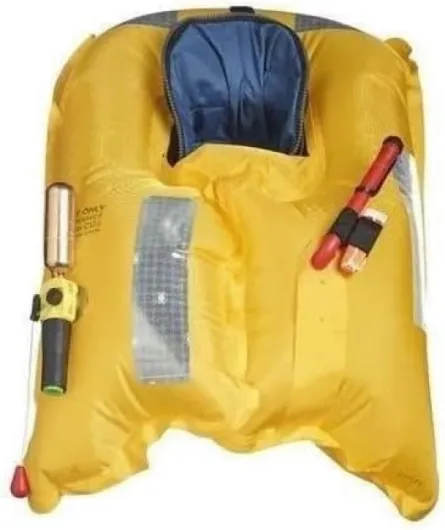
When it inflates (I manually pulled the toggle once in the water to test), the 180N bladder pops out in a bright color and there’s a clear chin support section that pushes your head back slightly. It’s not glamorous, but it’s exactly what you want if you’re tired or a bit out of it in the water: your face is kept out of the water without you doing much. It felt quite stable, even when I relaxed and stopped kicking.
The only downside design‑wise is that everything is quite focused on function, so if you like more visible reflective patches or a high‑vis cover, this black version is a bit plain. There is some reflective material, but it’s not as visually loud as some offshore models. For inshore use it’s fine, but personally I wouldn’t mind slightly more reflective surface on the outer shell for low‑light conditions.
Comfort: the main reason I actually kept it on all day
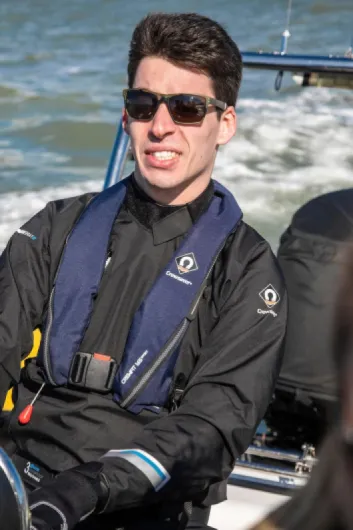
Comfort is where this jacket justifies its price, in my opinion. I wore it for around 5–6 hours straight on two separate days: one cooler day over a light jacket, and one warmer day over just a T‑shirt. The Fusion 3D cut and low profile really do make a difference. It sits close to the body and doesn’t swing around when you move. I noticed it for the first 10–15 minutes, then mostly forgot it was there, which is exactly what I wanted.
The neck area is usually where lifejackets annoy me. With this one, the edges didn’t chafe or dig in, even when I was turning my head a lot. It’s not heavily padded, but the shape distributes pressure quite well. Shoulder movement is free enough for grinding winches or hauling lines. I never had that feeling of the jacket riding up into my jaw when I crouched down, which is something I’ve had with bulkier models.
The dual side adjusters are pretty handy. I tightened it up over a thinner layer and then let it out slightly over a jacket without needing a wrestling match. Once set, it stayed in place and didn’t slowly loosen. The weight (about 1 kg) is noticeable if you pick it up in your hand, but on the body it feels lighter because it’s well balanced across the shoulders and chest.
Only real negative from a comfort angle: on the hotter day, it did get a bit warm around the chest, simply because anything wrapped around your upper body in the sun will trap some heat. It’s still much less sweaty than a solid foam vest, but don’t expect to forget you’re wearing it in 30°C with no breeze. For normal UK‑style conditions or mild weather, though, it’s very easy to live with.
Materials: solid build, but clearly aimed at practical use not style
The outer shell is polyester, which is pretty standard for this type of inflatable lifejacket. It feels tough enough to handle regular boat use: rubbing against non‑slip decks, getting shoved under other gear in a locker, and the usual sunscreen/saltwater mix. After a few outings with a bit of spray and one full dunk test, the fabric still looked fresh and didn’t feel like it was thinning anywhere.
The webbing for the straps and harness loop feels strong and dense, not the cheap, shiny type you sometimes see on budget vests. The soft loop D‑ring is clearly designed to cut weight and avoid clanging metal hardware. It’s made from stitched webbing rather than metal, which at first looks a bit too minimal, but once you tug on it and clip a lifeline, it feels secure. For serious offshore racing I might still prefer a beefier hardware setup, but for inshore cruising and day trips it feels right.
Inside, the bladder material (which you only see when you open it up or inflate it) looks like the usual coated fabric used in decent quality inflatables. Seams looked clean and even. When I repacked it after inflation, the material didn’t feel fragile or easy to crease permanently. That’s important because a lot of cheaper jackets start looking tired after just one inflation and repack.
Overall, the materials give a reliable but workmanlike impression: nothing flashy, but it feels like it’s built to last several seasons of regular use if you rinse it and check it now and then. If you’re expecting luxurious padding or fancy textiles, that’s not what this is. It’s more like a well‑made tool: comfortable enough, but clearly focused on durability and compliance rather than looks.
Durability and maintenance: feels built to last, if you actually look after it
From a durability point of view, the stitching and fabric give a reassuring impression. I paid attention to high‑wear areas: where the straps join the body, the harness loop, and the edges around the neck. After a few trips, some light spray, and one full inflation test, there were no loose threads or signs of stress. The polyester shell still looked basically new after a rinse and dry.
What matters more with inflatable lifejackets is how they handle being opened, repacked, and checked. I fully opened the cover to rearm it after my test inflation. The zip and cover panels handled being worked on without feeling like they were about to tear. Some cheaper jackets feel like you’re going to break them if you open them too wide; this one stayed stable and didn’t warp or crease badly when I folded the bladder back in.
The EXOLOK cylinder lock helps on the long‑term reliability side, because one common failure is simply a loose cylinder that doesn’t fire properly. Locking it in place reduces that risk. That said, you still need to check the firing mechanism date and the cylinder condition now and then. The nice part is that the side zip access makes that realistic even if you’re lazy by nature, like me. A 30‑second glance before leaving the dock is doable.
Realistically, how long will it last? Hard to say yet, but based on the build, I’d expect several seasons of inshore use if you don’t abuse it and you rinse salt off occasionally. It’s not indestructible, and if you throw anchors on top of it in a locker, it will age faster. But compared to some cheaper foam vests that start looking battered after one season, this feels like a more long‑term piece of kit, provided you’re willing to keep up with the basic maintenance and rearming schedule.
What you actually get out of the box
Out of the box, the Crewsaver Crewfit 180N Pro looks pretty straightforward: a black inflatable lifejacket with integrated harness attachment point (soft loop D‑ring), automatic inflation system, and 180N bladder inside. No fancy colors or flashy bits, just a fairly compact U‑shaped collar style unit. Mine came already armed with a gas cylinder and firing mechanism installed, so it was basically ready to wear once I checked everything was tight.
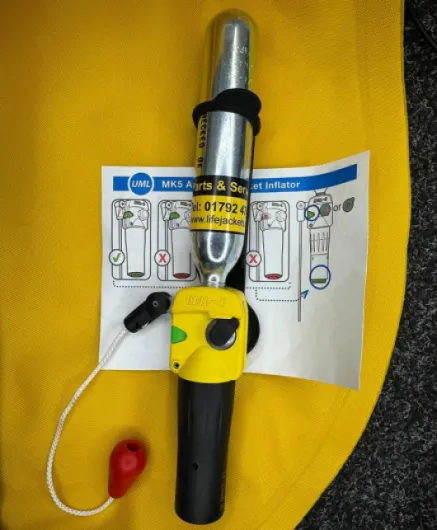
The first thing I did was open the side zip to see how easy it is to check the firing mechanism. This is one of the selling points: you don’t have to completely unfold the cover. In practice, that’s true. You unzip a small section, you can see the cylinder and the status indicator of the firing head. That’s a lot less hassle than the older jackets where you feel like you’re disassembling a tent every time you want to check if it’s still armed.
The harness option is basically a soft loop D‑ring at the front, designed for clipping a safety line. It’s lighter and less clunky than the old metal D‑rings I’ve used. It doesn’t bang around or bruise your ribs when you move, which I appreciated when crawling around on deck. On the other hand, if you’re used to solid metal hardware, this can feel a bit minimal at first, even though it’s rated for the job.
In terms of size and weight, the package dimensions listed (58 x 46 x 7 cm, around 1 kg) match the feel: it’s not ultra‑tiny, but it’s compact enough to throw in a bag or locker without fighting for space. Nothing fancy in the box: no extra pouch, no whistle on a lanyard in a separate bag, just the jacket. It feels like a work tool more than a gadget, which I actually prefer for safety gear.
Effectiveness and safety features: does it actually do the job?
I didn’t fall in by accident, so I forced the issue and pulled the manual toggle once while in the water to see how it behaves. Inflation was fast – a couple of seconds – and quite controlled. There was no violent jolt, just a firm expansion around my chest and neck. Once inflated, the 180N buoyancy felt solid. I’m around 85 kg, and it kept me high in the water with my mouth well clear, even when I relaxed completely and stopped trying to float.
The chin support is one of the more important parts. It pushes your head slightly back and supports under the jaw, which keeps your face out of the water. Lying on my back, I felt stable and not like I’d roll face‑down easily. Compared to old 150N models I’ve used, this felt a bit more reassuring, especially with light chop. It’s still an inshore jacket, but it doesn’t feel marginal on buoyancy.
On the safety side, the EXOLOK system is a good touch. It basically locks the gas cylinder so it can’t slowly unscrew itself over time. I’ve had that happen on other jackets where you suddenly find a loose cylinder when you check it months later. Here, once you’ve locked it in, it stays put. Combined with the easy side‑zip check, it makes it much more realistic to actually do quick pre‑trip checks instead of just hoping everything’s fine.
The only catch: after inflation, rearming and repacking still takes a bit of time and patience. That’s not unique to this model – it’s a general thing with inflatable lifejackets – but if you’ve never done it before, expect to spend 20–30 minutes the first time, carefully folding the bladder back into the cover. So yes, it’s clearly effective once deployed, but you do need to be willing to maintain it properly, not just throw it in a locker for three seasons and forget about it.
Pros
- Very comfortable and compact, easy to wear for 5–6 hours without major irritation
- Practical safety features: EXOLOK cylinder lock and side‑zip access for quick firing mechanism checks
- 180N buoyancy with chin support gives stable, head‑up position in the water
Cons
- Higher price than basic foam or entry‑level inflatable lifejackets
- Rearming and repacking after inflation still takes time and patience
- Black outer cover is a bit plain and not as high‑visibility as some alternatives
Conclusion
Editor's rating
The Crewsaver Crewfit 180N Pro is a solid, no‑nonsense inshore lifejacket that focuses on the right things: comfort, compact size, and practical safety features. The 180N buoyancy and chin support give good confidence once inflated, and the EXOLOK cylinder lock plus side‑zip access make routine checks much easier than on older designs. I actually wore it for full days without feeling strangled or annoyed, which for me is the real test.
It’s not the flashiest bit of kit and it’s not the cheapest either. If you’re an occasional paddler on a calm lake, this is probably more than you need. But if you spend regular time on small boats inshore and want one main lifejacket that you genuinely keep on, this hits a good balance between comfort, safety, and durability. The soft harness loop is light and practical, the materials feel robust, and as long as you’re willing to do basic maintenance and rearming, it should last several seasons.
So, who is it for? Regular day‑sailors, motorboaters, and RIB users who value comfort and easy checks. Who should skip it? People who just want a cheap spare for guests or who rarely go out – a simple foam jacket will be kinder on your wallet. For my use, it’s a pretty solid choice that I’d be happy to keep as my main inshore lifejacket.