
Summary
Editor's rating
Is it worth the money for a 5 kg stainless anchor?
Classic Bruce-style shape, nothing fancy but functional
316 stainless steel that actually looks and behaves like stainless
Early signs point to a long-lasting bit of gear
Holding power on sand and mud: good, as long as you set it properly
What you actually get out of the box
Pros
- Real 316 stainless construction with good corrosion resistance and easy cleaning
- Classic Bruce-style shape that sets quickly in sand and regular mud for small boats
- Feels solid and sturdy for a 5 kg anchor, with decent welds and no bending so far
Cons
- Struggles more in heavy weed and very soft mud, like most claw-style anchors
- No accessories included (no shackle, swivel, or storage bag), just the bare anchor

Specifications
View full product page →| Brand | NIDAYE |
A no-nonsense stainless anchor for small boats
I picked up this NIDAYE 5 kg Bruce-style claw anchor for a small speedboat and a 6 m sailboat I use on weekends. I wasn’t looking for anything fancy, just something that would actually hold the boat without rusting to pieces after one season. The listing looked basic, the brand is not exactly famous, but the price was reasonable for a 316 stainless anchor, so I gave it a shot.
Over a few outings, I used it mainly in sand and mud, with a bit of weed here and there. I’m not running offshore expeditions with it, just coastal hops and days at anchor in bays that can get a bit choppy when the wind picks up. My main expectation was simple: drop it, have it bite quickly, and not spend ten minutes re-setting while everyone on board rolls their eyes.
From the first tests, my feeling was that it’s a pretty straightforward piece of gear: no moving parts, no gimmicks, just a stainless claw with a decent shape. It’s not magic, and you still need enough chain and a proper scope, but once I adjusted that, it behaved like a normal Bruce should. No surprises, which on a boat is often what you want.
If you’re expecting some miracle anchor that grips on glass and holds through a storm with zero drag, this isn’t it. But if you want a solid, mid-sized stainless claw for a small yacht or speedboat, it gets the job done without drama. That’s basically my takeaway after using it several weekends in a row.
Is it worth the money for a 5 kg stainless anchor?
On the price side, you’re clearly paying more than a basic galvanized anchor of the same weight, but that’s normal for 316 stainless. For what it is—a mid-sized claw anchor for small boats—the value feels reasonable. You’re not just paying for the shiny look; you’re paying not to deal with rust flakes, ugly stains on the bow roller, and constant repainting or replacement every couple of seasons.
Compared to well-known marine brands, this NIDAYE one comes in cheaper while offering basically the same concept and similar material. You don’t get the big-brand logo or fancy packaging, but honestly, once it’s on the bow or in the locker, nobody cares who made it. The important part is that it holds the boat. From my outings, it performs in line with other Bruce-style anchors I’ve used, so the cost saving makes sense to me.
If your budget is tight and you’re fine with galvanised steel and a bit of rust, you can definitely find cheaper anchors that will also hold the boat. In that case, this might feel like overkill. On the other hand, if you already keep your boat in good shape and hate rusty marks, the extra you pay for stainless is easier to justify. I personally see it as a one-time buy that should last a long time instead of a disposable item.
So, value-wise, I’d call it good but not insanely cheap. You’re paying for durability and low maintenance more than for any special performance boost. For a small yacht or speedboat owner who wants a stainless primary or secondary anchor without paying top-brand prices, it hits a nice middle ground between cost and quality.
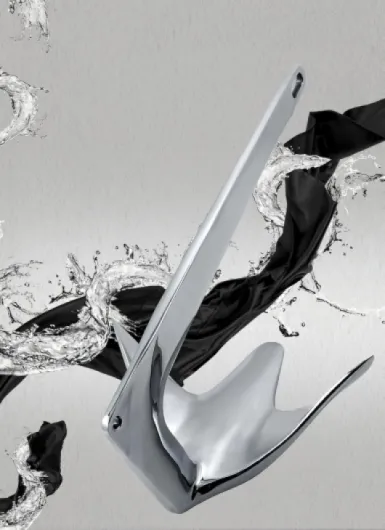
Classic Bruce-style shape, nothing fancy but functional
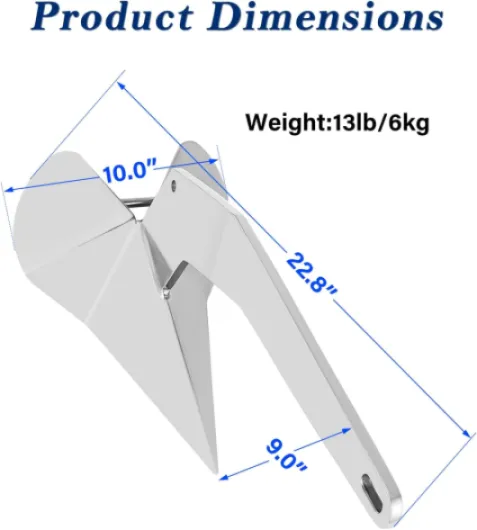
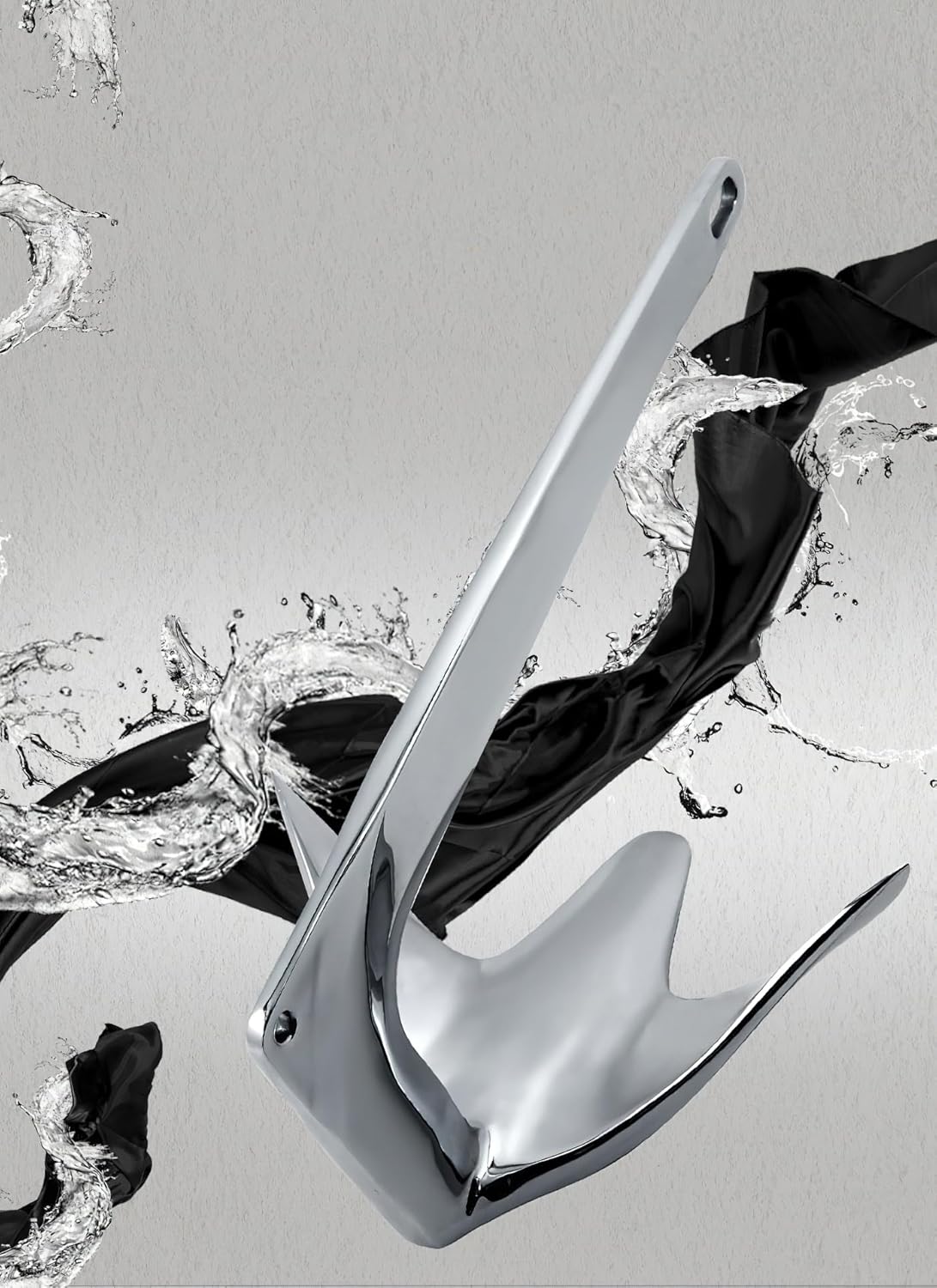
Design-wise, this is a straight-up Bruce-style claw anchor. Three flukes forming a kind of open claw, with a curved shank and a hole at the top for the shackle. If you’ve used Bruce or claw anchors before, there’s no surprise here. The proportions look normal: the flukes are wide enough, and the tip angles are fairly sharp, which helps it dig into sand and softer mud. It’s not some weird experimental shape that you have to relearn.
The geometry matters more than people think. In practice, the way this one is shaped makes it roll and set reasonably quickly once there’s tension on the rode. When I drop it from the bow and slowly reverse, you can feel through the chain when it flips and bites. In light wind and calm water, it usually sets on the first try. If I’m sloppy with scope or drop it in heavy weed, it can skate a bit, but that’s typical for this style, not really the fault of this specific model.
There are no moving parts, no hinges, nothing adjustable, which I like. Fewer things to seize or rattle. The only detail I would have liked is maybe a slightly more rounded edge on the shank end near the shackle hole, because it’s quite angular and can chew through a soft rope snubber if you’re not careful. I ended up adding a stainless shackle plus a swivel, which also gives a bit of spacing and solves that issue.
As for balance, when you pick it up by the shank, it hangs in a way that makes it easy to feed into a bow roller or to stow on a rail mount. On my small boat, I just keep it in the locker, and the shape means it tends to tangle less with the chain than a Danforth-style anchor. So in terms of pure design, it’s not revolutionary, but it’s a solid, familiar layout that behaves how you’d expect a Bruce to behave.
316 stainless steel that actually looks and behaves like stainless
The big selling point here is the 316 stainless steel, and that’s really why I went for it instead of another galvanized anchor. After a few trips in saltwater and being left wet in the locker, there’s no sign of rust or ugly stains so far. The surface is polished but not mirror-level. You can see some fine grinding marks, which tells me it’s more about function than looks, and I’m fine with that.
In terms of thickness, the metal doesn’t feel flimsy. The flukes have enough meat to them that I’m not worried about them bending the first time I get caught on a rock. I did one slightly sketchy retrieval where it was clearly snagged on something hard. We pulled gently with the engine, and it popped free without any visible deformation. I checked the tips and edges afterwards, and there were just minor scuffs, no bending or cracks.
The welds are not perfect showroom stuff, but they’re decent. You can see where the flukes are joined; the bead is regular and there are no obvious voids or sharp burrs. I ran my fingers along all the seams and only found one tiny rough spot that I quickly smoothed with a file to avoid catching ropes or fingers. For a mid-range, unknown-brand anchor, I’d say the build quality is pretty solid.
Compared to a cheap galvanized anchor I had before, the big difference is how easy this is to rinse and keep clean. Salt and mud wash off quicker, and it doesn’t leave rusty marks on the deck. If you’re fussy about your boat looking clean, that’s a plus. Long term, 316 stainless should hold up well, but obviously I’ve only got a few months of use on it so far. Still, based on what I’ve seen, the materials are in line with what’s advertised and feel reliable.
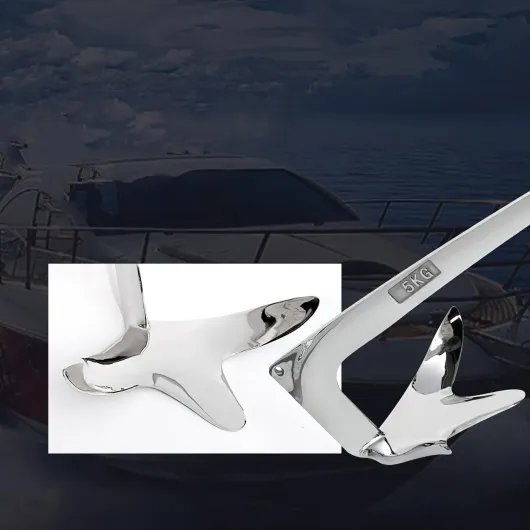
Early signs point to a long-lasting bit of gear
I’ve only had this anchor for a few months, but I’ve been fairly rough with it to see how it holds up. It’s been dragged over a mix of sandy bottoms, some rocky spots near the shore, and tossed into a damp anchor locker more times than I care to admit. So far, the durability looks good. No rust spots, no peeling, and the structure is still straight with no visible bending on the flukes or shank.
The main wear I see is purely cosmetic: scratches on the polished surface, especially on the tips and underside of the flukes from contact with rocks and gravel. That’s normal for any anchor. The important thing is that there are no hairline cracks or weird discolorations that would hint at bad stainless or poor heat treatment. After rinsing off the saltwater, it looks almost new, just with more scuffs.
One thing I pay attention to is how it behaves when stuck. I had one proper snag on what felt like an old chain or rock ledge. I pulled gently with the engine, changing angle a bit, and eventually it freed itself. Some anchors twist or bend at the crown in those cases, but here everything stayed aligned. The welds didn’t show any new marks, and the flukes stayed true. That gives me some confidence it can handle typical abuse from a small boat.
Of course, long-term durability for stainless also depends on how you treat it. If you constantly leave it sitting in a puddle of stagnant saltwater in the locker, even 316 will start to look tired after a while. I’ve been giving it a quick rinse with fresh water when I remember, and that’s probably helping. From what I’ve seen so far, I’d expect this anchor to last several seasons of normal use without drama, especially compared to cheap galvanized models that start flaking and rusting much earlier.
Holding power on sand and mud: good, as long as you set it properly
For actual use, I tried this anchor in three main conditions: sand, soft mud, and weedy patches. In sand, with about 4–5 times depth in chain and rope, it bites quickly. I usually drop it while slowly drifting back, then give it a gentle reverse with the engine. You can feel it grab and the boat stops pretty decisively. I’ve sat through gusts around 20–25 knots in a semi-sheltered bay, and the anchor held fine, no dragging that I could notice from GPS track or visual references.
In mud, it’s a bit more nuanced. In softer mud with some silt, it sets, but you sometimes need a bit more scope and patience. If I rush and don’t let it settle before powering back, it can just plow a bit then finally dig in. Once it’s buried, it holds reasonably well, but I wouldn’t rely on a 5 kg anchor in deep sticky mud with strong wind for a big boat anyway. On my 6 m sailboat, it was okay for normal conditions, but I always keep an eye on it when the wind shifts.
Where it’s less comfortable is heavy weed. Like most Bruce-style anchors, if you drop it into thick weed beds, it tends to skate along the top until it finds a patch of clearer ground. I had one time where I had to reset three times because it just wouldn’t bite through the weed. That’s not unique to this anchor, but if your local spots are mostly weedy, you might want a different design. For mixed sand and weed, it’s decent once it finds sand, but you need to be ready to move a bit to find better bottom.
Overall, in the conditions it’s meant for—sand and regular mud, on small boats—the performance is solid. It’s not magic, and you still need enough chain, proper scope, and a decent technique. But if you do your part, it holds as well as other Bruce anchors I’ve used in this weight range. For day trips and normal overnight stops in fair weather, I felt confident enough using it as my main hook.
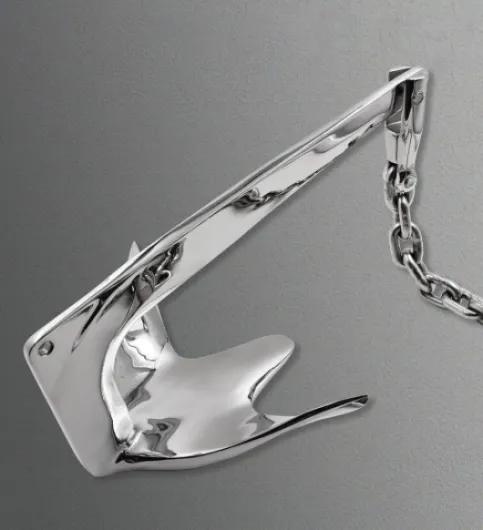
What you actually get out of the box
The "package" part is simple: you get one 5 kg Bruce-style claw anchor, and that’s it. No shackle, no swivel, no chain, no instructions. Honestly, for this type of product, I don’t really care about fancy packaging, but it’s good to know you’ll need to have your own hardware ready. It came in a plain cardboard box with some basic padding. Nothing special, but it arrived without bends or dings.
The anchor itself is sized about right for what it claims: basically for small boats. I’ve used it on a 5.5 m open speedboat and a 6 m light sailboat, and weight-wise it makes sense. If you’re thinking of using this as a primary anchor on anything much bigger or heavier, I’d say it starts to look a bit light, unless you’re always in very sheltered waters. The listing says it’s stainless steel and 5 kg, and on the scale it was basically spot on.
One thing to note: there’s no storage bag or protection for the sharp-ish edges. If you plan to toss this into a locker with inflatable gear, fenders or soft bags, you’ll probably want to wrap it or get a bag yourself. The finish is shiny enough that it looks nicer than a regular galvanized anchor, so if you keep it on a bow roller, it doesn’t look cheap, even if the brand is unknown.
Overall, the presentation matches the low-frills nature of the product. It’s clearly built to be used, not admired in the living room. If you expect a full anchoring kit or detailed documentation on how to set scope, you’ll be disappointed. If you just want a 5 kg stainless Bruce delivered in one piece, that’s exactly what you get, nothing more.
Pros
- Real 316 stainless construction with good corrosion resistance and easy cleaning
- Classic Bruce-style shape that sets quickly in sand and regular mud for small boats
- Feels solid and sturdy for a 5 kg anchor, with decent welds and no bending so far
Cons
- Struggles more in heavy weed and very soft mud, like most claw-style anchors
- No accessories included (no shackle, swivel, or storage bag), just the bare anchor
Conclusion
Editor's rating
After using the NIDAYE 5 kg Bruce-style claw anchor on a small speedboat and a 6 m sailboat, my opinion is pretty straightforward: it’s a solid, no-nonsense stainless anchor that does what you expect, as long as you use it within its limits. The 316 stainless construction looks and behaves like real stainless should, with no rust so far and only normal cosmetic scratches. The classic Bruce-style design sets well in sand and regular mud, and with proper scope and enough chain, it holds a small boat reliably in the kind of conditions most weekend boaters see.
It’s not perfect. In heavy weed it struggles, and 5 kg is on the light side if you try to push it as a main anchor for a heavier or longer boat. You also don’t get any extras in the box—no shackle, no instructions, nothing. But if you know how to anchor and already have the rest of the gear, that’s not a big deal. For the price, considering it’s 316 stainless, I think the value is pretty decent. I’d recommend it to owners of small yachts and speedboats who want a clean, low-maintenance stainless anchor without paying big-brand money. If you sail a heavier boat, anchor a lot in thick weed, or want something for serious storms, I’d look at a heavier model or a different design.