
Summary
Editor's rating
Value for money: decent if your expectations match the price
Design: functional shape with a few rough edges
Materials: 304 stainless is okay, but not bulletproof
Durability: fine for casual use, question mark for long term in salt
Performance on the water: it works, with limits
What you actually get out of the box
Pros
- Affordable stainless/nylon bow roller that covers the basic functions
- Pre-drilled holes and simple shape make installation straightforward for a handy owner
- Nylon roller runs smoothly and protects chain and bow from excessive friction
Cons
- 304 stainless and relatively thin metal make it less suited for heavy-duty or long-term saltwater use
- Spring-loaded pin feels light and shouldn’t be trusted as the only anchor security
- Finish and overall robustness are clearly below higher-end marine brands

Specifications
View full product page →| Brand | Yctze |
A budget bow roller that caught my eye
I picked up this Yctze 230 mm anchor bow roller because I needed something simple and not too expensive for a small boat refit. My old roller was bent and noisy, and I didn’t feel like dropping big money on a fancy branded one. This one popped up online with a mid-range rating and a decent price, so I figured I’d give it a try. I’ve used it over a few weekends on a small cruiser, with a standard plough anchor around 10 kg and a mix of chain and rope.
Right away, I’m going to say it: this is a budget piece of hardware. You can see it in the finish, in the weight, and in some small details. It’s not junk, but it’s not top-tier marine gear either. If you’re used to Lewmar or similar brands, you’ll notice the difference. If you’re upgrading from no roller at all or from a rusty DIY setup, it will probably feel like a step up.
In use, it does what it’s supposed to do: it guides the anchor over the bow and keeps it from chewing up the gelcoat. The nylon roller turns fine under moderate load, and the stainless frame hasn’t twisted or bent on me so far. But you do feel that it’s on the light side, especially if you’re thinking of hanging a heavy anchor out there full-time or bashing through chop with the bow taking hits.
Overall, after some real-world use, my feeling is that it’s decent but nothing more. It’s for people who want something functional and are okay with a few compromises on finish and long-term robustness. If you’re running a bigger boat or anchoring a lot in rough conditions, I’d be more cautious and probably look higher up the range.
Value for money: decent if your expectations match the price
In terms of value, this Yctze anchor roller sits in that middle ground: not super cheap no-name junk, but clearly cheaper than the big marine brands. For what you pay, you get a functional stainless/nylon roller that fits small to mid-size boats and does the basic job. If your old roller is shot or you didn’t have one at all, this is a budget-friendly way to upgrade your anchoring setup without emptying your wallet.
That said, you have to be honest about what you need. If you sail or motor occasionally on lakes or in sheltered bays with a modest anchor, this roller is probably good value. It will protect the bow, guide the anchor, and last a reasonable amount of time if you rinse it now and then. In that use case, it’s good value for money, because paying double or triple for a heavy-duty branded roller might be overkill.
If, on the other hand, you’re in full saltwater, leave the boat in the water year-round, and rely heavily on your ground tackle, I’d treat this purchase more as a stopgap than a long-term solution. There are tougher rollers out there with 316 stainless, thicker brackets, and better-finished pins and rollers. They cost more, but over five or ten years, they might actually be cheaper than replacing a lighter roller like this one once or twice.
So my take on value is pretty simple: it’s fair for what it is. You’re not getting top-tier gear, but you’re not paying top-tier prices either. If you go in with realistic expectations – small boat, moderate use, some basic maintenance – you’ll probably feel you got your money’s worth. If you expect it to behave like a premium roller in harsh conditions, you’ll be disappointed and should look higher up the range.
Design: functional shape with a few rough edges
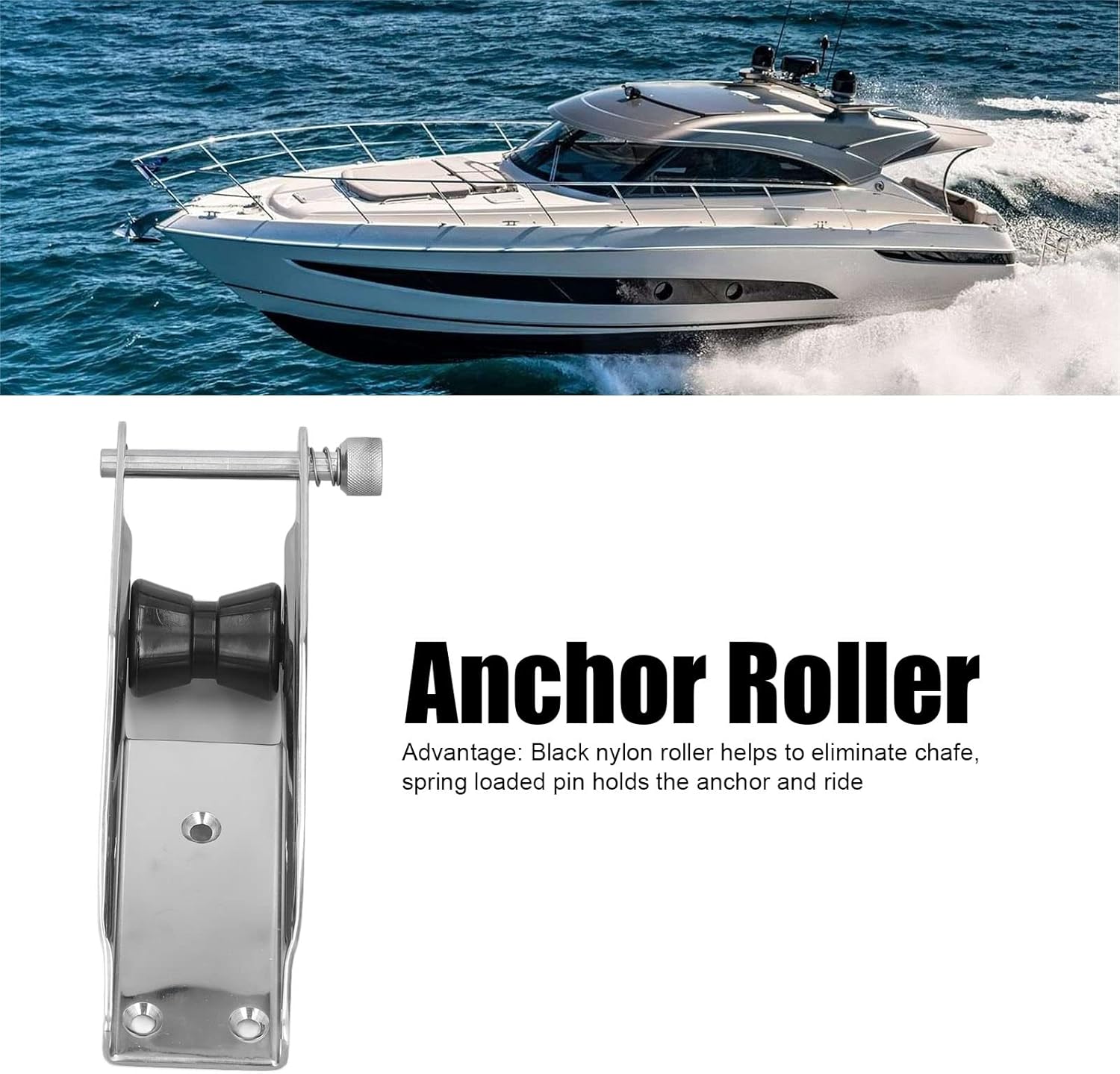
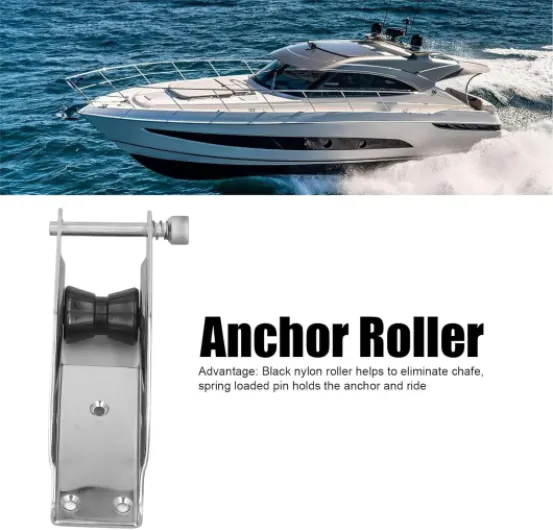
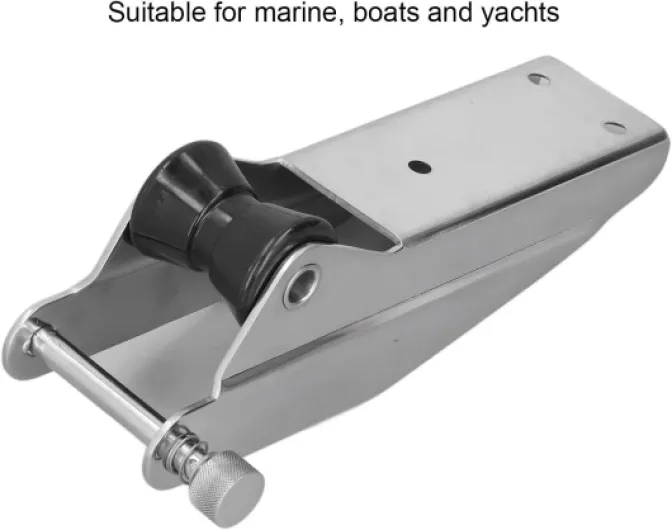
Design-wise, this roller sticks to a classic layout: stainless U-shaped bracket, single black nylon roller in the middle, and a spring pin across the top. That’s fine; there’s no need for fancy engineering on a small boat roller. The 230 mm length is okay for light anchors and small bows, but if your stem is bulky or you have a deep foredeck, you might find it a bit short. My plough anchor clears the bow, but only just. With a slightly bigger anchor, the tip might come a little too close to the hull for comfort.
One thing I noticed is that the sides of the bracket are a bit narrow. They hold the anchor shank, but there isn’t a lot of lateral guidance. When the boat swings at anchor and the chain tugs sideways, you can see the anchor move and the shank rub near the sides. It hasn’t damaged anything so far, but you can tell this isn’t designed for heavy lateral loads. If you anchor in calm lakes or rivers, no big deal. If you’re anchored in swell or strong current regularly, I’d want something stiffer and wider.
The spring-loaded pin is a good idea on paper: it lets you secure the anchor without extra lashings. In practice, it’s more of a backup than a main safety system. The spring isn’t very strong, and the machining around the pin holes isn’t perfect. I still use a separate line or chain stopper when underway, and I’d recommend the same. Treat the pin like a convenience feature, not a safety guarantee.
Visually, it’s plain. Brushed stainless with a black roller, no logo, no fancy finish. On my older boat, it fits in fine; it doesn’t look out of place or cheap from a distance. Up close, you notice the edges aren’t perfectly deburred and the welding (where present) is basic. Nothing sharp enough to cut you, but you can see it’s built to a cost. Functionally, the design works, but it’s clearly aimed at small to mid-size boats that don’t abuse their gear every weekend.
Materials: 304 stainless is okay, but not bulletproof
The frame is made from 304 stainless steel, which is pretty standard for cheaper marine hardware. It’s fine for freshwater and for coastal use if you rinse it, but it’s not as corrosion-resistant as 316 stainless that you see on higher-end gear. After a few outings in saltwater and a couple of rinses with fresh water, mine still looks clean. No rust spots yet, but I wouldn’t call that a long-term test. On cheaper 304 stuff, tea staining and light rust often show up after a season, especially around bolts and welds.
The thickness of the metal is acceptable but not generous. You can flex the bracket slightly by hand if you really try, which tells you it’s not built like a tank. Under normal usage with a 10 kg anchor, it holds fine and doesn’t deform. But if you’re hanging a 15–20 kg anchor out front and slamming into waves, I wouldn’t be shocked to see some bending over time. For a small sailboat or runabout, though, the gauge is probably enough.
The roller itself is black nylon, and that’s actually one of the better parts. It turns smoothly, doesn’t squeak, and doesn’t chew up the chain. Nylon is pretty tough, and it absorbs a bit of shock. After several anchor drops and retrieves, there’s only light marking on the surface, nothing serious. Compared to some hard plastic or cheap rubber rollers I’ve seen crack or flatten, this one seems decent. Just don’t expect it to stay pretty forever if you drag rusty chain across it daily.
Hardware quality (springs, pin, etc.) is average. The pin is stainless but feels a bit light, and the spring isn’t exactly heavy-duty. I’d keep an eye on it, especially if you leave the anchor locked in place and exposed to the elements all season. In short, materials are in line with the price: okay for casual use, not what I’d choose for a boat that lives in saltwater year-round with hard usage.
Durability: fine for casual use, question mark for long term in salt
On the durability side, I’ve only got a few weeks of use on it, so I can’t pretend I’ve torture-tested it for years. But I can at least talk about what I’m seeing and what I expect. So far, no bending, no visible cracks, no rust spots. The roller still turns smoothly and the pin still snaps into place. That’s the good part. For light use on a small boat that goes out on weekends and gets rinsed, I think it will hold up reasonably well.
My concern is more about long-term saltwater exposure and heavier usage. 304 stainless around the bow, where it’s constantly getting splashed, is always a bit of a gamble. You often start seeing tea staining around bolt holes and welds after a season or two, especially if the boat lives in a marina and doesn’t get much fresh water rinsing. The finish on this one isn’t super polished, which doesn’t help with corrosion resistance. I’d plan to inspect and clean it a bit more often than a higher-grade 316 roller.
Mechanically, the potential weak spots are the spring pin and the roller axle. If the spring rusts or weakens, the pin may stop locking properly. If the axle isn’t perfectly aligned or if dirt and salt build up, the roller could start to bind. So far, none of that has happened on mine, but I’d still recommend a quick rinse and a visual check after a salty weekend. It’s not high-maintenance, but it’s not completely “fit and forget” either.
My honest feeling: for the price and for light-duty use, the durability is acceptable. If you’re a heavy cruiser, anchor a lot, or run a bigger anchor, I’d spend more on a thicker, 316 stainless roller from a more established marine brand. This Yctze one is more for the casual boater who wants something functional and is okay with possibly swapping it out in a few seasons if it starts to show its age.
Performance on the water: it works, with limits
In actual use, the Yctze roller does what you buy it for: it guides the anchor up and down without chewing the bow. I’ve used it for about a dozen anchor drops in mixed conditions: light wind, a bit of chop, and some current. The anchor comes in fairly straight, the chain rides fine on the nylon roller, and I haven’t had any jams so far. Compared to my old bent roller, it’s clearly an upgrade in terms of smoothness and noise.
Where you start to feel the limits is when the load isn’t straight. When the boat swings and the chain pulls at an angle, you can see the bracket flex a little and the shank rub against the sides more than I’d like. It hasn’t caused any damage yet, but it’s a reminder that this is a light-duty to medium-duty piece of gear. If you’re often anchored in windy, gusty bays where the boat dances around, I’d want something stiffer. For sheltered moorings and casual weekend use, it’s fine.
The spring pin performance is mixed. It does hold the anchor in place when you push it in properly, but because the spring isn’t very strong and the fit isn’t super precise, I don’t fully trust it for rough passages. I still secure the anchor with an extra line or chain lock every time I leave the anchorage. So in my routine, the pin is more of a helper when I’m working on deck than a real safety lock. That’s not a deal-breaker, but it’s worth knowing before you rely on it.
Noise and friction are low. The nylon roller turns freely, and there’s no grinding sound even with a bit of weight on the chain. Over time, I expect some groove to form, but for now it’s still smooth. Overall, performance is decent: it gets the job done for small to mid-size boats in moderate conditions. Just don’t treat it like a heavy-duty commercial-grade roller, because it’s not built for that.
What you actually get out of the box
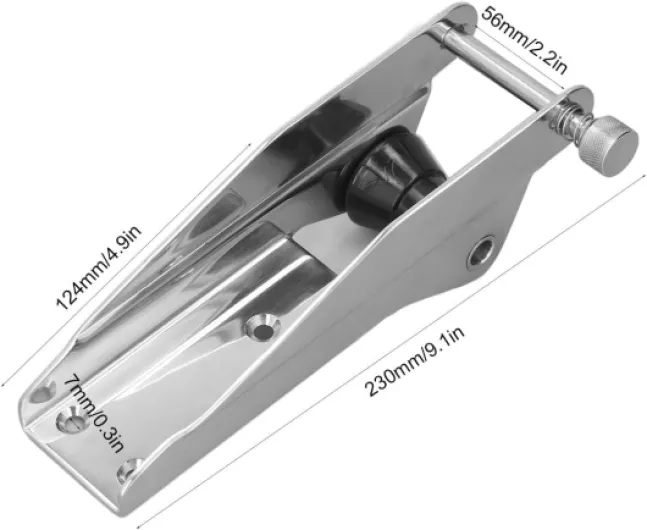
Out of the box, the Yctze anchor roller is pretty straightforward: one stainless steel bracket with a black nylon roller and a spring-loaded pin. No extra bolts, no gasket, no template, just the roller itself. Dimensions are roughly in line with the listing: about 230 mm long, and the whole thing weighs around 800 g. So it’s not super beefy, but it’s not toy-level either. The shape is a classic bow roller style with a flared entry and a cutout for the anchor shank.
The pre-drilled holes are a plus. They’re reasonably aligned and spaced, and on my boat I only had to enlarge them slightly to match existing holes from the old roller. That said, don’t expect a universal fit: you’ll likely need to drill at least two new holes in your bow or backing plate. There’s no marking or paper template in the box, so you’re on your own for positioning and measurements. For me, that’s fine, but if you’re not handy with tools, it’s one more small hassle.
The spring-loaded pin is meant to lock the anchor in place when it’s seated in the roller. Mechanically, it works: it snaps into place and holds the shank. But it doesn’t feel especially solid or precise. There’s a bit of play, and you can tell it’s not the kind of hardware that likes to be abused. For a small anchor and occasional use, it’s okay. For daily charter use or heavy ground tackle, I’d be less confident.
Overall, the presentation is very “no-frills”: one piece of hardware, basic protective wrapping, no instructions. If you’ve already installed deck gear before, you’ll manage easily. If this is your first time fitting an anchor roller, you might miss a small diagram or at least a line about recommended bolt sizes and backing plates. It’s not a big deal, but it shows that this is intended as a cheap part, not a carefully packaged premium kit.
Pros
- Affordable stainless/nylon bow roller that covers the basic functions
- Pre-drilled holes and simple shape make installation straightforward for a handy owner
- Nylon roller runs smoothly and protects chain and bow from excessive friction
Cons
- 304 stainless and relatively thin metal make it less suited for heavy-duty or long-term saltwater use
- Spring-loaded pin feels light and shouldn’t be trusted as the only anchor security
- Finish and overall robustness are clearly below higher-end marine brands
Conclusion
Editor's rating
After using the Yctze 230 mm anchor bow roller for a bit, my conclusion is that it’s a decent, budget-friendly option for small boats and light to medium use. The 304 stainless frame and nylon roller are adequate, the pre-drilled holes make installation easier, and it does the basic job of getting the anchor on and off the bow without tearing up the gelcoat. It’s not fancy, it’s not ultra-robust, but it works as long as you don’t push it beyond what it’s built for.
Where it falls short is in long-term confidence and heavy-duty use. The metal gauge isn’t very thick, the spring-loaded pin feels a bit light, and 304 stainless around the bow will always need a bit more attention in saltwater. If you’re a weekend boater on a lake or in sheltered coastal areas, it’s a reasonable buy and good value for money. If you’re cruising hard, running a big anchor, or leaving the boat in saltwater year-round, I’d personally spend more on a heavier 316 stainless roller from a better-known marine brand.
So, who is this for? Owners of small to mid-size boats who want a practical, affordable bow roller and are okay with checking it from time to time. Who should skip it? People who anchor a lot in rough conditions, use heavy anchors, or want something they can bolt on and forget about for years. For me, it’s a solid 3 out of 5: functional and reasonably priced, but with clear limits you need to accept.