
Summary
Editor's rating
Value for money: worth it if you keep your expectations in check
Design and user interface: functional but a bit clunky
Waterproofing and build: feels cheap but survives splashes
Audio performance, Bluetooth, and radio reception on the water
What you actually get and what it really does
Does it actually make life easier on the boat?
Pros
- Low price for a waterproof marine‑style head unit with Bluetooth, USB, AUX, and RCA outputs
- Decent Bluetooth stability within a few meters and simple reconnection to phone
- Survives splashes and light rain without issues during normal boat use
Cons
- Basic, dated interface with a dim screen that’s hard to read in bright sunlight
- Build quality feels cheap and long‑term durability is uncertain
- Remote control is flimsy and not very responsive, making it only marginally useful

Specifications
View full product page →| Brand | Fabater |
A cheap way to get Bluetooth on the boat
I picked up this Fabater marine Bluetooth stereo mainly because I wanted something cheap and waterproof for a small fishing boat, not a fancy system. I wasn’t expecting hi‑end audio, just something that could play Spotify from my phone and catch a few FM stations while out on the water. The price and the promise of Bluetooth, USB, AUX, and a sub output looked decent on paper, so I gave it a shot.
After a couple of weekends using it, my general feeling is: it does what it says, but nothing more. If you’ve had mid‑range brands like Pioneer or Kenwood marine units before, this will feel like a step down in terms of finish, interface, and radio sensitivity. But if you’re coming from “no music at all on the boat”, then it’s already a clear step up, as long as you keep your expectations realistic.
The main thing I noticed right away is that the unit is focused on the basics: Bluetooth streaming, FM/AM radio, simple USB stick playback. It claims lossless FLAC support and surround modes, but in real life, with boat noise and basic speakers, that’s more marketing than something you actually notice. On the other hand, the waterproof aspect and the simplicity of use are the bits that actually matter when you’re on choppy water with wet hands.
So overall, I’d describe this as a budget marine head unit that covers the essentials. It’s not perfect, and there are a few annoyances I’ll get into, but if you just want tunes on a small boat or maybe an ATV or an old car that lives outside, it’s a workable option. Just don’t expect miracles for the price.
Value for money: worth it if you keep your expectations in check
Price is the main selling point here. Compared to big marine brands, this Fabater unit usually comes in noticeably cheaper, especially if you catch it on sale. For that lower price, you get Bluetooth, FM/AM, USB, AUX, RCA outputs, and a sub output. On paper, that’s quite a lot of features. In reality, the execution is basic but functional, which is about what I’d expect at this level.
If you compare it to a no‑name car stereo you might stick in an old vehicle, it’s in the same ballpark. The difference is the waterproof front and the fact it’s somewhat designed with marine use in mind. So if you’re thinking of putting a regular cheap car stereo on a boat, I’d say spend a little more and get something like this instead. It should survive moisture and splashes better, and that alone justifies the small price bump.
Against more recognized marine brands, though, the gap shows. You usually get better screens, nicer interfaces, stronger radio tuners, and more solid construction when you pay more. If you’re on the water a lot, or if the boat is more than just a weekend toy, investing in a better unit probably makes sense. Over a few years, the extra cost spreads out and you get a more pleasant experience every single trip.
So in terms of value, I’d say it’s good for: small boats, budget builds, secondary systems (like on an ATV or an old car), or anyone who just wants simple Bluetooth audio outdoors without caring too much about polish. If you’re picky about sound quality, interface, and durability, you’ll probably find it a bit cheap and might be happier spending more from the start.
Design and user interface: functional but a bit clunky
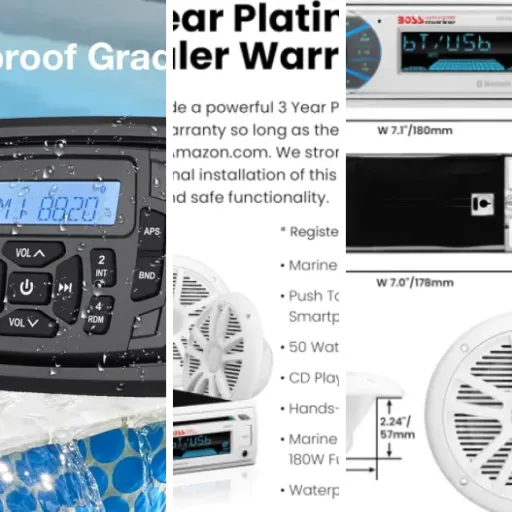
Design‑wise, this thing screams "no‑nonsense budget unit". Black plastic front, small display, a few physical buttons, and that’s it. No big color screen, no fancy animations. For a boat, I actually don’t mind that. Fewer moving parts, fewer things that can break. The layout is fairly compact, so it fits nicely in smaller dashboards or tight panels where a bigger double‑DIN unit wouldn’t work.
The button layout is okay but not great. The volume buttons are easy to find by touch, which is important when you’re steering or dealing with lines and just want to quickly turn the music down. However, some of the secondary buttons are small and close together, and with wet fingers or gloves it’s pretty easy to hit the wrong one. Changing modes (Bluetooth, radio, USB, AUX) is straightforward, but digging into settings like EQ or radio tuning takes a bit of trial and error at first.
The screen is very basic: simple text, limited characters, and not super bright. On a cloudy day or at dusk, it’s fine. In full sunlight, especially if the panel is angled, it can be hard to read song names or radio frequencies. You can still see enough to change sources and adjust volume, but don’t expect to comfortably scroll long track names. It’s more of a status display than something you really interact with a lot.
Overall, the design is practical but a bit dated. It feels like a car head unit from 10–15 years ago that’s been made waterproof. If you care about looks and modern interfaces, you’ll probably find it a bit boring. If you only care that it fits, turns on, and doesn’t mind getting splashed, then the design is acceptable. It’s not pretty, but on a work boat or a beater car, that’s not really a deal‑breaker.
Waterproofing and build: feels cheap but survives splashes
In terms of build, you can tell this is made to hit a low price point. The plastic doesn’t feel high‑end, the buttons have a slightly stiff, clicky feel, and the overall finish is a bit rough compared to better‑known marine brands. That said, after a few outings with spray, wet hands, and some light rain, the unit kept working fine. No condensation under the screen, no random reboots, and no buttons getting stuck, which is honestly what matters most for this kind of product.
The waterproof claim seems realistic for regular use. I wouldn’t deliberately hose it down at point‑blank range or submerge it, but for normal boat splashes and occasional rain, it held up. I did wipe it down after each trip and tried not to leave it sitting with standing water on the face. The connectors on the back are the usual type, so you still need to be careful with how you install and protect the wiring behind the dash. The front panel is the main waterproof part; behind it, it’s still basic electronics.
Vibration and bumps didn’t seem to bother it either. The boat I used is not exactly smooth; it bangs around a bit in chop. The unit stayed in place, no rattling, and the sound didn’t cut out when hitting waves. That gives me some confidence it can handle life on an ATV or an outdoor vehicle too, as long as you mount it properly and don’t expect it to survive direct pressure washing.
Long‑term durability is harder to judge after only a few weeks, but nothing in the build screams high quality. It feels like a product that will be fine for a couple of seasons if you take basic care of it, but I wouldn’t be shocked if it starts fading, getting scratchy buttons, or having small issues faster than a more expensive brand. So, if you want something bulletproof for heavy daily use, I’d look higher up the range. For occasional weekend use on a small boat, it’s acceptable.
Audio performance, Bluetooth, and radio reception on the water
Let’s talk sound first. With basic 6.5" marine speakers (nothing fancy), the audio quality is decent but nothing more. It’s stereo, it gets loud enough for a small to medium boat, and it doesn’t distort too badly until you really crank it near the max. The unit claims support for FLAC and lossless audio, but honestly, on a boat with wind, engine noise, and average speakers, I couldn’t really tell a difference between FLAC and standard MP3 or Spotify streaming. So yes, it plays FLAC, but it’s not going to magically turn your setup into a hi‑fi system.
The built‑in EQ is basic: a few presets and some manual adjustment for bass and treble. It’s enough to tweak things so it doesn’t sound too flat or too boomy, but don’t expect fine control. If you add an external amp and a sub using the SUB output, you can definitely improve the low end, but the head unit itself is more of a simple source than a serious audio processor. For casual listening while cruising or fishing, it’s fine. If you’re trying to throw a party on the dock, you’ll quickly find its limits.
Bluetooth performance is actually one of the better points. The connection is relatively stable within a few meters. I left my phone in a dry box under the console, and the music kept playing without major dropouts. When I walked a few meters away on the dock, it still worked, but after around 8–10 meters with some obstacles, it started to cut a bit. Latency is low enough for music and basic YouTube videos; it’s not meant for gaming or anything like that, but on a boat that’s not really the use case anyway.
Radio reception is okay. The product mentions an anti‑interference digital radio IC and better reception in remote areas. I tested FM in a lake area with patchy coverage. It did manage to pick up a couple of stations that my older cheap car radio struggled with, but it’s still not on the same level as a good automotive unit from known brands. Auto‑scan and memory presets work, but manual fine tuning is a bit annoying due to the interface. So, performance overall is acceptable for the price: it plays music reliably, doesn’t cut out all the time, and the sound is fine for background listening, just don’t expect premium audio.
What you actually get and what it really does
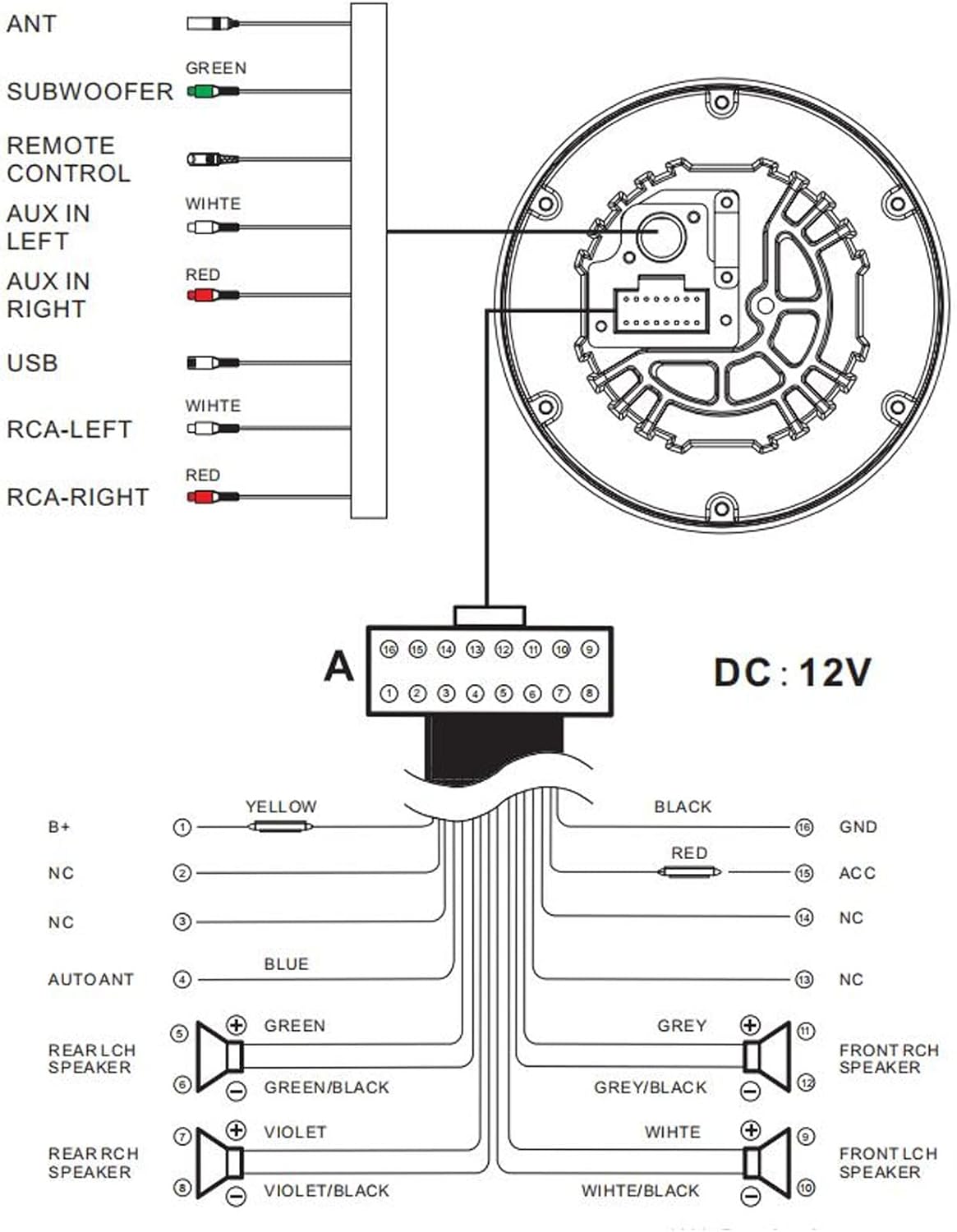
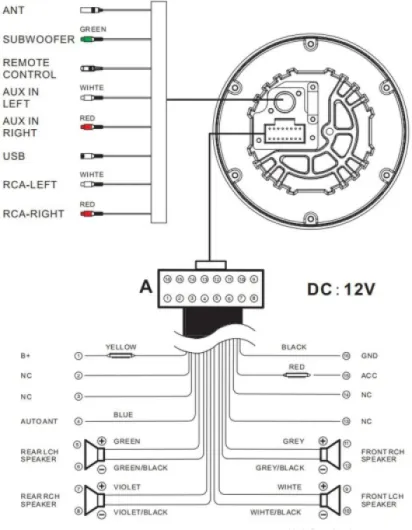
Out of the box, you basically get the head unit, a basic remote, and a battery for that remote. No speakers, no fancy wiring harness with labels, just the bare minimum. The documentation is typical low‑cost electronics: it exists, but it’s not super clear, especially if you’re not used to wiring head units. If you’ve installed a car stereo before, you’ll manage. If not, expect to spend a bit of time double‑checking wire colors and maybe watching a YouTube video.
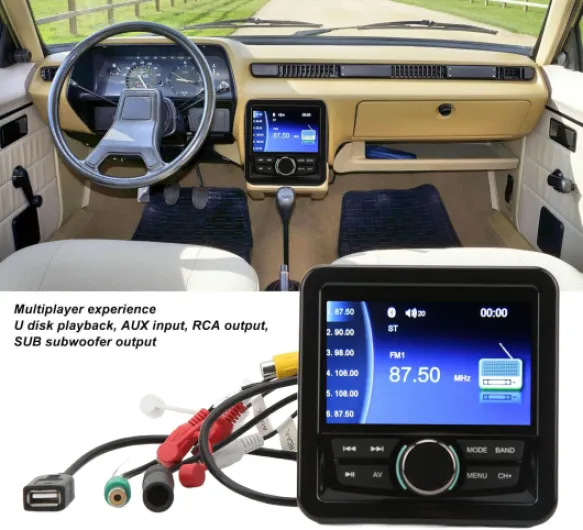
On the feature side, it’s a digital media receiver only: no CD drive, just FM/AM radio, Bluetooth, USB, and AUX. You also get RCA outputs and a dedicated SUB output, so you can hook it up to an amp and a subwoofer if you want more bass. It claims support for MP3 and FLAC, which is nice on paper, and you can plug a USB stick full of files and scroll through them. In practice, the navigation through folders is pretty clunky, and the small screen doesn’t help much, so it’s better suited for simple playlists rather than a huge, well‑organized library.
The Bluetooth side is fairly straightforward: you pair your phone, and it reconnects automatically most of the time. It works with both Android and iOS; I tested it with an Android phone and a Windows laptop. The advertised 10‑meter range is roughly accurate in open space. On the boat, with the unit in the console and my phone sometimes in a pocket or a small dry bag, I got a few small hiccups but nothing dramatic. It’s not as stable as more expensive units, but for casual listening it’s acceptable.
In day‑to‑day use, the core functions are all there: volume, track skip, source selection, basic EQ, radio presets. The interface is a bit dated and not very intuitive at first, but after a couple of days you remember where things are. If you want a slick touchscreen and pretty graphics, this is not it. If you just want a box that plays music and doesn’t care if it gets splashed, then the feature set is decent, especially at this price point.
Does it actually make life easier on the boat?
From a practical standpoint, the question for me was simple: does this thing reliably give me music and radio without fuss? Most of the time, yes. Power it on, it usually reconnects to the last Bluetooth device, and I can start a playlist in a few seconds. Volume control is straightforward, and having the option to quickly switch to FM when my phone battery is low is handy. It’s not a smart device, but for a boat that’s often better. Less to crash, less to update.
One thing I liked is being able to plug in a cheap USB stick with a few albums and just let it run. That means if someone forgets their phone or we don’t want to drain batteries, we still have music. The navigation through tracks is basic, but for long playlists it’s fine. The AUX input is also useful if you have an older MP3 player or want to quickly hook up a friend’s device without messing with Bluetooth pairing.
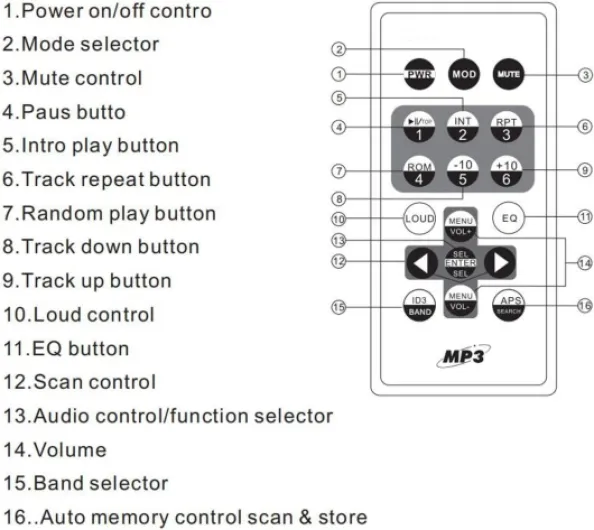
The remote control is kind of a mixed bag. It’s nice in theory to be able to adjust volume or skip tracks from a bit further away, but the remote feels flimsy, and the buttons aren’t very responsive unless you aim it fairly well at the unit. It’s infrared style, not RF, so line of sight matters. On a small boat where you’re basically sitting near the console, it’s not that useful. On a slightly bigger boat where the unit is not easily reachable, it could help, as long as you don’t lose it in a storage compartment.
In daily use, I’d say the effectiveness is good enough for basic needs. It starts, it plays, it doesn’t randomly lose settings, and it doesn’t crash. The interface could be cleaner, the remote could be better, and the radio tuning could be smoother, but if you just want background music while you fish or cruise, it does the job without too much drama.
Pros
- Low price for a waterproof marine‑style head unit with Bluetooth, USB, AUX, and RCA outputs
- Decent Bluetooth stability within a few meters and simple reconnection to phone
- Survives splashes and light rain without issues during normal boat use
Cons
- Basic, dated interface with a dim screen that’s hard to read in bright sunlight
- Build quality feels cheap and long‑term durability is uncertain
- Remote control is flimsy and not very responsive, making it only marginally useful
Conclusion
Editor's rating
After using the Fabater Marine Bluetooth Stereo Radio for a bit, my conclusion is pretty straightforward: it’s a budget marine head unit that does the basics and not much more. You get Bluetooth streaming, FM/AM radio, USB and AUX inputs, and even a subwoofer output, all in a compact, waterproof front panel that can handle splashes and light rain. Sound quality is decent for casual listening, the Bluetooth connection is fairly stable at normal distances, and installation is manageable if you’ve ever wired a car stereo before.
On the downside, the build and interface clearly feel low‑cost. The screen is hard to read in bright sun, the buttons aren’t the most comfortable, the remote is flimsy, and the whole thing feels a bit dated compared to better‑known marine brands. The advertised FLAC and surround features don’t really change much in real use, especially on a noisy boat with average speakers. Long‑term durability is also a question mark; it doesn’t feel like a product you buy for 10+ years of heavy use.
I’d recommend this unit to someone who just wants cheap and functional audio on a small boat, ATV, or old vehicle and doesn’t care about fancy interfaces or top‑tier sound. It’s also fine as a temporary solution while you figure out a more serious setup later. If you’re out on the water a lot, care about smoother radio reception, and want something that feels more solid, I’d skip this and look at mid‑range marine brands instead. In short: it gets the job done, but it’s clearly a budget choice with the compromises that come with that.