
Summary
Editor's rating
Value: not cheap, but makes sense if you actually use radar
Design: classic Garmin dome, nothing fancy but practical
Power consumption and smart modes: good for people on batteries, not shore power
Durability and build: feels solid, but time will tell
Performance: where the 50 watts and MotionScope actually matter
What you actually get with the GMR Fantom 24x
Effectiveness in real conditions: fog, traffic and tight spaces
Pros
- Clear target detection with MotionScope Doppler that actually helps in busy traffic
- Dual range and up to 60 RPM give a responsive, useful picture for both near and mid-range
- Power save and timed transmit modes make it more battery-friendly for cruising boats
Cons
- Price is on the high side compared to simpler non-Doppler domes
- Still needs manual tweaking in heavy rain or near large structures to reduce clutter

Specifications
View full product page →| Brand | Garmin |
A radar for people who actually leave the marina
I’ve been running the Garmin GMR Fantom 24x dome radar on a 30-foot cruiser for a bit now, mostly in coastal waters with the usual mix of fog, rain and crowded channels. I’m not a Garmin fanboy, I just wanted something that works, talks nicely to a Garmin plotter and doesn’t drain the batteries when I’m on the hook. This dome sits in that category: not cheap, but clearly built for people who actually use radar, not just to look cool at the dock.
What pushed me to try this one was the combo of 50-watt solid-state power and the whole MotionScope / Doppler thing. On paper, it promises better target separation and the ability to see who’s moving toward you and who’s going away. In practice, I wanted to see if it actually helped in tight traffic and in rain clutter, or if it was just another buzzword stuck on the box.
I’ve used older magnetron radars before, plus a couple of earlier small solid-state domes from other brands. Compared to those, the Fantom 24x is clearly more “plug it in, let auto do most of the work, and tweak a bit if you’re picky.” After a few trips in crap visibility, I can say it’s not magic, but it does make life easier, especially if you’re not a radar pro who loves fiddling with gain and sea clutter every 5 minutes.
Overall, if you’re expecting a miracle that turns night into day, you’ll be disappointed. If you just want reliable targets, decent range, and a radar that doesn’t cook your batteries in three hours, this one is pretty solid. It has a few quirks, and the price bites a bit, but as a tool on a cruising boat, it gets the job done without drama.
Value: not cheap, but makes sense if you actually use radar
Let’s be honest: the GMR Fantom 24x is not a budget radar. You’re paying for the Garmin name, the Doppler features, and the integration with Garmin chartplotters. If you just want a basic radar to say you have one, this will feel expensive. But if you’re the kind of boater who actually goes out in low visibility and runs at night or in shoulder seasons, the price starts to make more sense.
The main value comes from a mix of performance and ease of use. You get solid target detection, MotionScope, dual range, and reasonable power management, all tied directly into your existing Garmin system. No adapters, no weird compatibility issues, everything shows up cleanly on the touchscreen. That alone saves time and headaches during installation and daily use. If you already have a Garmin chartplotter, it’s an easy choice ecosystem-wise.
Compared to cheaper domes without Doppler or dual range, you pay more, but you also get a radar that actually helps your brain process what’s happening around you. Having moving targets color-coded and seeing two ranges at once is not just a luxury; it genuinely makes navigation safer and less stressful, especially if you’re not a pro. On the other hand, if you only boat on sunny afternoons in wide-open water, you’re probably overbuying with this model.
So in my opinion, value is decent but not mind-blowing. It’s fair for what it offers, especially if you’ll really use the features. There are cheaper options, and there are more powerful open arrays that cost more. The Fantom 24x sits in that middle spot: a solid, capable radar for serious recreational skippers. If price is your main concern, you can find lower-cost domes. If reliability, integration and real-world usability matter more, this one justifies itself pretty well.
Design: classic Garmin dome, nothing fancy but practical
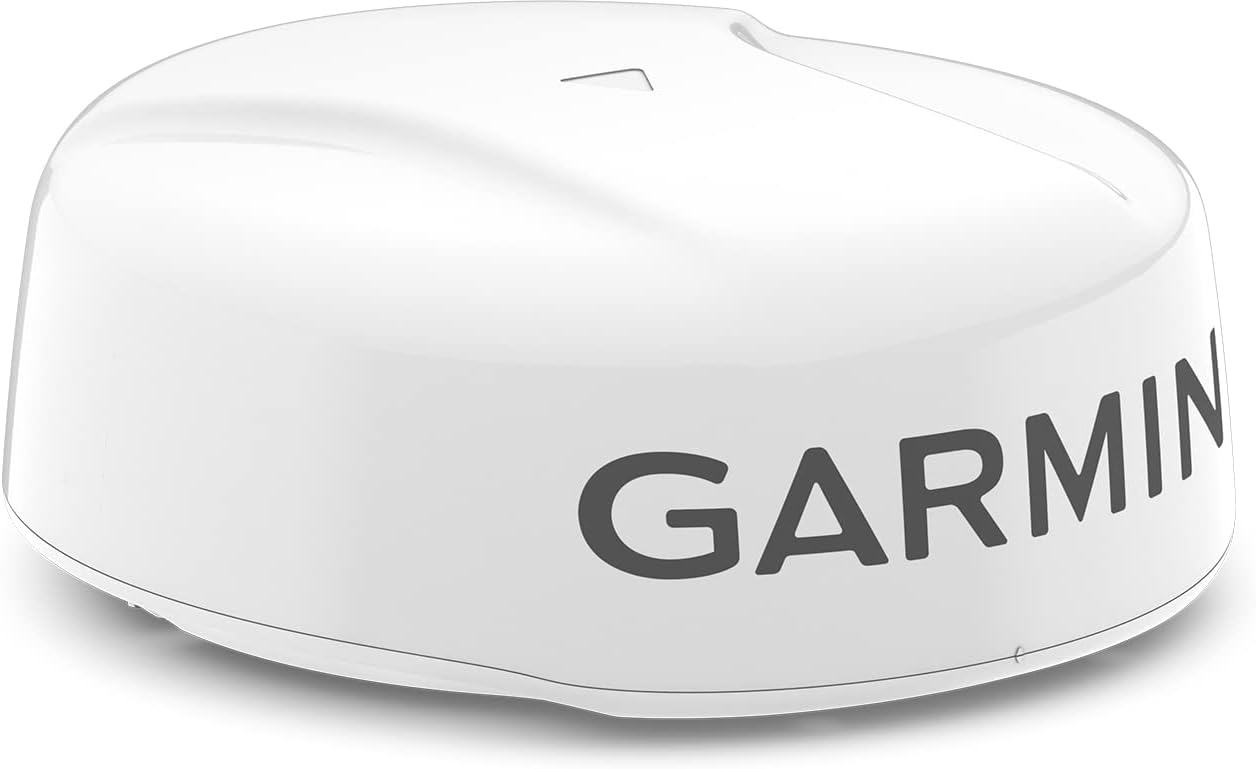
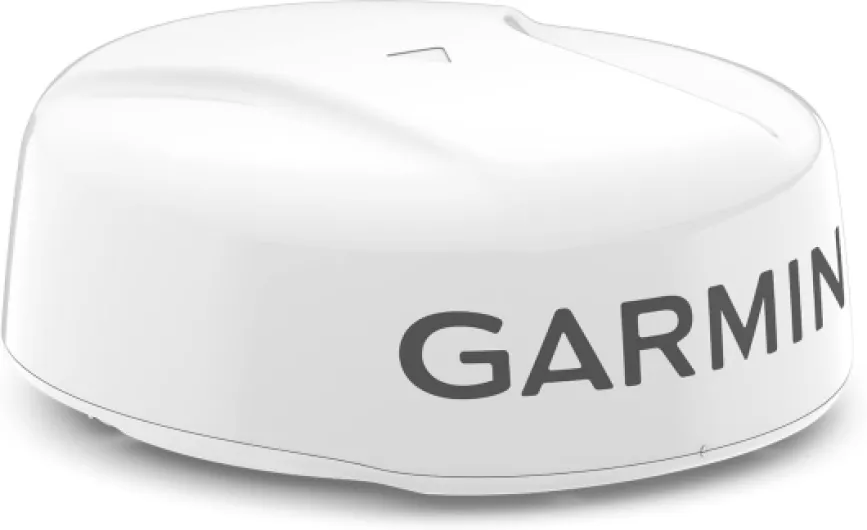
Design-wise, the GMR Fantom 24x is pretty standard: a 24-inch white dome, low-profile enough for most arches and hardtops. It doesn’t scream for attention, which I like. It looks like what it is: a radar dome. No weird shapes, no flashy branding beyond the Garmin logo. On my boat, it blends in with the rest of the gear on the arch and doesn’t look out of place, even next to older hardware.
What I appreciated is that Garmin kept the physical setup straightforward. The mounting template is accurate, the base is flat, and you don’t fight with odd bolt positions. I was able to reuse an existing radar mount with minor adjustments. It’s not super light, but for a 24-inch dome, the weight felt reasonable when lifting it up a ladder, and it’s not so bulky that you’re terrified of dropping it every second.
On the wiring side, you get long 15 m power and network cables, which is both good and slightly annoying. Good because you’re almost guaranteed to reach from the mast/arch down to the helm. Annoying because if you’re on a smaller boat, you end up coiling extra cable somewhere. Still, I’d rather have too much than not enough, and the connectors feel robust. Once everything is in place, you pretty much forget about it.
In terms of user-facing design, you don’t interact with the dome physically after installation; everything is on the chartplotter touchscreen. The radar menus on my Garmin plotter are fairly clear, but there are a lot of options. If you’re upgrading from a very basic radar, the number of settings (gain, sea clutter, MotionScope colors, power save levels, timed transmit) might feel like overkill at first. Once you’ve set your favorites, you mostly stick to a couple of views. So design-wise: clean, functional, nothing that will make you say “wow,” but also nothing that gets in your way.
Power consumption and smart modes: good for people on batteries, not shore power
On a cruising boat, power draw matters. That’s one of the reasons I went for a solid-state dome like the Fantom 24x instead of an older magnetron radar. This unit is designed to be more efficient and also gives you a couple of tools to manage power: power save mode and timed transmit mode. You don’t get exact amp numbers plastered all over the place, but in practice, my house bank voltage dropped noticeably slower than with the previous older radar I was running.
The power save feature lets you basically choose how “hard” the radar works. If you’re just casually watching for bigger targets on a clear night, you can dial it back and reduce consumption. When you really need maximum performance in bad weather, you crank it up. It’s not a night-and-day difference on the screen, but over a few hours at anchor or slow cruising, you feel the difference in how long you’re comfortable leaving it on without worrying about the batteries.
The timed transmit mode is actually more useful than it sounds. You can set active and inactive periods down to seconds, not just minutes. So you can have it transmit, say, 10 seconds every minute, which gives you a regular updated picture without the radar blasting full-time. For things like overnight passages when you’re trying to balance awareness and battery life, that’s pretty handy. It takes a bit of experimenting to find a rhythm you like, but once set, you can just let it run.
Is it perfect? No. If you’re super picky about every amp, you’d still want to look up real-world current draw numbers and maybe compare to smaller domes. But from my use, it feels reasonable for a 24-inch unit with this performance level. On my setup, I’m comfortable running it for several hours without feeling like I’m murdering the batteries, especially in the smarter modes. If you’re always on shore power or a big generator, you probably don’t care. If you’re more of an anchoring and passagemaking type, these power features actually matter and are not just marketing fluff.
Durability and build: feels solid, but time will tell
Durability is always a bit of a gamble, especially with electronics sitting up in the sun and salt. The GMR Fantom 24x is made in China, like most of this kind of gear now, but the overall build feels solid. The housing looks well-sealed, the plastic doesn’t feel flimsy, and the mounting points are sturdy. I’ve had it through rain, spray and a couple of rough days with plenty of vibration, and so far there’s been no weird noises, no condensation inside the dome, nothing suspicious.
Garmin gives a 2-year warranty, which is pretty standard. It doesn’t scream long-term confidence, but it’s not bad either. I’d prefer 3 years for something in this price range, but that’s just how most marine electronics are. The cables and connectors feel robust enough and lock in tightly. I’ve disconnected and reconnected the network cable a few times during other work, and it hasn’t loosened up or shown corrosion so far. Obviously, a season or two isn’t the ultimate test, but first impressions are positive.
Compared to some older radars I’ve had, the main improvement is just that the dome seems better sealed and the finish holds up better against UV. I’ve seen cheaper domes yellow and get chalky pretty fast; this one still looks clean. I can’t say how it’ll look after 5–7 years in the sun, but out of the box and after some use, it gives off a reliable, workmanlike vibe, not something fragile.
That said, it’s still electronics in a harsh environment. If you expect it to survive a decade with zero maintenance, that’s probably optimistic. I’d still recommend giving the connectors a bit of dielectric grease, checking the mounting bolts once in a while, and keeping an eye out for water intrusion. But as far as initial build quality and early use go, I don’t have any big red flags. It feels like a radar you can trust, not something that will fall apart after one rough season.
Performance: where the 50 watts and MotionScope actually matter
On the water, the performance is the main reason to pay for this thing. The 50-watt solid-state output gives solid range and decent target separation. On my setup, I’m usually running one screen on short range (around 1–3 NM) and another on mid-range (6–12 NM). On the short range, buoys, small boats and shorelines show up clearly enough that I can trust what I’m seeing, even in light rain. It doesn’t feel like a blurry blob of echoes like older radars I’ve used.
MotionScope (Doppler) is actually useful, not just a gimmick. Moving targets are color-coded based on whether they’re coming toward you or moving away. In a busy channel, that means you instantly see which AIS-less small boats are actually a concern. It’s not perfect in heavy seas, and occasionally you get some weird color flickers, but overall it helps your brain sort things quickly. For me, that’s probably the single most useful feature in real use, especially at night or in fog.
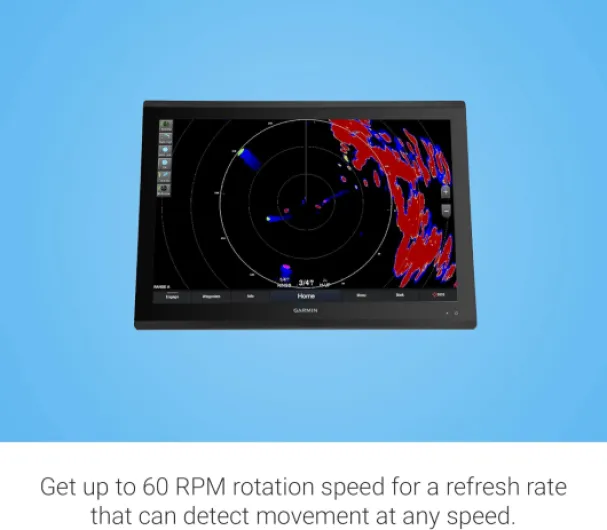
The 60 RPM rotation speed gives a smooth and responsive image when you’re turning. On some cheaper radars, you feel like the display is always a bit behind your heading, especially at low range. With the 24x, the image keeps up well, so when you dodge a pot or another boat, the radar picture updates fast enough that you don’t feel like you’re guessing. The Dynamic Auto Gain and sea clutter settings are decent; I still tweak them sometimes near shore or in heavy rain, but most of the time “auto” is good enough for casual cruising.
On the downside, long-range performance is good but not mind-blowing. You can see big targets far out, but you shouldn’t expect to reliably pick up tiny stuff at max range. Also, like all domes, it won’t match an open array for pure performance. If you’re running offshore a lot and want the cleanest possible picture, you’d still look at a bigger setup. For coastal and nearshore use though, the Fantom 24x feels like a pretty solid balance between range, clarity and ease of use.
What you actually get with the GMR Fantom 24x
The GMR Fantom 24x is a 24-inch white dome radar rated at 50 watts output, designed to plug into Garmin chartplotters over their network. In the box you get the dome itself, a 15 m power cable, a 15 m network cable, mounting hardware, and a drilling template. No fancy extras, just what you need to get it on the mast or arch and talking to your plotter. It’s clearly made to integrate into a Garmin ecosystem, not to be a universal radar for every brand.
The main selling points on paper are: MotionScope (Doppler) to highlight moving targets, True Echo Trails to show where things have been, Dual Range to split your screen between near and far ranges, and Dynamic Auto Gain that tries to adjust itself based on conditions. It also has a power save mode and a timed transmit mode, so you can decide when it actually sends out pulses and when it chills to save power.
In practice, the features that matter most on a small boat are: how clearly it shows other boats and buoys, how fast it updates when you’re maneuvering, and how much fiddling you need to do. The 24x can spin up to 60 RPM, which gives a nice fast refresh. When you’re turning in a tight harbor or crossing a busy channel, that extra speed means the picture doesn’t feel laggy, which I appreciated a lot. The auto stuff (auto gain and sea clutter) isn’t perfect, but it’s good enough that I didn’t feel forced to go full manual every time.
Overall, the “feature list” looks long, but in day-to-day use, I mainly lean on MotionScope, Dual Range, and power save. The rest is nice to have, but those three are what actually change how you use the radar. If you want something dead simple, you might find there’s a bit too much going on in the menus. If you like to tune your setup, you’ll be happy there’s enough room to tweak without it turning into a science project.
Effectiveness in real conditions: fog, traffic and tight spaces
Effectiveness for me is simple: does it actually help when visibility goes to hell, and does it reduce stress when traffic gets dense? With the Fantom 24x, yes, mostly. I’ve used it on a few early-morning departures in thick fog where you can barely see the bow. Being able to see other boats, markers and shorelines on the plotter while creeping along at 5–6 knots makes a big difference. Targets are reasonably clear, and the combination of radar overlay on the chart plus MotionScope makes it easier to spot the guy crossing your path with no AIS.
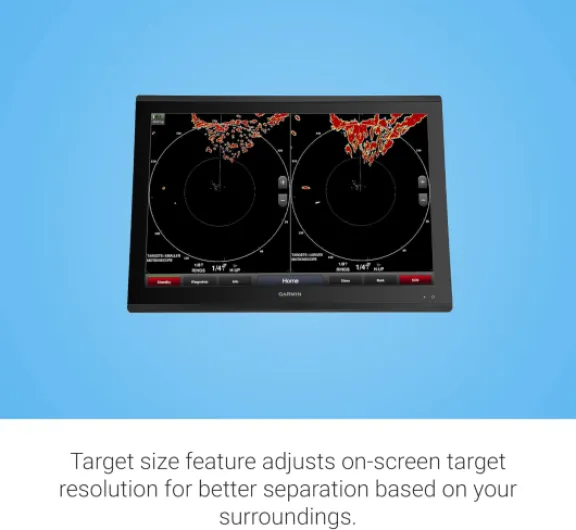
In crowded harbors and channels, the Dual Range mode is genuinely handy. I’ll run one half of the screen at 0.75–1 NM and the other at 6–8 NM. That way I can see who’s about to cross my bow and also what’s coming down the channel a bit further away. It’s not something you absolutely need, but once you get used to it, going back to a single range feels limiting. The radar keeps both ranges updating without feeling sluggish, which is key when you’re actively maneuvering.
The True Echo Trails feature is one I didn’t expect to use much, but it’s actually decent when you’re trying to understand traffic patterns. It leaves a trail behind moving targets, so you can see which way that fishing boat has been drifting or where the ferry just came from. It’s not perfect in tight turns, and it can clutter the screen if you leave it on all the time, but in busy areas it helps you read the situation faster. Combined with MotionScope, it makes the whole picture more readable, even if you’re not a radar nerd.
Where it’s less impressive is in very heavy rain and close to big structures like container ports. You still get plenty of clutter, and while the auto settings help, you sometimes have to play with gain and filters to get a clean enough picture. So it’s not magic, but it’s clearly more effective than the older domes I’ve used. If you actually bother to learn two or three key settings and views, it becomes a very useful tool rather than just a fancy spinning thing on the roof.
Pros
- Clear target detection with MotionScope Doppler that actually helps in busy traffic
- Dual range and up to 60 RPM give a responsive, useful picture for both near and mid-range
- Power save and timed transmit modes make it more battery-friendly for cruising boats
Cons
- Price is on the high side compared to simpler non-Doppler domes
- Still needs manual tweaking in heavy rain or near large structures to reduce clutter
Conclusion
Editor's rating
The Garmin GMR Fantom 24x is a solid, no-nonsense dome radar for people who actually plan to use radar as a real tool, not just a gadget. The 50-watt solid-state output, MotionScope Doppler and dual range all come together to give you a clear, usable picture in fog, at night and in busy channels. It’s not magic, and it doesn’t turn you into a pro navigator, but it genuinely makes it easier to spot threats and understand what’s happening around your boat. Integration with Garmin chartplotters is smooth, and the menus, while a bit crowded, are logical once you’ve spent some time with them.
It’s not perfect. The price stings, long-range performance is good but not on par with an open array, and in very heavy rain or near big structures you still need to tweak settings. Power consumption is reasonable for its class, and the power save and timed transmit modes are genuinely useful if you care about your batteries. Build quality feels solid, and with the 2-year warranty, it sits in the normal range for marine electronics. Overall, I’d say it’s a pretty solid choice for coastal cruisers and serious recreational skippers already in the Garmin ecosystem. If you only day-cruise in clear weather, it’s overkill. If you run at night, in fog, or in busy waterways, it earns its place on the mast.