Summary
Editor's rating
Good value if you keep your expectations realistic
Straightforward design, nothing fancy but practical
Polyester braid: soft in the hand, firm under load
Holding up so far, but not bulletproof heavy-duty gear
What you actually get in the bag
Do they actually hold your boat where you left it?
Pros
- Soft, comfortable polyester braid that’s easy on the hands and knots well
- Ready-made 8-inch spliced loops and finished ends make them usable straight out of the bag
- Good price for two 10 m, 14 mm lines compared to buying rope and splicing yourself
Cons
- Low stretch means less shock absorption in choppy or surge-prone moorings
- Better suited to small/medium boats and casual use than heavy-duty, long-term mooring

Specifications
View full product page →| Brand | Savage Island |
Two cheap lines to stop your boat wandering off
I picked up these Savage Island 14 mm mooring ropes because I needed a quick, cheap way to tie up a small motorboat without overthinking it. Nothing fancy, just something that wouldn’t snap the first time there’s a bit of swell at the pontoon. The listing looked pretty standard: 2 ropes, 10 m each, spliced loop on one end, polyester, navy blue. For the price, I wasn’t expecting miracles, just something usable.
After a few weekends tying up at a floating pontoon and a couple of nights on a mooring, I’ve got a decent feel for them. I’ve used thicker, more premium lines before, and also some really awful budget ropes that go stiff, fray fast, and feel like plastic wire. These sit somewhere in between: not top-shelf chandlery gear, but clearly not the worst cheap stuff either. They’re what I’d call basic but reliable.
What stood out to me from the start was the soft feel and the ready-made eye splice. I could literally unpack them, clip the loop over a cleat, and be done. No cutting, no finishing, no messing around with whipping. For someone who just wants to tie up and go for a drink, that’s pretty handy. There are a few compromises though, especially on stretch and long-term use.
If you’re expecting professional-grade docking lines for a big yacht, you’re in the wrong price bracket. But if you run a small boat and want a pair of lines that are easy to handle, don’t hurt your hands, and look tidy on the cleats, these are worth a look. I’ll walk you through what I liked and what bugged me a bit.
Good value if you keep your expectations realistic
For what you pay, getting two 10 m, 14 mm dock lines that are ready to use with a splice is decent value. If you try to buy rope by the metre and then get someone to splice eyes for you at a chandlery, you’ll usually end up paying more than this, especially if you want something that feels as soft in the hand. So from a basic cost vs. convenience angle, these score well.
The trade-off is that you’re not getting premium double-braid with built-in stretch or some fancy brand name that hardcore sailors like to brag about. You’re getting simple polyester braids that work, look tidy, and are strong enough for small-boat docking. If you understand that, the value is solid. If you expect them to behave like high-end nylon dock lines on a big yacht, you’ll be a bit underwhelmed.
Compared to random no-name ropes I’ve bought from hardware stores, these feel better finished – cleaner splice, smoother surface, nicer handling. Compared to proper marine-brand dock lines that cost more, you save money but lose some stretch and probably some long-term durability. For a casual boater who goes out on weekends and just wants lines that won’t be a pain, I think the balance is fair.
So overall, I’d call the value good for small to medium boats and light to moderate use. If you’re on a budget and need a pair of usable lines quickly, they make sense. If mooring is critical for you – bigger boat, rougher conditions – I’d spend more and treat these as backup or secondary lines rather than the main set.
Straightforward design, nothing fancy but practical
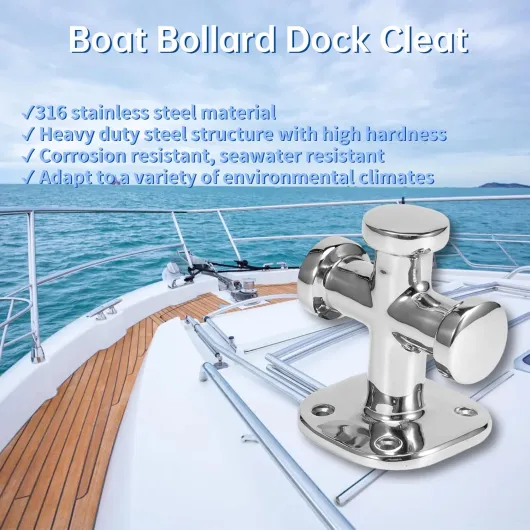
The design is pretty straightforward: braided polyester rope, 14 mm thick, with a factory-made eye splice on one end. The 8-inch loop is a decent size – big enough to drop over a standard cleat or a bollard without fighting it, but not so big that it flops around and looks messy. The splice itself on my set was tidy: no loose strands, no weird bumps, and it sits flat enough that it doesn’t snag when you handle it.
Visually, the navy blue colour is fine. It looks clean and hides dirt better than white ropes, which is nice when you’re stepping on them with sandy or muddy shoes. After a few uses, they still looked pretty new, no obvious fading or fluffing. If you’re picky about matching your fenders and lines, these are a pretty neutral choice. They don’t scream “cheap” from a distance, which I appreciate.
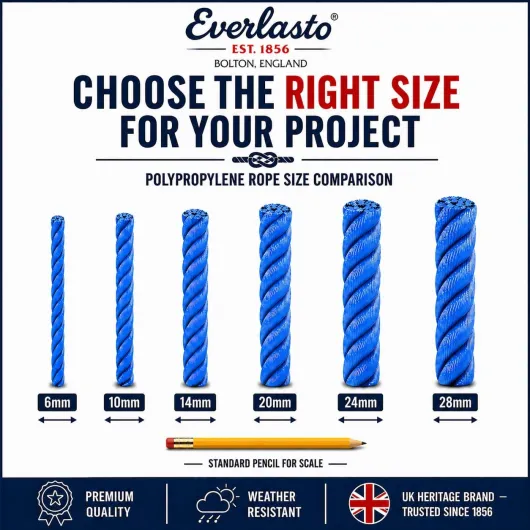
In terms of handling, 14 mm is a good compromise: thick enough to grab easily, thin enough to work with most small-boat cleats. I never felt like they were cutting into my hands, even when I was pulling the boat in against the pontoon. The braided construction gives them a smooth, slightly soft feel, which is nicer to handle than rigid, scratchy ropes. They coil reasonably well too; they don’t twist into a mess the second you drop them.
One thing to note: because they’re polyester and not a stretchy mooring-specific blend, they don’t have built-in shock absorption. Design-wise, they’re more like general-purpose braided lines sold as dock lines. For a little boat in a marina, that’s okay. For a heavier boat bouncing in a surge-prone harbour, I’d probably add rubber snubbers or use something stretchier for the main lines. So, design is simple, functional, and aimed at practicality more than anything clever.
Polyester braid: soft in the hand, firm under load
The ropes are made from polyester, which is pretty standard for marine use. Polyester handles UV and water better than basic polypropylene, and it doesn’t go as stiff and horrible as some really cheap ropes do after a season. After getting them wet a few times and leaving them in the sun for a few hours, I didn’t notice any immediate fading or stiffening. They still felt soft and flexible when dry again.
Because it’s a poly braided rope, it has a smooth outer surface and a fairly tight weave. That gives it decent knotability – cleat hitches and bowlines held fine and came undone without a fight, even after being under tension for a while. The listing mentions “polysoft/softline”, and I agree they’re comfortable to handle. Compared to some harsh, crunchy polyprop lines I’ve used, these are much kinder on your hands, especially if you’re pulling the boat around a bit.
The downside of polyester in this setup is the low stretch. For actual mooring, a bit of stretch is nice because it soaks up the shock loads when a wake hits. These don’t give much, so the load transfers more directly to your cleats and hardware. On a light boat, you mainly just notice the boat tugging a bit more sharply. On a heavier boat, I’d want either thicker lines or a different material blend. So the material is strong and durable, but not the softest in terms of shock absorption.
Overall, for the price point, the material choice is sensible: strong, weather-resistant, and easy to work with. It’s clearly not some premium double-braid with fancy cores, but for tying up a small recreational boat, it’s more than enough. I’d call the materials pretty solid for casual boating, with the caveat that they’re not designed as high-end, super stretchy dock lines.
Holding up so far, but not bulletproof heavy-duty gear
I’ve only put them through a few weeks of regular use, so I can’t pretend I’ve stress-tested them for years. But in that time, they’ve been soaked in saltwater, left in the sun, dragged over pontoon cleats, and stuffed in a locker. So far, the outer braid is holding up well: no serious cuts, no big tufts of fibres sticking out, just minor surface fluff where they rub the most. That’s normal for braided lines and nothing to worry about yet.
The spliced loops are my main concern point on cheap ropes, because bad splices can slip or start to open. On these, the splices still look tight after repeated loading. I haven’t seen any movement in the bury or any weird deformation. I gave them a few hard pulls by hand and with the boat on the line; they stayed solid. The heat-sealed and stitched ends on the other side also stayed closed, no unravelling there either.
Long-term, polyester is generally more UV resistant than plain polypropylene, so I’d expect these to survive a couple of seasons if you’re a casual boater who doesn’t leave the lines permanently outside all year. If you leave them on a sun-baked pontoon 24/7, they’ll obviously age faster. But that’s true for most ropes in this price bracket. I’d probably rotate them or bring them in when I’m not using the boat for a while if I wanted to stretch their life.
I wouldn’t call these indestructible, and if you’re running a heavy boat in rough conditions all the time, I’d invest in chunkier, more purpose-built dock lines. But for normal leisure use, the durability so far feels good enough. They don’t give the impression they’ll fall apart after one season, which is honestly what I was half-expecting at this price.
What you actually get in the bag
Out of the bag, you get two identical ropes: 14 mm diameter, about 10 m long each, both in navy blue. One end of each rope has an 8-inch spliced loop, the other end is heat-sealed and stitched so it doesn’t fray. No fancy extras, no clips, no instructions – just the lines. Honestly, that’s fine; tying a boat isn’t rocket science.
The main thing to know is that these are polyester braided ropes, not three-strand nylon. That means they’re fairly low-stretch, more stable in length, and they don’t feel like rubber bands when the boat moves. For docking lines, that’s usually okay, especially for smaller boats or calm moorings. If you’re used to stretchy nylon dock lines that act like shock absorbers, you’ll notice the difference: these feel firmer under load.
On my boat (about 5.5 m), 10 m per line is enough to go from boat cleat to pontoon cleat with a bit of spare to adjust. I usually run them either as straight bow/stern lines or as a bow line plus a spring. For slightly bigger boats, they still work, but you might want longer lines depending on how you tie up. They’re not colour-coded or anything, so if you like super organised setups with different colours, this is just plain navy.
Overall, the package is simple: two usable, ready-to-go dock lines that cover most basic mooring situations. No nonsense, no packaging gimmicks, and nothing that screams “premium”. It feels like something you’d grab off a shelf when you realise at the last minute that your old lines are shot and you just need something that works.
Do they actually hold your boat where you left it?
In practice, these lines do the basic job: they keep the boat tied up. I used them mostly on a 5.5 m open motorboat, in a sheltered marina and on a visitor pontoon that sees a bit of wash from passing boats. Tied as bow and stern lines with a spring, they held everything in place fine. No slipping on the cleats, no nasty surprises when a bigger wake rolled through. The knots held, and the eye splice made clipping onto cleats quick and simple.
Where you feel the limits is when there’s more movement. Because the ropes don’t stretch much, when a wake hits, the boat gives a sharper jerk than with proper stretchy mooring lines. It’s not catastrophic, but you feel it. I didn’t see any damage to the cleats or hardware, but long term I’d probably pair these with snubbers or use them as secondary lines, not the only thing holding a heavier boat in a rougher spot.
In terms of handling when wet, they stay grippy enough and don’t become a slippery mess. I tied and untied them with wet hands and never felt out of control. They also don’t soak up tons of water like some natural fibres, so they don’t become super heavy or take ages to dry. After a few uses, there was no serious fraying, just the normal light fuzz you get from braided rope rubbing on cleats.
For day-to-day docking – quick trips, weekend use, tying up at a calm pontoon – they’re perfectly effective. I wouldn’t rely on them as the only lines on a big yacht sitting out a storm, but for casual use on small to medium boats, they get the job done without drama. If you know what you’re buying – simple polyester dock lines – they behave exactly as you’d expect.
Pros
- Soft, comfortable polyester braid that’s easy on the hands and knots well
- Ready-made 8-inch spliced loops and finished ends make them usable straight out of the bag
- Good price for two 10 m, 14 mm lines compared to buying rope and splicing yourself
Cons
- Low stretch means less shock absorption in choppy or surge-prone moorings
- Better suited to small/medium boats and casual use than heavy-duty, long-term mooring
Conclusion
Editor's rating
The Savage Island 2 x 14 mm mooring ropes are basically no-nonsense dock lines that do what they’re supposed to do: they tie your boat to the dock without fuss. The polyester braid feels soft in the hand, the 8-inch spliced eyes are practical, and the 10 m length works well for most small to medium boats in marinas or on calm pontoons. After a few weeks of use, they’ve handled saltwater, sun, and regular rubbing on cleats without any serious wear, which is reassuring at this price point.
They’re not perfect. The low-stretch polyester means they don’t absorb shock as well as proper stretchy mooring ropes, so in choppier spots you’ll feel sharper tugs when wakes hit. I’d be cautious using them as the only lines on a heavier boat in rough conditions. But if you see them as budget-friendly, ready-to-go lines for casual use, they make sense. They’re especially good if you’re upgrading from really cheap, stiff hardware-store rope and just want something more comfortable and better finished.
If you’ve got a small leisure boat and want simple, decent lines without spending a fortune, these are a good fit. If you run a bigger yacht, stay out in rough weather, or want long-term, heavy-duty gear, I’d spend more on proper branded dock lines and maybe keep these as spares. Overall, they’re pretty solid for the money, with clear strengths in comfort and convenience, and predictable limits when it comes to high-load, rough conditions.