
Summary
Editor's rating
Is it worth the money compared to just shouting or using cheap radios?
Design and mounting: smart idea, but a bit too focused on caps
Battery life: good enough for a full day, not a multi-day workhorse
Comfort: light and forgettable… as long as you don’t mind wearing a cap
Durability and waterproofing: feels fine, but I wouldn’t abuse it
Range, clarity, and real-world use on the water
What this thing actually is (and what it isn’t)
Pros
- Very clear voice communication even with wind and engine noise, thanks to effective noise control
- Hands-free, open-mic operation makes docking and anchoring less stressful than using PTT radios
- Lightweight and comfortable to wear on a cap for several hours, with decent all-day battery life
Cons
- Mounting options are limited; works best only if everyone is willing to wear a baseball cap
- Price adds up quickly when you buy multiple units, and you’re locked into Sena’s proprietary mesh

Specifications
View full product page →| Brand | Sena |
Finally talking on a boat without yelling across the deck
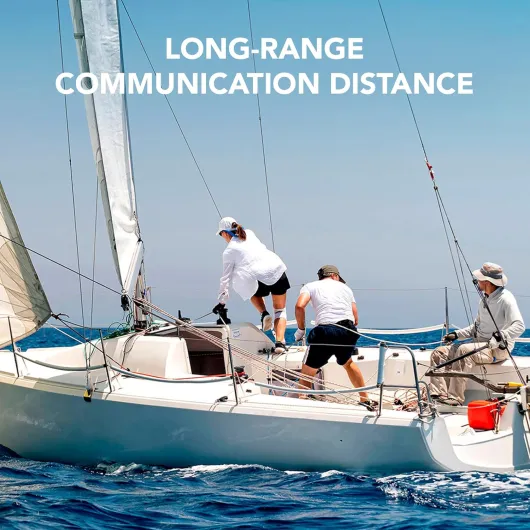
I’ve been using the Sena Nautitalk Crew Compact Marine Mesh Communication on a 32-foot sailboat for a few weekends, mostly for docking, anchoring, and mooring. Before this, we just shouted or used cheap handheld VHF radios with those annoying PTT buttons and lots of wind noise. So I went into this test mainly wanting one thing: stop the chaos when we’re coming into a tight marina berth.
First clear point: this little thing does what it says. You can talk normally, hands free, and the other person hears you clearly, even with wind and engine noise. It’s not some sci‑fi device; it’s just a small, light intercom that makes basic crew communication a lot less stressful. It’s more like having a permanent open phone call than using a walkie‑talkie.
I used one unit and borrowed another from a friend so we could test the mesh properly: one on the helm, one on the bow. We tried it during docking with 15–18 knots of wind, engine running, and people shouting on nearby boats. The voice stayed clear most of the time. There’s a tiny delay, like people mention in reviews, but in real life on a boat it’s not a big deal because you’re not having rapid-fire conversations; you’re giving short, simple instructions.
It’s not perfect. The mounting options are a bit limited, the price is on the high side for what is basically a small comms unit, and the proprietary mesh means you’re basically locked into Sena if you want more units. But if your main goal is calmer maneuvers and fewer frustrated arguments on board, it already changes the mood quite a bit. You talk instead of shout, and that alone made me keep using it every time we left the dock.
Is it worth the money compared to just shouting or using cheap radios?
This is where opinions will split. The Nautitalk Crew Compact is clearly not cheap for what looks like a small plastic unit with a speaker and mic. You’re paying for the mesh tech, the waterproofing, and the Sena brand. If you already use Sena gear for motorcycling, you’ll probably be less shocked by the price. If you’re coming from $40 walkie‑talkies, you’ll definitely raise an eyebrow.
From a pure “calm docking” perspective, it does deliver. Being able to talk normally from helm to bow, with clear audio and no PTT button, reduces stress. For me, that has real value. Less yelling, fewer misunderstandings, and fewer tense moments when you’re trying to squeeze into a tight slip with an audience. One of the Amazon reviewers summed it up well: it makes docking and mooring more relaxed because you can be more precise. I completely agree with that part.
However, there are a few things that hold the value back a bit: the limited mounting options, the proprietary mesh (you’re stuck with Sena), and the fact that you need multiple units to really benefit. Buying one unit alone is pointless; you need at least two, ideally more. When you multiply the price by 2–4 for a small crew, it adds up quickly. At that point, you start comparing it to other crew comms systems or even more robust headsets.
So in my view, the value is good for people who sail regularly with a short-handed crew and are willing to invest in comfort and calm maneuvers. If you only go out a couple of times a year, or your budget is tight, it’s probably overkill and you’ll manage with shouting or basic radios. It’s not a bargain, but it’s also not a rip-off. It sits in that zone of “pricey but justifiable” if you really care about smoother communication on board.

Design and mounting: smart idea, but a bit too focused on caps
Design-wise, the Nautitalk Crew Compact is small, light, and pretty minimal. The unit is white, weighs about 20 grams, and doesn’t feel bulky at all. When clipped to a baseball cap, you almost forget it’s there after a few minutes. The controls are small but usable: you’ve got basic buttons to power it on, change channels, and adjust volume. It doesn’t feel like a fragile toy, but it also doesn’t feel like heavy-duty commercial gear either. More like decent consumer-level marine equipment.
The main design quirk is the mounting system. Out of the box, the most practical way to wear it is clipped to a cap. And that’s also what I ended up doing 90% of the time. The cap mount works, it’s stable, and the speaker ends up in the right spot near your ear. But if you don’t like wearing a hat, or if your crew doesn’t always have caps on, it becomes a bit annoying. The helmet strap mounts are there, but on a small cruising sailboat, not many people are wearing helmets, so they’re not super useful.
I ran into the same frustration as one of the Amazon reviewers: I kept thinking, “Why is there no simple over-the-head band option?” Something like a lightweight clamp that goes around the back of your head or over the top would solve a lot of situations. As it is, you either commit to always having a cap on, or you start improvising mounts, which isn’t ideal on a moving boat. Once it’s clipped and set up, it’s fine, but getting everyone fitted the first time takes a bit of trial and error.
On the positive side, the design is clearly made for marine use. No big exposed ports, USB‑C is covered, and the buttons can be used with slightly wet fingers. It doesn’t scream “tech gadget,” it just looks like a small, plain white module hanging off your hat. From a distance, most people wouldn’t even notice it. I’d just say the design is functional but a bit limited by the mounting choices. If Sena added one or two more ways to wear it, it would fit more crews and more headgear styles.
Battery life: good enough for a full day, not a multi-day workhorse
The specs claim about 8 hours of talk time, and that lines up fairly well with what I saw. On a typical day sail (4–6 hours with intermittent talking), the battery had no problem lasting the whole trip. I usually charged it after each day out of habit, but one weekend I purposely didn’t charge it to see how far it would go. After roughly two shorter days of use (maybe 6–7 hours total with lots of standby time), it was getting low but hadn’t died yet.
Charging is via USB‑C, which I appreciate because I already have those cables on the boat for phones and other gadgets. No proprietary dock, no weird connector. Plug it into a 12V USB outlet or power bank and it’s topped up. Charging time isn’t blazing fast, but for a small battery device like this, it’s fine. I’d guess around 1.5–2 hours from low to full, though I didn’t sit there timing it with a stopwatch.
One funny line in the specs is the “2 D batteries required (included).” That’s clearly a mistake in the listing; the unit is rechargeable, no one is loading D cells into this thing. In reality, you just treat it like any other small electronic: charge before use, don’t expect it to last a whole week without power. For day sailing or weekend outings where you have access to charging each night, it’s totally fine. For longer offshore passages without easy charging, you’d need to plan around it or bring a power bank dedicated to these.
Overall, I’d rate the battery as good but not outstanding. It matches the marketing claim, doesn’t die unexpectedly, and charges over a standard cable. If you’re expecting multi-day constant usage like a professional headset on a workboat, this isn’t it. But for recreational boating and short-handed coastal trips, it gets the job done without causing battery anxiety.
Comfort: light and forgettable… as long as you don’t mind wearing a cap
Comfort is actually one of the stronger points here. The unit is ultra light at around 20 grams, so once it’s clipped to a cap brim, you don’t really feel any weight pulling on your head. I used it for a few 3–4 hour outings, sometimes in choppy water, and it never felt like it was dragging the cap down or twisting it. The clip is firm enough that it doesn’t wobble around when you turn your head quickly to check traffic or sails.
The way the speaker sits just in front of your ear is also pretty smart. It doesn’t go inside the ear, and it doesn’t press on it like some headsets do. That means no hot spots or pressure after an hour. I wear sunglasses and sometimes reading glasses at the helm, and the Nautitalk didn’t interfere with either. One crew member had hearing aids and confirmed it didn’t clash with them either, which lines up with the Amazon review mentioning that.
The downside is pretty straightforward: you have to wear something to clip it to. For me, that was a baseball cap. On hot days with little wind, that’s fine. But on colder days when I’d rather wear a beanie, or if I’m just not in the mood for a hat, it becomes annoying. There’s no simple on-ear or over-head solution included. So comfort is good as long as you accept the “cap as part of the system” requirement. If someone on your crew hates hats, they’ll complain.
Noise-wise, it’s also comfortable: you still hear the environment around you since the speaker is not sealing your ear. That’s important for safety on a boat. You can hear traffic, waves, and people shouting, while still catching the helm’s instructions. If you’re used to big over-ear headsets, this will feel very open, but for casual cruising and short-handed sailing, I found this balance pretty solid. Not luxurious, not terrible, just practical and easy to live with for several hours at a time.
Durability and waterproofing: feels fine, but I wouldn’t abuse it
The Nautitalk Crew Compact is listed as waterproof, and it’s clearly built with marine use in mind. I didn’t dunk it overboard, but we definitely used it in spray, light rain, and with wet hands. It never glitched or showed any signs of moisture issues. The ports are protected, and the casing feels properly sealed. For normal sailing, docking, and anchoring in typical coastal conditions, it seems more than adequate.
Physically, the unit feels like decent plastic. Not super thick, but not flimsy either. I dropped it once from about shoulder height onto the cockpit floor (fiberglass), and it survived without a mark. The clip mechanism on the cap mount is probably the most fragile-looking part, but it held up through repeated clipping and unclipping during my tests. I wouldn’t go yanking it around aggressively, but under normal use it seems fine.
The EU spare part availability of 2 years is at least some sign that Sena expects these to be in use for a while and supported. That said, it’s still an electronic gadget made in China, not a ruggedized industrial radio that you’d throw around a commercial fishing boat. If you’re rough on gear, you’ll want to be a bit careful where you stash it and how you treat the clip and cable.
After a few weekends of use, I don’t see any early wear: buttons still click properly, the wind sponges are intact, and the USB‑C port cover hasn’t loosened. I’d call the durability pretty solid for recreational boaters. If you’re using it every single day in harsh conditions, I’d be more cautious, but for regular weekend sailing and the occasional bad-weather docking, I’d trust it to hold up as long as you’re not careless with it.
Range, clarity, and real-world use on the water
In terms of performance, the big question for me was: Can I hear my bow crew clearly while docking or anchoring in real conditions? Short answer: yes, most of the time, and much better than shouting or using cheap handheld radios. The advertised range is about 0.5 mile. On a 32-foot boat, we’re obviously nowhere near that distance, but we did test it walking around the marina and along the pier. It stayed connected further than we realistically needed on a boat, even with a few masts and structures in between.
Voice clarity is solid. The Advanced Noise Control actually does a decent job of cutting engine rumble and wind. We tried it with 15–20 knots on the nose, engine at around 2000 rpm, and the bow person was still understandable without shouting. You can tell there’s some processing going on because background noise drops when someone speaks, but it doesn’t sound robotic or weird. Compared to cheap PMR or VHF handhelds I’ve used, it’s cleaner and less fatiguing to listen to.
There is a small audio delay, like one reviewer said. It’s maybe a fraction of a second. For normal crew talk like “a bit more to port” or “drop now,” it doesn’t matter. You notice it if you’re standing close to each other and talking into it at the same time, but on a boat you’re usually separated anyway. So yes, it’s there, but it doesn’t break anything in real use. I never had a situation where I thought, “This delay caused a problem.”
We didn’t hit any major dropouts or weird disconnections during our tests, but keep in mind we only used two units, not a big group. The mesh is supposed to handle virtually unlimited users over 6 channels, but I can’t confirm how it behaves with a full regatta crew. For a small crew of 2–4 people on a cruising boat, the performance felt stable and predictable. It’s not magic, but it’s clearly a step up from yelling and hoping the wind is in your favor.
What this thing actually is (and what it isn’t)
The Nautitalk Crew Compact is basically a tiny, waterproof intercom that clips to your cap or helmet and uses a proprietary mesh network to connect to other Sena units. It’s not a VHF radio replacement, it’s not for talking to harbor master or other boats. It’s strictly for crew-to-crew communication on the same boat (or maybe between two nearby boats if you’re rafting up).
On paper, the specs are pretty straightforward: around 0.5 mile range, up to 8 hours of talk time, 6 communication channels, and it only weighs about 20 grams (0.7 oz). It’s waterproof, has noise control, and charges over USB‑C. The box is simple: the unit itself, two helmet strap mounts, a cap mount, two wind sponges for the mic, and a USB‑C cable. No fancy extras, no charging dock, nothing like that.
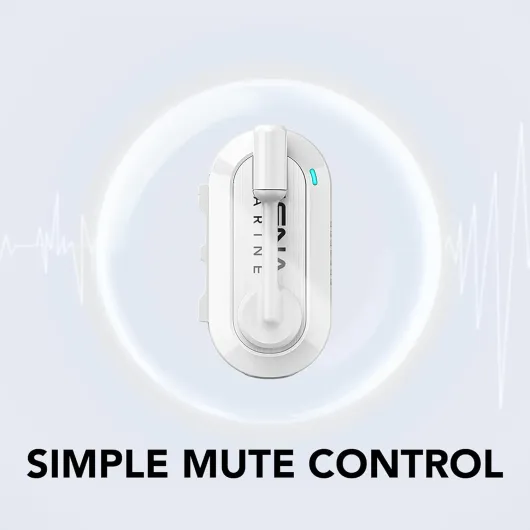
In practice, you pair it with other Nautitalk or compatible Sena units, pick a channel, and then it just stays connected. You don’t push a button to talk; it’s open mic style. That’s a big difference from cheap walkie‑talkies. For docking or anchoring, that makes life easier because your hands are on the wheel, line, or windlass, not on a PTT button. You literally just talk like you’re standing next to the person.
What it’s not: it’s not a full headset with ear cups, not an over‑ear headphone style. The speaker sits just in front of your ear, almost like a little puck hanging from your cap brim. That’s why it works fine even if you wear glasses or hearing aids. But it also means it doesn’t isolate you from outside noise, which is good for safety but not ideal if you wanted full hearing protection. So think of it as a simple crew comms tool, not a multi-purpose audio gadget.
Pros
- Very clear voice communication even with wind and engine noise, thanks to effective noise control
- Hands-free, open-mic operation makes docking and anchoring less stressful than using PTT radios
- Lightweight and comfortable to wear on a cap for several hours, with decent all-day battery life
Cons
- Mounting options are limited; works best only if everyone is willing to wear a baseball cap
- Price adds up quickly when you buy multiple units, and you’re locked into Sena’s proprietary mesh
Conclusion
Editor's rating
After using the Sena Nautitalk Crew Compact on a small sailboat for a few weekends, my take is pretty straightforward: it does exactly what you expect from a crew communication system, with clear audio, solid noise control, and enough battery life for a full day on the water. It makes docking, anchoring, and tight maneuvers calmer because you can talk normally instead of shouting over wind and engine noise. The open mic style is comfortable to use, and the ultra-light weight means you forget it’s there once it’s clipped to your cap.
It’s not perfect though. The dependence on a cap mount is a real limitation, and I’d like to see more wearing options out of the box. The price also stings a bit once you realize you need two or more units for it to be useful, and you’re locked into Sena’s proprietary mesh. For casual boaters who go out a few times a year, it’s probably more of a luxury than a necessity. For short-handed crews who sail regularly and are tired of miscommunication and stress during maneuvers, it starts to make sense.
If you want a simple, reliable way to talk between helm and bow without messing with PTT buttons, and you’re okay paying for that convenience, the Nautitalk Crew Compact is a pretty solid choice. If budget is your main concern or you hate wearing hats, you might want to look at other options or stick with basic radios. Overall, I’d give it a strong but not perfect rating: good product, clear benefit, with a few design and price trade-offs you need to accept.