
Summary
Editor's rating
Value for money: solid mid-range choice, not the cheapest, not overpriced
Simple black line, practical splice, a bit stiff out of the box
Polyester double braid: strong, low stretch, and handles abuse well
Built to last more than one season (if you don’t abuse it too hard)
What you actually get in the package
Does it actually hold the boat securely? Yes.
Pros
- Strong double-braid polyester with high breaking load (5630kg for 16mm)
- Pre-spliced 35cm eye and whipped ends make it genuinely ready to use
- Good resistance to UV, abrasion, and saltwater for regular marina use
Cons
- A bit stiff when new, takes a few uses to become more manageable
- Plain black color shows salt and dirt and can be harder to distinguish from other lines

Specifications
View full product page →| Brand | ROTA MARINE |
A no-nonsense dock line for everyday boating
I’ve been using this ROTA MARINE 16mm x 10m black dock line on my small motorboat for a few weeks now, mainly for mooring in a marina and occasionally for tying up to a quay. I’m not a professional skipper, just a regular boater who wants something reliable that doesn’t fray after one season. I picked this one because it’s double-braid polyester, pre-spliced, and priced in the mid-range compared to what I usually see in chandlers.
Right out of the bag, the first thing I noticed is that it’s a proper 16mm line, not one of those that feel thinner than advertised. It has a bit of weight to it and the 10m length is actually useful: long enough to handle slightly awkward mooring spots, but not so long that it becomes a tangled mess on deck. I’ve been using it mostly as a bow line and sometimes as a spring.
In practice, I wanted to see three things: how easy it is to handle when wet, how the splice and whipping hold up, and whether it stiffens or goes fluffy after a few uses. So far I’ve used it in sun, rain, and a couple of windy days where the boat was really pulling on the line against the pontoon. No special treatment, just coiled roughly and left in the locker or on the cleat.
Overall, my first impression is pretty positive: it’s not fancy, it’s not trying to be anything clever, but it feels like a solid, workhorse dock line. There are a couple of small annoyances I’ll get into later (mainly the stiffness when new and the way black color shows salt and dust), but for basic mooring on a leisure boat, it holds its own quite well.
Value for money: solid mid-range choice, not the cheapest, not overpriced
On the value for money side, this ROTA MARINE line sits in a kind of middle ground. It’s more expensive than the bargain-bin polypropylene stuff you find in hardware stores, but cheaper than some big-brand yachting lines with flashy names. For a 16mm x 10m pre-spliced polyester dock line with decent specs, the price feels fair. You’re clearly paying for proper material (polyester double braid) and a good splice, not just a random piece of rope.
If I compare it to what I’ve used before: I’ve had cheaper polyprop lines that looked okay at first but went fluffy, faded, and felt sketchy after one season. Those were cheaper up front, but I ended up replacing them sooner. On the other hand, I’ve also seen premium dock lines that cost much more but, in practice, don’t do a massively better job for a small leisure boat. This ROTA MARINE rope lands in that “good enough and reasonably priced” zone where you feel you’re getting real quality without paying for branding.
The fact that it’s ready to use out of the box is also part of the value. Getting a proper 35cm eye splice done professionally can cost money if you don’t do it yourself, and badly done DIY splices can be a weak point. Here, you avoid that hassle. You also don’t need to tape or melt the ends because the tail is already whipped and stitched. So you’re not just buying raw rope; you’re buying something you can literally put straight on the cleat when it arrives.
It’s not perfect. At this price, a small storage bag or at least some clearer labeling of length would have been nice, and the rope is a bit stiff when new. But overall, considering the material quality, the breaking load, the splice work, and the expected lifespan, I’d say the value is pretty solid. If you’re on a tight budget and only sail a couple of times a year, you might settle for cheaper lines. If you care about reliability and plan to keep your boat for a while, this feels like a sensible compromise between cost and durability.
Simple black line, practical splice, a bit stiff out of the box
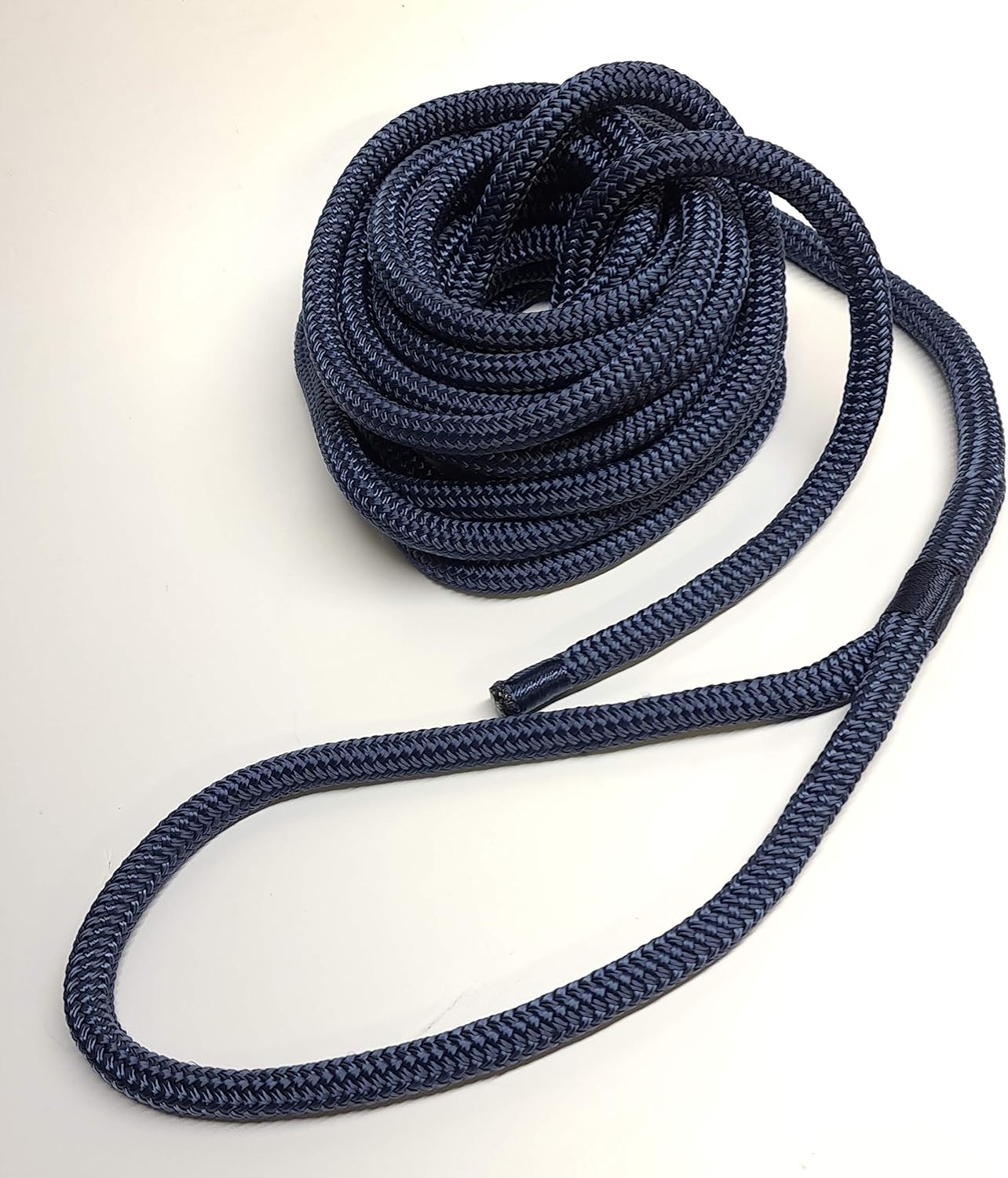
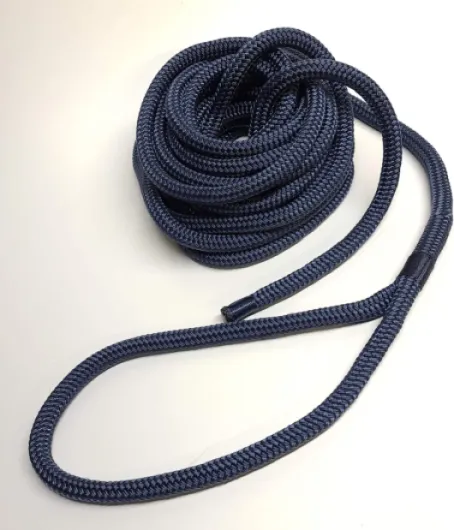
The design is straightforward: black double-braid polyester, 16mm thick, 10m long, one spliced eye, one finished tail. No color tracers, no reflective threads, no fancy branding on the rope itself. If you like a clean, uniform look on your deck, the plain black is actually quite nice. On the other hand, black rope can be harder to see in low light, and it shows salt marks quite clearly after a few trips, so be aware of that.
From a handling point of view, the rope felt a bit stiff when new. The double-braid construction is tight, which is good for durability but means it doesn’t flop around like old, soft mooring lines. After a few uses — especially getting it wet and loading it under tension — it loosened up a bit and became easier to coil and throw. Still, if you’re used to very soft, old nylon lines with a lot of stretch, this polyester one will feel firmer and less stretchy.
The spliced eye design is practical. About 35cm is a good compromise: it’s large enough to slip over chunky cleats on the pontoon or on the bow, but not so big that half the line ends up in the loop. The splice is finished with whipping and stitching, which gives you confidence when the boat is pulling hard in chop or swell. I’ve had cheaper lines where the splice looked messy and loose; this one looks like it’s been done properly with the right tools.
One small downside in the design is the lack of any color coding or markers. If you have several black lines of different lengths on board, you’ll end up checking them manually each time. It’s not a deal-breaker, but some brands add a bit of colored whipping or a label to indicate length, which can be handy. Here, everything is plain black. Overall, the design is no-frills but functional: it looks like a working line, not a decorative one, and it’s clearly aimed at people who care more about strength and reliability than about style points.
Polyester double braid: strong, low stretch, and handles abuse well
The big selling point here is the 100% high-tenacity polyester double-braid construction. The outer cover is a 24-strand braid and the core is 12-strand, which is a pretty standard setup for a decent quality dock line. Polyester is known for low stretch, good UV resistance, and decent abrasion resistance, and that lines up with what I’ve seen in use. If you’re tying up in a marina with fixed pontoons and you don’t want your boat bouncing too much, low-stretch polyester is a good choice.
The spec sheet says the breaking load for the 16mm size is 5630kg, which is overkill for most small leisure boats, but it’s reassuring when you leave the boat overnight in gusty conditions. I’ve had the line under decent tension in crosswinds, and there was no feeling that it was reaching its limit. The rope also has a working stretch of about 5% and elongation at break around 15%, so it has a little give but not as much as nylon. In real terms, that means it doesn’t behave like a bungee; it holds the boat fairly firmly in place.
In wet conditions, the polyester absorbs very little water (the data says around 1–2%), and that matches what I felt: the rope gets wet, obviously, but it doesn’t become a heavy sponge. It dries reasonably quickly and doesn’t seem to change diameter much when wet, so it stays easy to handle on cleats. The wet and dry abrasion resistance is rated as excellent, and after a few weeks of rubbing against fairleads and pontoon rings, I only see minor fuzzing on the outer cover, nothing dramatic.
Compared to cheaper polypropylene lines I’ve used before, this polyester feels denser and more trustworthy. Polypropylene tends to go fluffy, fade in the sun, and feels quite slippery when wet. This ROTA MARINE line has a more grippy texture and doesn’t feel like it’s going to snap or melt if it sees a bit of friction. It’s not luxury yacht grade, but as a material choice for everyday mooring, it’s solid. If you’re looking for a stretchy snubber-like effect, this isn’t the ideal rope, but if you want strength and stability, polyester double braid is a good match.
Built to last more than one season (if you don’t abuse it too hard)
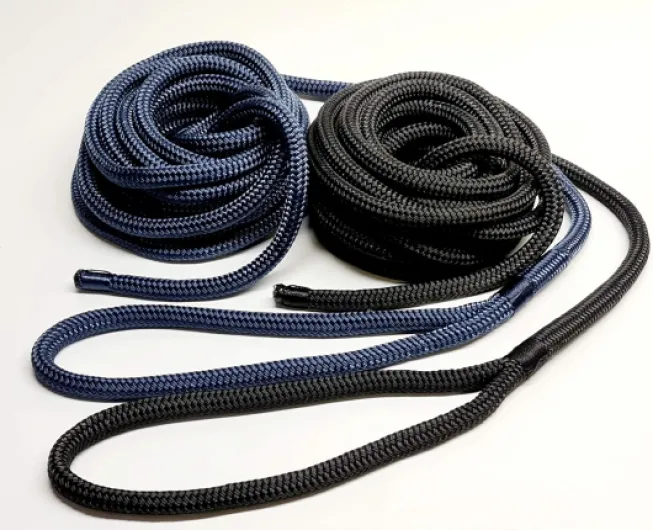
Durability is where cheap lines usually let you down, so I paid attention to how this one behaved after several trips. The manufacturer claims excellent UV resistance and excellent wet/dry abrasion resistance, and from what I’ve seen so far, that seems realistic. After a few weeks staying partly exposed on the pontoon and partly in the cockpit, there’s no obvious fading or hardening. The black color still looks black; it hasn’t gone grey or chalky like some poor-quality ropes do.
The outer braid is still in good shape. There’s a bit of light fuzzing in the spots where it rubs against metal fairleads, but nothing that worries me. No cuts, no deep wear, and no loose outer strands. The splice and whipping also look the same as on day one, which is important because those are usually the first areas to show problems. I’ve pulled hard on the spliced eye a few times when adjusting lines in wind, and there’s no sign of slippage or distortion in the splice.
Polyester has a melting point of 256°C and a critical temperature around 170°C, which basically means regular friction from normal use isn’t going to melt it unless you do something really silly, like letting it run hard over a winch at high speed. For mooring duty, that’s not really an issue. Water absorption is low (1–2%), so the rope doesn’t stay soaked and doesn’t seem to rot or smell. After several salty days, a quick rinse with fresh water brought it back to looking pretty clean, except for some salt traces on the black surface.
Of course, I can’t pretend I’ve tested it for years, but compared to the cheap polypropylene lines I’ve burned through in one season, this feels far more robust. If you store it reasonably — not constantly baking in full sun on the rail — I don’t see why it wouldn’t last several seasons of normal leisure use. If you’re a heavy user in rough conditions every weekend, you might eventually want something higher-end, but for regular boat owners, the durability seems more than acceptable for the price.
What you actually get in the package
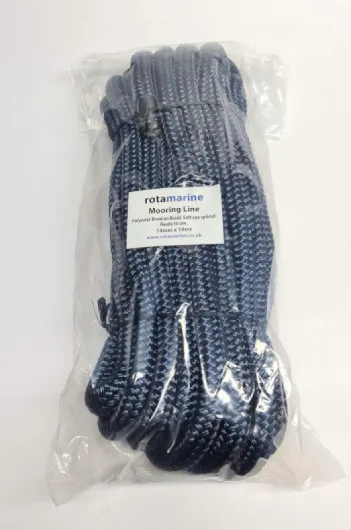
When you order this ROTA MARINE dock line, you get exactly one thing: a 10-meter length of 16mm black double-braid polyester rope, with one end nicely spliced into an eye and the other end heat-cut and whipped. No bag, no fancy packaging, no instructions — just the rope. Honestly, for this type of product, that’s fine. You’re not buying a gadget; you just want a line that’s ready to clip onto a cleat.
The spliced eye is about 35cm, which is a useful size in real life. It’s big enough to drop over most pontoon or boat cleats without fighting it, but not so huge that it becomes bulky. The stitching on the splice and the whipping looks neat and tight. After a few weeks of use, I don’t see loose threads or anything unraveling. The other end is hot-cut and then whipped and stitched, so you don’t get that annoying fraying that cheaper ropes often have after a couple of uses.
In terms of specs, the manufacturer lists a breaking load of 5630kg for the 16mm size, which is more than enough for a typical leisure boat of 6–9 meters. It’s double-braid polyester with a 24-strand outer cover and 12-strand inner core, UV resistant, and with low water absorption. All of that is nice on paper, but what matters to me is that it feels strong, doesn’t go fuzzy immediately, and doesn’t turn into a stiff cable after a few days in the sun.
If I compare it to some no-name ropes I’ve picked up in bargain bins at marinas, the presentation here is a clear step up: proper splice, proper whipping, and consistent diameter along the length. It still looks like a basic working line, not premium yachting jewelry, but that’s exactly what I expect at this price point. Nothing fancy, just functional and ready to toss on the cleat as soon as you open the parcel.
Does it actually hold the boat securely? Yes.
In terms of real-world effectiveness, this rope does exactly what it’s supposed to do: it keeps the boat tied up without fuss. I’ve used it as a bow line on a 7m motorboat, sometimes as a stern line, and a couple of times as a spring when the wind was pushing the boat off the pontoon. In all these situations, the line held steady, didn’t slip on the cleats, and didn’t show signs of distress even when the boat was snatching a bit in chop.
The low stretch of polyester is quite noticeable compared to nylon lines I’ve used before. The boat doesn’t move as much, which is good when you’re in a tight berth and don’t want to bump neighbors. On the flip side, if your pontoon is very rigid and there’s a lot of surge, you might feel more jerks transmitted to the cleats. Personally, I prefer this for my marina setup, and if I need extra shock absorption, I’d rather add a mooring compensator than rely on stretchy rope alone.
Handling-wise, once the rope softened up a bit after a few uses, it became easy to coil and throw. The 16mm diameter gives a good grip in the hand without cutting into your fingers when the line is under tension. The pre-spliced eye speeds up mooring: I can just drop it over a cleat or bollard and adjust the rest of the line from the boat. The whipping on the tail end also helps it feed cleanly through fairleads without catching on loose fibers.
I haven’t had it long enough to comment on multi-year performance, but after several weeks of use in saltwater, with sun, rain, and some abrasion, it’s holding up well. No noticeable loss of strength, no hard spots, and only mild surface fuzzing where it rubs. For day-to-day mooring on a leisure boat, I’d say it’s effective and trustworthy. It’s not magical or anything; it’s just a solid rope that does its job quietly, which is exactly what I want from a dock line.
Pros
- Strong double-braid polyester with high breaking load (5630kg for 16mm)
- Pre-spliced 35cm eye and whipped ends make it genuinely ready to use
- Good resistance to UV, abrasion, and saltwater for regular marina use
Cons
- A bit stiff when new, takes a few uses to become more manageable
- Plain black color shows salt and dirt and can be harder to distinguish from other lines
Conclusion
Editor's rating
After using the ROTA MARINE 16mm x 10m black dock line for a while, my overall opinion is that it’s a solid, no-nonsense mooring rope. The double-braid polyester construction feels strong, the pre-spliced 35cm eye is practical, and the whipping on both ends is done properly. It holds the boat securely, doesn’t slip on cleats, and so far has handled sun, saltwater, and abrasion without any serious wear. It’s a bit stiff when new and the plain black color shows salt marks, but in daily use, it simply gets the job done.
I’d recommend this line to leisure boat owners who want something reliable for regular marina or pontoon mooring and don’t feel like gambling on the cheapest rope available. If you’ve had enough of fluffy, faded polypropylene that feels weak after one season, this is a sensible upgrade. On the other hand, if you’re looking for very soft, stretchy lines for exposed moorings, or if you want color-coded ropes for easy identification, you might prefer a different product or a nylon option. For most casual skippers, though, this ROTA MARINE dock line is a good balance of strength, durability, and price, with nothing flashy but very few real weaknesses.