
Summary
Editor's rating
Value for money: cheap, functional, and a bit rough
Basic 33C design with a pre‑installed clevis
Stainless steel core and rubber jacket: decent but clearly budget
Short‑term durability seems fine, long‑term is still a question mark
Real‑world performance and installation quirks
What you actually get in the bag
Does it actually move your throttle/shift smoothly?
Pros
- Low price compared to big‑name 33C cables
- Works as a functional throttle/shift replacement if routed correctly
- Stainless inner core and included M5 clevis make installation easier for compatible setups
Cons
- Product description is confusing and mixes brake hose and marine cable info
- Not as smooth or refined as higher‑end cables, especially with tighter bends
- Unknown brand and unproven long‑term durability for heavy or professional use

Specifications
View full product page →| Brand | BADIKA |
A budget control cable that’s a bit confusing on paper
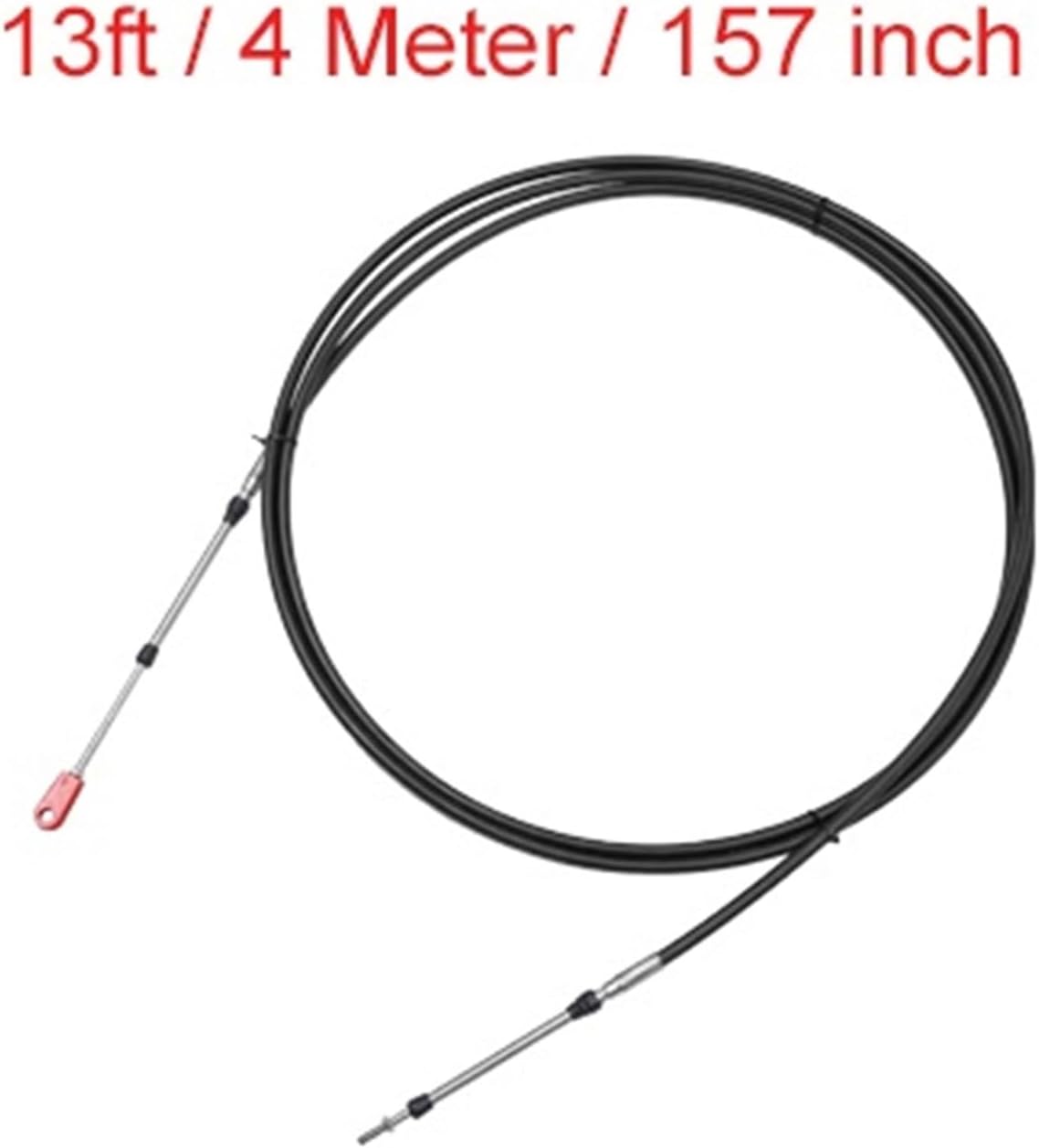
I picked up this so‑called “Brake and clutch oil lines” cable mainly for a small outboard project, not for actual brakes. The title is messy, but what you really get is a 3300/33C style marine throttle/shift cable with a clevis end, in my case the 157‑inch (about 4 m) version. Brand is BADIKA, which I’d never heard of before, so I went in expecting something basic and possibly rough around the edges.
Right out of the bag, it was clear this is more of a generic universal cable than something perfectly tailored for a specific engine or control box. The listing talks about marine throttle, then suddenly about brake hoses, heat insulation, braking sensitivity… it feels like they copy‑pasted text from another product. So if you’re new to this kind of part, the description can be confusing and you definitely shouldn’t treat it as a plug‑and‑play brake line for a motorcycle or car. It’s a pull/push control cable, not a hydraulic hose.
I fitted it as a throttle/shift replacement cable on an old 15 hp outboard that originally used 33C‑type cables. My goal was simple: find out if a cheap, no‑name cable could replace the worn original without adding too much play or stiffness. I wasn’t expecting miracles, just something that moves smoothly and doesn’t rust in a month. I also measured it against my old Teleflex cable to see how close it is in terms of core travel and end fittings.
After a couple of weekends on the water, I’d say it’s functional and decent for the money, but it’s not on the same level as big brands in terms of smoothness and precision. If you’re picky about control feel, you’ll notice the difference. If you just want your throttle and shift to work again on a small boat without spending a lot, it’s worth considering, as long as you double‑check the length and connector style before ordering.
Value for money: cheap, functional, and a bit rough
On the value side, this cable sits in that cheap‑but‑usable category. It’s clearly priced below big names like Teleflex or OEM cables, and you can feel that in the finish and smoothness. But if you just need to get a small boat or project running again without dropping a lot of cash, it’s pretty hard to argue with the price. You get a functional 3300/33C‑style cable with stainless elements and a clevis already included, which is enough for many simple setups.
Where you “pay” is mainly in refinement and long‑term confidence. The listing is confusing, the branding is unknown, and you don’t get the same level of trust you’d have with a cable that’s been used for decades in the marine world. Also, the fact that the product page mixes talk of brake systems and marine throttles doesn’t inspire total confidence. You need to know what you’re buying and how you’re going to use it; this is not a plug‑and‑play kit for beginners who expect everything to be labeled and explained.
For me, using it on a small outboard that only runs on weekends, the cost vs result balance is acceptable. The boat shifts and throttles properly now, and I didn’t have to spend much. If it lasts a couple of seasons without stiffening or rusting, I’ll consider it money well spent. If it fails early, I’ll chalk it up to experience and go back to a more expensive brand. That’s kind of the gamble with no‑name parts.
If you’re on a budget, reasonably handy, and okay with a “good enough” solution, the value is pretty solid. If downtime is expensive for you, or if this cable would be controlling something critical where failure is a big problem, I’d treat this as a backup or temporary fix rather than the primary long‑term solution. It’s decent for the price, but there is definitely better out there if you’re willing to pay more.
Basic 33C design with a pre‑installed clevis
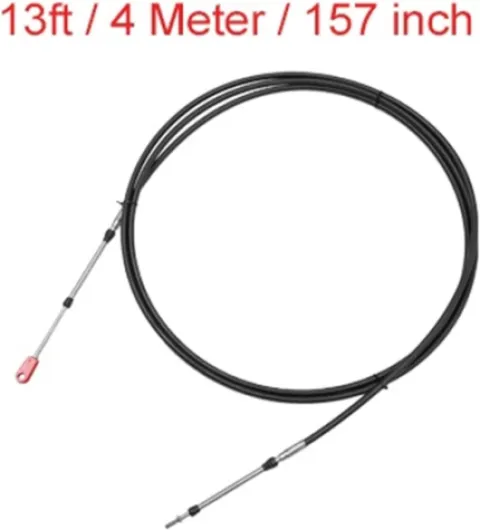
Design‑wise, this thing is pretty straightforward: black outer jacket, stainless inner core, and a clevis on the end that’s ready to screw into an M5 linkage. If you’ve ever dealt with standard 3300/33C marine cables, you’ll recognize the general layout. The cable isn’t super thick, but it feels in line with other light‑duty control cables I’ve used on small boats and karts. It’s not some super heavy‑duty industrial piece, more of a light/medium application cable.
The pre‑installed clevis is handy if it happens to match your setup. In my case, the M5 thread and clevis width lined up with the throttle arm on my outboard, so I didn’t have to hunt for extra hardware. The downside is that if you need a different style of end (ball joint, fork with different width, or a bigger bolt), you’ll either have to swap the clevis or adapt it, which might be annoying if you don’t have spare parts. It’s not a universal solution for every engine, despite what the listing kind of implies.
One thing I noticed is that the bend radius tolerance is okay but not great. When I tried a tight loop behind the console, the cable got noticeably stiffer. It still moved, but you could feel the extra friction at the control lever. Compared to a name‑brand cable I have on another boat, this one doesn’t like sharp bends as much. So design‑wise, it works best if you can give it a fairly gentle route, not snake it around small corners or cram it through tight holes.
In practice, the design is functional but nothing special. It’s a generic layout that copies the standard 33C style, which is good because it makes it easier to integrate into existing systems. But don’t expect any clever touches or premium features like super smooth liners or special low‑friction coatings. It’s a simple control cable that does what it says as long as you keep your expectations in check and plan the routing properly.
Stainless steel core and rubber jacket: decent but clearly budget
The listing claims stainless steel and rubber as the main materials, and that’s pretty much what you see. The inner core looks like stainless and didn’t show any rust after a few trips in brackish water, which is a good sign. I also deliberately left a small exposed section damp for a week in the garage to see if it would start spotting. So far, no orange spots, just a bit of dried residue from the light oil they use inside the cable.
The outer jacket is a fairly standard black rubber or rubber‑like plastic. It’s not super thick, but it doesn’t feel flimsy either. I bent it back and forth a bunch of times while routing it along the side of the boat, and it didn’t crack or show white stress marks. That said, it doesn’t feel as tough or as slick as the jackets on higher‑end cables. It picks up dirt and scuffs a bit easier, and I wouldn’t be shocked if it starts to look tired after a couple of seasons of UV and grime if you leave the boat outside all year.
The metal fittings at the ends feel okay but not premium. Threads are clean enough; the M5 nut goes on without binding. The clevis pin and clip are basic but serviceable. I wouldn’t use this in a highly corrosive environment without rinsing it regularly, but for casual freshwater or light saltwater use, the materials seem fine. I did a quick magnet test and some parts are slightly magnetic, so it’s probably a mix of stainless and regular steel. Not a big surprise at this price.
Overall, the materials match the budget price point. They’re good enough for hobby use, small boats, or light mechanical linkages. If you’re building something that needs to run hard every day, or you need top‑tier corrosion resistance, I’d still lean toward a known brand. But for what I paid, I can’t really complain. It feels like a sensible compromise between cost and durability, as long as you maintain it a bit and don’t abuse it with extreme bends or rough handling.
Short‑term durability seems fine, long‑term is still a question mark
I’ve only had this cable in use for a few weeks, so I can’t pretend to know how it’ll look after five years. But I did a few small tests to get a sense of its short‑term durability. First, just normal use on the water: a couple of trips, some rain, some sun, and a rinse with fresh water afterward. No visible rust on the metal parts yet, and the jacket still looks the same. The ends where the inner cable exits the jacket haven’t started fraying or cracking, which is usually where cheap cables fail first.
I also did some manual stress testing before installing it: repeated full‑travel cycles while holding the cable in a gentle curve, then in a tighter curve. After a few dozen cycles, I didn’t feel any sudden increase in friction or hear any grinding sounds inside. The jacket didn’t twist or bunch up. That’s a good sign, but keep in mind this is just a basic bench test, not months of daily use. The area where the jacket meets the metal end fittings looks decently crimped, but not as clean as on more expensive cables. If something is going to loosen over time, I’d bet on those transitions.
One thing I’m slightly cautious about is UV and weathering. The outer jacket doesn’t look like it has any fancy UV coating. If you leave your boat in the sun all season, I could see the jacket getting dull and maybe stiff over a couple of years. For now, it’s fine, but I’d probably give it a quick wipe with a protectant every now and then if it’s constantly exposed. It’s not the sort of cable I’d install in a commercial boat that runs every day and lives in saltwater.
So far, durability is acceptable for light to moderate hobby use, but I wouldn’t call it bulletproof. If you want something you can install and forget for years in harsh conditions, I’d still go with a known marine brand. If you’re okay checking it once in a while and maybe replacing it sooner if it starts to stiffen up, this one is a reasonable budget choice. Basically: fine for weekenders, questionable for heavy‑duty or professional setups until it proves itself over time.
Real‑world performance and installation quirks
Performance in the real world is always about more than just moving back and forth. I started by following the length advice from the listing: measure the route, add a bit for a loop, and round up. I already knew my old cable length, so I matched it at 157 inches. The new cable slid into the existing routing without too much drama, but I did have to open up one clamp because the jacket is very slightly thicker than the old one. Nothing major, just something to note if your cable run is already tight.
Once installed, shifting felt positive. The detents on the gearbox were clear, and the cable didn’t flex or compress enough to feel vague. Throttle movement was consistent, and the engine responded predictably. After about 4–5 hours of mixed use, I rechecked the linkage. No obvious stretch, no slack that wasn’t there before. I also tried some deliberate abuse: sharp turns, trimming the engine, and wiggling the control while watching the cable run. The jacket didn’t kink, but you can see that tight bends make the inner movement a bit heavier.
I also paid attention to noise and vibration. Some cheap cables rattle or transmit vibrations to the control lever. This one is fairly quiet. There’s no noticeable buzz in the handle, and it doesn’t slap around in the cable run. I zip‑tied it in a couple of spots and it stayed put. After rinsing the boat down with fresh water and letting it dry, the cable still felt the same the following weekend, so no immediate water intrusion issues showed up.
Overall, performance is pretty solid for casual use. It’s not as slick or refined as a higher‑end brand, but it works reliably so far. The main thing is to respect the bend radius and take your time on routing. If you try to force it through tight S‑curves, you’ll feel the drag. If you give it a clean path, it behaves nicely and should be fine for small boats, go‑karts, or other light mechanical controls where absolute precision isn’t critical.
What you actually get in the bag
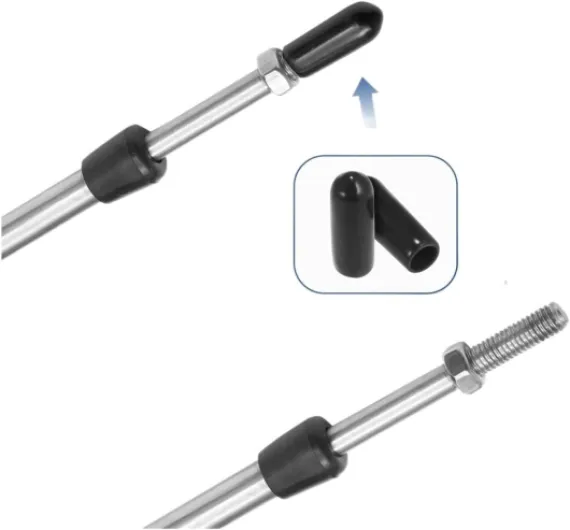
On paper, this product is all over the place: the title mentions brake and clutch oil lines, then marine throttle shift, then talks about braking distance. In reality, what showed up is a single 3300/33C‑type push‑pull cable with a black outer jacket and a clevis already installed on one end. No extra hardware, no instructions beyond what’s written online, and no fancy branding. Just a cable in a plastic bag with a small label saying BADIKA and the length.
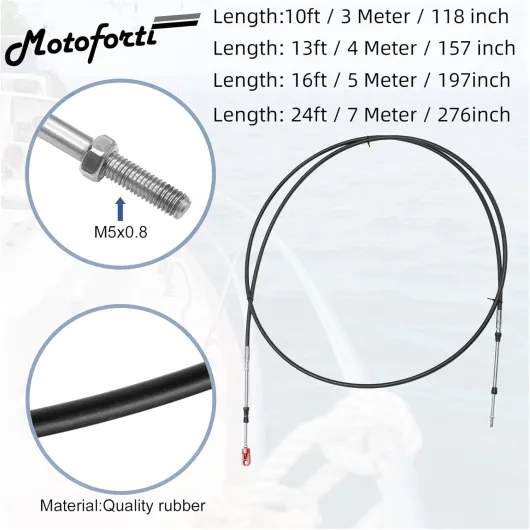
The thread size is M5x0.8 on the end where the clevis screws on, which matches a lot of generic marine and mechanical linkage setups. The listing says it comes in multiple lengths: 118, 157, 197, and 276 inches. Mine was the 157‑inch version and the length was pretty much spot on when measured end‑to‑end, maybe off by a couple of millimeters but nothing that matters in practice. The travel of the inner cable was close to my old 33C cable, so it lined up decently with the existing control box and engine lever.
There’s no fancy packaging or protective caps on the ends, so when I opened it, there was a bit of light oil/grease residue but nothing leaking or messy. No paper manual, just the cable. If you’ve never installed a throttle/shift cable before, you’ll be relying on the product page or YouTube. To be fair, that’s pretty standard for cheap replacement cables from unknown brands, but it’s worth mentioning. You don’t get the polished experience you’d have with something like Teleflex/Morse.
Overall, the presentation screams budget but usable. It’s exactly one part doing one job, no extras. If you’re comfortable measuring cable runs and figuring out routing yourself, that’s fine. If you expect a detailed guide or labeled ends explaining which side goes to the control and which to the engine, you won’t find that here. It’s targeted at people who already have a rough idea what a 33C cable is and how to swap one in.
Does it actually move your throttle/shift smoothly?
In terms of effectiveness, I used this cable as a replacement throttle/shift line on an older 15 hp outboard that had a very sticky original cable. After installing the BADIKA cable and adjusting the linkage, the controls were definitely smoother than before, but not silky. There’s a slight drag when you move the lever, which you notice if you’re used to more expensive cables. It’s not bad, just not super light. For casual boating, it’s fine. If you’re constantly shifting and throttling, you might wish it was a bit smoother.
I tested it on the water over a couple of weekends, doing repeated shifts from neutral to forward and reverse, plus a lot of throttle changes while trolling. The cable didn’t bind or stick, and I never had a moment where I felt it was going to jam. No noticeable play or stretching appeared during those first outings. The engine hit full throttle and went back to idle reliably. So functionally, it gets the job done. The clevis stayed tight on the M5 thread, and the locknut didn’t back off.
Where you feel the price is mostly in fine control. Compared to the older Teleflex cable I have on another boat, this one has a slightly more “gritty” feel when you move very slowly through the range. It’s not grinding, more like a mild internal friction. If you route it with gentle curves and avoid tight bends, it improves a bit, but it never feels as smooth as the more expensive cable. For most people, that’s acceptable, but if you’re picky about control feel, it might bug you over time.
In short, effectiveness is decent but nothing more. It solves the problem of a seized or frayed cable and restores normal throttle/shift operation at low cost. Just don’t buy it expecting high‑end marine control performance. It’s a budget replacement that works, as long as your expectations match the price and you take care with the installation.
Pros
- Low price compared to big‑name 33C cables
- Works as a functional throttle/shift replacement if routed correctly
- Stainless inner core and included M5 clevis make installation easier for compatible setups
Cons
- Product description is confusing and mixes brake hose and marine cable info
- Not as smooth or refined as higher‑end cables, especially with tighter bends
- Unknown brand and unproven long‑term durability for heavy or professional use
Conclusion
Editor's rating
After using the BADIKA 3300/33C‑style cable for a bit, my overall feeling is that it’s a functional budget option with a messy product description. Installed as a throttle/shift cable on a small outboard, it works: the engine shifts, the throttle responds properly, and the cable hasn’t shown early signs of rust or failure. It’s not super smooth, but it’s smoother than the worn‑out cable it replaced, and for a weekend boat that’s enough for me.
This cable makes sense if you’re price‑sensitive and a bit handy. You need to be comfortable measuring your own cable run, checking the connector style, and routing it so you avoid tight bends. If you do that, you’ll probably be happy enough with it, especially for casual freshwater or light saltwater use. Just don’t buy into the confusing “brake and clutch oil lines” wording and try to use it as a hydraulic brake hose; that’s not what it is. It’s a mechanical control cable, plain and simple.
If you want long‑term reliability and top‑tier smoothness, or you’re fitting it to something that gets used hard and often, I’d still go with a recognized marine brand even if it costs more. But for small boats, karts, or light mechanical controls where you just need a working cable and don’t want to overspend, this BADIKA cable is a reasonable choice. It’s decent, not special, and the price reflects that.