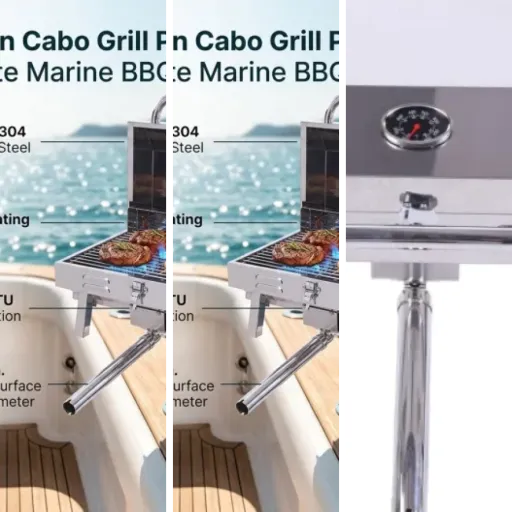

Summary
Editor's rating
Value: Decent for Casual Boaters, Less So for Heavy Users
Design: Practical Idea with Some Rough Spots
Materials: 304 Stainless, but Clearly on the Budget Side
Durability: Feels Okay Short-Term, Questionable Long-Term
Performance: Cooks Fine, but You Need to Work Around Its Quirks
Out of the Box: Very Generic, Very Basic
Pros
- Affordable compared to branded marine grills with similar size and power
- 304 stainless steel construction holds up reasonably well with basic care
- 360° rotating base is genuinely useful for managing wind and smoke direction
Cons
- Build quality and finishing feel budget, with some wobble and uneven heat
- Short 90-day warranty and generic branding don’t inspire long-term confidence
- Temperature gauge and “smokeless” claims are overstated and only roughly accurate

Specifications
View full product page →| Brand | Generic |
A Boat Grill for People Who Just Want Hot Food on the Water
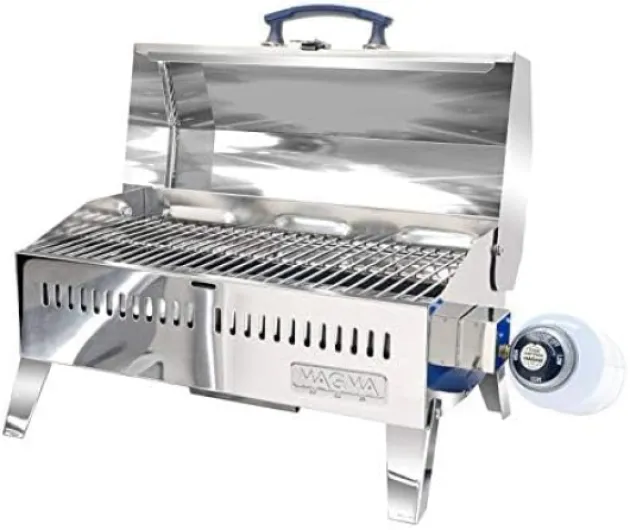
I took this generic stainless steel boat grill out for a handful of weekend trips on a pontoon and a small fishing boat to see what it’s really worth. No brand name, basic packaging, and a 90-day warranty didn’t give me huge confidence at the start, but I wanted to see if it could at least cook burgers and sausages without drama. I’ve used Magma-style marine grills before, so that’s my reference point here.
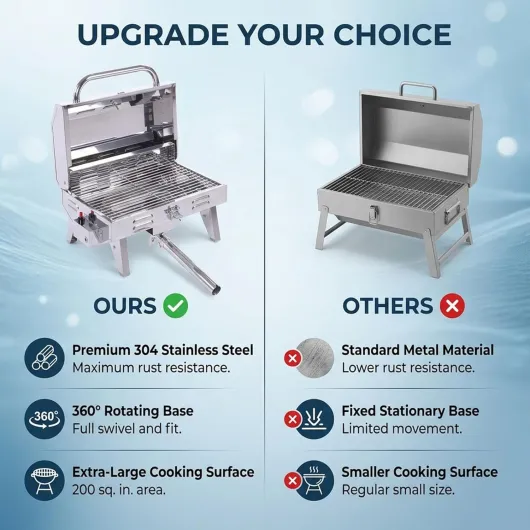
Right away, this thing feels like a budget take on those better-known marine BBQs. Same idea: stainless steel body, 200 square inch cooking area, and a base that rotates 360° so you can angle it away from the wind and the people sitting nearby. On paper, 12,000 BTU and 304 stainless steel sound solid. In practice, it’s more of a “good enough” solution than something you’d brag about.
My use was pretty simple: grilling for 3–4 people at a time, mostly hot dogs, burgers, a few chicken thighs, and some veggies. Conditions were mixed: light wind on a lake, a bit more gusty one afternoon, and some drizzle. I mounted it on a rail on the pontoon and once just used it as a stand-alone grill at the dock to compare.
Overall impression so far: it works, it cooks, and it hasn’t rusted on me yet, but there are a few rough edges. If you’re expecting high-end fit and finish, you’ll be annoyed. If you just want something that heats up and doesn’t fall apart immediately, it’s decent. I’d call it a functional budget marine grill, not a premium one.
Value: Decent for Casual Boaters, Less So for Heavy Users
Price-wise, this sits below the big marine brands, and you can feel that when you use it. That said, for what it costs, it’s not a bad deal if your expectations are realistic. You’re getting 304 stainless, a 200 square inch cooking surface, a 12,000 BTU burner, and a rotating base that actually helps in the wind. For casual weekend use on a lake or short trips, it’s good enough. You’ll spend less than you would on a comparable Magma-style grill, and for some people that’s all that matters.
Where the value drops a bit is if you think long-term. The 90-day warranty, the slightly loose base, the average finishing, and the generic nature of the product all point to something that might not age as nicely as a more expensive option. If you’re the type who grills on the boat every weekend all summer, every year, spending more on a sturdier, branded grill might actually be cheaper in the long run. You’ll probably get better support, more consistent build quality, and maybe less frustration with small details like the lid hinge and the mounting hardware.
For someone who just wants a simple grill for occasional use, this makes sense. You get a functional marine grill without dropping a big chunk of cash. If it lasts you a few seasons with light use, that’s already decent value. But if you care about perfect heat distribution, bulletproof mounts, and long warranties, I’d say this one is more of a budget compromise than a smart long-term investment. It’s basically: pay less now, accept some quirks, and don’t be shocked if you end up replacing it earlier than a more premium model.
So overall, I’d rate the value as fair to good for casual users, but only average if you’re thinking in terms of heavy, multi-year use in harsher conditions. It fills a niche: people who want to grill on the water without overthinking it or overspending, and who are fine with “it works” rather than “it’s built like a tank.”
Design: Practical Idea with Some Rough Spots
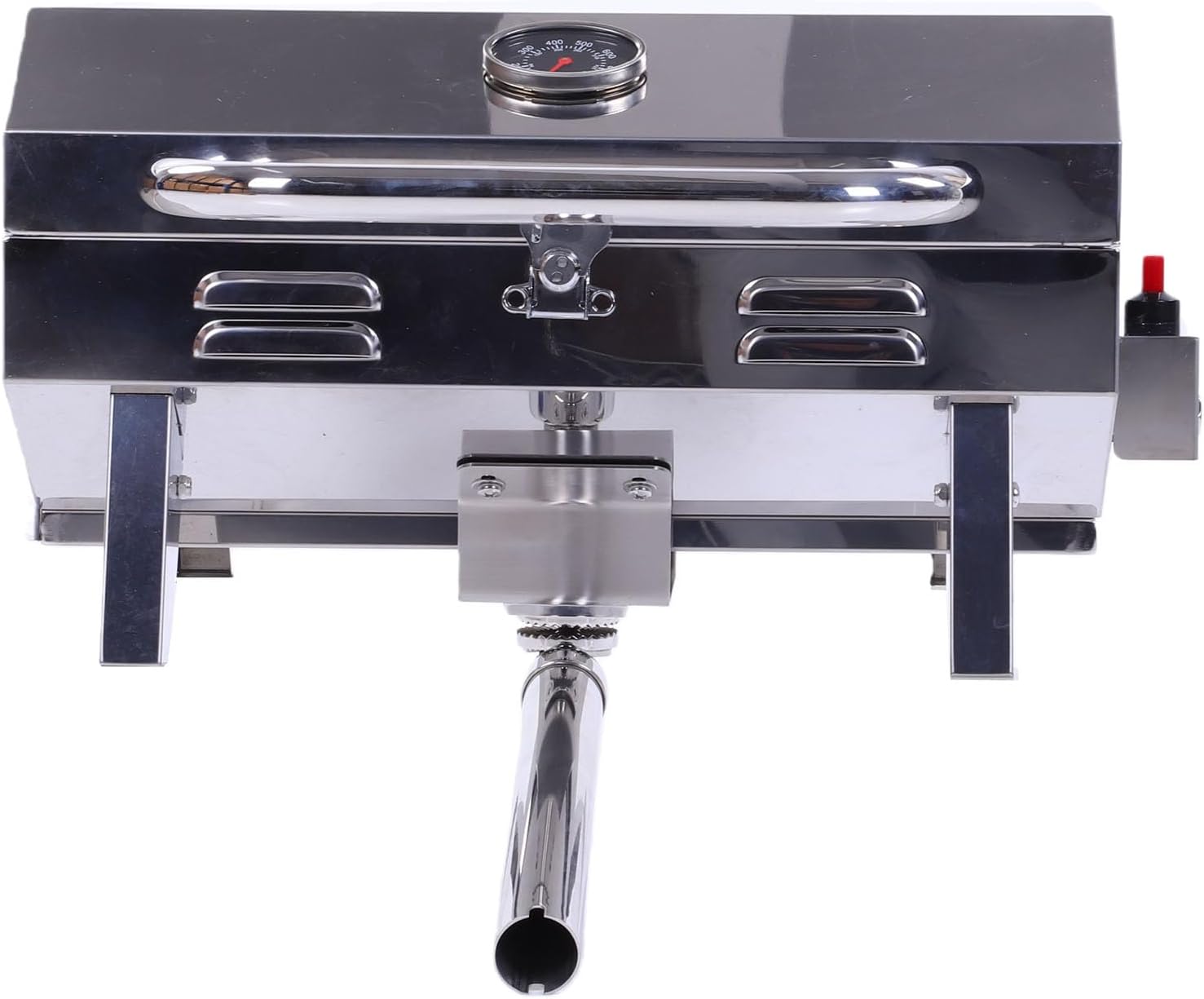
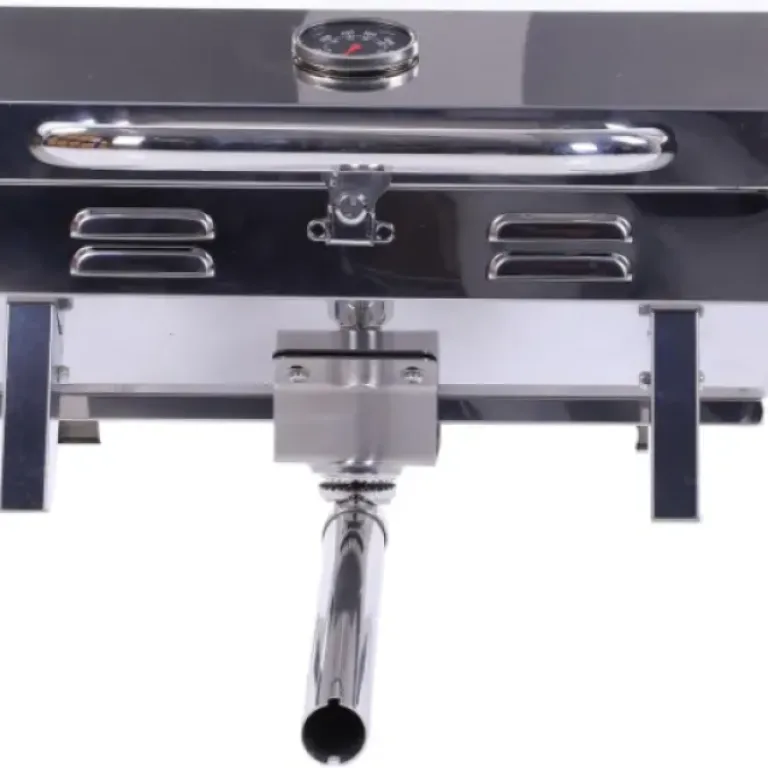
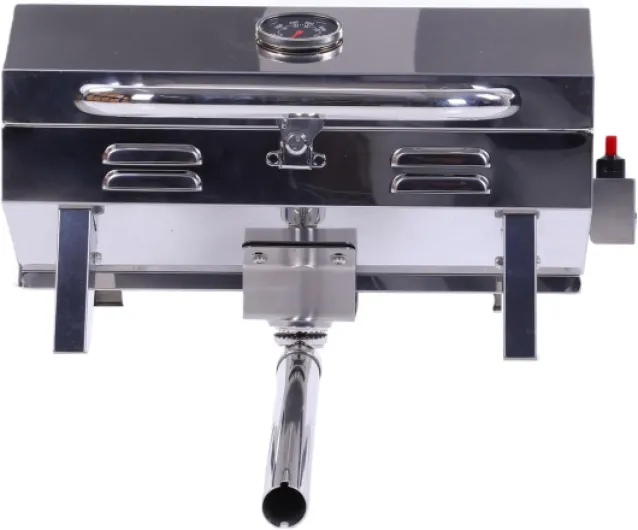
The general design makes sense for a boat grill: compact footprint, lid with built-in temperature gauge, and a 360° rotating base so you can turn it away from wind or from people sitting nearby. On my pontoon, the rotating base actually helped; I could swing the grill slightly so the smoke didn’t blow straight into the seating area. The mechanism itself is pretty simple—basically a pivot with a tightening point. It works, but it doesn’t feel very refined. There’s a bit of play, and if you don’t tighten it enough, the grill can wobble a little when you open the lid.
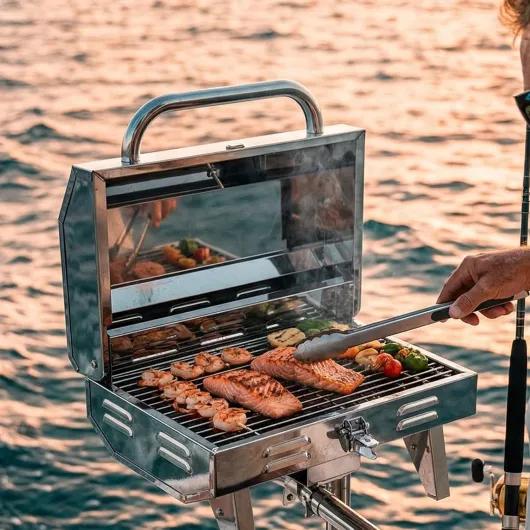
The 200 square inch cooking area is enough for 6–8 burgers or a mix of hot dogs and veggies. It’s not huge, but for a small group on a boat it’s fine. The grates are basic and don’t feel especially heavy-duty. They heat up decently, but they’re not the thick kind that hold tons of heat. I noticed that the heat distribution wasn’t perfectly even—hotter in the middle, weaker on the outer edges—so you end up rotating food around a bit if you want everything to cook evenly.
One design detail that’s a bit annoying is how the lid opens relative to the boat rail or mounting area. Depending on how you install it, the lid can bump into nearby railings or seats because the hinge doesn’t lift very high. You need to think a bit about placement, especially on a smaller boat. Also, the built-in temperature gauge is nice to have, but it’s not super precise. It gives you a rough idea (low, medium, hot) more than an accurate number you can fully rely on.
In short, the design is functional but not clever. The 360° base is the main selling point, and it does help in real conditions, but the rest is pretty standard. If you’re okay with a bit of wobble and some uneven heat, it’s fine. If you want rock-solid mounting and really even cooking, you’ll probably want to look at more established marine brands, even if they cost more.
Materials: 304 Stainless, but Clearly on the Budget Side
The grill is advertised as being made from 304 stainless steel, which is the usual choice for marine use. After a few outings and some exposure to spray and drizzle, I didn’t see any obvious rust spots, which is good. The mirror polished finish looks nice from a distance, but up close you can tell it’s not top-tier finishing. You can see light scratches and small imperfections pretty quickly, especially if you’re not gentle when cleaning it or you store it loosely with other gear.
The handle is also listed as 304 stainless steel. It stays reasonably cool to the touch if you don’t crank the grill for an hour straight, but after a long cook it does get warm, so I’d still be careful. It feels solid enough, no flex when lifting the lid, but again, it doesn’t have that heavy, premium feel—more like medium-gauge metal that’s good enough for a few seasons if you take care of it. The frame and body panels don’t feel flimsy, but if you press hard on the sides you can see a bit of give.
The insulation rack and internal parts are basic. They do their job of keeping some distance between the burner and the grates, but nothing more. I didn’t see any warping after a few medium-length cooks, which is a good sign. The "fireproof" and "smokeless" claims are a bit optimistic. It’s still a grill: if fat drips and flares up, you’ll get smoke. It’s not worse than other grills, but it’s definitely not smoke-free. The burner itself seems decent; 12,000 BTU is enough for a grill this size, and it lit reliably with a lighter (note: mine didn’t have an integrated igniter, so you’ll want a long lighter).
Overall, the material quality matches the price and the "Generic" branding: usable and reasonably resistant, but not something I’d expect to last a decade with heavy use. If you rinse it after use, dry it, and use the cover, I think you can get a few good seasons out of it. If you leave it permanently exposed on a saltwater mooring with no care, I wouldn’t bet on long-term durability, even if it is 304 stainless on paper.
Durability: Feels Okay Short-Term, Questionable Long-Term
I obviously haven’t had this grill for years, so I can’t pretend to know how it will hold up in the long run, but after several outings and a couple of weeks stored outdoors under the included cover, I can at least talk about early signs. So far, no rust spots, no warped lid, and the hinges still move fine. The mirror polished stainless shows fingerprints and small scratches quickly, especially if you’re not gentle with cleaning, but that’s cosmetic more than functional.
The rotating base is the part I’m most unsure about long-term. It works now, but it doesn’t feel super robust. There’s a bit of play, and if you tighten it hard to reduce wobble, you can feel the hardware straining a little. On a calm lake and a pontoon, it’s okay. If you’re planning to use it a lot on a boat that bounces around or in rougher conditions, I’d keep an eye on that mechanism and maybe avoid yanking it around aggressively. The stand itself is stable enough on flat surfaces, but I wouldn’t call it rock solid in all situations.
The 90-day warranty also says a lot. That’s not very long, especially for something meant to live in a harsh environment. It doesn’t mean it will fail after three months, but it shows the manufacturer isn’t exactly betting on long-term support. Compared to better-known marine brands that offer longer warranties and more spare parts, this one feels more disposable: if something important breaks in a year or two, you’ll probably replace the whole thing rather than repair it.
In short, if you treat it decently—rinse off salt, dry it, use the cover, and don’t leave it out all winter uncovered—I think it can last a few seasons without major issues. If you’re rough with your gear and expect it to survive constant exposure with no maintenance, I’d be skeptical. It’s acceptable durability for the price, but it doesn’t inspire huge confidence for very heavy use or permanent saltwater mooring.
Performance: Cooks Fine, but You Need to Work Around Its Quirks
On the cooking side, this grill is perfectly usable, but not impressive. The 12,000 BTU burner is enough to get it up to grilling temperature fairly quickly. From cold, I was hitting a decent heat level in about 8–10 minutes with the lid closed. In light wind, it held temperature reasonably well, especially when I angled it with the 360° base. When the wind picked up, I could feel the heat drop, and I had to keep the lid closed more often to compensate. That’s pretty normal for small marine grills, though, so I wouldn’t call it a disaster.
Heat distribution is where the budget design shows. The center of the grate gets hot, and you’ll get nice browning on burgers or sausages there. The edges are noticeably cooler. When I tried cooking chicken thighs across the whole surface, I ended up rotating pieces between the hot center and the cooler sides to get everything cooked evenly. For basic stuff like hot dogs, it’s fine. For things that need more even heat, you just have to babysit it a bit more. The built-in temperature gauge helps you see general trends, but it’s not super accurate, so I mostly went by feel and how the food looked.
The "smokeless" claim is exaggerated. It smokes just like any other small grill when fat drips. It’s not worse, but definitely not smoke-free. Flare-ups were manageable; I didn’t get huge fireballs, but you do see some flames if you overload the grate with greasy meat. The lid closes reasonably tight, which helps calm things down. One positive point: it didn’t randomly blow out in light wind, which is sometimes an issue with small boat grills. The burner stayed lit as long as I shielded it a bit and didn’t leave the lid wide open facing the wind.
For what I used it for—simple meals on the water—it did the job. If you’re expecting restaurant-level sear or very precise temperature control, you’ll be disappointed. If you just want to cook a few burgers, sausages, or fish fillets without too much fuss, it’s fine. I’d give the performance a passing grade: not great, not terrible, just average with some minor annoyances you can work around once you get used to it.
Out of the Box: Very Generic, Very Basic
When they say “Generic,” they’re not kidding. The grill arrived in a plain cardboard box with some basic foam and plastic, no branding, no fancy graphics, and pretty minimal paperwork. There were no included accessories beyond the stand and cover, and the paperwork was basically a folded sheet with rough instructions and not much detail. If you like clear manuals and diagrams, this will annoy you a bit. I had to figure out a couple of things by trial and error, especially around how the base tightens and how it’s meant to be embedded or mounted.
The parts inside were mostly intact, but the finishing touches felt cheap: some edges were a bit sharp, a couple of small scuffs on the mirror polished surface right out of the box, and a few fingerprints or grease marks from the factory. Nothing that stopped it from working, but it doesn’t give that “new and clean” feeling. You’ll probably want to wipe everything down properly before first use. At least all the main pieces were there and the lid, handle, and base lined up correctly once assembled.
Assembly itself was straightforward but not super intuitive from the instructions. I’d say it took me about 25–30 minutes from unboxing to having it fully together and mounted on the stand the first time, mainly because I double-checked the screws on the base and how tight I wanted the rotating mechanism. Someone handy would probably do it faster. Once set up, it looks like a typical compact boat grill: rectangular, shiny, and fairly compact for a 200 square inch cooking surface.
Overall, the presentation screams “budget import” rather than “premium marine gear.” If that bothers you, this is probably not for you. If you just want something that works and don’t care about logos or fancy packaging, you’ll shrug and move on. It’s very no-frills, which matches the price point but also sets the tone: you’re not buying polish here, you’re buying basic function.
Pros
- Affordable compared to branded marine grills with similar size and power
- 304 stainless steel construction holds up reasonably well with basic care
- 360° rotating base is genuinely useful for managing wind and smoke direction
Cons
- Build quality and finishing feel budget, with some wobble and uneven heat
- Short 90-day warranty and generic branding don’t inspire long-term confidence
- Temperature gauge and “smokeless” claims are overstated and only roughly accurate
Conclusion
Editor's rating
This generic stainless steel boat grill does what most people need on a casual day out: it cooks burgers, hot dogs, and simple meals without too much hassle. The 12,000 BTU burner is strong enough for a 200 square inch grate, and the 360° rotating base actually helps deal with wind and smoke direction. The 304 stainless construction is a plus at this price, and after some real use I didn’t see rust or warping. It’s clearly a budget product, though: the finishing is rough in spots, the base has a bit of wobble, heat distribution isn’t perfect, and the temperature gauge is more of a rough guide than a precise tool.
If you’re a casual boater who grills a few times a season and doesn’t want to spend big money on a fancy brand, this is a decent, no-frills option. Just take care of it: rinse, dry, use the cover, and don’t abuse the rotating base. On the other hand, if you’re out on the water every weekend, or you’re in a harsh saltwater environment and want something you can rely on for years, I’d look at more established marine grills, even if they’re pricier. This one feels more like a short-to-medium term solution than a long-term workhorse.