
Summary
Editor's rating
Good value if you actually need this much thick rope
Chunky, bright, and not exactly subtle
Polypropylene: tough enough but with clear limits
Holding up well so far, with a few things to watch
What you actually get in the coil
How it actually performs on the water and at camp
Pros
- Thick 20 mm diameter and long 100 m coil give plenty of strong line for multiple uses
- Bright green colour and floating PP material make it easy to see and handle around water
- Good price per metre compared to buying several separate dock lines or premium ropes
Cons
- Stiff, plasticky handling and bulky diameter can be awkward on small boats or tight cleats
- Polypropylene is less durable long term than polyester/nylon under heavy UV and abrasion
- Ends fray quickly if not properly melted and taped after cutting

Specifications
View full product page →| Brand | vidaXL |
A big green rope that actually gets used
I picked up this vidaXL 20 mm polypropylene boat rope mainly because I needed a long, thick line for mooring and general messing about with a small motorboat and a couple of kayaks. A full 100 m coil at this price looked like a good deal, and I wasn’t looking for fancy yacht-club gear, just something that could take some abuse and not fall apart after one season. I’ve been using it for a few weeks now around a lake and on a short coastal trip, cutting off sections as needed.
In practice, it’s a pretty straightforward product: a thick, braided PP rope in bright green, 20 mm diameter, with a stated breaking strength of 2400 kg and a working load of 480 kg. So, clearly not for heavy lifting or safety-critical stuff, but enough for mooring a small to medium boat, tying down gear, or general camp and garden use. I used it for mooring my 5 m boat, for towing an inflatable, and even as a temporary washing line at the campsite.
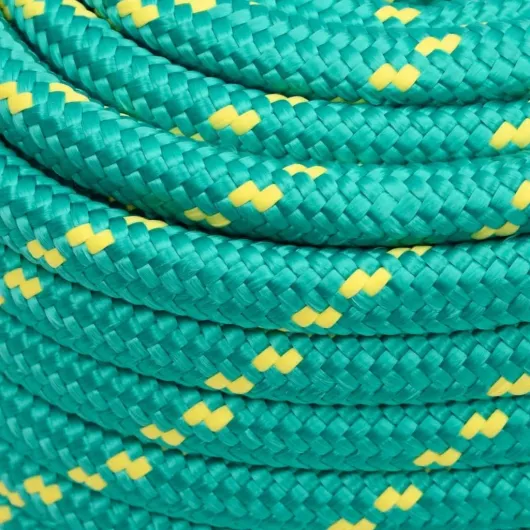
From the first use, what stands out is the sheer bulk and visibility. This is not a discreet rope. It’s thick, heavy, and that green colour is hard to miss, which is actually handy when you drop it on a messy deck or along a dark pontoon. It’s also clearly synthetic: it feels like polypropylene, slightly stiff at first, with a bit of shine to it and that typical plastic rope feel in the hand.
Overall first impression: it’s a no-nonsense, budget-friendly rope that does what it says. It’s not perfect – it’s heavier than you might expect for PP, it kinks a bit when new, and it’s not the softest on the hands – but for basic marine and camping jobs, it’s already proving useful. If you expect premium yacht-grade line, you’ll probably complain. If you just want a long, tough rope you don’t have to baby, it’s off to a decent start.
Good value if you actually need this much thick rope
On value, it really depends what you’re comparing it to and what you actually need. For a 100 m coil of 20 mm rope, the price is quite reasonable. Buying shorter, pre-made dock lines in this thickness would cost a lot more overall. Here, you’re paying for bulk: one big roll you can cut into as many lines as you want. For me, that made sense because I needed several lengths for different uses – mooring, towing, general tie-down – and I like having spare rope around.
That said, if you only need one or two short lines, this might be overkill. You end up with a heavy coil taking space in the garage or on the boat. Also, 20 mm is quite thick for small boats or light tasks. For kayaks, small dinghies, or basic camping, you could get away with a thinner, cheaper rope. In that case, the value is less clear, because you’re paying for strength and diameter you won’t really use. So I’d say it’s good value for people who genuinely need multiple strong lines, less so if you’re just after a single mooring rope.
Compared to more premium marine ropes (polyester, double-braid, etc.), you do feel where the savings come from: stiffer handling, more basic finish, and probably less long-term UV resistance. But those ropes can cost a lot more per metre. For a casual boater or camper who doesn’t want to spend big money on rope, this vidaXL option hits a decent middle ground: not fancy, but strong enough and cheap enough that you don’t stress every time you cut a new piece.
Overall, I’d call the value "pretty solid" if you’re realistic about its limits. It’s not the best rope on the market, but for the price per metre, the thickness, and the versatility, it makes sense. If your priority is premium feel and long-term performance on a larger boat, spend more. If your priority is having a big, reliable chunk of rope for general jobs without blowing the budget, this one is worth it.
Chunky, bright, and not exactly subtle
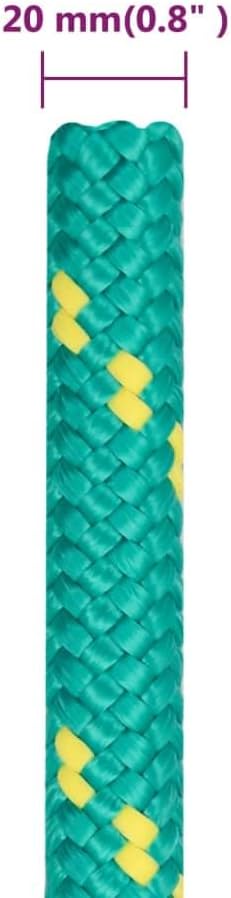
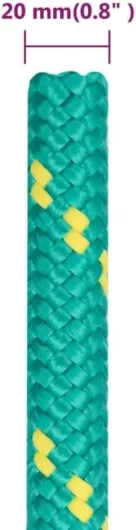
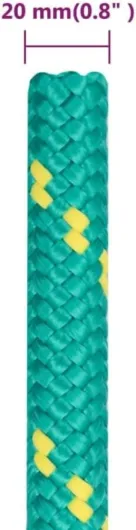
The design is pretty simple: a braided polypropylene rope in a solid green colour. No tracer lines, no mixed colours, just one bright shade. On the water, I actually liked that. The rope is easy to spot in low light and against dark water or a dirty dock. If you’re using it for mooring, you see instantly which line is which. It’s not pretty in a classic nautical way, but in terms of practicality, the colour works. Just don’t expect it to blend in if you’re trying to keep your boat looking tidy and colour-coordinated.
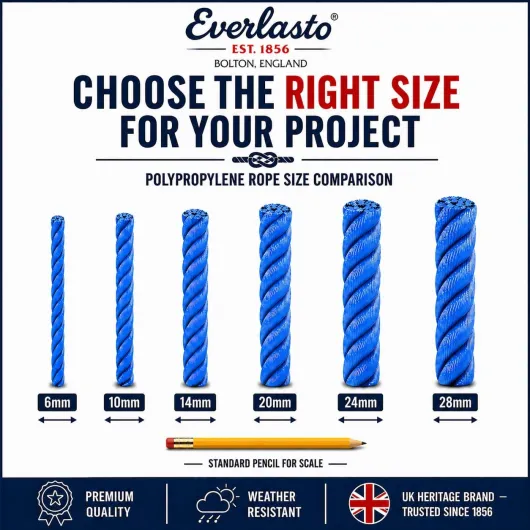
The 20 mm diameter makes it feel substantial. Compared to the 10–12 mm lines I usually use for kayaks and lighter mooring, this feels almost overkill, but that’s also the point. It fills the hand, and you can grip it easily even with wet fingers or gloves. The braid is fairly tight and uniform; I didn’t find weird thin spots or lumps. It’s not a fancy double-braid like some higher-end marine ropes, more of a straightforward braided PP, but for the price bracket it looks consistent enough.
One thing to flag: because it’s braided PP and not a higher-end material like polyester or nylon, it has that slightly stiff, plasticky behaviour. When new, it holds the coil shape a bit and can kink if you just pull from the middle of the roll without flaking it out. After a few uses and once you’ve cut it into shorter lengths, it gets more manageable, but out of the box, it doesn’t lay as nicely as some softer marine ropes. Visually, you can see a bit of shine, which also tells you it’ll probably float, which is handy around water.
So design-wise, it’s very functional: big diameter, bright colour, simple braid. No bells and whistles, no stitched eyes, no branding woven into the rope. If you want something that looks fancy on a polished yacht, this is not it. If you want something obvious, easy to see, and easy to grab, it ticks those boxes. I’d call it a practical, slightly rough-looking work rope rather than a showpiece.
Polypropylene: tough enough but with clear limits
The rope is 100% polypropylene, which is pretty standard for budget marine and utility ropes. PP has some clear pros: it’s light, it floats, it doesn’t soak up water, and it handles most weather and chemicals fairly well. Around the boat and campsite, that’s actually what you want. I left a length tied outside on a mooring cleat for a couple of weeks in sun and rain, and it didn’t show any obvious fading or damage. It stayed basically the same stiffness, no weird sticky feel or surface cracking.
On the downside, polypropylene isn’t the strongest or most heat-resistant material compared to polyester or nylon. You feel that when you pull it quickly over a rough surface: it warms up and can fuzz a bit. I used a section for towing a small inflatable and noticed some light fuzzing where it rubbed against a metal edge. Nothing dramatic so far, but if you plan to run it over sharp, rusty stuff all the time, it will mark faster than a higher-end rope. For normal mooring and tie-down use, though, it’s holding up fine.
The manufacturer claims good abrasion and chemical resistance. In practice, I’d call it "pretty solid for everyday use". I’ve had it in muddy water, a bit of salt, and some contact with oily hands from the engine, and it just rinses off. No staining or hard spots yet. Being PP, it also doesn’t absorb water, so it doesn’t get heavy when wet. That’s noticeable when you haul it back on board – it feels about the same weight wet or dry, which is nice on longer lengths.
Where the material clearly has a limit is high load and safety use. With a working strength of 480 kg, I treated it as fine for mooring my small boat and tying stuff down on a trailer, but I wouldn’t use it for anything like climbing, towing cars, or lifting heavy loads overhead. The brand literally warns against that, and I agree. As long as you stay within common sense and its stated use (marine, camping, washing line, general tying), the material is decent. If you know you need something bulletproof and long-term UV resistant for years in the sun, I’d probably step up to polyester, but you’ll also pay more.
Holding up well so far, with a few things to watch
Durability-wise, for the time I’ve had it, the rope is holding up pretty well. I’ve left sections in the sun, dragged them over a slightly rough dock, and had them rubbing against cleats and metal edges. There is some light fuzzing where it contacts rough surfaces, which is normal for a braided PP rope, but nothing that suggests it’ll fall apart quickly. The braid is staying tight, and there are no random broken strands popping out yet.
In terms of UV resistance, it’s too early to judge long-term, but after a few weeks of on-and-off exposure, the colour is still bright, and the rope doesn’t feel brittle. Polypropylene usually doesn’t love years of full sun, so if you plan to leave it permanently outside, I’d expect some ageing over time. Personally, I’m treating it as a working rope: use it, rinse it if it gets salty, then store it under cover. If you do that, I don’t see any reason it wouldn’t last several seasons for casual users.
The key with durability here is also how you cut and finish the ends. If you just chop it with a knife and leave it, it will unravel and look messy fast. As soon as I cut a length, I melt the end with a lighter and sometimes wrap a bit of tape. That makes a big difference. Once sealed, the ends stay tidy and don’t fray further. That’s not a fault of this rope specifically; it’s just how this material behaves.
Given the price and the specs, I’d say the durability is decent for what you pay. It’s not industrial-grade, and it’s not designed for extreme abrasion or constant heavy loads. But for normal boating, camping, and garden jobs, it feels robust enough. If you want a rope you can basically forget on a dock for years and expect it to be perfect, you should probably get a higher-end polyester line. If you’re okay with basic care and occasional trimming of fuzzy spots, this one should hold up fine.
What you actually get in the coil
The product is sold as a 100 m, 20 mm braided polypropylene rope, and that’s what shows up: one big, heavy coil in bright green. No fancy branding, no extras like pre-spliced eyes or thimbles. Just a straightforward coil secured with a few plastic ties. Mine came in a basic cardboard box, loosely packed, and the rope wasn’t tangled, which is already a win. You cut off the lengths you need, and that’s it. It’s clearly aimed at people who want bulk rope, not a finished dock line set.
On paper, the specs are pretty clear: 20 mm thickness, 100 m length, rope weight around 160 g/m (the whole coil is roughly 16–17 kg), breaking strength 2400 kg and recommended working strength 480 kg. That working strength is important; I treated it as "safe for mooring and tying stuff down" but not for anything where a failure would be dramatic, like lifting loads or safety lines. They also clearly say it’s not for climbing or swings, which I agree with. It’s stiff and not made for shock loads.
Out of the box, the rope is fairly clean, no strong chemical smell, just that light plastic odour you expect. The ends are cut cleanly but not heat-sealed in a fancy way; it’s more of a quick melt. Once you start cutting it, you’ll want a lighter or hot knife handy because the braid unravels pretty fast if you leave it raw. I ended up sealing each cut end with a lighter and some tape, which is normal for this type of rope but good to know if you expect finished ends.
In terms of positioning, you can tell this is a budget, multipurpose rope: colour is bold, finish is basic, and the value is in the sheer amount of line you get. No instructions beyond the usual "don’t climb with it" type warnings. For someone who knows roughly what they’re doing with rope, it’s fine. If you’re a complete beginner, you might miss a bit of guidance on how to cut and finish it, but nothing dramatic. It’s very much a "here’s your big roll of rope, now go use it" product.
How it actually performs on the water and at camp
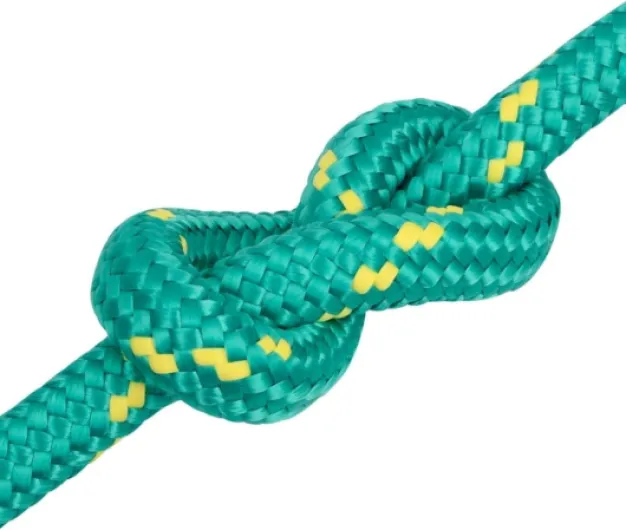
In use, the rope does the job it’s supposed to do. I cut a few 10–15 m sections for mooring my 5 m boat, one piece for towing a small inflatable, and another length as a general-purpose line on the campsite. For basic mooring, it’s honestly fine. It holds knots well enough – bowlines, clove hitches, and figure eights all stayed in place, and I didn’t have issues with them slipping under normal loads. Because it’s PP and fairly stiff, some knots are a bit bulky, but that’s expected with 20 mm rope.
For towing the inflatable (two adults plus a kid, nothing crazy), the rope handled the load without trouble. There’s not a lot of stretch in it compared to nylon, so the pulls are a bit sharper, but for short, slow towing over calm water it was okay. I wouldn’t use this as a long tow rope in rough conditions because the lack of stretch can be uncomfortable and harder on hardware, but for light duty it worked. When the line got dragged through the water, it mostly floated, which is nice because you see where it is and it doesn’t sink under the prop.
I also used a long length as a makeshift washing line and to secure a tarp over the boat. Here it’s probably overkill in terms of diameter, but it’s very stable. Once you tension it, it stays put, and because it doesn’t soak water, it doesn’t sag much when it rains. For camping and garden jobs, it’s frankly more rope than you need, but if you already have the coil, it’s handy to have a strong line around.
The main limitation I felt was handling over longer distances. A 20 mm rope is heavy and bulky to coil and uncoil repeatedly. If you’re constantly throwing lines and dealing with tight cleats or small fairleads, it’s not the most agile rope. For my small boat, I think 14–16 mm would have been enough. But if you’ve got a slightly larger boat or you just like the security of a thick line, it’s reassuring. Effectiveness overall: it does what the listing says for boating, camping, and general tying, as long as you respect its working load and don’t try to turn it into climbing gear or industrial lifting equipment.
Pros
- Thick 20 mm diameter and long 100 m coil give plenty of strong line for multiple uses
- Bright green colour and floating PP material make it easy to see and handle around water
- Good price per metre compared to buying several separate dock lines or premium ropes
Cons
- Stiff, plasticky handling and bulky diameter can be awkward on small boats or tight cleats
- Polypropylene is less durable long term than polyester/nylon under heavy UV and abrasion
- Ends fray quickly if not properly melted and taped after cutting
Conclusion
Editor's rating
After using the vidaXL 20 mm polypropylene boat rope in real conditions – small boat mooring, light towing, and campsite jobs – my take is pretty straightforward: it’s a chunky, no-frills rope that gets the job done for everyday use. The big advantages are the length (100 m), the solid thickness, and the fact it’s easy to spot and handle. It holds knots well enough, floats, doesn’t soak up water, and seems to cope with normal sun and abrasion so far.
It’s not perfect. The handling is a bit stiff, the ends need proper melting and taping, and 20 mm is overkill for smaller setups. Polypropylene also isn’t the king of long-term UV or high-load performance, so if you’re looking for something to leave out in harsh sun for years or for serious towing and lifting, I’d look at better materials. But at this price, as a general-purpose marine and camping rope, it makes sense. The Amazon rating around 4.3/5 matches my experience: not flawless, but solid for the money.
If you have a small to medium boat, like to have spare rope on hand, and don’t want to spend a fortune on premium lines, this coil is a practical choice. If you only need one pretty, soft dock line or you’re running a larger yacht and care about top-tier performance and look, you’ll probably be happier with a higher-end rope and a smaller total length.