
Summary
Editor's rating
Price versus what you actually get out of it
Resin quality, consistency, and how it handles fibreglass
Tin, catalyst bottle, and handling in the workshop
How the repairs hold up after some use
Curing behaviour, workability, and day-to-day use
What you actually get in the kit
How well it actually repairs and laminates in real use
Pros
- Wets out fibreglass well and cures to a hard, tack-free finish
- Lloyds approved and feels robust enough for real boat and GRP repairs
- Good value per kilo compared to smaller DIY packs and big-name marine brands
Cons
- Strong styrene smell and no low-odour features, good ventilation is a must
- No measuring tools or detailed beginner-friendly guide included, you need your own gear

Specifications
View full product page →| Brand | Trade Paints |
A no-nonsense resin for boat and GRP repairs
I picked up this Trade Paints General Purpose GRP Polyester Resin (the 5 kg tub with 100 g catalyst) for a mix of boat and general fibreglass repairs. Nothing fancy: I had a couple of cracks on an old GRP dinghy, a soft patch on a small trailer mudguard, and a test panel I use to check how products cure. I’m not a pro shipyard, but I’ve used a fair few resins over the years, from cheap DIY-store stuff to more serious marine brands.
What I wanted was pretty simple: a resin that wets out standard chopped strand mat properly, doesn’t go all jelly-like in random patches, and cures hard without staying sticky for days. I also didn’t want to spend a fortune on some top-end system for basic repairs. The Lloyds approval caught my eye because it usually means at least a minimum level of quality, especially for boat work.
I’ve now gone through roughly half the tub on several jobs over a couple of weekends. I tried it in different conditions: cool garage around 14–15°C, and a warmer day closer to 20–21°C. I played with the catalyst ratio a bit (within the usual 1–2% MEKP range) to see how it behaved. That gave me a decent idea of how predictable it is in real life, not just on the label.
Overall, it feels like a solid, general-purpose resin. It’s not magic, and it’s not idiot-proof, but if you already have a basic idea how to work with GRP, it does what it’s supposed to do. There are a couple of small annoyances, especially about measuring the catalyst and the smell, but nothing that stopped me using it. I’d say it sits in the “reliable workhorse” category rather than anything fancy.
Price versus what you actually get out of it
On the value for money side, this 5 kg + 100 g kit sits in a pretty reasonable spot. You’re getting a decent volume of resin that’s clearly aimed at real repairs and small projects, not just a one-off patch. For the price typically seen online, it undercuts some of the big-name marine brands while still being Lloyds approved, which is a nice reassurance if you’re using it on a boat or anything structural.
When you compare it to smaller DIY-store packs, the price per kilo is clearly better here. Those little 500 g or 1 kg kits often cost almost the same as this per unit weight, but you run out quickly. If you have several repairs to do or a larger laminating job, this Trade Paints tub makes more sense. You just have to accept that you’re buying in bulk, so you should plan to use it within a reasonable timeframe and store it properly so it doesn’t start to gel in the can over many months.
The flip side is that the kit is quite barebones. No tools, no measuring accessories, and the instructions are a bit minimal for total beginners. So if it’s your first time, you’ll have to spend a bit extra on brushes, rollers, cups, and a scale. For experienced DIYers or small workshops that already have that stuff, the value is clearly good. You’re basically paying for a straight, reliable resin rather than packaging and extras.
All in all, I’d say the value is pretty solid if you have several GRP jobs lined up or you already know you’ll use most of the 5 kg. If you only need to patch a tiny crack once in your life, this is overkill and a smaller kit might make more sense. But for regular DIY boat owners, car panel tinkerers, or people doing ponds and roofs in fibreglass, it’s a sensible, cost-effective option.
Resin quality, consistency, and how it handles fibreglass
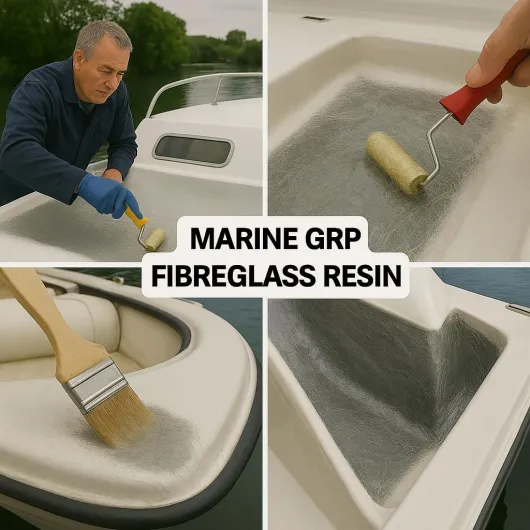
The resin itself has a medium viscosity, pretty much what you’d expect from a general laminating polyester. It’s not super runny like some casting resins, but it’s fluid enough to wet out standard 450 g/m² chopped strand mat without too much effort. With a proper laminating roller, I had no dry patches or stubborn white spots in the glass. It soaked through nicely after a bit of working, even on overlapping edges and corners.
Colour-wise, it’s slightly amber in the can, but once cured in a thin laminate it looks fairly clear. Don’t expect crystal-clear like epoxy; this is a standard polyester, so it’s more about structural work than aesthetics. For repairs on a boat hull or a panel that will be painted or gelcoated afterwards, it’s perfectly fine. The cured surface is tack-free as advertised, as long as you get the catalyst ratio right and let it fully cure. I didn’t have that annoying always-sticky surface you sometimes get with cheap resins.
I used it with different fibreglass products: 300 g/m² and 450 g/m² chopped strand mat, and a bit of woven roving on a test panel. It bonded well in all cases, and the layers fused into a solid laminate. No weird delamination when I tried to peel at the edges the next day. It sands like a normal polyester laminate: hard but not impossible, and it doesn’t clog the paper too badly once properly cured. It feels comparable to mid-range marine resins I’ve used before, not brittle or chalky.
So in terms of materials and handling, it’s pretty solid for general GRP work. You’re not buying a high-end, low-odour, low-shrink specialty system here, but for reinforcing, patching, and building up layers on boats, roofs, and panels, it behaves how you’d expect. My only small complaint is that the resin smell is on the stronger side, which is normal for polyester but worth knowing if you’re used to milder products or working in a tight space.
Tin, catalyst bottle, and handling in the workshop
The packaging is basic but functional. The resin comes in a standard metal can with a press-on lid. You’ll probably want a flat screwdriver or similar to open it the first time. The lid reseals reasonably well if you press it back down properly, but it’s not 100% airtight like a screw-top, so I’d avoid leaving it half open in a dusty workshop. I stored mine with the lid fully pressed down and a bit of tape around the edge, and the resin stayed in good condition between uses.
The catalyst is in a small plastic bottle with a screw cap. No child safety cap on mine, so you really need to keep it out of reach if there are kids around. The bottle pours fine, but it’s easy to overshoot if you try to dose directly into the mixing cup. I ended up using a small syringe to measure the MEKP more accurately. It would have been nice if the kit included at least a basic dosing guide in ml per 100 g resin, or a simple chart printed bigger on the label. You can figure it out, but you have to do the math yourself or look it up.
The outer shipping packaging was solid. Everything was in a cardboard box with some padding, and there were no dents on the tin or leaks from the catalyst. For a resin kit, that’s important because cleaning up a leak is annoying and you can lose a noticeable amount of product. The labels on both containers are clear about safety risks, which is reassuring. You get warnings about gloves, goggles, ventilation, and so on.
In day-to-day use, the packaging is okay but not perfect. It does the job of protecting the product, but it’s not super convenient for precise dosing. If you’re used to this kind of material, you’ll already have scales and measuring tools, so it’s not a big deal. If this is your first time working with resin, just be aware you’ll need a bit of extra kit and some care when handling the catalyst bottle.
How the repairs hold up after some use
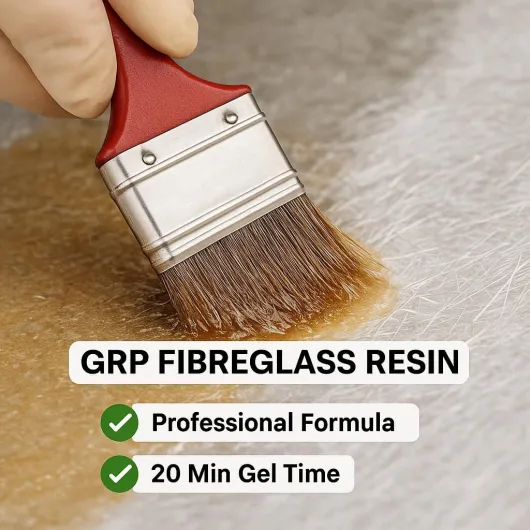
Durability is always the real test with this kind of product. I’ve had the dinghy repairs in use for a little while now. The hull has been in and out of the water, dragged on a beach a couple of times, and stored outside. So far, the resin hasn’t shown any signs of cracking, blistering, or water ingress on the patched areas. I checked the inside and outside of the hull after a few outings, and everything looks stable. No hairline cracks around the repair edges, which is usually where cheap resins can fail.
The trailer mudguard reinforcement is another good indicator. That part flexes a bit when driving over bumps. I bonded new glass over a cleaned and sanded metal surface. After a few trips, the laminate is still firmly attached, no peeling at the edges, and no rattling. I also deliberately hit it a bit with my hand to see if it felt hollow or fragile, and it feels solid. Obviously, we’re not talking years of use yet, but early signs point to a robust bond that handles vibration and some movement.
I left the test panel outside, exposed to sun and rain for a couple of weeks. The uncovered resin didn’t chalk or turn weird colours in that short time. Polyester will always age under UV if left bare, so I wouldn’t rely on it as a final finish outdoors, but as part of a proper system with paint or gelcoat on top, it looks fine. The important part is that it stayed hard and didn’t soften or swell with moisture.
So for now, I’d rate the durability as good for general marine and GRP use. It behaves like a proper boat-grade polyester resin, which matches the Lloyds approval claim. If you’re expecting epoxy-level chemical resistance or zero shrinkage, this isn’t that, but for classic fibreglass repairs and laminates that will be coated afterwards, it holds up as you’d expect from a decent marine resin.
Curing behaviour, workability, and day-to-day use
In terms of overall performance, the two big points for me were how predictable the cure was and how easy it was to work with over a few hours. I mixed several small batches between 150 g and 500 g. With 1–1.5% catalyst at around 20°C, the resin stayed workable long enough to wet out the glass and roll out bubbles without rushing, but it didn’t drag on for ages either. It starts to thicken gradually, so you get a clear signal when it’s time to stop adding more glass.
The resin cures to a tack-free surface, which is quite handy if you’re doing a final layer that you want to sand or paint. For multi-layer laminates done wet-on-wet, I’d still lay them up in one go. When I left a cured layer for the next day and then added more resin, it stuck fine after a quick sand, but that’s standard practice anyway. Shrinkage seemed reasonable: I didn’t notice any serious print-through or warping on the test panel or the repaired hull, just the usual slight tightening as it cures.
One thing to keep in mind is the smell and ventilation. Like most polyester resins, this one gives off a strong styrene odour while working and during cure. In the open or a well-ventilated garage with a mask, it’s manageable, but I wouldn’t use it in a small enclosed space. Compared to some other brands I’ve tried, I’d say the smell is pretty typical, not worse, not better. It’s just something you have to accept with this type of product.
Overall, the performance is consistent: pot life matches the catalyst ratio, cure is complete if you respect temperature and mixing, and the end result is a solid, sandable laminate. No surprise gelling in the pot, no weird soft spots in the laminate. It doesn’t make your life easier if you completely ignore the instructions, but if you have basic GRP habits, it behaves predictably, which is really what you want during a repair job.
What you actually get in the kit
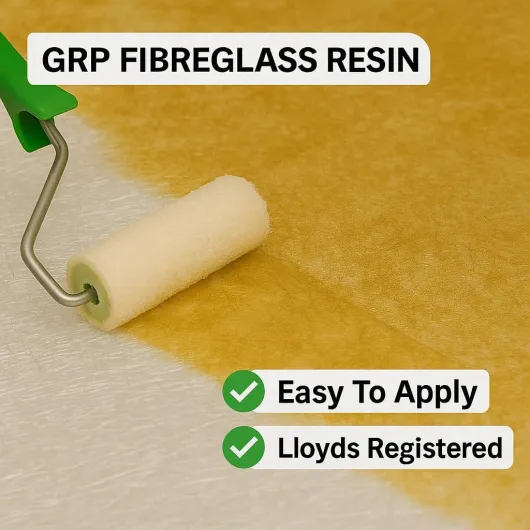
The kit is pretty simple: a 5 kg tin of polyester laminating resin and a 100 g bottle of MEKP catalyst. No extras, no measuring syringes, no fancy instructions booklet. Mine arrived in a standard metal can with a lid you pry open, and the catalyst came in a small plastic bottle with a screw cap. Everything was sealed properly, no leaks in the box, which is already a good sign with this kind of stuff because when it leaks, it’s a mess.
The label on the resin tin is basic but clear enough. You’ve got the usual safety pictograms, mixing ratio guidelines, and some notes about cure times and temperature. It’s not laid out like a glossy brochure, but all the key info is there. I would have liked slightly clearer mixing instructions for beginners, like a simple table saying “X ml of catalyst for Y grams of resin at 20°C”, but if you’ve ever used polyester resin before, you’ll find what you need.
The 100 g catalyst for 5 kg resin is in the normal range, but keep in mind that you’re not meant to use the whole bottle in one go. You’ll be working at around 1–2% by weight, so you really need a scale or at least some way to measure fairly accurately. The kit doesn’t include any measuring tools, so you need to bring your own cups, scales, and mixing sticks. Not a big deal, but worth mentioning so you’re not surprised when you open the box.
In practice, the presentation matches the product’s purpose: this is for people who already have a basic setup for GRP work. It’s not a beginner’s “all-in-one repair pack” with pre-cut glass and brushes. If you already have mat, rollers, and a scale, you’re set. If you’re starting from scratch, you’ll have to buy a few things alongside it, which slightly affects the value for a first-time user.
How well it actually repairs and laminates in real use
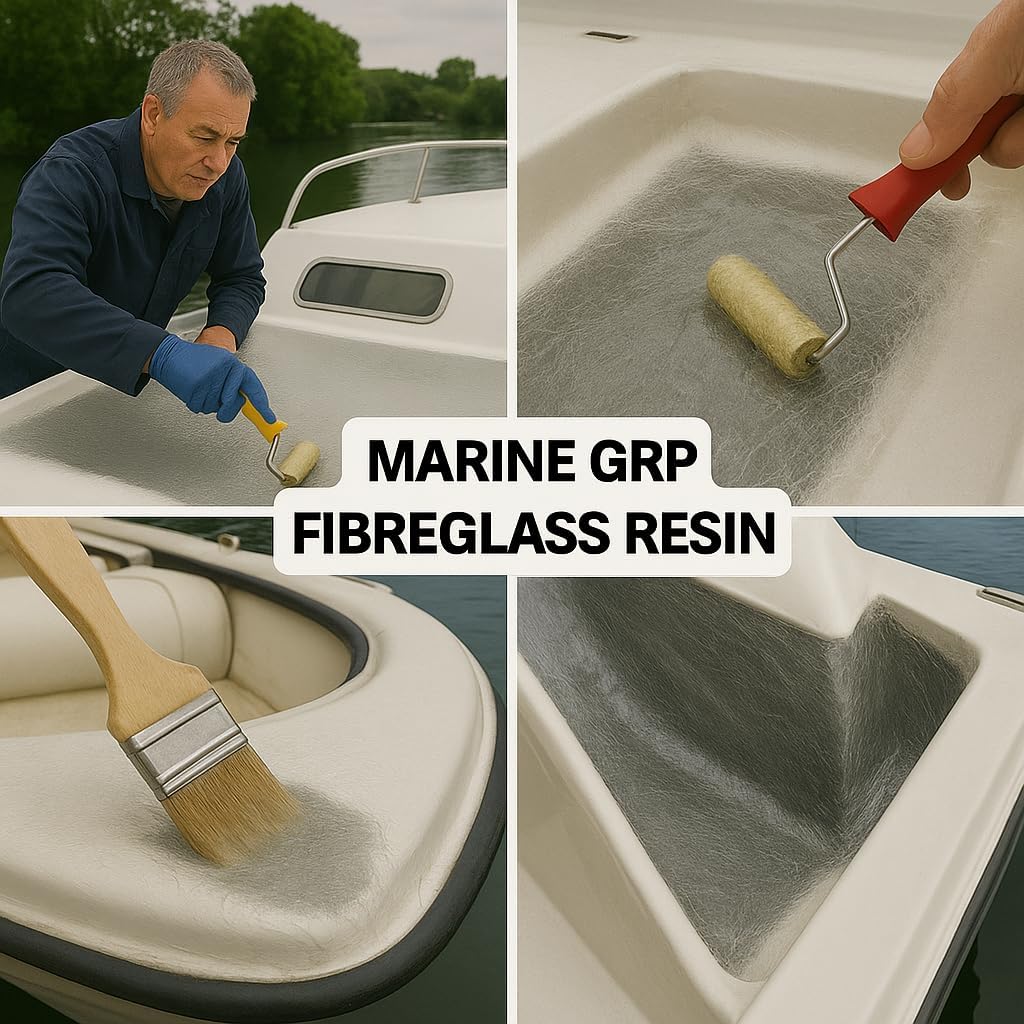
On the effectiveness side, I used this resin for three main jobs: repairing two cracks and a small soft area on a GRP dinghy hull, reinforcing a rusty trailer mudguard with new glass, and making a flat test panel with three layers of mat. In all cases, the resin cured fully and gave a hard, solid laminate that didn’t flex or crumble. After a week, I took the dinghy out on the water, and the repaired areas stayed dry with no signs of blistering or weeping.
Curing times were pretty much what I expected for polyester. At around 20°C with roughly 1.5% catalyst, I was getting a workable pot life of about 15–20 minutes before it started to gel, and it was hard to the touch after a couple of hours. In a cooler garage (around 14–15°C) with similar catalyst levels, it took longer to kick: maybe 25–30 minutes of working time and several hours before it felt properly hard. That’s normal behaviour, but you do need to plan your batches and not mix too much at once.
The bond strength to existing GRP seemed good. I prepped the surfaces with a rough sanding (80 grit), cleaned off dust and grease, and then laminated. After full cure, I tried tapping and flexing the repaired areas. No cracking sounds, no sign of the repair lifting. When I sanded back the edges to fair them, the transition between old laminate and new felt solid, not like a brittle layer sitting on top. For a general-purpose resin at this price, that’s about what I was hoping for.
So in practice, it gets the job done for typical boat and GRP repairs: hull patches, panel reinforcements, and small construction projects. It’s not doing anything special, but it doesn’t fail either, which is what matters. If you follow basic prep and mixing rules, you end up with tough, waterproof repairs. If you’re sloppy with catalyst or work in very cold conditions, you can run into undercure like with any polyester, so it’s not magic, just reliable if you know what you’re doing.
Pros
- Wets out fibreglass well and cures to a hard, tack-free finish
- Lloyds approved and feels robust enough for real boat and GRP repairs
- Good value per kilo compared to smaller DIY packs and big-name marine brands
Cons
- Strong styrene smell and no low-odour features, good ventilation is a must
- No measuring tools or detailed beginner-friendly guide included, you need your own gear
Conclusion
Editor's rating
After using the Trade Paints General Purpose GRP Polyester Resin on a few real-world jobs, my feeling is that it’s a solid, no-drama resin for everyday marine and fibreglass work. It wets out glass properly, cures hard with a tack-free surface, and the repairs I did on a dinghy hull and a trailer mudguard are holding up well so far. The behaviour during mixing and curing is predictable as long as you respect the usual polyester rules about temperature and catalyst ratio.
It’s not perfect. The smell is strong, there are no dosing tools in the box, and the instructions could be clearer for total beginners. It’s also not some fancy low-odour, low-shrink system; it’s a straightforward laminating resin. But for the price and the Lloyds approval, it feels like good value if you actually need 5 kg and you already have the basic tools and a bit of experience with GRP.
If you’re a DIY boat owner, working on car panels, roofing, ponds, or general GRP laminates, this is a practical choice that gets the job done without fuss. If you’re completely new to fibreglass and only need a tiny repair, or if you want super precise, low-odour epoxy-style performance, you might want something else. For regular, functional repairs and builds, though, it sits in a comfortable middle ground between cheap, sketchy resins and high-end systems.