
Summary
Editor's rating
Value: not cheap, but you feel where the money goes
Design: bulky, practical, and clearly built for actual driving
Comfort: finally a boat seat that doesn’t kill your lower back
Materials: marine vinyl and dense foam that actually feel built for abuse
Durability and weather resistance: early signs are promising
On-water performance: support, driving position, and real-world use
What you actually get in the box (and what you don’t)
Pros
- Very comfortable high-back design with dense foam that stays supportive on long outings
- Useful flip-up bolster that gives two real driving positions (relaxed and higher/forward)
- Marine-grade vinyl, stainless hardware, and included cover that help with durability and weather protection
Cons
- Bulky size can be awkward in tight helm areas and for frequent in-and-out movement
- Pedestal and swivel are not included, increasing total cost if you don’t already have a base

Specifications
View full product page →| Brand | SUNDGORA |
A proper captain’s chair for people who actually sit for hours
I put this SUNDGORA Premium Pontoon Bucket Seat with flip-up bolster on my pontoon to replace a tired, flat captain’s chair that had basically turned into a bar stool with armrests. I’m on the water a lot in the summer, and after a few long days my lower back usually reminds me that I’m not 20 anymore. So I was looking for something with real back support, not just a pretty seat for photos.
Out of the box, it’s clear this is not a tiny lightweight seat. It’s a chunky, high-back chair with a flip-up bolster that’s meant for actual driving and fishing, not just cruising for half an hour. I mounted it to an existing pedestal with a standard bolt pattern (5" x 5"), and the whole process was pretty straightforward. No pedestal or swivel comes with it, which is normal but still something you need to plan for if you’re rebuilding a helm from scratch.
Over a few weekends, I used it for everything: slow trolling, cruising with the family, and just sitting at the dock for an hour while messing with gear. That gave me enough time to see how the foam holds up, how the vinyl deals with sun and spray, and whether the bolster is actually useful or just a gimmick. I also used the included cover every time I left the boat at the slip to see if it actually protects or is just another thin plastic bag.
Overall, it’s not perfect, but it’s a solid, comfort-focused seat that feels more like a car bucket seat than a flimsy boat chair. The price isn’t cheap, and there are small details that could be better, but if you spend long stretches at the helm, it’s clearly built with that use in mind. If you just go out for an hour on Sundays, it’s probably overkill. If you run the boat all day, it starts to make sense.
Value: not cheap, but you feel where the money goes
Price-wise, this SUNDGORA seat sits in that mid-to-upper range for pontoon captain’s chairs. You can definitely find cheaper seats, especially basic folding ones or low-back models, but they don’t offer the same level of padding, back height, or bolster function. On the other end, there are branded OEM-style seats that cost more and sometimes don’t offer much beyond a logo and matching upholstery. This one lands in a zone where you’re paying for real comfort and materials without going into luxury pricing.
What makes it feel like decent value is how it performs over time. After a few long outings, I realized I wasn’t thinking about the seat much – which is a good sign. No back pain, no sore tailbone, no constant adjustments. If you spend a lot of hours behind the wheel, that comfort is worth something. Compared to my previous generic captain’s seat, this one is a clear upgrade in support and build. The included cover also saves you from having to buy a separate one, which is usually an extra cost.
That said, if you’re a casual boater who goes out for an hour or two every couple of weeks, this might be more seat than you need. A simpler, cheaper seat could be enough for that use. Also, remember you still need a pedestal or swivel base, so if you’re starting from scratch, the total cost goes up. For someone rebuilding a helm or upgrading from worn-out factory seats and who actually uses the boat regularly, the price makes more sense.
In short, it’s not the budget option, but you do get solid materials, real comfort, and a cover thrown in. If you’re on the water often and your back is tired of cheap, flat cushions, the extra spend here feels justified. If you just want something to sit on for short rides, you can probably save money with a simpler model.
Design: bulky, practical, and clearly built for actual driving
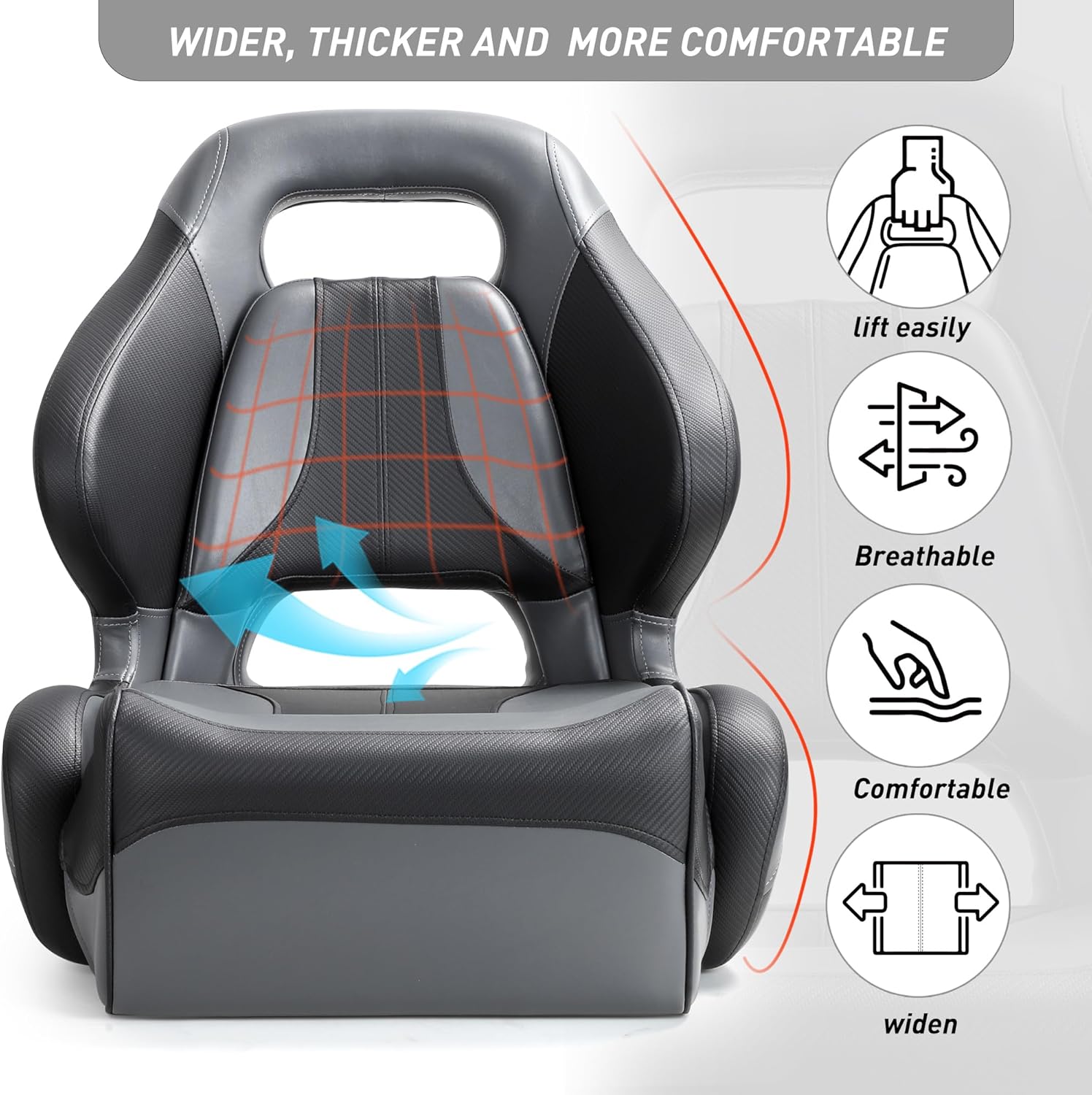
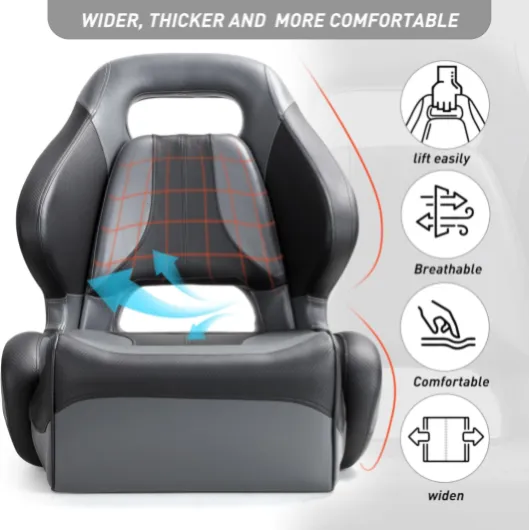
Design-wise, this SUNDGORA seat leans more toward practical than flashy. The charcoal/black color combo is pretty neutral and blends with most pontoon interiors. It doesn’t scream for attention, which I like. The shape is closer to an automotive bucket seat than a flat boat cushion. You’ve got defined side bolsters, a tall back, and a flip-up front bolster that changes your seating position when raised. The extra-high backrest is the main thing you notice once you sit down – it hits well above the shoulders, which is a big step up from the low, square seats a lot of pontoons come with.
One smart design touch is the opening in the backrest. It’s basically a handle cutout that makes it easier to grab and lift the seat when you’re moving it around. I didn’t think much of it at first, but when I had to carry the seat down the dock alone, I was glad it was there. It takes a lot of strain off your fingers compared to grabbing under the base or squeezing the sides. It’s the kind of detail that tells you someone actually thought about how this gets used in real life.
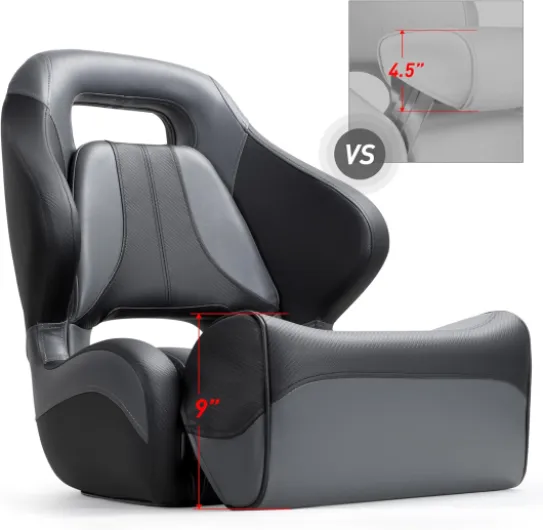
The flip-up bolster is thick and wide, not just a thin pad. When it’s down, it extends the seat depth so you can sit back and relax. When it’s up, you gain a more upright, higher driving position, which is handy if you like to sit higher when docking or if you’re standing and just leaning against it. The mechanism on mine feels firm – it doesn’t flop around or drop by itself, but you do have to use a bit of force to move it, which I prefer over something loose.
If I had to nitpick the design, I’d say it’s definitely on the chunky side. On a smaller console or tight helm area, it will look and feel big. Also, there are no armrests, which might bother some people who are used to lounging rather than actively driving. Personally, I prefer no armrests when I’m constantly reaching for controls, rods, and the wheel, but if you’re mainly a cruiser, that might feel like a downgrade from some plush pontoon seats with arms.
Comfort: finally a boat seat that doesn’t kill your lower back
Comfort is where this seat actually earns its keep. I did a full afternoon on the water – roughly six hours between driving, trolling, and hanging out at anchor – and my lower back was noticeably less sore than with my old flat pontoon chair. The high backrest supports your shoulders and lets you lean back properly instead of hunching forward. After about two hours of slow cruising, I realized I wasn’t constantly shifting around trying to find a better spot, which is usually my routine with stiffer seats.
The seat cushion itself is thick and has that slow-rebound feel. When you sit down, it gives a bit, then holds you. You don’t sink through to a hard board underneath. The wider base spreads your weight better, so your thighs don’t go numb after a while. For context, I’m around 5'10" and 190 lbs, and I never felt like the seat was too small or too soft. It strikes a decent balance: firm enough for control at the helm, soft enough that you don’t dread long runs.
The flip-up bolster is more useful than I expected. With it down, you’re in a relaxed, slightly reclined position – good for cruising or just hanging out. Flip it up and you’re in a higher, more forward stance that works well when you’re docking, scanning for markers, or standing half the time. I used the bolster-up position a lot while trolling slowly, where I like to be a bit higher to watch the lines but still supported. It also helps shorter people get a better view over the console without needing a booster cushion.
The only downside comfort-wise is the bulk. If your helm area is tight and you like to twist and swivel a lot, the big back and side bolsters can make the seat feel a bit in the way, especially if you’re constantly getting up to grab rods or fenders. It’s not a lounge sofa; it’s clearly built for someone actually driving or fishing from that spot. But for long sits behind the wheel or at the helm, it’s one of the more comfortable options I’ve used in this price range.
Materials: marine vinyl and dense foam that actually feel built for abuse
The seat is made of marine-grade vinyl over high-density, slow-rebound foam. In practice, that means the surface feels thicker and slightly textured, not that shiny, slippery plastic vinyl you get on budget seats. I had it out in full sun and light spray for a few outings. The vinyl didn’t feel sticky or overly hot compared to the older white seat I had before. Charcoal and black obviously absorb more heat than white, but it stayed in the manageable zone where you can sit down in shorts without jumping back up.
The foam is where I noticed the difference most. On cheaper seats, you sit down and immediately feel the base after half an hour. Here, the foam compresses slowly and evenly. After a few hours, I could still feel support under my thighs and lower back instead of that “bottomed out” feeling. The side bolsters are firm enough to keep you in place when you hit small chop, but not so hard that they dig into your hips. I’m around average build; someone very wide might find the bolsters a bit intrusive, but for me they were fine.
Stitching and seams look decent. There are no loose threads on my unit, and the pattern follows the curves of the seat without weird puckering. I hosed it down after a salty day and didn’t see any water sneaking into the seams or under the vinyl. Obviously long-term sun exposure is the real test, but after several sunny weekends and a couple of heavy rinses, there’s no discoloration, peeling, or wrinkling. The vinyl also wipes clean pretty easily – dried spray and a small sunscreen smudge came off with a wet cloth and mild soap.
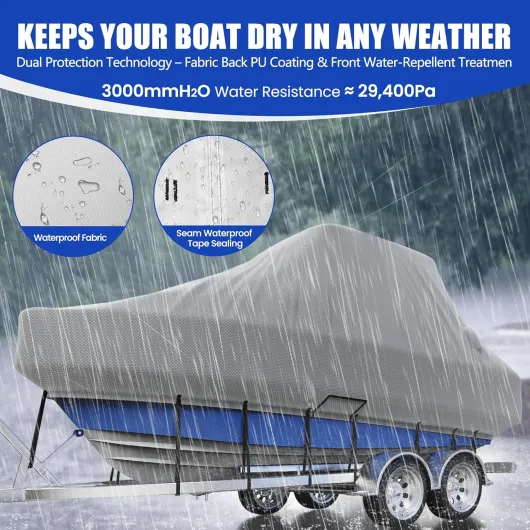
The included cover is a nice bonus material-wise. It’s not some thin tarp; it has a bit of heft and a water-resistant feel. I left the seat covered through a couple of rain showers, and water beaded off it instead of soaking through. It’s not a full mooring cover replacement, but it’s good enough to keep dust, bird mess, and direct UV off the seat when the boat is parked. Overall, the materials feel like they’ll handle a few seasons of use if you’re not abusing them and you actually use the cover when the boat sits.
Durability and weather resistance: early signs are promising
I haven’t had this seat for years obviously, but I did put it through a few weeks of pretty typical abuse: sun, light rain, salt spray, wet shorts, and constant getting in and out. I also left it covered at the slip between trips. So far, the vinyl still looks new – no fading, no cracks, and no weird shiny spots from rubbing. The seams are still tight, and the foam hasn’t started to sag or form permanent dents where I usually sit.
The stainless hardware is doing its job. After exposure to saltwater and a couple of rinses, there’s no rust or staining around the bolts. That’s more than I can say for some “stainless” screws I’ve seen on budget seats that start showing surface rust after a couple of trips. The underside of the seat looks solid as well – no exposed wood or cheap backing that soaks water. That matters a lot for long-term durability, especially if you’re in a humid or marine environment.
The included cover plays a big role in keeping it fresh. I used it every time I left the boat for more than a day. It kept dust, bird droppings, and direct UV off the vinyl. After a couple of rain showers, the cover was wet but the seat underneath was dry. Long term, that’s what will keep the vinyl from drying out and cracking. If you’re the type who never covers anything, you’ll obviously shorten its life, but that’s true of any marine vinyl.
Based on the build and materials, I’d expect this to hold up several seasons with normal use and basic care (cover it, rinse salt off, don’t cut it with hooks or knives). It’s not indestructible – if you drag coolers across it or leave metal tools on the vinyl, you’ll mark it. But structurally and material-wise, it feels more robust than the cheaper folding seats and thin-back captain’s chairs I’ve used before. Time will tell, but early signs point to decent longevity for the price bracket.
On-water performance: support, driving position, and real-world use
On the water, the seat behaves the way you’d hope from something marketed as a “captain’s chair” with a sport flip-up bolster. The main thing I noticed is how much more stable I felt at the helm. The side bolsters keep you from sliding around in small chop, and the high back gives you something solid to lean into when you hit wakes. Compared to my old flat seat, I felt more locked in and in control, especially when turning at speed or running in short, bumpy waves.
The ability to switch between two positions with the bolster is actually useful, not just a selling point. In the “bolster down” mode, you’re sitting deeper and a bit farther back from the wheel. That’s good for relaxed cruising or when you’re just hanging out at anchor and using it like a regular chair. In “bolster up” mode, you naturally move slightly forward and higher. I used that when docking and navigating tighter areas where I want a clear view over the bow. It also works nicely if you like to stand and just lean your thighs against the bolster during short moves.
In terms of movement, the seat itself doesn’t swivel or slide by default – that depends on your base. Mounted on a standard swivel/slide, it behaved fine. The weight of the seat does mean cheap, worn-out swivels will show their limits; mine was decent quality, so it just felt more planted. I didn’t hear any creaks or feel flex in the seat base when I shifted my weight from side to side or braced myself going over wakes.
One small performance downside: because it’s a big seat, it can get in the way a bit when you’re frequently stepping in and out of the helm area. If your console is narrow or close to the side gate, you might find yourself turning sideways and squeezing past. On a wider pontoon layout, it’s fine, but on tighter setups, measure your space before buying. Otherwise, in actual use – driving, fishing, hanging out – it does what it’s supposed to do: it supports you and keeps you comfortable without making you constantly adjust your position.
What you actually get in the box (and what you don’t)
When you open the box, you’re basically getting three things: the seat itself, the mounting hardware, and a fitted boat seat cover. That’s it. No pedestal, no swivel, no fancy extras. The hardware is stainless, which is important on the water, and the bolt pattern is the standard 5" x 5" and 5" x 12", so it lines up with most bases you’ll find on pontoons and a lot of fishing boats. I mounted it on an existing swivel/slide base and didn’t have to drill new holes, which was a relief.
The seat comes fully assembled, so there’s no messing with bolting the bolster or backrest together. You basically unbag it, line up the base, and bolt it down. The included cover is heavier than the cheap universal covers you see online. It fits tight over the seat and actually covers the whole thing, not just the top. After a week of leaving the boat at the dock, the seat stayed clean and dry under it, while my buddy’s uncovered vinyl seat next to it was already dusty and bird-stained.
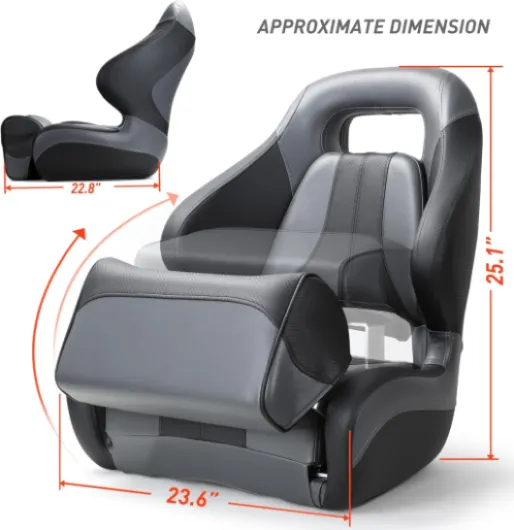
In terms of size, this thing is not small. The listed dimensions (around 23.6" wide, 25.2" high) are accurate, and you feel it when you carry it around or try to squeeze it behind a small helm. The back has an opening near the top that works like a built-in handle, which sounds like a minor detail, but it actually helps a lot when lifting it into the boat or shifting it around. I weighed it roughly using a bathroom scale trick, and it’s on the heavier side compared to cheap plastic seats, which makes sense given the foam and structure.
So in simple terms: you’re paying for a full-size, cushioned captain’s seat with a usable cover and proper stainless hardware. You still need a base or pedestal, so budget for that if you don’t already have one. If you’re upgrading from a small folding seat, be ready for this to take more space, but you’re getting a lot more support and presence at the helm in return.
Pros
- Very comfortable high-back design with dense foam that stays supportive on long outings
- Useful flip-up bolster that gives two real driving positions (relaxed and higher/forward)
- Marine-grade vinyl, stainless hardware, and included cover that help with durability and weather protection
Cons
- Bulky size can be awkward in tight helm areas and for frequent in-and-out movement
- Pedestal and swivel are not included, increasing total cost if you don’t already have a base
Conclusion
Editor's rating
This SUNDGORA Premium Pontoon Bucket Seat is a solid choice if you actually spend hours at the helm and care more about support than flashy styling. The high back, dense foam, and flip-up bolster make a real difference in comfort and driving position. After several full days on the water, I had less back and seat fatigue compared to my old basic captain’s chair, and the seat still looked and felt fresh. The included cover and stainless hardware are practical touches that help with long-term durability.
It’s not perfect. The seat is bulky, so it can feel big in tighter helm areas, and it doesn’t include a pedestal or swivel, which adds to the total cost if you don’t already have one. There are cheaper options if you only boat occasionally and don’t need this level of padding or adjustability. But for regular boaters, especially pontoon and fishing folks who sit and drive for long stretches, it’s a strong, comfort-focused upgrade that actually gets the job done without feeling like fragile, disposable gear.