Summary
Editor's rating
Value for money compared to fancier dock lines
Simple, chunky design that feels safe in the hand
Polyester build: strong, stable, and a bit on the stiff side
Early signs on wear and long-term toughness
Real-world performance: handling, stretch, and day-to-day use
What you actually get in the pack
Do they actually hold the boat properly?
Pros
- Thick 18mm polyester construction feels strong and secure
- Low-stretch behaviour keeps the boat snug to the pontoon
- Good value for two 10m lines with ready-made spliced loops
Cons
- A bit bulky for smaller cleats and tight lockers
- Less shock absorption than stretchy nylon lines, so not ideal as the only lines in very exposed moorings

Specifications
View full product page →| Brand | Savage Island |
Solid ropes for tying up without stress
I bought these Savage Island 18mm docking lines because I needed a simple, chunky pair of mooring ropes for a small cruiser and didn’t feel like paying premium-brand prices. No fancy marketing here: it’s two black polyester ropes, 10m each, with a spliced loop on one end. I’ve been using them for several weekends on a 7m boat, in a tidal marina with a bit of swell, so they’ve had a real-world test, not just a quick try in the garden.
Right from the first use, the main thing that stood out was the thickness and feel. At 18mm they’re quite beefy for a small to mid-size boat, so they feel safe when you’re coming in a bit hot and need to grab and hold. They’re not super soft like some premium dock lines, but they’re not rough either. I’d call them “comfortable enough” in the hand, even when wet, and they don’t slip easily.
In practice, I used one rope as a bow line and the other as a stern line, with the spliced loop over the pontoon cleats and the free end on the boat cleats. They handled a couple of windy berthings where I really leaned on them, plus a few nights with the boat rocking around. No visible damage, no worrying stretching, and the splice never looked sketchy. So in terms of basic reliability, they feel pretty solid so far.
If you’re looking for something flashy or colour-coded, this isn’t it. They’re plain black, come in a basic pack, and that’s about it. But if you just want two strong lines that get the job done for normal mooring, my first impression is positive. Not the fanciest, but honestly, for the price and what they’re meant to do, they seem like a sensible buy.
Value for money compared to fancier dock lines
Price-wise, these sit in that budget-to-mid range where you’re not paying for a big marine brand name, but you’re also not at the absolute rock-bottom cheapest rope you can find. For two 10m, 18mm polyester lines with spliced eyes, I think the value is pretty solid. If you tried to buy equivalent rope by the metre and then pay someone to splice eyes, you’d likely end up spending more overall.
Compared to the nicer, branded dock lines that are sold as “softline” or “premium mooring ropes”, you’re mainly missing out on extra softness, fancy packaging, and sometimes colour options. In real use, I didn’t feel like I was missing much. Sure, a softer rope feels nicer in the hand, but these are comfortable enough, and I’d rather save the money for fuel or harbour fees. For a leisure boater who just wants reliable lines, it’s hard to justify paying a lot more unless you’re very picky about feel or looks.
If you’re on a tight budget and thinking of going even cheaper with thin polypropylene lines, I’d honestly say spend the bit extra and get something like these instead. The difference in handling, strength, and general confidence when tying up is noticeable. At the same time, if you’re running a big yacht and want colour-coded, super-soft, brand-name lines to match the rest of your setup, these might feel a bit basic. They’re more “practical workhorse” than “showpiece”.
Overall, for a small to mid-size boat owner who just needs two strong, no-nonsense mooring lines, the price-to-performance ratio is good. You’re paying for decent polyester, proper splices, and enough thickness to feel safe, without throwing money at marketing gloss. For me, that’s a fair deal.
Simple, chunky design that feels safe in the hand
The design is very straightforward: poly-braided construction, 18mm diameter, 10m length, black colour, and a single 8" spliced loop on one side. No built-in shock absorbers, no fancy reflective threads, just a plain mooring line. That simplicity is actually a plus if you don’t like overcomplicated gear. You can instantly see which end goes on the cleat (the loop) and which end you work with on the boat.
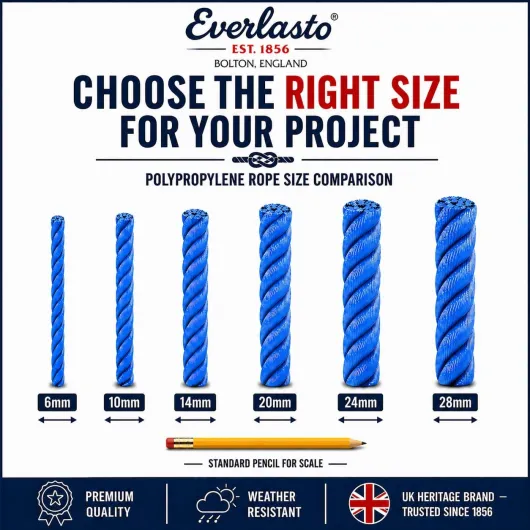
The 18mm thickness is on the heavier side for smaller boats, and that’s noticeable. On my 7m boat, they feel slightly oversized but in a good way. When you grab them with wet hands or gloves, they’re easy to hold and pull. If you’re used to 12–14mm lines, these will feel more bulky, and they do take up a bit more locker space. But when the wind picks up and you’re leaning on the lines, that extra diameter gives a bit of confidence. They don’t dig into your hands the way thin lines do.
The spliced loop is clean enough. It’s not the tightest, most polished splice I’ve ever seen, but it’s consistent on both ropes and doesn’t show gaps or weird loose strands. I’ve loaded it up hard on a cleat a few times, and it hasn’t slipped or deformed. The rest of the rope has a regular, tight braid that doesn’t twist up into a mess. When I flake it into a coil, it behaves reasonably well after that first outing, with only minor kinking.
Visually, there’s not much to say: they’re just black ropes. That can be a plus if you want something that doesn’t show dirt and scuffs easily. On the downside, black ropes can be harder to see at night or in low light compared to white or bright colours. No reflective strands means you’ll rely on your deck lights or headlamp. Overall, the design is basic but practical: thick, easy-to-handle, and clearly aimed at being functional rather than pretty.
Polyester build: strong, stable, and a bit on the stiff side
These lines are made from polyester, not nylon. That matters in real use. Polyester tends to stretch less, handles UV better, and doesn’t go rubbery when wet. In practice, that means once you’ve set your lines, the boat doesn’t move as much as it would on stretchy nylon. On my berth, which gets some wash from passing boats, I noticed the boat stayed fairly snug to the pontoon, with less bouncing than with my older, thinner nylon lines.
The flip side of polyester is that you get less built-in shock absorption. If you’re in a very exposed mooring with constant swell, you might want to add rubber snubbers or use these more as fixed lines rather than the only thing taking all the shock. For my use (marina berth, some wind and wash but nothing extreme), the trade-off is fine. The ropes feel firm, not like bungee cords, and I prefer that when stepping on and off the boat.
The poly-braided construction gives a smooth but grippy surface. It’s not fluffy-soft like some premium softline moorings, but it also isn’t harsh. After a few days of handling, I didn’t get any rope burn or nasty fibres in my hands, even when hauling quickly. Wet or dry, they keep a decent grip, which is important when you’re trying to lasso a cleat in a bit of a hurry. They don’t go slimy when wet, which some cheaper polypropylene ropes tend to do.
In terms of build quality, the braiding is tight and even along the length. No weird thin spots or loose strands so far. The heat-sealed and stitched ends are basic but effective – no fraying yet. Being polyester, I’m also less worried about them going chalky or brittle in the sun compared to cheaper materials. Overall, for the price, the material choice feels sensible: strong, stable, low-maintenance, and clearly aimed at practical use rather than fancy looks.
Early signs on wear and long-term toughness
I haven’t owned these for years, but after a few weeks of regular use and some deliberate abuse, the durability looks promising. I’ve used them in rain, sun, and with a fair bit of chafe against wooden and metal pontoon edges. The outer braid shows some light fuzzing in the main contact areas, which is normal, but there are no cuts, no deep scuffs, and no broken strands so far.
The spliced loops are holding up well. I paid close attention to the throat of the splice (where it takes the most strain on the cleat) and there’s no sign of it opening up or deforming. The stitching and tucks are still tight. On some cheap ropes, you start to see weird gaps or twisted sections after a few hard loads; here, everything still looks tidy. That’s a good sign for long-term use, assuming normal care.
The ends that are heat-sealed and stitched haven’t started to fray yet, even after being dragged around and tied/untied a lot. The heat seal itself is a bit ugly, but it works. If you’re picky, you could always whip the ends yourself, but honestly I haven’t felt the need. The rope hasn’t gone noticeably stiffer either, which can happen when cheap fibres start to degrade with UV and salt. Being polyester, I expect it to handle sun exposure better than polypropylene or very cheap blends.
Of course, I can’t claim long-term, multi-year results yet, but from what I’ve seen, I’d be comfortable using these as main mooring lines for a season or more, then maybe demoting them to backup or spring lines later. For the price bracket they’re in, the durability so far feels good value: they behave like ropes that should last, not like disposable budget lines you replace every few months.
Real-world performance: handling, stretch, and day-to-day use
After several uses in mixed weather, I’d say the overall performance is steady and predictable. The ropes don’t do anything fancy, but they behave the same each time, which is what you actually want when docking. In light conditions, they’re obviously overkill in terms of thickness, but that just makes them easy to grab and means you’re not babying them. I’ve dragged them over rough pontoon edges and metal fittings, and there’s only light cosmetic wear, nothing serious.
In stronger winds (around 20–25 knots), I noticed the low stretch of the polyester more clearly. The boat stayed tighter to the pontoon, which is nice for getting on and off, but you do feel the boat snatch a bit more when a larger wake comes through. Still, nothing felt unsafe. Cleats and fairleads took the load fine, and the ropes didn’t show visible elongation or flattening. I haven’t had them in a full-on storm yet, but for typical weekend sailor conditions, they’ve been completely fine.
Handling-wise, the 18mm diameter is a mixed bag. On the plus side, it’s very comfortable in the hand and gives a good grip when you’re pulling the boat in. On the downside, it’s a bit chunky for smaller cleats and fairleads, and it takes up more locker space. If you’re on a small boat with tiny hardware, you might find this size a bit too big. For a 6–9m boat with decent cleats, though, it’s a reasonable choice, especially if you like that feeling of a strong, fat line holding you in place.
After getting soaked repeatedly and drying out, there’s been no obvious stiffening or hard spots forming in the rope. It’s stayed flexible enough to coil easily. No weird smell, no discolouration so far. So in terms of day-to-day performance, they’re basically “fit and forget”: tie up, adjust, and stop thinking about them. Not exciting, but that’s kind of the point for mooring lines.
What you actually get in the pack
Out of the bag, you get exactly what’s written on the listing: two black 10m braided polyester ropes, 18mm thick, each with an 8-inch spliced loop on one end and a heat-sealed, stitched finish on the other. No extras, no instructions, no storage bag. Just ropes. The packaging is very basic – clear plastic wrap with a simple label. It looks cheap, but honestly, for dock lines I don’t really care. I’m going to throw the packaging away in 10 seconds anyway.
The ropes came neatly coiled, not tangled, and the loops were properly formed. The spliced eye is a decent size for standard cleats and bollards. On my pontoon cleats, the loop drops over easily without having to fight it. The other end has a heat-sealed cut and a bit of stitching so it doesn’t fray. It’s not the prettiest finish I’ve seen, but after several uses and getting wet/dry repeatedly, the ends haven’t started fluffing up, so it’s doing its job.
One thing to note: there’s no length marker printed on the rope, so if you throw them in a locker with other lines, you’ll have to remember which is which by eye or by thickness. For me it’s fine because these are my only 18mm lines, but if you’ve got a pile of different ropes, a small tag would have been handy. Also, they arrive with a bit of coil memory, so the first time you unroll them they want to stay in loops. After a couple of uses and re-coiling them properly on deck, that eased off.
Overall, the presentation is nothing special but perfectly functional: two solid, ready-to-use lines, no DIY splicing needed, no extra faff. If you’re expecting fancy branding and a nice box, you’ll be disappointed. If you just want ropes that are ready to tie on the boat, they come good to go straight out of the bag.
Do they actually hold the boat properly?
In day-to-day use, these lines do what they’re supposed to do: keep the boat tied up without drama. I’ve used them for several weekend trips now, mooring in my home marina and on a couple of visitor pontoons. Bow and stern lines, plus occasionally as a spring. Each time, they’ve held firm, no worrying stretching, and no signs of them struggling under load. Even with a bit of side wind and some wash from passing boats, they’ve kept the boat where it should be.
The fixed spliced loop is genuinely handy. I usually drop the loop over the pontoon cleat first, then adjust tension from the boat end. That saves time when you’re coming in short-handed. The loop size works fine for normal cleats and small bollards. Because the rope doesn’t stretch much, once you’ve got the tension right, it stays roughly there. With my old stretchy nylon lines, I always had to re-tension after a while because the boat would drift out a bit.
For knots, the rope is easy to work with. It takes a cleat hitch, bowline, and round turn with two half hitches without slipping. The 18mm thickness does mean you need a bit more space on smaller cleats, but on my boat’s hardware it was still okay. I never felt like the rope was about to pop off a cleat or slide loose. Even when wet and under tension, the knots stayed put but were still possible to undo without using a marlinspike or swearing for ten minutes.
Where they’re slightly less ideal is as shock-absorbing springs in a very bouncy berth. Because the polyester doesn’t give much, you feel the jerks more if the boat is moving a lot. In that situation, I’d either add snubbers or pair these with a more elastic line. But for normal marina use and casual mooring, their effectiveness is solid: they hold, they don’t creep, and they give you a reassuringly firm connection to the dock.
Pros
- Thick 18mm polyester construction feels strong and secure
- Low-stretch behaviour keeps the boat snug to the pontoon
- Good value for two 10m lines with ready-made spliced loops
Cons
- A bit bulky for smaller cleats and tight lockers
- Less shock absorption than stretchy nylon lines, so not ideal as the only lines in very exposed moorings
Conclusion
Editor's rating
If you strip it down, these Savage Island 18mm mooring lines are plain but reliable ropes. Two 10m polyester lines with spliced eyes, chunky enough to feel secure, and built well enough that I’m happy using them as main bow and stern lines on a 7m boat. They don’t try to be fancy: no special colours, no reflective bits, no luxury feel. They just tie the boat up and stay put.
I’d recommend them to casual and regular boat owners who want something sturdier than bargain-bin polypropylene, but don’t care about big-brand labels. They’re especially suited to small and mid-size boats in marinas or sheltered moorings where low stretch and easy handling matter more than maximum shock absorption. If you want extra comfort or use a very exposed berth with constant swell, you might pair them with snubbers or mix them with softer, stretchier lines.
If you’re very fussy about ultra-soft feel, colour coordination, or you run a high-end yacht and want everything to look pristine, these will probably feel a bit basic. But for most of us who just want good value for money and ropes that get the job done, they hit a nice middle ground: tough, simple, and reasonably priced. Not perfect, not fancy, but a solid, practical choice.