
Summary
Editor's rating
Value: lots of rope for the money, with a small handling tax
Design and handling: soft in the hand, annoying in the coil
Materials and build: standard nylon done fairly well
Durability: holds up well if you’re not careless
Performance on the water and in the yard
What you actually get for your money
Pros
- Strong double-braided nylon with realistic 5850 lb breaking strength for 12 mm
- Very good length and versatility for the price, can be cut into multiple lines
- Handles loads well with useful stretch for mooring and anchoring
Cons
- Arrives coiled with a lot of twist, takes time to de-kink and re-coil properly
- No finished eye splice or hardware, just raw rope you must finish yourself

Specifications
View full product page →| Brand | CarBole |
A long chunk of rope that actually feels trustworthy
I’ve been using this CarBole 12mm x 61m nylon rope as a sort of “do-everything” line: boat stuff, a bit of towing, some light tree work, and random camping uses. It’s not fancy, it’s just a big coil of white rope, but that’s kind of the point. I wanted something long, reasonably strong, and not stupidly expensive, and this one kept popping up with decent reviews and a 5850 lb stated breaking strength.
Out of the box, it’s exactly what it says on the page: a 200 ft / 61 m length of 12 mm double-braided nylon. No hardware, no extras, just rope. I mainly bought it as an anchor/kedge line and backup dock line for a small boat, but I’ve also used it to pull some stuff around the yard and to help guide a couple of trees while cutting. In other words, I’ve actually abused it a bit, not just coiled it nicely and admired it.
The short version: the rope itself feels solid for the price, and the nylon behaves like you’d expect. There’s some stretch, which is what you want for mooring and anchoring, and it’s not shredding itself at the first bit of abrasion. Where it falls down is more on handling and how it’s coiled from the factory. You can see the same comment in the Amazon reviews: getting it kink-free is a pain.
If you’re expecting a perfectly laid, zero-twist line straight out of the box, you’ll be annoyed. If you’re okay spending some time flaking it out and re-coiling it properly, you end up with a good workhorse rope that covers a lot of uses: docking, anchor rode extension, hauling, basic rigging. It’s not the best rope I’ve touched, but for the price per meter, it’s hard to complain too much once you’ve sorted the kinks.
Value: lots of rope for the money, with a small handling tax
From a money perspective, this CarBole rope is good value if you actually need the full 61 m or plan to cut it into several pieces. Buying equivalent length in pre-made dock lines would be much more expensive. Here, you’re basically paying for raw material and doing the finishing work yourself (splices, heat-sealing ends, etc.). If you’re okay with that, the price per meter is hard to argue with.
Compared to other ropes I’ve used in the same price range, the quality feels slightly above the cheapest no-name stuff. The braid is tighter, the nylon feels better, and the stated breaking strength seems realistic. The trade-off is the annoying factory coil. You kind of pay with your time instead of your wallet: you save money, but you spend an hour or so untangling and re-coiling it properly. If you’re the kind of person who hates that kind of fiddly work, that’s a real downside.
If you only need a couple of short dock lines and don’t care about having a long spare rope, you might be better off buying finished lines with pre-spliced eyes. They’ll cost more per meter, but you get something ready to use with less hassle, and usually in nicer colors. This CarBole line makes the most sense for people who want a multi-purpose bulk rope: extra anchor rode, long tow line, general utility rope for the yard, or to cut into multiple lines for different boats.
Overall, I’d say the value is pretty solid: you get a long, reasonably strong, double-braided nylon rope for a fair price. Just go in knowing that you’re trading a bit of convenience (factory twist, no finished ends) for that lower cost. If that sounds fine to you, it’s money well spent. If you want plug-and-play perfection, you’ll need to spend more on a different product.
Design and handling: soft in the hand, annoying in the coil
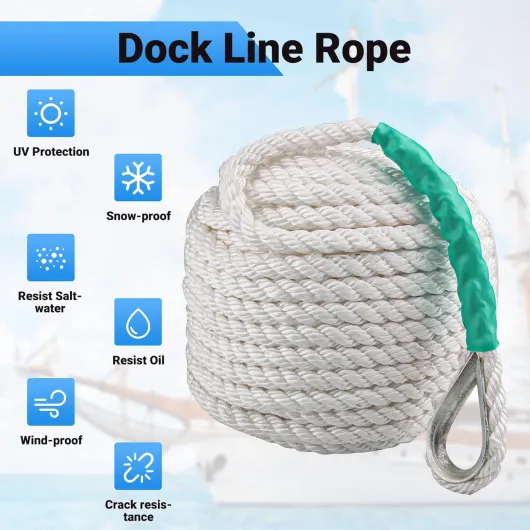
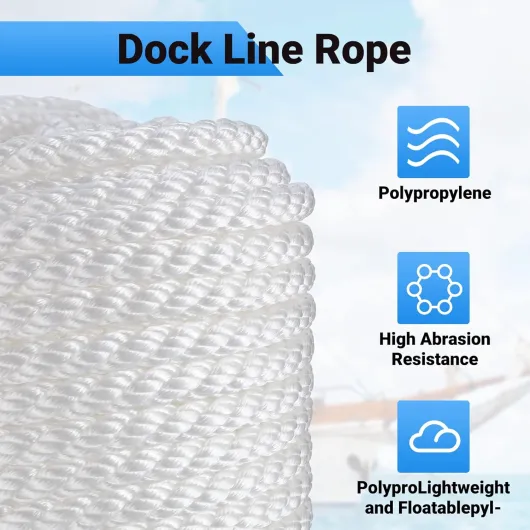
The design is pretty straightforward: double-braided nylon, all white, no tracer color. The braid is fairly tight, so it doesn’t feel fluffy or cheap, but it’s also not a super stiff, high-end marine line. In the hand, it feels on the softer side, which is nice when you’re actually pulling on it or handling it a lot. One Amazon reviewer said they’d prefer something stiffer for tree rigging, and I get that—if you’re used to stiffer arborist lines, this will feel more like a soft marine rope than a pro rigging rope.
One thing that stood out is how it comes coiled from the factory. Mine arrived in a tight coil with a lot of built-in twist. The other reviewer who said it took them an hour to get 300 ft kink-free wasn’t exaggerating. My first attempt to unroll it straight from the coil gave me a mess of loops and hockles. I ended up walking it out fully along the driveway, untwisting sections, then re-flaking it into a proper figure-eight style pile. After that, handling improved a lot, but out of the box it’s a bit of a headache.
In use, the rope runs fine through pulleys and around cleats once you’ve dealt with the initial twist. It doesn’t flatten out weirdly under load, and it holds knots well. Bowlines, clove hitches, trucker’s hitches all bite cleanly. Because it’s double-braid nylon, it has a bit of stretch, which is exactly what you want for mooring and anchoring to absorb shock loads, but that stretch makes it feel less precise compared to low-stretch polyester when you’re using it for rigging or pulling trees.
Visually, it’s just plain white rope. After some use, it picks up dirt and stains quickly (mine has green marks from algae and brown from mud), so don’t expect it to stay clean-looking. No colored tracer means if you mix it with other white ropes, you might have trouble telling them apart. Practically, though, the design is simple and functional: decent diameter, comfortable in the hand, and flexible enough to work in most basic marine and outdoor setups, once you invest time to straighten it out.
Materials and build: standard nylon done fairly well
The rope is 100% nylon, double-braided construction. That’s a pretty standard choice for marine lines because nylon has good stretch, handles shock loads, and tolerates water and sun reasonably well. Compared to polypropylene, nylon sinks and doesn’t go stiff and crunchy as fast. Compared to polyester, it stretches more, which is good for mooring/anchoring but less ideal if you want a really static line.
The outer braid on this CarBole rope feels consistent along the whole 61 m: no obvious thin spots, no loose bunches, and the weave looks uniform. I checked several sections under load, and the sheath didn’t start to fuzz badly right away. I’ve dragged it over a concrete edge a few times and around rough bark; it picked up some fuzz and minor scuffs, but nothing that made me doubt the integrity. For the price level, I’d say the abrasion resistance is pretty solid. Obviously, if you park it on sharp metal all season, it will lose that fight eventually.
The inner core (since it’s double-braid) also seems to share the load properly. When you tension it hard, the rope doesn’t feel like just the sheath is taking it. I haven’t dissected it, but in use, the rope maintains its round profile and doesn’t get weirdly lumpy under strain. That’s usually a good sign that both core and cover are doing their job. The stated tensile strength of 5850 lb for a 12 mm nylon double-braid sounds realistic, not inflated.
As for chemical and weather resistance, nylon is generally fine around fuel, oils, and saltwater, within reason. I’ve had this rope wet and salty more than once, left it to dry in the sun, and so far it hasn’t gone stiff or brittle. Long term, any nylon rope will degrade under UV, but you’d have to leave it outside constantly for that to really show. For a typical boater or occasional user, the material choice is totally adequate. It’s not some fancy heat-resistant, ultra-low-stretch fiber, but for boating, camping, and general hauling, plain nylon is still one of the best all-round options.
Durability: holds up well if you’re not careless
After some weeks of mixed use—boat, yard work, a couple of camping trips—the rope is holding up better than I expected for the price. The outer sheath has some fuzz where it rubbed on rough surfaces, but nothing that looks close to failure. No flat spots, no serious cuts, and the rope still feels solid when you run it through your hands. I’ve washed off mud and salt a couple of times with fresh water, and it didn’t go stiff afterward.
In a marine context, I’ve let it sit wet in a bucket and also left it coiled on deck in the sun. Neither seems to have done much damage yet. Nylon isn’t perfect under UV, but unless you leave it out 24/7 all season, it generally survives fine. The rope hasn’t discolored badly except for dirt and algae stains, which are aesthetic more than anything. If you want it to last, just rinse salt off and don’t store it permanently in standing water or direct sun.
The double-braid construction also helps with long-term shape and strength. Some cheaper 3-strand ropes I’ve used in the past went hard and lumpy quickly; this one has stayed flexible and reasonably round. It still bends nicely around cleats and through fairleads. I haven’t seen any core slippage or weird bulges that would suggest internal damage. As long as you’re not using it for abusive tasks like constant winch line work over sharp edges, it should last several seasons for a casual user.
I wouldn’t call it bombproof, and if you’re a professional who beats on ropes all day, you’ll probably want something higher-end. But for a typical boat owner or homeowner who uses it regularly but not daily, the durability-to-price ratio is solid. You’ll more likely lose it, cut it, or retire it out of caution before it actually fails from normal wear.
Performance on the water and in the yard
In practical use, this rope does what it’s supposed to do. As an anchor/kedge line on a small boat, it behaved like a normal nylon anchor rode. There’s enough stretch that when a wake or gust hits, you don’t get that brutal jerk you’d get from a non-stretch line. I’ve used it as a secondary line off the bow in a bit of chop, and it held fine, no scary creaking or snapping noises, and no visible damage afterward.
I also tried it for basic towing and hauling around the yard—pulling a small trailer by hand, dragging logs, and helping guide a couple of trees while cutting. For that, the strength feels more than adequate. Under heavy pull, it elongates a bit (as nylon does), but it doesn’t feel like it’s about to let go. Knots stayed tight but were still possible to untie after load, which is nice if you don’t want to cut the rope every time. I wouldn’t use it as professional rigging rope for serious tree work, but as a homeowner line for occasional jobs, it’s fine.
Where the performance is a bit mixed is handling during deployment and retrieval. If you don’t take the time to properly flake and store it, the built-in twist from the original coil tends to show up as kinks and tangles, especially when paying it out quickly from a pile. Once I re-flaked it and started storing it in a loose coil or figure-eight, that issue dropped a lot, but it’s something you notice early on. On a boat, a line that kinks when you’re trying to drop anchor in a hurry is annoying.
Overall, though, for typical boating and outdoor tasks, it performs at least as well as other budget nylon lines I’ve used, and in some cases better because of the double-braid construction. It’s not a specialist rope, but as a general-purpose workhorse for mooring, anchoring, and hauling, it gets the job done without any scary surprises. You just have to put up with or fix the initial twist problem to get the best out of it.
What you actually get for your money
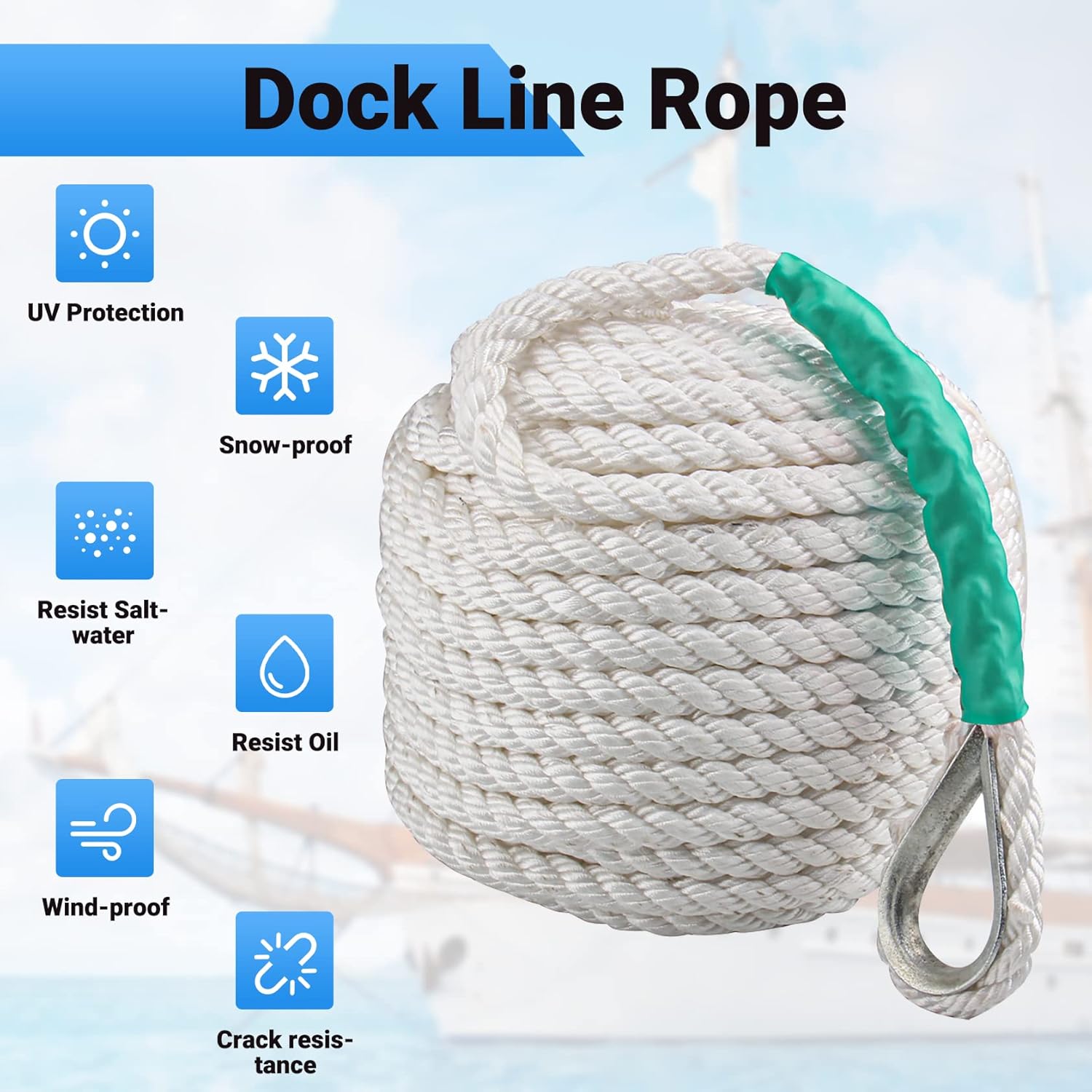
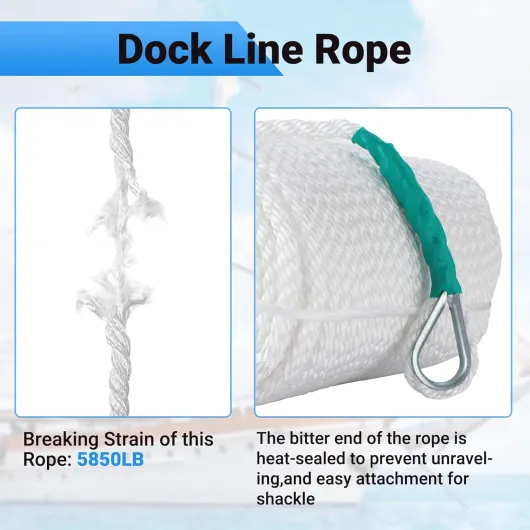
This is a single piece of double-braided nylon rope: 12 mm diameter, 61 m (200 ft) long, white, with a stated breaking strength of 5850 lb (around 2650 kg). No thimble, no pre-spliced loop, no bag. Just rope in a coil. That’s important to know because if you’re expecting a finished anchor line with stainless hardware, this isn’t it. You’ll have to do your own eye splice or knot work if you want a proper connection to an anchor or shackle.
On paper, it’s marketed for boats: docking, mooring, anchoring. But the listing also mentions camping, hiking, pulley systems, hoisting, etc. I’ve used it in most of those roles except serious climbing (and I wouldn’t use it for climbing, to be clear). For boating, the 12 mm thickness is about right for small to medium boats—personally, I’d be comfortable using it for craft in the 18–28 ft range as an anchor line extension or secondary dock line, depending on how exposed the mooring spot is.
The break strength of 5850 lb is decent for this diameter nylon. You obviously shouldn’t work it anywhere near that; as a rule of thumb, safe working load is a fraction of that number. But for typical use—mooring, anchoring in normal conditions, hauling logs around the yard—it’s more than enough. I’ve put it under what I’d call "serious hobbyist" tension (tree rigging with a winch, towing some heavy stuff slowly) and never felt like it was about to give.
From a value perspective, the price per meter is pretty attractive compared to buying shorter pre-made dock lines. If you’re okay doing your own splicing or just tying bowlines, you basically get a big pool of line you can cut down or use as one long run. For a casual boater or someone who just wants a long, strong rope around the house, that makes sense. If you want polished, ready-to-use dock lines with eyes on both ends, you’ll be happier with something more premium and pre-finished.
Pros
- Strong double-braided nylon with realistic 5850 lb breaking strength for 12 mm
- Very good length and versatility for the price, can be cut into multiple lines
- Handles loads well with useful stretch for mooring and anchoring
Cons
- Arrives coiled with a lot of twist, takes time to de-kink and re-coil properly
- No finished eye splice or hardware, just raw rope you must finish yourself
Conclusion
Editor's rating
This CarBole 12 mm x 61 m nylon rope is basically a solid, no-frills workhorse. The rope itself is decent: good strength for its size, proper double-braid nylon, and versatile enough for anchoring, docking, hauling, and general outdoor use. I’ve pulled on it hard in a few different scenarios and never felt like it was going to fail. For a budget-friendly line, that’s exactly what most people want.
The main downside is handling, especially when it’s new. The way it’s coiled from the factory builds in a lot of twist, so your first session with it will probably involve swearing while you walk it out and re-coil it to get rid of kinks. If you’re willing to spend that time and you don’t expect finished loops or fancy packaging, you end up with a long, reliable rope at a decent price. If you want something ready to drop in as a polished anchor line with hardware, this isn’t it.
I’d recommend it for: small to mid-size boat owners who want extra anchor rode or a long utility line, DIY types who don’t mind splicing or tying their own ends, and anyone who just wants a strong general-purpose rope around the house or campsite. I’d skip it if you’re super picky about handling right out of the box, or if you only need short, tidy dock lines and don’t care about having a big bulk length. For what it costs, it’s a good, practical choice, just not perfect.