
Summary
Editor's rating
Value: good sonar for the money, but remember there’s no charts
Design: big, simple, and very focused on visibility
Power draw and real-world battery impact
Durability and build: feels solid but not indestructible
Sonar performance: where this thing actually shines
What you actually get with the Striker Plus 9SV
Pros
- Large 9-inch screen that stays readable in bright sun and split-screen modes
- Strong sonar package (CHIRP, ClearVü, SideVü) that clearly shows structure and fish
- Quickdraw Contours lets you build your own lake maps over time
Cons
- No built-in charts and no support for third-party or Garmin mapping
- Stock mount is basic and the transducer is exposed and easy to knock out of alignment

Specifications
View full product page →| Brand | Garmin |
A big fishfinder that actually feels usable on the water
I’ve been running the Garmin Striker Plus 9SV with the CV52HW-TM transducer on my small aluminum boat for a while now, mostly for freshwater pike and walleye, plus a bit of trolling. I’m not a tournament angler, just someone who fishes most weekends in season and wants gear that works without spending all day in the menus. This unit sits in that middle ground: not entry-level, not high-end chartplotter either. It’s basically a big fishfinder with GPS and some mapping tricks.
The first thing that hit me is the size of the screen. Nine inches on a small console sounds like overkill, but on the water, with sun glare and chop, it actually feels right. You can split the screen in two or three and still read things without squinting. Compared to my old 5-inch Lowrance, it’s night and day in terms of readability and how relaxed I am when I’m running or lining up a drift.
But you have to be clear on what this thing is: it’s not a full chartplotter. There are no preloaded lake maps, and you can’t add Navionics or Garmin BlueChart or anything like that. The GPS is there to mark waypoints, record tracks, and draw your own contour maps with Quickdraw. If you’re expecting detailed navigation charts out of the box, you’re going to be disappointed.
So my overall first impression: the Striker Plus 9SV is a solid fishfinder with a big readable screen and strong sonar, but it’s more of a DIY mapping setup than a real navigation tool. If you know that going in, you’ll probably be pretty happy. If you expect full charts at this price, you might feel a bit short-changed.
Value: good sonar for the money, but remember there’s no charts
On the value side, the Striker Plus 9SV sits in a pretty interesting spot. For the price, you get a large 9-inch screen, CHIRP sonar, ClearVü, SideVü, GPS, and Quickdraw mapping. That’s a lot of tech compared to older basic units. If your main goal is to see fish, structure, and depth clearly, it’s good value for money. The sonar performance is strong enough that you feel like you’ve upgraded your fishing, not just bought a bigger display.
Where the value becomes more debatable is the lack of real charts. You can’t load Navionics or Garmin maps, and there are no preloaded contours. You either rely on your own Quickdraw maps or just use it as a raw GPS with waypoints and tracks. If you often fish new lakes or need depth contours right away, you might be better off spending a bit more on a true chartplotter/fishfinder combo. I’ve had a few trips on unknown lakes where I really missed having proper charts and had to rely on phone apps alongside the Garmin, which is a bit clumsy.
That said, if you mostly fish the same bodies of water, Quickdraw becomes quite handy. After a few trips, you end up with your own contour maps that are actually more accurate in your favorite spots than some generic chart. It just takes time on the water. So the value depends a lot on your style: home-lake angler who likes to refine spots = good deal; constant traveler to new lakes = less ideal.
Considering the overall package—big screen, good sonar, simple interface, and included transducer—it’s pretty solid bang for the buck if you understand the limitations. There is better stuff out there, but it’s more expensive. And there are cheaper units, but they usually have smaller screens or no side imaging. So I’d put the value at slightly above average, with the clear warning that you’re paying for sonar, not charts.
Design: big, simple, and very focused on visibility
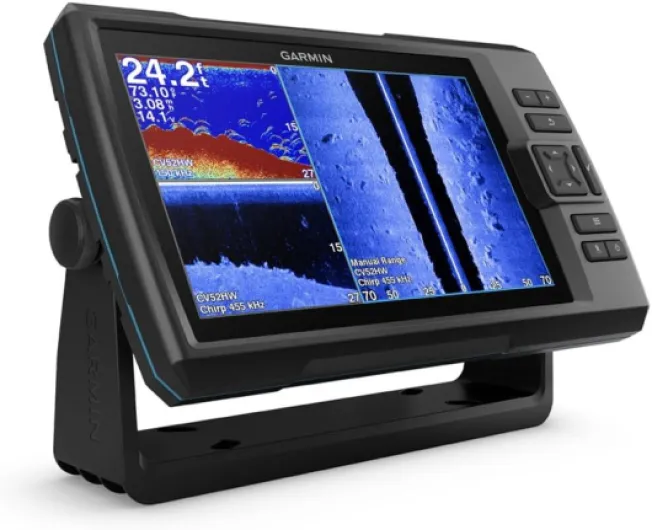
Design-wise, the Striker Plus 9SV is pretty straightforward: a big 9-inch screen, chunky bezel, and a row of physical buttons on the right. No touchscreen. At first I was a bit disappointed because I’m used to poking at my phone all day, but after a few choppy days on the lake with wet fingers, I actually appreciated the physical keys. You can navigate the menus with gloves on and you’re not wiping water off a touchscreen every five minutes.
The layout is simple: directional pad, menu, back, power, and a few shortcut keys. You can set up different layouts and swap between them quickly. The screen is bright enough to stay readable in full sun, and I never felt like I had to lean over it or cup it with my hand to see. In the evening, you’ll want to dim it, because at full brightness it can be a bit much in low light. The viewing angles are decent; you can stand a bit to the side and still see what’s going on, which is handy when someone else is at the helm.
The downside: it’s a big unit. On a small tiller boat or a tiny console, this thing dominates the dash. You need to think about your mounting spot in advance. The included tilt mount is okay for basic use, but it doesn’t swivel easily from side to side. If you want to turn the screen toward the front deck for casting, you’ll probably want to invest in a better third-party mount or a RAM mount. Also, the connectors are all on the back, so if you flush-mount it, be ready to deal with clearance for cables.
In terms of overall design feeling: functional, not pretty. It looks like a tool, not a fancy gadget. That fits what it does. Personally I would have liked a slimmer bezel and maybe a little swivel in the stock mount, but for the price range and the use case, it’s acceptable. The important part is that the screen is big and actually readable in rough real-world conditions, and on that, it does the job well.
Power draw and real-world battery impact
The Striker Plus 9SV is battery powered from your boat’s 12V system, like most fishfinders. Garmin doesn’t scream about power consumption in the marketing, but in practice, a 9-inch bright screen and multiple sonar modes obviously draw more than a tiny 4-inch unit. On my 12V 80Ah deep cycle battery running a trolling motor and this unit, I noticed the fishfinder does make a difference on full-day outings, but not in a dramatic way.
On a normal summer day, I’ll run the unit 8–10 hours with mixed use: sometimes full brightness, sometimes dimmed, sonar always on, and often using split screen with traditional + ClearVü. I still finish the day with enough battery left for the trolling motor, but I’m no longer as relaxed as I was with my old small unit. If your battery is small or old, you’ll feel it. This isn’t the kind of device you forget is running; it’s big and bright and clearly pulling some power.
There’s no built-in battery, obviously, so if you use it on a kayak or a small car topper with a portable battery box, you need to size your battery properly. I’d say for a full day of fishing with this screen size, I wouldn’t go under a 20Ah lithium or 35–40Ah lead-acid if you don’t want to stress. There are some basic power-saving moves you can do: drop the brightness, shut off sonar when you’re anchored for a long time, and avoid leaving Wi‑Fi on if you don’t need it. None of these change things dramatically, but together they help.
In short: power consumption is reasonable for a 9-inch sonar, but it’s not light. If you’re used to a tiny unit sipping power, this will be a step up in draw. Just plan your battery setup accordingly and you’ll be fine. It’s not a deal-breaker, but it’s something to keep in mind before you mount it on a small boat with a weak battery.
Durability and build: feels solid but not indestructible
In terms of build, the Striker Plus 9SV feels solid enough for weekend use. The casing doesn’t flex, the buttons have a firm click, and after a bunch of launches, road trips, and some sketchy weather, nothing has rattled loose. I’ve had it in rain and spray, and so far no fogging under the screen or weird moisture issues. It’s clearly made to sit on a boat and deal with normal splashes, not to be babied in a living room.
The weak point on most of these units is usually the mount and the transducer, and this one is no exception. The included transom mount is standard plastic. It works, but if you bang the transducer against a trailer roller or a rock, it’s not going to like that. I’ve already had to re-adjust it once after a rough launch where it got knocked up. That’s not unique to Garmin; it’s just how exposed transom mounts are. If you fish in shallow rocky rivers a lot, you’ll want to be very careful with it, or consider a more protected mounting spot or a trolling motor mount.
The connectors on the back of the head unit feel snug, but I wouldn’t be yanking them in and out all the time. This is more of a “mount it and leave it there” type of unit. I remove mine for winter storage and that’s it. The screen has held up fine against light scratches; I don’t baby-wipe it every trip, I just wipe with a microfiber or shirt occasionally. No major marks so far.
Overall, I’d say the durability is decent for normal recreational use. It’s not a tank, and if you’re abusing your boat or bouncing through big waves every weekend, I’d treat the unit and especially the transducer with care. But for regular lake fishing, it doesn’t feel fragile, and it handles spray, sun, and basic rough handling without drama.
Sonar performance: where this thing actually shines
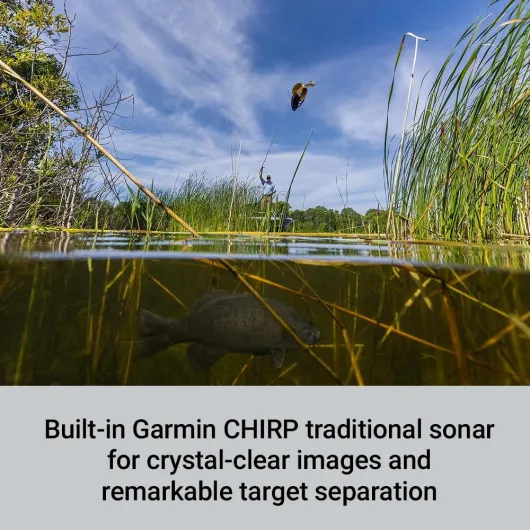
This is where the Striker Plus 9SV earns its keep. The traditional CHIRP sonar is clear and stable, even when I’m moving at a decent clip. I’m seeing good target separation between baitfish and bigger fish, and bottom hardness is easy to read once you get used to the color scheme. Compared to my old non-CHIRP unit, it’s a big upgrade. I can run 15–20 km/h and still keep a decent bottom lock in reasonable depths, which is enough for how I fish.
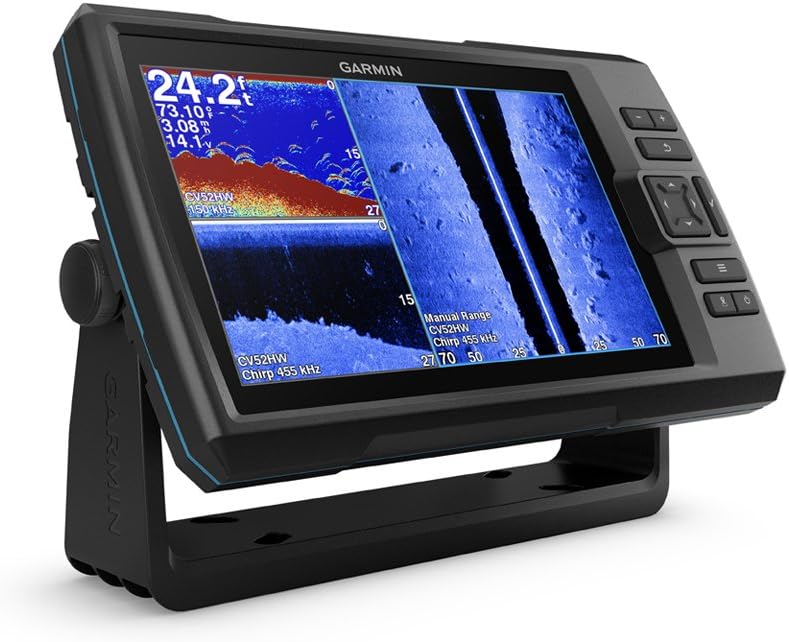
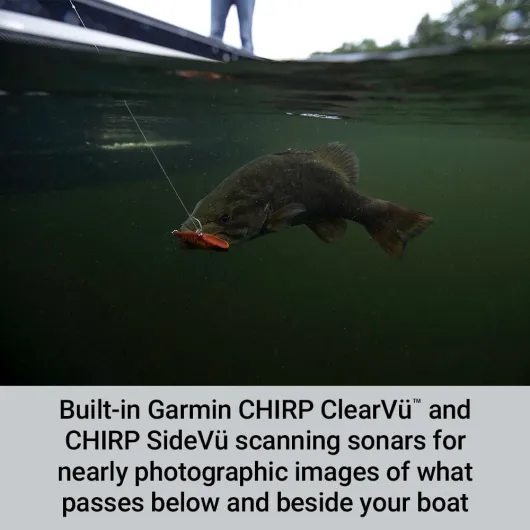
The ClearVü (down imaging) is handy for understanding structure. You can clearly see rocks vs weed beds vs timber, and it helped me clean up a few spots I thought I knew. On a weedy lake I fish often, it made it a lot easier to see the edges of the weedline and pockets in the weeds where fish tend to sit. Is it super photographic like the marketing pictures? No, but it’s detailed enough to change how you work a spot. Once you trust it, you start adjusting your drifts based on what you see, not just your old GPS tracks.
The SideVü is more of a mixed bag for me. It works, and I can definitely spot rock piles, logs, and transitions off to the side of the boat. But you need to play with range and sensitivity a bit, and it’s not a “set it once and forget it” thing on every lake. In clearer, shallower water, I got better results. In deeper or murkier water, it’s still useful, but you don’t always get those nice clean shapes you see in product photos. It’s still an advantage to have side imaging at this price, but don’t expect miracles without some tweaking.
Overall, on the pure sonar side, I’m pretty happy. The unit boots up quickly, finds depth fast, and doesn’t crash or freeze. I’ve had a couple of moments where the depth reading jumped around in very shallow weed-choked water, but that’s fairly normal. For most normal fishing situations, the sonar performance is solid and feels like a proper upgrade if you’re coming from older or smaller gear.
What you actually get with the Striker Plus 9SV
Out of the box, you get the Striker Plus 9SV head unit, the CV52HW-TM transducer, a 4-pin to 12-pin adapter, a tilt mount, power/data cable, and transom/trolling motor mounts. No fancy gimbal base with knobs, just the basic tilt bracket, which is fine but not super flexible if you want to adjust angle all the time. The unit itself is fairly light at a bit over a kilo, and doesn’t feel cheap, but it’s clearly a plastic shell meant to live under some sort of windshield or at least not be kicked around.
The main features on paper are: 9-inch sunlight-readable screen, built-in GPS (but no charts), CHIRP traditional sonar, ClearVü (down imaging) and SideVü (side imaging) through the included transducer, and Quickdraw Contours for drawing your own maps. It also has built-in Wi‑Fi so you can hook it to the Garmin ActiveCaptain app on your phone to sync waypoints and get software updates. In practice, the Wi‑Fi is nice once, then you kind of forget about it unless you’re nerdy about keeping everything updated.
The menus are very Garmin: simple icons, big buttons, and not much fluff. You’ve got presets like full-screen traditional sonar, full-screen ClearVü, side-by-side sonar views, sonar + map, etc. Swapping views is quick and you don’t feel lost like on some more complex units. It really feels more like a pure fishfinder than a multifunction display. That’s good if you want something straightforward, less good if you wanted to integrate radar, NMEA data, or a network of devices. This unit is not built for that world.
Overall, the presentation of the product is honest if you read the fine print: fishfinder first, GPS helper second, no real charting. If you’re coming from a basic depth finder, it feels like a big step up. If you’re coming from a full chartplotter, it will feel like a stripped-down tool that focuses on sonar and not much else.
Pros
- Large 9-inch screen that stays readable in bright sun and split-screen modes
- Strong sonar package (CHIRP, ClearVü, SideVü) that clearly shows structure and fish
- Quickdraw Contours lets you build your own lake maps over time
Cons
- No built-in charts and no support for third-party or Garmin mapping
- Stock mount is basic and the transducer is exposed and easy to knock out of alignment
Conclusion
Editor's rating
The Garmin Striker Plus 9SV is a solid choice if you want a large, easy-to-read fishfinder with strong sonar and you don’t care much about built-in charts. The traditional CHIRP, ClearVü, and SideVü all do their job well enough to actually change how you fish, especially on familiar lakes where you’re fine building your own maps with Quickdraw. The 9-inch screen is a real comfort upgrade over smaller units, and the physical buttons are practical on rough, wet days.
On the flip side, it’s not a full chartplotter, and that’s the main limitation. No preloaded maps, no adding Navionics or Garmin charts. If you want detailed navigation charts or you often fish new waters, you’ll probably end up running a phone app or another device next to it, or you’ll wish you had spent more on a model that supports proper mapping. Power draw is also something to think about on small boats with limited battery capacity, and the stock mount and transducer hardware are okay but not bulletproof.
So who is this for? Anglers who mostly fish a few regular lakes, want a big clear screen, and care more about sonar performance than fancy navigation will be happy with it. If you’re a casual weekend angler upgrading from a tiny depth finder, it feels like a big step up. Who should skip it? People who rely heavily on charts, travel a lot to new spots, or want a fully integrated electronics network on a bigger boat should look at Garmin’s real chartplotters or similar units from other brands.