Summary
Editor's rating
Value for money: worth it if you fish often, maybe overkill if you don’t
Design: compact, serious look, and mostly practical
Materials and build: feels sturdy, but not tank-heavy
Durability and saltwater resistance: early signs are reassuring
On the water: casting, drag, and retrieve performance
What you actually get with the Penn Clash II 3000
Pros
- Robust saltwater-ready build that stays smooth after multiple harsh sessions
- Smooth, controllable drag and good line lay with braid for consistent casting
- Strong, clean retrieve with no noticeable gear slip or wobble under load
Cons
- No spare spool or pouch included despite the mid/high price
- A bit heavier than some competing 3000-size reels, so not ideal for ultralight setups

Specifications
View full product page →| Brand | Penn |
A shore and kayak reel that actually feels ready for saltwater
I’ve been using the Penn Clash II 3000 mainly for shore spinning and a bit of kayak fishing, mostly targeting bass and pollack with lures. I’m not sponsored, I paid for it, and I’ve been out in rough, wet conditions with it, not just casting on a sunny pier. So this is more "boots on the ground" feedback than brochure talk. If you’re wondering if it’s worth the money over cheaper reels, that’s pretty much what I’ll focus on.
First thing: this reel feels like it was actually made for saltwater, not just labeled that way. I’ve dunked it with spray, fished in proper sideways rain, and it hasn’t started grinding or sounding rough. No weird noises, no play appearing in the handle after a few sessions. For me, that’s the baseline: if a reel starts feeling sloppy after a couple of trips, I lose confidence fast.
On the other hand, it’s not some magic reel that makes you cast twice as far or suddenly catch more fish. It’s a pretty solid, well-built reel that does the basics right: smooth drag, decent weight, good line lay. If you’re coming from a cheap entry-level reel, you’ll probably feel the difference straight away. If you already own mid-range Shimano or Daiwa gear, the difference is there, but it’s more about durability and feel than some huge performance jump.
Overall, after several sessions, my impression is: it’s good gear for regular saltwater anglers, a bit pricey for the casual once-a-month person, and not perfect, but it gets the job done with fewer worries about it dying after one rough season. I’ll go into details on the build, performance, and whether I think the price is justified.
Value for money: worth it if you fish often, maybe overkill if you don’t
Let’s talk about money. The Penn Clash II 3000 sits in that mid to upper mid-range price bracket. It’s clearly more expensive than entry-level reels and some mid-range options, but cheaper than the really high-end stuff. So the real question is: do you actually get enough extra for the price? In my view, if you fish saltwater regularly, yes; if you’re an occasional summer angler, probably not.
What you’re paying for here is mainly build quality, smoother performance, and better durability in saltwater. Compared to cheaper reels I’ve used, I feel more relaxed about using this in rougher conditions. I’m not constantly thinking "is this going to start grinding or seize up?". That peace of mind has some value, especially if you fish a lot from rocks or kayaks where gear takes more abuse. The reel rating on Amazon (4.6/5 from hundreds of reviews) lines up with my feeling: most people seem satisfied, with few horror stories.
On the downside, for the price, a spare spool or at least a basic pouch would have been nice. You’re basically paying for the reel and nothing else. Also, if you only fish a few times a year, you can get a cheaper spinning reel that will do the job fine for occasional use. The difference in smoothness and durability only really pays off if you’re out there often or fishing in tougher conditions like surf, rocks, or from a kayak.
So, value-wise, I’d say it’s good value for serious or regular inshore anglers, but not a bargain. There’s better bang-for-buck options if you’re on a tight budget, and there are smoother, fancier reels if you’re ready to pay more. This one sits in a realistic middle: you pay a fair bit, but you get a reel that feels built to last and fish hard.
Design: compact, serious look, and mostly practical
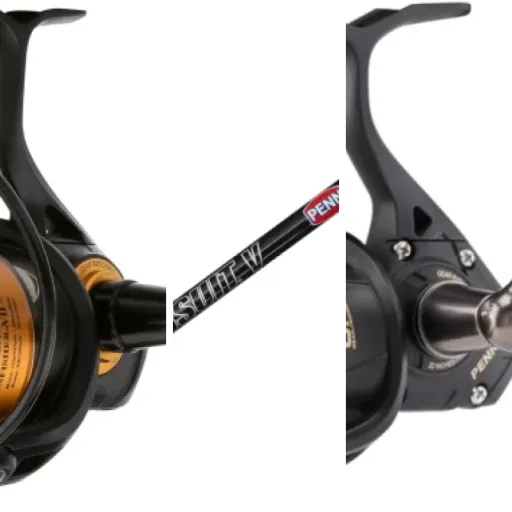
Design-wise, the Penn Clash II 3000 goes for a grey/black, no-nonsense look. It doesn’t scream for attention, which I actually like. It looks like a tool, not a toy. On the rod, it sits nicely and doesn’t feel oversized. The body shape is fairly compact, with a slightly chunky rotor that gives a feeling of robustness. The spool is shallow-ish for braid, which is what most people will use for this kind of fishing anyway.
The handle is metal with a round knob that gives good grip, even with wet or slimy hands. It folds easily for storage, and there’s no annoying play or flex when you crank hard. The bail wire is thick enough and snaps over firmly without feeling cheap. After a few sessions of repeated casting, I never had the bail randomly flip mid-cast, which has happened to me on lower-end reels and is both annoying and expensive when lures go flying.
What I liked is that the reel feels well balanced when you start reeling. No weird vibrations at higher retrieve speeds, no rotor wobble. When working lures like small metal jigs or surface lures, the retrieve stays smooth and controlled. The drag knob is large enough to adjust on the fly without fiddling. The only small gripe I have is that the drag knob plastic feels a bit cheaper compared to the rest of the reel; not terrible, just slightly out of line with the otherwise solid feel.
Overall, the design is practical and focused on fishing rather than showing off. It looks serious, it behaves well on the rod, and all the main controls are where you want them. Nothing revolutionary, but no big design mistakes either, which is what matters when you’re out in wind and spray and just want your gear to work.
Materials and build: feels sturdy, but not tank-heavy
The reel uses an aluminium body with stainless steel for the handle and bearings, and that’s pretty much what you’d expect at this level. In the hand, it feels solid without being ridiculously heavy. At 286 g, it’s not the lightest 3000 reel on the market, but for a saltwater-focused reel I’m fine with a bit of extra weight if it means it can hold up better. I paired it with a 9 ft lure rod around 20–40 g casting weight and after a few hours of casting, my arm was tired from the fishing, not especially from the reel weight.
The gearing uses Penn’s CNC Gear Technology, which basically means the gears are cut more precisely instead of being roughly cast. In practice, that usually means less play and a smoother feel over time. After several outings, including some heavy cranking against tide and a few decent fish, I don’t feel any new slack or grinding. The rotor and body connection still feel tight. Cheaper reels I’ve had in the past often started to feel sloppy after a handful of tougher sessions.
The corrosion-resistant aspect is always hard to judge quickly, but I’ve deliberately not babied it: salt spray, some sand exposure, and only a quick rinse with freshwater when I got home. So far, no signs of rust on screws or the bail arm, and the line roller still turns freely. That’s where the stainless steel bearings seem to help. Obviously, long-term we’ll see, but early signs are positive. I’ve had reels where the line roller started squeaking after two trips; not the case here.
If you’re looking for ultralight magnesium or super high-end fancy materials, this isn’t that. This is more simple, proven materials put together well. For a reel that’s meant to live in saltwater, I actually prefer this approach. I’d rather have a slightly heavier but reliable reel than a feather-light one that starts corroding or loosening after a season.
Durability and saltwater resistance: early signs are reassuring
Durability is usually where cheaper reels fall apart in saltwater, so I paid attention to that. The Penn Clash II 3000 has some features aimed at this: hydrophobic line roller bearing, a sort of clutch armor system to protect internals, and corrosion-resistant components. In practice, this means the reel should be more forgiving when you fish in the rain, get splashed by waves, or drop it in wet sand by accident. I’ve had mine out in heavy spray on a rocky mark and on a kayak with water constantly sloshing around, and it still feels like new in terms of function.
I’ve opened the bail and checked the line roller a few times. It still spins freely, no grinding, and no rusty color showing. On some mid-range reels I’ve owned, that’s usually the first thing to go: line roller seizing up or sounding gritty. Here, after multiple salty sessions and only basic rinsing (quick freshwater shower, nothing fancy), everything stays quiet. The body screws and bail wire haven’t developed any obvious corrosion marks yet either.
Where I see the durability most is in the general tightness of the reel. The handle still has no play, the rotor doesn’t wobble, and the drag feels exactly like day one. I’ve done some fairly heavy cranking with shads in current and a few snag pulls, and the gears haven’t started feeling loose. I’ve had cheaper reels where after a few snag pulls you could feel a slight knock every turn – nothing like that here so far.
Of course, I can’t pretend I’ve used it for years yet, but compared to reels that started complaining early, this one gives off the right signs. If you rinse it after use and don’t actively abuse it, I’d expect several seasons of regular inshore fishing without major issues. If you never rinse your gear and throw it in the back of the car wet and sandy, nothing will last forever, but this seems more forgiving than the average budget option.
On the water: casting, drag, and retrieve performance
In real fishing conditions, the Penn Clash II 3000 performs smoothly and predictably, which is what I want. The Leveline slow oscillation system gives a pretty neat line lay with braid. I’m using 20 lb braid, and it spools evenly with no big ridges or dips. That helps with casting distance and reduces wind knots. I won’t say it magically adds 20 meters to your cast, but compared to a cheap reel I used before, I’m getting slightly more consistent distance and fewer tangles, especially in crosswinds.
The drag is one of the better points. The HT-100 carbon drag is smooth from the start, not sticky. I’ve hooked a few decent bass and one surprise pollack in current, and the drag started up cleanly without jerking, which helps avoid pulled hooks on light leaders. The max drag spec is only about 10 lb, but for inshore lure fishing that’s enough. You’re not winching tuna with this. What matters more is how controllable it is, and here it’s easy to fine-tune. Small adjustments on the knob actually change something, rather than going from too loose to too tight in a quarter turn.
Retrieve speed with the 6.2:1 ratio is good for working lures. You can burn a surface lure or metal pretty fast without feeling like you’re spinning forever, and you can still slow down for soft plastics. When cranking against tide or when a fish runs sideways, the reel doesn’t feel like it’s struggling. I haven’t noticed any gear slip or odd noises under load. One Amazon reviewer mentioned "loads of power and control with no gear slip", and I’d agree with that from my own use.
If I nitpick, I’d say it’s not as buttery smooth as some higher-end Shimanos I’ve used, but it’s consistent and solid. No random grinding spots, no sudden resistance. Overall, for shore and kayak spinning, it does exactly what you need: good line lay, reliable drag, and enough cranking power for typical inshore species.
What you actually get with the Penn Clash II 3000
The Penn Clash II 3000 is marketed as an inshore spinning reel for things like bass, pollack, cod and wrasse. The 3000 size sits right in that sweet spot for European shore lure fishing: not too big, not too small. The reel weighs around 286 g, so it’s not ultralight, but on a 8–9 ft lure rod it balances pretty well. You feel it in the hand, but it doesn’t feel like a brick. For kayak fishing, the size is nice too: compact enough to handle easily, but with enough line capacity for a decent run.
On paper, you get a 6.2:1 gear ratio, HT-100 carbon drag, CNC-cut gears, and a corrosion-resistant build. Line capacity given is 205 m of 0.36 mm braid, which is more than enough for most inshore work. I spooled it with 20 lb braid and still had plenty of space. There’s no fancy extras in the box: just the reel, some paperwork, and that’s it. No spare spool, no reel bag. At this price, a spare spool would have been nice, so that’s a small minus for me.
Out of the box, the reel feels tight and solid. No wobble in the handle, bail snaps cleanly, rotor turns smoothly with no grinding points. The drag knob has clear clicks and doesn’t feel loose. Compared to cheaper reels I’ve used (Okuma, entry-level Shimano), the first impression is that everything feels more precise and less plasticky. It’s not luxury-level, but it gives the feeling of something that can take a bit of abuse.
In short, the presentation is simple: no frills, just a solid reel. If you like getting extras and fancy packaging, you’ll be disappointed. If you care more about the reel itself than what’s around it, you’ll probably be fine with the minimal approach. Personally, I would have liked at least a soft pouch, but it’s not a deal-breaker.
Pros
- Robust saltwater-ready build that stays smooth after multiple harsh sessions
- Smooth, controllable drag and good line lay with braid for consistent casting
- Strong, clean retrieve with no noticeable gear slip or wobble under load
Cons
- No spare spool or pouch included despite the mid/high price
- A bit heavier than some competing 3000-size reels, so not ideal for ultralight setups
Conclusion
Editor's rating
After using the Penn Clash II 3000 for shore and kayak lure fishing, my overall feeling is that it’s a solid, confidence-inspiring saltwater reel. It’s not ultra light, it’s not packed with extras, and it doesn’t magically turn you into a better angler. But it does the important things well: smooth drag, good line lay with braid, strong and clean retrieve, and a build that actually seems ready for saltwater abuse. I’ve put it through rain, spray, and some heavy cranking, and it still feels tight and smooth with no obvious wear.
I’d recommend this reel to anglers who fish the coast regularly – people targeting bass, pollack, wrasse and similar species from rocks, beaches or kayaks. If you’re out most weeks in the season and want a reel you don’t have to baby, it makes sense to spend a bit more on something like this. On the other hand, if you only fish a couple of times each summer, or mostly in freshwater, this might be more than you need; a cheaper reel will probably be enough and you won’t fully use what you’re paying for here.
In short: good, honest workhorse reel with a price that reflects that. Not perfect, but I’d happily keep it in my main saltwater setup, and I trust it more than the budget reels I’ve burned through in the past.