
Summary
Editor's rating
Is it good value for money?
Telescopic design: compact and convenient, with some trade-offs
Handling and comfort during a real fishing session
Materials feel decent, but this isn’t a tank
How it holds up after some abuse
Casting, drag, and real-world fishing performance
What you actually get in the kit
Pros
- Very compact telescopic design with a useful carry bag for travel and car storage
- Reel is smoother than expected for the price and comes with a spare spool
- Complete starter kit (rod, reel, line, lures, tackle) so you can fish right away
Cons
- Rod lacks sensitivity and backbone compared to a decent 2-piece setup
- Included lures and terminal tackle are low quality and mostly feel like filler
- Telescopic design is more fragile and requires careful handling and cleaning

Specifications
View full product page →| Brand | Sougayilang |
A full fishing kit in a small bag – worth it or not?
I picked up the Sougayilang telescopic combo (2.4 m / 7.87 ft version with carrier bag) because I wanted something I could throw in the car and forget about until a last-minute fishing opportunity popped up. My usual setup is a 2‑piece medium spinning rod and a mid-range Shimano reel, so I wasn’t expecting this kit to compete with that. I mainly wanted to see if this was a realistic “all-in-one” starter or travel kit, or just another cheap toy.
Over a few weekends, I used it on small lakes and a slow river, mainly targeting bass and panfish with light lures and some simple rigs. I also tested the reel on one of my own rods to separate the rod’s behavior from the reel’s performance. I didn’t baby it: tossed it in the trunk, walked with it in the bag, and did several extend/collapse cycles in a day, because that’s how most people will use a telescopic rod.
Overall, it’s not trash, but it’s not a pro setup either. It sits somewhere in the middle: pretty solid for casual use, with a few obvious weak spots if you’ve used better gear before. The combo is clearly built for convenience more than finesse or power. If you’re expecting high-end sensitivity or want to fight big fish in heavy cover, you’ll feel its limits right away.
If you just want something you can grab and fish without thinking too much about gear, it gets the job done. But you need to understand what you’re paying for: a complete kit that’s decent, not a long-term “main rod” for serious anglers. That’s the mindset you should have going into this.
Is it good value for money?
In terms of value, this combo sits in a pretty fair spot. You’re paying for convenience and a full starter kit more than for top performance. If you add up a separate telescopic rod, an entry-level reel, a basic bag, some line, and a few cheap lures, you’d probably end up around the same price or slightly higher. So as a bundle, it makes sense, especially for someone who doesn’t want to think about each piece separately.
Where it shines is for casual anglers and beginners. If you fish a few times a year, travel occasionally, or just want a rod in the car for spontaneous trips, this gives you everything you need to start. You’ll probably upgrade the line and tackle at some point, but right out of the box you can fish and catch something. That’s worth something, especially for people who don’t want to spend hours researching gear.
Compared to a basic 2‑piece combo from brands like Ugly Stik or Shimano’s lower lines, this kit loses on pure rod quality and long-term durability, but wins on portability and the fact that it comes with a carry bag and extras. If you never need the telescopic feature, a normal 2‑piece combo in the same price range will usually feel better and last longer. So the value really depends on how important compact size is to you.
Overall, I’d call the value good if you know what you’re buying: a portable, all-in-one kit that’s decent but not high-end. If you expect pro performance or heavy-duty reliability at this price, you’ll be disappointed. If you just want a simple, packable combo that gets the job done for light fishing, it’s money reasonably well spent.
Telescopic design: compact and convenient, with some trade-offs
The telescopic design is the big selling point. Collapsed, the 2.4 m rod is around 16–17 inches, which is actually pretty handy. It fits horizontally in my hatchback trunk without any diagonal Tetris, and I even slipped it into a regular backpack just to see if it worked – it does, though it sticks out a bit. For travel, camping trips, or just leaving it in the car “just in case,” this format makes sense.
Extending the rod is straightforward: pull each section out gently until it seats. You do have to pay attention to fully extend each segment; if one section is slightly collapsed and you cast hard, it can slide back in. That happened to me once on an early cast, and it doesn’t feel nice. After that, I got into the habit of checking each joint with a light tug before fishing. Collapsing it is just the reverse, but I’d recommend wiping off any sand or grit first, because telescopic joints don’t like dirt.
The guides are decent for the price. They’re not crooked or misaligned on my unit, and the ceramic inserts looked fine under close inspection. Still, this is not a rod I’d want to step on or throw around; the tip section is thin, and if you snag hard and yank like crazy, you’ll probably stress those top sections pretty fast. Also, the action is on the softer side, so it loads differently than a regular 2‑piece rod. Casting light lures is okay, but accuracy and feedback aren’t as sharp as with a standard medium-light or medium spinning rod.
From a pure design standpoint, it’s built for convenience over performance. If you accept that, the design makes sense. If you’re hoping a telescopic rod will feel just like a solid 2‑piece, you’ll be a bit disappointed. It’s usable, but you can feel the compromises in sensitivity and stiffness.
Handling and comfort during a real fishing session
On the water, the combo is comfortable enough, but not exactly refined. The rod is fairly light, so you can cast for a few hours without your wrist complaining. The balance with the included reel is acceptable; the combo doesn’t feel super tip-heavy or awkward, which is sometimes a problem with cheap telescopic setups. For a light power rod, it’s okay for spinners, small crankbaits, and simple rigs with a small sinker.
The EVA grip is basic but does the job. It’s not too hard and doesn’t get slick when wet. I fished with it for a couple of hours straight, including some casting from the bank and some jigging from a small boat, and I didn’t have any hot spots or weird pressure points in my hand. You don’t get the ‘nice’ feeling of a higher-end rod, but it’s far from uncomfortable. It’s basically neutral: you forget about it, which is fine.
The reel handle has an EVA knob that I actually liked. It’s big enough to grab easily, and it doesn’t feel cheap or hollow. Cranking on a decent fish felt controlled. The drag adjustment on top is easy to reach and tweak mid-fight. The only minor annoyance: the bail arm on my reel felt a bit stiff to close manually at first. After a few trips, it loosened up a bit, but out of the box it felt slightly tight.
From a comfort point of view, the combo is perfectly acceptable for casual outings. If you’re planning to fish dawn to dusk, you’d probably still prefer a better-balanced 2‑piece rod and a smoother reel, but for 1–3 hour sessions, this setup doesn’t get in the way. The main thing you’ll notice is more about sensitivity and feedback rather than actual physical comfort.
Materials feel decent, but this isn’t a tank
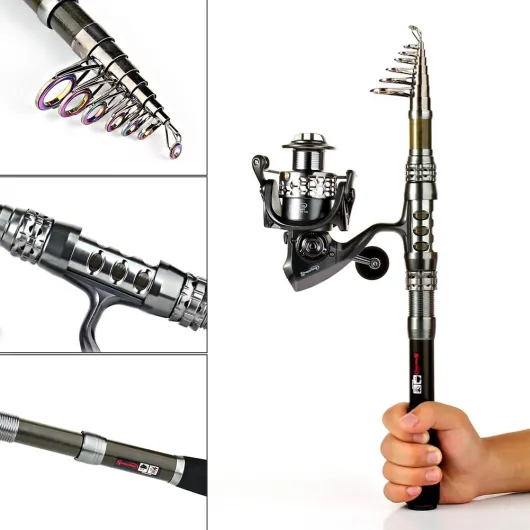
The rod is advertised as carbon fiber mixed with fiberglass, which is pretty standard for budget telescopic rods. In hand, it feels light enough (a bit under 8 oz for the 2.4 m version) and not overly tip-heavy. The blank walls don’t feel paper-thin, but again, this is not something I’d try to horse a big catfish out of a snag with. It’s a light power rod, so it fits better with 4–10 lb line and smaller lures, which matches what they claim.
The reel seat is a stainless-steel hooded seat. It holds the reel firmly; I didn’t feel any wobble or play even after a few sessions. The foregrip and main grip are EVA, which is pretty standard. It’s not fancy, but it doesn’t get slippery when wet, and it’s easy to clean. If you’re used to cork, this will feel more ‘plastic’, but for a travel combo, EVA is practical and low-maintenance.
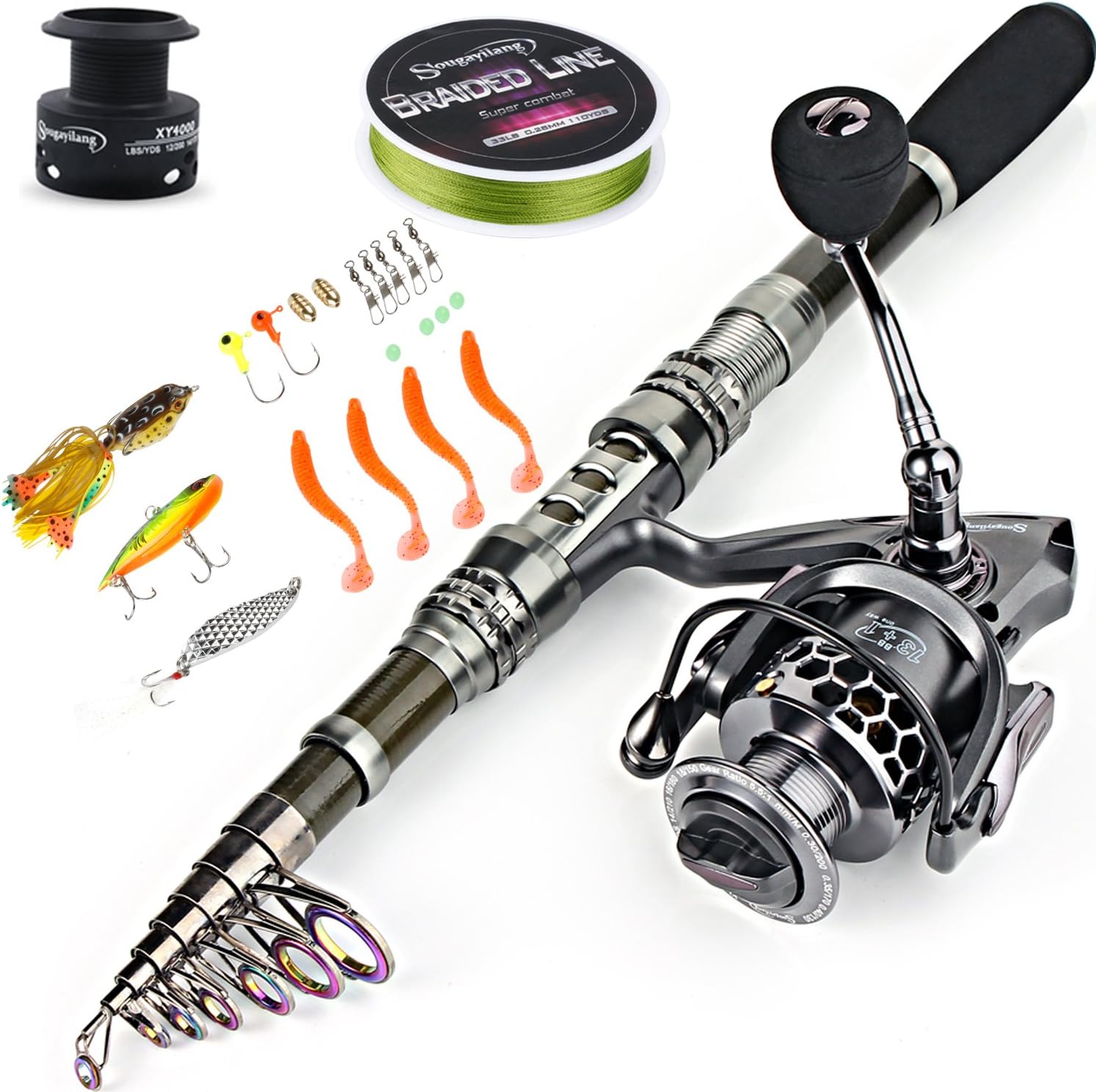
The reel itself uses a stainless steel main shaft and comes with a CNC machined aluminum spool plus a spare. The frame feels like typical mid-range graphite/plastic. The handle folds for storage and can be swapped left/right easily. The 13+1 bearings claim sounds like marketing fluff; it’s smoother than a basic no-name reel, but it doesn’t feel like a premium reel with high-quality bearings. Still, under load with a fish on, it stayed consistent, and I didn’t hear grinding or feel excessive flex in the rotor.
In short, the materials are good enough for casual use. Just don’t confuse “carbon fiber” in the description with high-end rod blanks. This is budget-level carbon/fiberglass, which is fine as long as you stay within its intended use: light line, modest fish, and no abusive treatment. If you treat it as a throw-around beater rod, it will eventually remind you it’s still a telescopic combo under 100 bucks.
How it holds up after some abuse
Durability is usually where cheap telescopic rods fall apart, so I paid attention to that. Over a few weekends, I did a bunch of extend/collapse cycles, tossed the bag into the trunk with other gear, and wasn’t overly gentle. So far, no sections got stuck permanently and no cracks or obvious wear on the joints. That’s a good sign, but keep in mind this is still a short test, not a full year of use.
The guides stayed in place and the inserts didn’t pop out, which sometimes happens on low-cost rods. I made sure not to high-stick (lifting the rod too vertical with a fish on) or yank hard on snags, because that’s how you snap telescopic tips. If you treat it with basic common sense, it should last for a while. If you hand it to kids who slam it shut full of sand or step on it, it’s not going to like that at all.
The reel held up reasonably well. No obvious play developed in the handle or rotor, and the drag still felt the same after several fish. I did notice a slight rough spot when cranking under load after it accidentally got a bit of sand on it, but a quick clean and light oil helped. This is not a sealed reel, so if you use it near saltwater, rinsing with fresh water after every trip is mandatory if you want it to last.
For the price range, I’d say the durability is acceptable but not bulletproof. It’s not a tank you can abuse without thinking, but if you extend/collapse it carefully, keep the joints clean, and rinse the reel when needed, it should serve as a travel/occasional combo for a good while. If you want something to be your main everyday setup for years, I’d look at a standard 2‑piece rod and a better reel instead.
Casting, drag, and real-world fishing performance
Performance-wise, I’d call this combo decent but not more. With 8–10 lb mono, I was able to cast small crankbaits and soft plastics a reasonable distance. It doesn’t bomb casts like a longer, stiffer rod, but for shore fishing on a pond or small lake, it’s fine. The action is on the softer side, so it loads easily with lighter lures, but you lose some crispness and accuracy, especially when there’s wind.
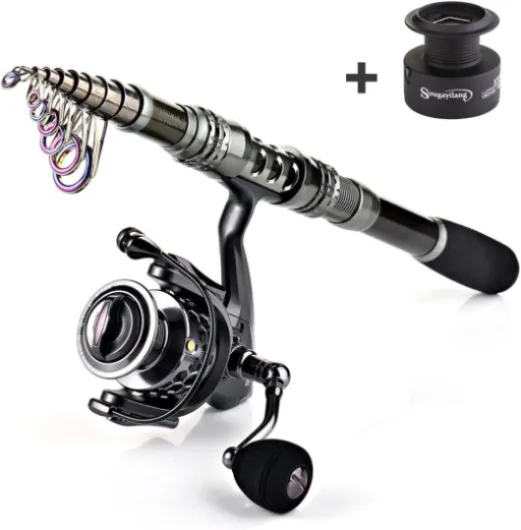
The reel is the pleasant surprise. For its price, it’s actually pretty smooth. The claimed 5.5:1 gear ratio feels right: not super fast, not slow. The drag is usable and reasonably consistent; I tested it on a few decent bass and it let line out smoothly without jerky starts. It’s not as precise as a higher-end reel, but it didn’t slip or lock up on me. Line lay is okay; not perfect, but I didn’t have crazy wind knots or loops flying off all the time with mono.
Where you feel the limits is sensitivity and backbone. Because of the telescopic sections and mixed materials, the rod doesn’t transmit bottom contact as well as a good 2‑piece rod. If you’re used to feeling every pebble when jigging, this will feel dead in comparison. Also, when you hook into something a bit heavier, the rod bends deep. It handled average bass fine, but I wouldn’t use this in heavy cover or for species that pull hard into snags. You just don’t have the same control.
Overall, the performance is good enough for casual freshwater fishing, especially for beginners or as a backup/travel setup. It’s not something I’d bring to a tournament or rely on for big saltwater fish, despite the ‘saltwater/freshwater’ claim. It can survive occasional light saltwater use if you rinse it well, but I’d keep it mainly for lakes, rivers, and light shore fishing.
What you actually get in the kit
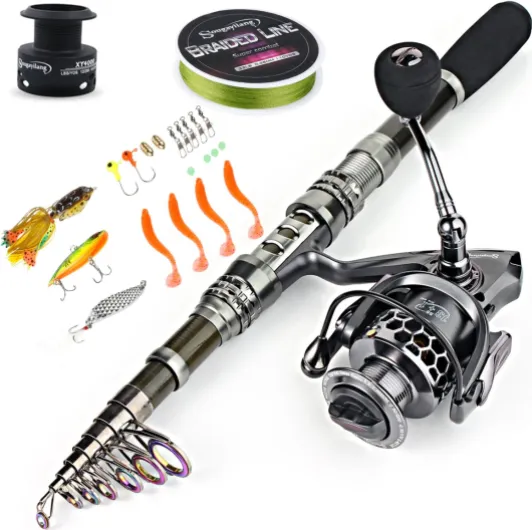
The first thing to know is this is a full bundle, not just a rod and reel. In the bag I got: the telescopic rod, the spinning reel already spooled with about 100 m of mono, a spare aluminum spool, three basic lures, a small pack of assorted terminal tackle (hooks, swivels, a few sinkers), and the carrier bag itself. On paper, you can literally buy this and go straight to the water. In practice, I’d still swap some stuff out, but we’ll get to that.
The carrier bag is simple but useful. It’s not padded like a premium rod case, but it’s enough to keep everything together and stop guides from catching on other gear. It fits in a car trunk easily and even in a big backpack if you want to hike a bit. Zippers are basic but didn’t jam on me. I wouldn’t trust it for rough airline travel without extra protection, but for driving to a local spot, it’s fine.
The included lures and accessories are honestly the weakest part. They’re okay as a backup, but they feel cheap. The hooks are on the soft side; they bend easier than what I’m used to. The lures will catch fish if you’re not picky, but if you already own any halfway decent tackle, you’ll probably just toss these in a backup box and use your usual stuff. The mono line is usable, but a bit springy and memory-prone; I’d replace it with better 8–10 lb mono or braid once you’ve tested the reel.
So the main value here is really: rod + reel + carry bag, with the rest more like a starter pack. If you’re a complete beginner, it’s nice to have everything in one purchase. If you’ve fished before, you’ll treat half of the included accessories as temporary or emergency gear rather than your main setup.
Pros
- Very compact telescopic design with a useful carry bag for travel and car storage
- Reel is smoother than expected for the price and comes with a spare spool
- Complete starter kit (rod, reel, line, lures, tackle) so you can fish right away
Cons
- Rod lacks sensitivity and backbone compared to a decent 2-piece setup
- Included lures and terminal tackle are low quality and mostly feel like filler
- Telescopic design is more fragile and requires careful handling and cleaning
Conclusion
Editor's rating
After using the Sougayilang telescopic combo for a bit, my takeaway is simple: it’s a practical travel and starter setup, as long as you keep your expectations realistic. The rod is light, packs down small, and handles casual freshwater fishing without drama. The reel is smoother than I expected at this price and perfectly usable with better line. The bag keeps everything together and makes it easy to throw the whole kit in the car or a backpack.
On the other hand, it’s not a high-performance tool. The rod lacks sensitivity and backbone compared to a decent 2‑piece, the included tackle is mostly filler, and durability will depend heavily on how gently you treat the telescopic sections. For regular, serious anglers who fish weekly and care about feel and control, this is more of a backup/travel rod than a main setup.
I’d recommend it to beginners who want a simple all-in-one kit, people who fish occasionally, or anyone who specifically needs a compact travel rod that fits in tight spaces. If you fish often, chase bigger or stronger species, or already own better gear, you’re probably better off spending a bit more on a proper rod and reel and just buying a separate travel case. In short: good value for light, casual use; not the best choice for heavy or frequent fishing.