
Summary
Editor's rating
Value for money: fair deal if you need two swivels and accept a few quirks
Design: simple, square, and mostly thought-through
Materials and build: decent stainless, not tank-grade
Durability: holding up fine so far, but needs basic care
Performance on the water: rotates fine, lock is okay but not perfect
What you actually get in the box
Pros
- Stainless steel construction (SS304) handles casual marine use better than cheap painted steel
- Universal 175 x 175 mm size with slotted holes makes installation on most seats and pedestals easy
- Includes a locking mechanism that holds the seat in place while underway when properly engaged
Cons
- Rotation is not very smooth and has a bit of play compared to higher-end swivels
- Lock mechanism can be awkward to reach and sometimes requires wiggling to fully engage
- Requires basic maintenance (rinsing and lubrication) to avoid stiffness and minor corrosion over time

Specifications
View full product page →| Brand | MiDMarine |
Two stainless swivels that look simple but matter a lot on the water
I’ve been using this pair of MiDMarine stainless steel 304 boat seat swivels with lock on a small fishing boat for a while now. They’re not the kind of product you get excited about, but if your seat can’t rotate properly or feels sketchy, you notice it fast. I swapped out some old rusty swivels with these and wanted to see if the stainless steel and the locking system were actually worth the effort and money.
On paper, they tick the right boxes: marine grade stainless, universal fit with slotted holes, and a built-in lock to stop the seat from swinging when you’re under way. Size is 175 x 175 mm, so it’s a standard square plate that should fit most pedestals and seats without weird adapters. The pair weighs about 4.4 lb in total, so each unit feels fairly solid in the hand, not flimsy sheet metal.
In reality, once you start bolting them down and sitting on them, you notice the details: how smooth the rotation is, whether there’s any wobble, and how practical the lock actually is when you’re wearing wet gear and the boat is moving. That’s where these swivels are good but not flawless. They do the job, but they’re not the kind of hardware you forget about completely.
If you’re expecting cheap junk, you’ll probably be pleasantly surprised. If you’re expecting top-tier commercial-grade hardware, you’ll see the limits pretty quickly. I’d say they sit somewhere in the middle: decent performance for casual boating or fishing, with a few quirks you need to know before buying.
Value for money: fair deal if you need two swivels and accept a few quirks
In terms of value, this pair sits in that middle ground of “good enough for most people”. You get two stainless swivels with a lock mechanism, some basic screws, and a fairly universal fit. For the typical small boat owner who just wants seats that rotate and don’t rust immediately, it’s a reasonable package. You’re not paying for a big brand name or fancy engineering, and it shows, but the price reflects that.
When I compare it to cheaper painted steel or zinc swivels I’ve seen at local shops, this MiDMarine set is a step up mainly on the corrosion side. Those cheaper ones often start rusting quickly if you forget to rinse them. On the other hand, if you compare it to higher-end marine hardware from big brands, you’ll probably find smoother rotation and better lock ergonomics, but at a higher price per swivel. Here, you’re clearly paying for basic stainless functionality rather than premium feel.
One thing to factor in is that it’s a pair. If you only need one swivel, this might not be the best deal unless you want a spare or plan to upgrade two seats anyway. But if you have a small boat with two main seats, getting a matched pair at this price point makes sense. The Amazon rating around 3.8/5 also matches my feeling: it’s not a bargain miracle, not a rip-off either, just solid middle-of-the-road value.
If your expectations are realistic – something that rotates, locks, and doesn’t fall apart in a season – you’ll probably be satisfied. If you’re picky about ultra-smooth motion, perfect locking, and long-term saltwater abuse with zero maintenance, you’ll likely feel that you should have spent more for a higher-end product. For casual boaters, though, I’d call the value decent but nothing more.
Design: simple, square, and mostly thought-through
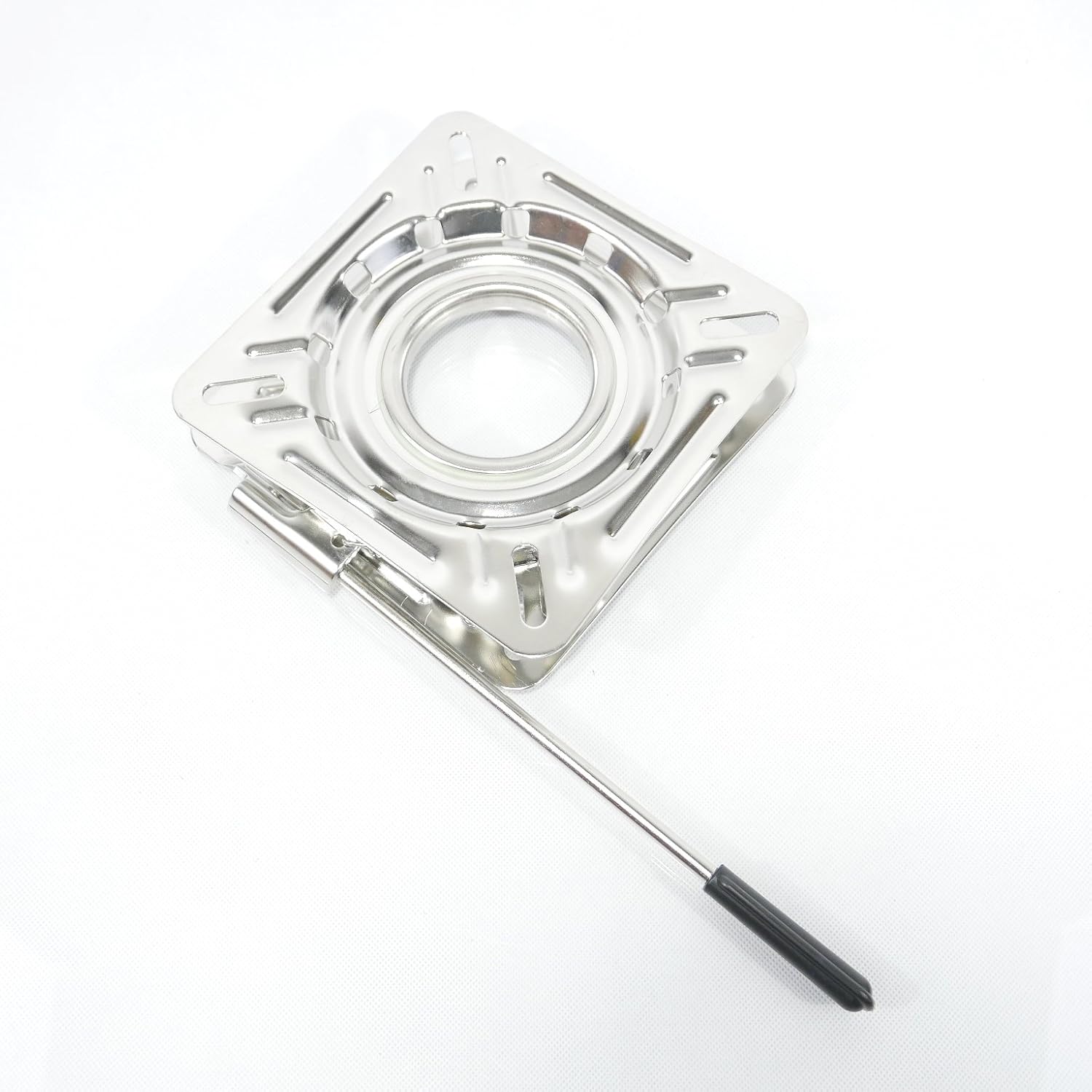
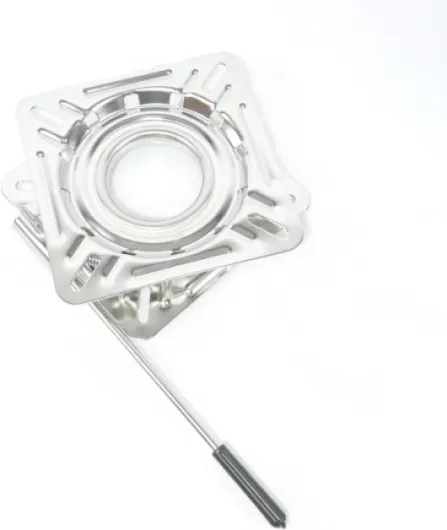
The design is very straightforward: two square plates with a central swivel and a side lock. No height adjustment, no fancy damping, just rotation and locking. The 175 x 175 mm footprint makes it compatible with a lot of generic marine seats and pedestals. The slotted holes are probably the best design decision here, because they saved me from having to drill new holes in my existing pedestal. I could nudge the plate a few millimeters to match what was already there.
Rotation-wise, the design is okay but not silky smooth. There’s a bit of resistance, which I actually like on a boat seat because it keeps you from spinning too freely when the water is choppy. Still, you can feel that it’s not a high-end bearing; it’s more of a practical swivel that gets the job done without feeling premium. There’s a tiny bit of play if you rock the seat hard side to side, but nothing alarming for casual use.
The lock mechanism is where the design could be better. It’s functional, but the ergonomics are a bit clumsy. Depending on how your seat is mounted and where the plate ends up, the lever (or pin, depending on version) can be slightly awkward to reach while seated. On my setup, I have to lean down more than I’d like to lock or unlock it. It’s not a deal breaker, but if you’re older or have back issues, it’s worth keeping in mind.
Visually, it’s just brushed or slightly matte stainless. No fancy logo, no paint, no rubber bumpers. That’s fine by me; it hides under the seat anyway. But don’t expect something pretty. Overall, the design is functional and fairly universal, with the only real downside being the slightly awkward lock access depending on your installation.
Materials and build: decent stainless, not tank-grade
The brand claims SS304 stainless steel, which is pretty standard for mid-range marine hardware. On my boat (brackish water, not full open ocean), it’s holding up fine so far. After exposure to spray and a couple of rainy days, I haven’t seen any serious rust. There are a few tiny discoloration spots starting near the edges, but nothing that looks like deep corrosion. For 304 stainless, that’s normal if you don’t rinse it all the time.
The plates themselves feel thick enough. They don’t flex under normal body weight, even when I lean hard to one side of the seat. I’m around 85 kg (about 187 lb), and with gear and some movement, the swivel hasn’t bent or warped. The welds on the center pivot and around the locking area look okay: not pretty, but not sloppy either. No cracks, no visible gaps. It’s clearly mass-produced, but the quality control on my pair is acceptable.
One thing I did notice is that the internal moving parts don’t seem to be fully sealed. That’s not shocking for this price range, but it means you should occasionally spray some marine grease or light oil to keep it from squeaking or binding up over time. If you just install it and forget it in salt water, I can see how some users might end up with stiffness or minor rust on less visible parts.
In short, the materials are “pretty solid” for weekend and light regular use, but I wouldn’t pick this as hardware for a boat that lives permanently in harsh salt conditions without regular maintenance. For a small fishing boat or lake boat, the material quality is good enough, especially considering you get two swivels in the pack.
Durability: holding up fine so far, but needs basic care
Durability-wise, after regular use and exposure to water, the swivels are holding up reasonably well. No major rust, no deformation, and the rotation is still roughly as smooth as day one. I do rinse the hardware with fresh water after longer outings, and I gave the swivel points a quick spray of marine lubricant once. With that minimal care, the signs of wear are pretty minor: a bit of surface discoloration and some faint marks where the lock engages.
I can see how someone who just installs them and never touches them again, especially in salt water, might have a different experience. 304 stainless is good, but not magic. If you leave salt and grime on it constantly, you’ll eventually get tea staining or small rust spots. The fact that the internal moving parts aren’t sealed means they can dry out and start to squeak or get stiff if ignored. So I’d say the long-term durability is decent, but not maintenance-free.
Mechanically, there’s no sign of the plates bending or the welds cracking. I’ve loaded the seat with gear on my lap, leaned back, leaned forward, and the swivel doesn’t feel looser over time. The small amount of play has stayed about the same. The lock hasn’t rounded off or failed to hold under normal conditions; it still clicks into place and keeps the seat from swinging when I’m underway at moderate speed.
Overall, I’d rate durability as good for weekend and recreational use. For a heavily used charter boat or a boat that lives permanently in a harsh marina environment, I’d personally look at heavier-duty or higher-grade stainless options. But for the price and the fact you get a pair, the lifespan seems fair as long as you give them occasional rinsing and lubrication.
Performance on the water: rotates fine, lock is okay but not perfect
Once installed, the overall performance is decent. The seats rotate smoothly enough to turn and talk to people or adjust yourself while fishing. There is some resistance, but I actually see that as a plus on a boat. You don’t want to spin like an office chair when a wave hits. You can do a full 360° rotation, but you need to apply a steady push rather than a light tap. No grinding noises so far, just a faint mechanical feel when turning.
In terms of stability, I haven’t felt unsafe sitting on it, even when the water got a bit rough. There’s a slight play if you really rock the seat back and forth, but nothing that makes you think it’s about to fail. For normal use – sitting, turning to grab gear, casting a line – the swivel feels strong enough for an average adult. I wouldn’t jump on the seat or treat it like gym equipment, but that’s true for most boat seats anyway.
The locking mechanism works, but it’s not the most user-friendly thing in the world. Sometimes you have to wiggle the seat a bit to get it to fully engage or disengage. On calm water, that’s not a big deal. On choppy water, it can be slightly annoying when you’re trying to lock the seat straight ahead and it doesn’t catch on the first try. Once locked, though, it holds position well and doesn’t move during navigation, which is the main point.
Compared to some cheaper zinc or painted steel swivels I’ve tried before, this one is more reassuring in terms of corrosion resistance and stiffness, but it’s not a huge jump in smoothness or comfort. If you just want something that works and doesn’t rust fast, it’s fine. If you’re expecting very smooth, effortless rotation and a super precise lock, you might be a bit underwhelmed.
What you actually get in the box
Out of the box, you get two swivels and a small bag of screws. No fancy packaging, no long manual, just the basics. Honestly, for this kind of hardware, that’s fine. The plates come lightly oiled, which is normal for metal parts, and there’s no strong smell or weird residue. The finish is fairly clean: no razor-sharp edges, no visible warping, and the welds on the central pivot look okay, not pretty but functional.
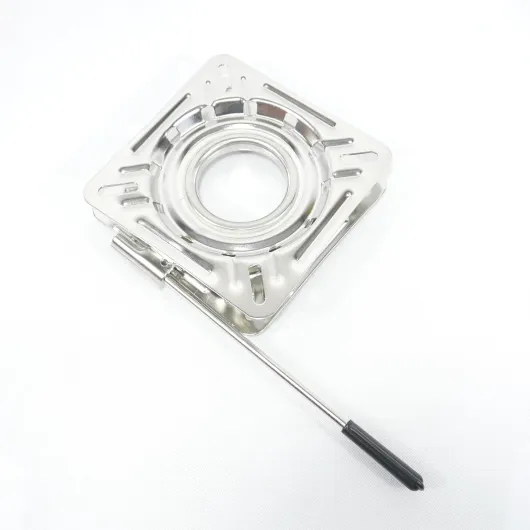
Each plate is 175 mm by 175 mm and about 30 mm high, which matches what’s in the description. The top and bottom plates rotate around a central bearing, and there’s a small mechanism on the side that handles the locking. The slotted mounting holes are a plus: they give you some wiggle room if your old holes aren’t perfectly aligned. I had no trouble lining them up with a generic pedestal base and a budget captain’s chair.
The included screws are usable but nothing special. If your boat lives in salt water all year, I’d honestly consider swapping them for higher grade stainless fasteners. The product is advertised as SS304, which is fine for most marine use but not bulletproof in very harsh salt environments. The Amazon listing also mentions “alloy steel,” which is a bit confusing, but the visible parts do look and behave like stainless in terms of corrosion so far.
Overall, the presentation is basic but practical. You can tell it’s made in China and focused on function, not looks. No nonsense, no frills, but also no big surprises. For a mid-range price point, that’s acceptable, but it doesn’t give a premium impression either.
Pros
- Stainless steel construction (SS304) handles casual marine use better than cheap painted steel
- Universal 175 x 175 mm size with slotted holes makes installation on most seats and pedestals easy
- Includes a locking mechanism that holds the seat in place while underway when properly engaged
Cons
- Rotation is not very smooth and has a bit of play compared to higher-end swivels
- Lock mechanism can be awkward to reach and sometimes requires wiggling to fully engage
- Requires basic maintenance (rinsing and lubrication) to avoid stiffness and minor corrosion over time
Conclusion
Editor's rating
Overall, this MiDMarine pair of stainless steel 304 boat seat swivels with lock does what it’s supposed to do: it lets your seats rotate and gives you a way to lock them when you’re underway. The build feels reasonably solid, the stainless holds up fine with basic care, and the universal slotted holes make installation straightforward on most standard pedestals and seats. It’s not fancy, but it works.
The downsides are pretty clear: the rotation isn’t ultra-smooth, there’s a bit of play, and the lock mechanism can be slightly awkward to reach and sometimes needs a small wiggle to engage. If you expect high-end, commercial-grade hardware, this will feel a bit rough around the edges. But for a small fishing boat or recreational runabout, it’s acceptable and feels safe enough in normal use.
I’d recommend this set to casual boaters and weekend anglers who want a reasonably durable stainless swivel without spending a lot. If your boat lives mostly on a lake or occasionally in brackish water and you’re willing to rinse and lube it now and then, it should last a good while. On the other hand, if you’re in harsh salt conditions, use your boat heavily, or are very picky about smoothness and ergonomics, I’d say skip this and invest in a higher-grade swivel from a more premium brand.